Family holidays in Corsica:beaches, boat trips and experiences
Shallow, clear water, boat trips to caves and islands, river swimming and tortoises – Corsica is a wonderful island for families with children.
Corsica is well suited to a family holiday. Many beaches have shallow, crystal-clear water where small children can play safely, and boat trips, train rides and animal parks are never far away. At the same time the island is large, the roads are winding and the summer is hot, so it pays to plan ahead.
This guide covers the best beaches for children, where it makes sense to stay, and the experiences children remember – with practical advice on ferries, cars and the sun.
The most important decision on a family holiday in Corsica is where you stay. With a base near a shallow sandy beach and shops and restaurants close by, the days are easy. Add a boat trip, a day by the river and a couple of excursions, and avoid long drives on winding mountain roads – especially if anyone gets carsick.
Find your family holiday
What matters most to you? Pick what suits you and go straight to that part of the guide.
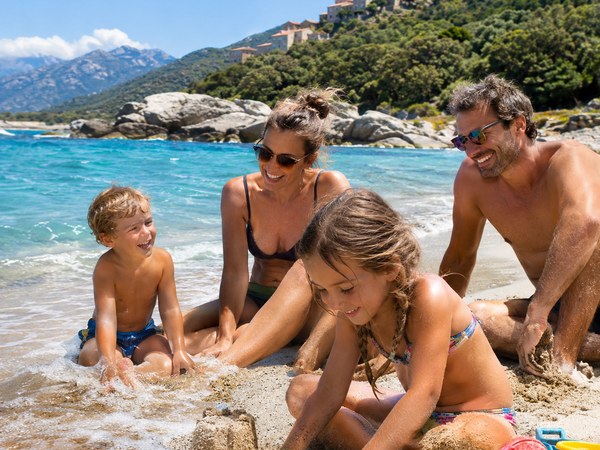
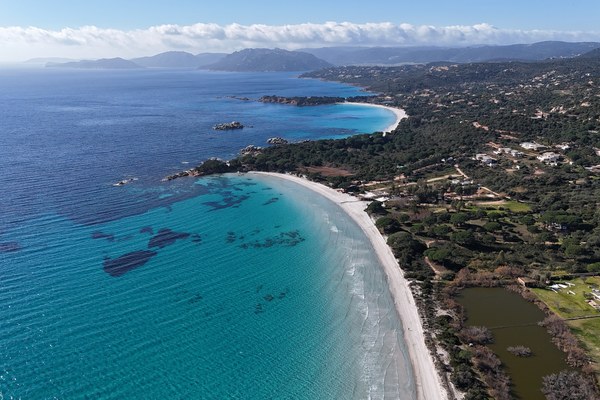
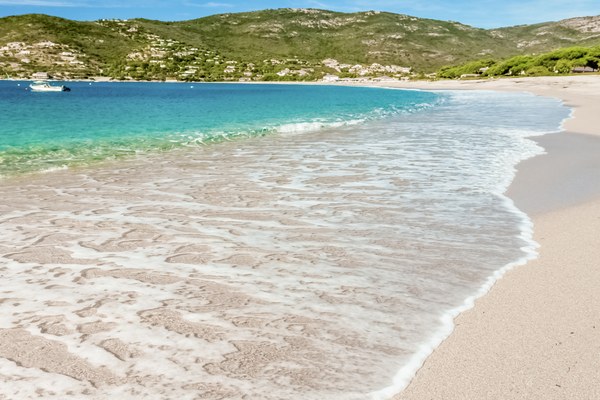
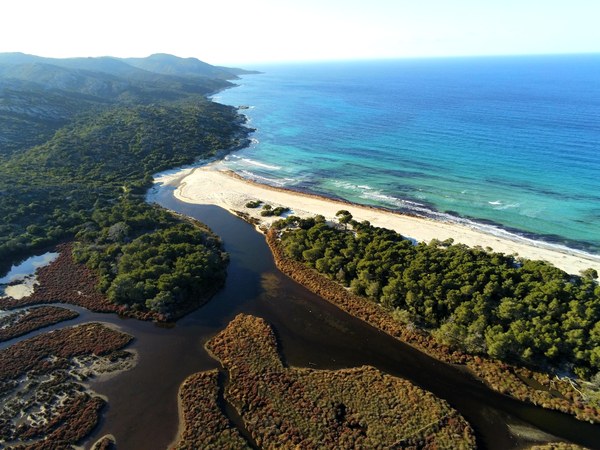
Many of Corsica’s beaches seem made for children: long, gently shelving and with water so clear you can see the fish swimming around your legs. Especially in the south and east, and in the Balagne in the north-west, you will find bays where it is safe to paddle and play.
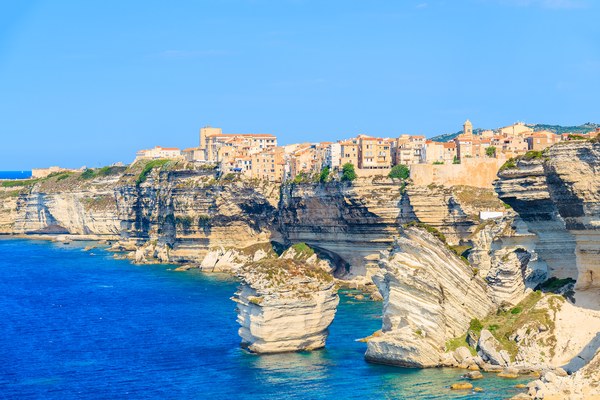
It is also easy to fill the days with experiences that do not involve long journeys: a boat trip beneath the cliffs of Bonifacio, the train along the beaches of the Balagne, giant tortoises, river pools in the mountains and ice cream on the square in the evening sun.
Corsica is also a safe island to travel with children. Distances are short, the food is simple, and Corsicans are used to families – in restaurants and on campsites alike. Many holiday homes have a pool and garden, so the little ones can play while the adults relax in the shade.
Gently shelving beaches with clear water
Short distances from a good base
Boat trips, trains and animal parks
Safe and child-friendly
Practical advice for families
The summer sun in Corsica is strong, and many beaches have little natural shade. Bring a parasol or hire sunloungers, use sunscreen and UV clothing, and keep the children out of the sun in the middle of the day in July and August. There are pharmacies in every town and most larger villages, and they give good advice on sunburn and insect bites.
Water shoes for rocks and sea urchins
A parasol – there is little shade
Child car seats in the hire car
Shorter drives – the roads are winding
Mosquito repellent for the evenings
Plenty of water and snacks in the car
In France, children under ten must travel in a child car seat or on a booster seat. Book one together with the hire car, and check that it is there when you collect the car. The most popular beaches have lifeguards in summer; with the youngest children, it is a good idea to choose one of those.
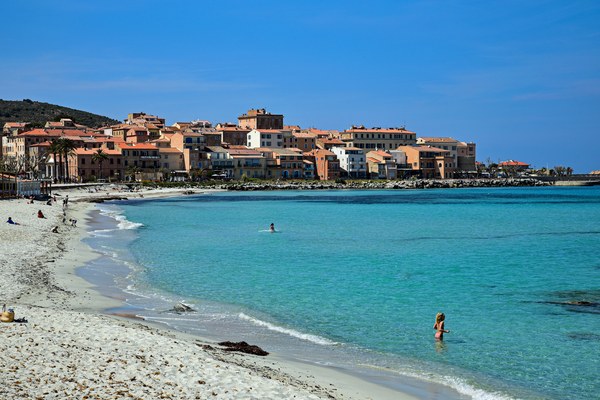
The best beaches for small children are gently shelving and lie in sheltered bays. Around Porto-Vecchio, Palombaggia, Santa Giulia and Rondinara are known for water that stays shallow a long way out. In the Balagne, the beaches at L'Île-Rousse and Algajola and the long beach at Calvi are good choices, with ice cream, toilets and restaurants close at hand.
On the west coast there are more wild beaches with waves and deep water, and the finest beaches in the Agriates can only be reached by boat or four-wheel drive – both better suited to older children. When the wind blows from the west, the east coast and the bays around Porto-Vecchio are often calmer.
The Balagne, with Calvi and L'Île-Rousse, is the easiest area for families: an airport, sandy beaches right by the town centres and a train that runs along the beaches. Around Porto-Vecchio in the south you stay close to the best-known beaches, often in a holiday home with a pool.
The Gulf of Valinco, with Propriano, is a quieter alternative in the south-west. Think twice before choosing a base high up in the mountains or on the west coast with small children – it means a lot of driving on winding roads.
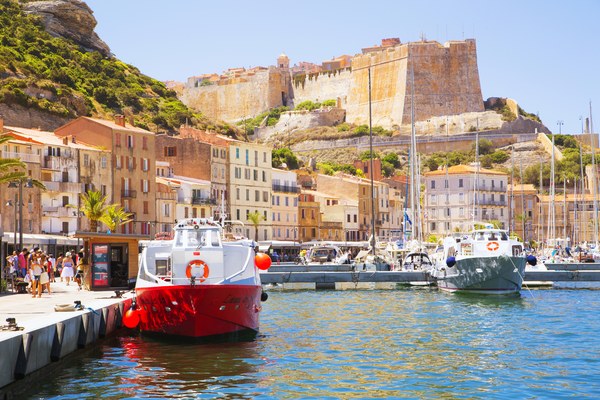
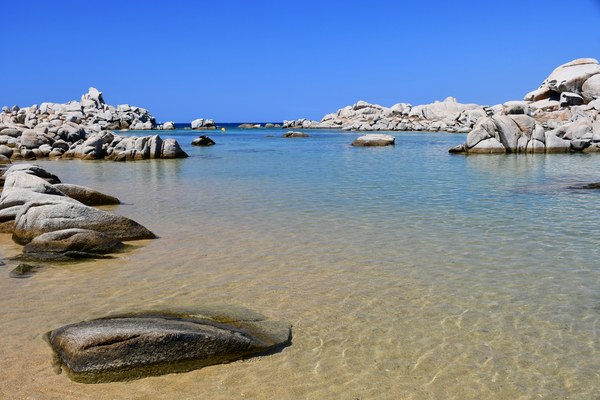
For many children a boat trip is the highlight of the holiday. From the harbour in Bonifacio, short trips run beneath the cliffs and into the sea caves, and longer ones go to the Lavezzi Islands, a nature reserve of granite boulders and turquoise coves where you can swim and snorkel.
From Calvi, Porto, Galéria and Cargèse, trips run to the Scandola reserve on the west coast, often stopping at the fishing village of Girolata. They are longer, and the sea can be rough, so they are best for children who can cope with a day at sea.
The train – along the beaches and through the mountains
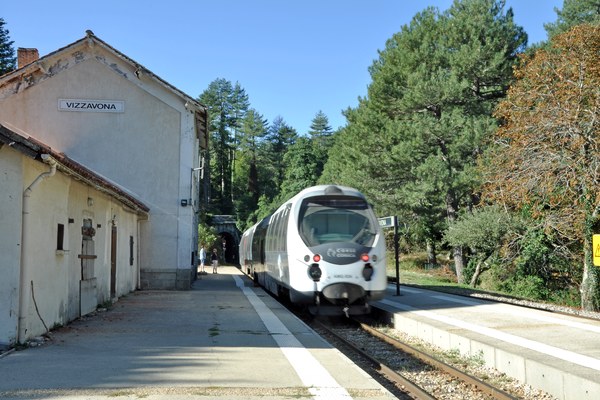
From spring to autumn a local train runs between Calvi and L'Île-Rousse, stopping at several beaches along the way. Children love hopping off at one beach and taking the train on to the next, and you do not have to hunt for a parking space.
The narrow-gauge railway through the mountains between Ajaccio, Corte and Bastia is an experience in itself, with tunnels, bridges and views. The journey takes time, so it is a good idea to choose a shorter stretch.
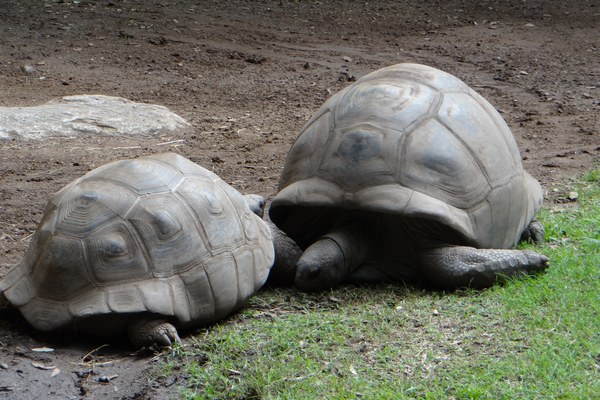
A Cupulatta, in the forest near Vero on the road from Ajaccio towards Corte, is one of the largest tortoise parks in Europe. It is home to around 3000 tortoises and turtles of more than a hundred species from all over the world – from tiny ones to giant tortoises – and the park works on breeding, research and conservation.
The park lies in the shade of the trees and is a good choice on a hot day. It is closed from mid-November to the end of March, so check the opening times before you go.
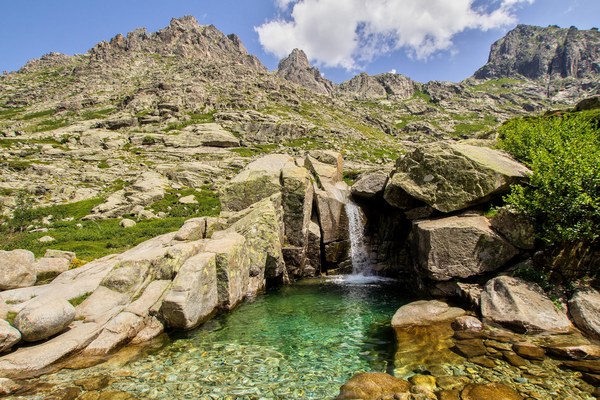
When it is hot on the coast, a day by the river makes a welcome break. The mountain rivers have pools of ice-cold, clear water between smooth rocks. The Cavu river near Porto-Vecchio, the Restonica near Corte and the Cascade des Anglais in Vizzavona are popular with children.
Keep a close eye on the youngest: the rocks are slippery, the water is cold and some pools are deep. After rain or thunderstorms the rivers can rise quickly – never swim in a river when there is thunder in the mountains. Check whether swimming is banned before you go – the local councils close some pools when water tests are poor.
The clear water makes Corsica a great place to learn to snorkel. With a mask and snorkel, children can see fish and starfish just off the beach, especially around rocks and in calm bays. In many places you can hire a kayak or a paddleboard.
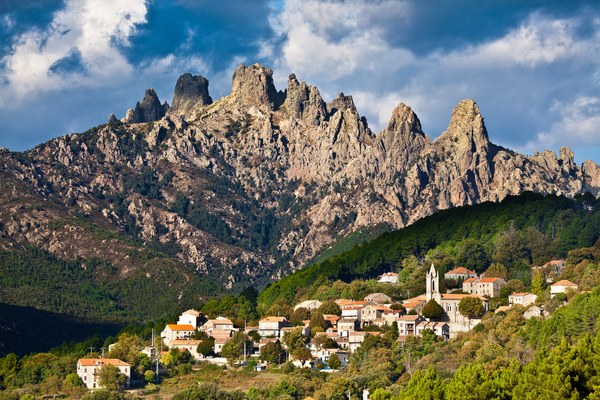
In the forests inland there are several treetop adventure parks, with courses for both young and old. Older children can try canyoning with a guide in the gorges, for example around Bavella.
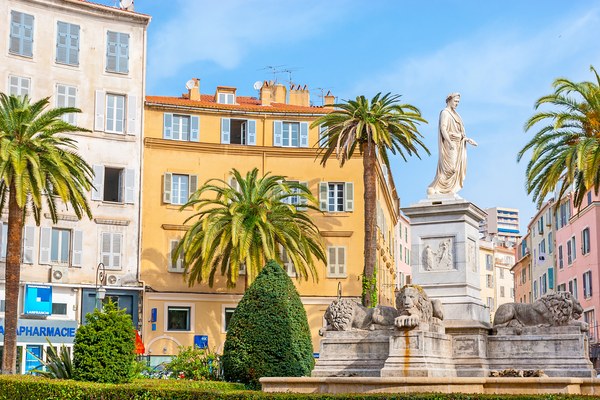
Corsica’s towns are small and easy to explore with children. In Bonifacio and Ajaccio little tourist trains run around the centre, and in Calvi and Corte you can walk up to the citadel and take in the view. In Ajaccio you can visit the house where Napoleon was born.
In the evening the squares come to life, and it is a tradition to eat dinner late and have an ice cream afterwards. Many restaurants have a children’s menu, and pizza is everywhere.
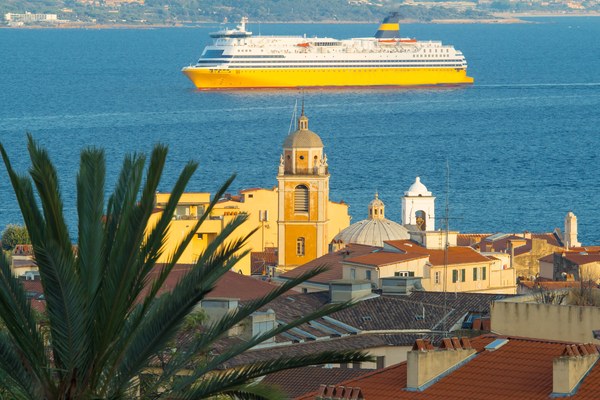
Many families bring their car on the ferry. Overnight ferries with cabins sail from Marseille and Toulon, so the children sleep while you cross. Day ferries sail from Nice and Toulon, and from mainland Italy the crossings from Livorno and Piombino to Bastia are the shortest, at around four hours. Book early for July and August.
In Corsica a car is almost essential. The roads are winding and narrow, and journeys take longer than the map suggests – plan short driving days with breaks, and bring something for carsickness.
June and early September are ideal for families with small children: the sea is warm, there are fewer people and it is not as hot as in midsummer. If you have to travel during the school holidays, early July is better than August, when French and Italian families fill the island.
In July and August you should book accommodation and ferries early, and plan beach time for the morning and late afternoon.
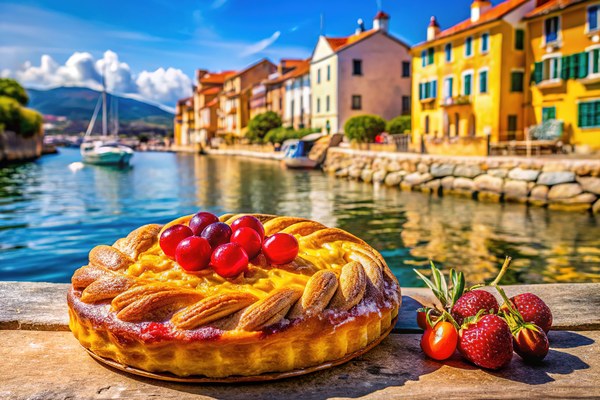
Corsican food is simple and suits most children. Pizza, pasta, grilled fish and chips are everywhere, and many restaurants have a children’s menu. Try beignets – deep-fried doughnuts, often made with brocciu cheese – and fiadone, a mild cheesecake.
For breakfast and packed lunches, canistrelli are popular: dry biscuits flavoured with lemon, aniseed or chestnut flour. Corsicans eat dinner late, often not before half past seven, so an afternoon snack is a good idea.
Plan your family holiday
Map
See places and hotels
Open the map to find destinations and hotel suggestions all around the island.
Accommodation
Where should you stay?
The best areas to stay on the island – and whether to choose a holiday home, a hotel or a campsite.
A suggestion for four varied days in the south – with beach, boat, river and islands.
Day 1
The beach at Santa Giulia
Time: all day
Start the holiday at a relaxed pace on one of the most gently shelving beaches in the south. Arrive early to get a spot, and take a long lunch in the shade.
Shallow water
Kayaks and paddleboards
Arrive early
Day 2
A boat trip in Bonifacio
Time: morning
Drive to Bonifacio and take a short boat trip into the caves beneath the cliffs. Walk up to the old town and take the little train back.
The caves
The old town
The little train
Day 3
The Cavu river and Bavella
Time: all day
Swim in the pools of the Cavu river and drive on up to the Col de Bavella for the views and a short walk among the pigs and pine trees.
River pools
The Bavella pass
Wear water shoes
Day 4
The Lavezzi Islands
Time: all day
Take the boat from Bonifacio out to the Lavezzi Islands. Swim and snorkel in the turquoise coves between the granite boulders, and bring a packed lunch and plenty of water.
Frequently asked questions about Corsica with kids
Is Corsica a good destination for families with children?
Yes. Many beaches are gently shelving with clear water, the island is safe, and there is plenty for children to do. Choose a base near a good beach and you avoid long drives.
Where are the best beaches for small children?
Around Porto-Vecchio in the south, with Santa Giulia, Palombaggia and Rondinara, and in the Balagne, with Calvi, L'Île-Rousse and Algajola. There the water stays shallow a long way out.
Where should families stay?
The Balagne and Porto-Vecchio are the easiest areas, with beaches, shops and restaurants close by. Propriano is a quieter alternative in the south-west.
When is the best time to travel with children?
June and early September: a warm sea, fewer people and lower prices. July and August are the hottest and busiest months.
Do you need a car in Corsica with children?
Yes, almost always. The coastal train in the Balagne can cover some of it, but a car is the easiest way to reach beaches, boat trips and rivers. Remember a car seat – in France, children under ten must travel in a child seat or on a booster seat.
Is it dangerous to swim in the rivers?
No, if you are careful. The rocks are slippery, the water is cold and some pools are deep, so keep a close eye on the youngest. After rain or thunderstorms the rivers can rise quickly.