The complete guide to the coast between Ajaccio and Scandola – with red cliffs, Genoese towers, boat trips, beaches, mountain villages and food.
The west coast is Corsica at its most dramatic. The mountains plunge straight into the sea, the roads cling to the cliffs, and the Gulf of Porto, with the Calanche de Piana, Girolata and Scandola, is a UNESCO World Heritage Site.
This guide will help you choose a base, a route and a boat trip, whether you are arriving from Ajaccio in the south or from Calvi and the Balagne in the north.
Many people simply drive through the west coast on their way between Ajaccio and Calvi. That is a shame. Some of the most beautiful landscapes in the Mediterranean are found here, and they are best enjoyed when you give them a couple of nights, an early morning on the road and a day out on the water.
Find your west coast
Choose the experience that suits your trip and go straight to the most relevant parts of the guide.
The west coast – mountains that plunge into the sea
As the crow flies, the coast between Ajaccio and Scandola is only around a hundred kilometres long, but the road is long and winding. Here is an overview before you choose your stops and where to stay.
Follow the car along the coast road, and tap a point to see the places on the way.
The route is simplified. The road is narrow and winding – allow twice as long as the map suggests.
Why choose the west coast?
The west coast does not have the long, white lagoon beaches you find in the south. It has something else: a landscape so dramatic that the drive itself becomes a highlight. The reddish granite of the Calanche de Piana, the deep Gulf of Porto and the volcanic cliffs of Scandola are among the most photographed places in the entire Mediterranean.
At the same time, the mountains are never far away. From Porto you can be up in the chestnut forests around Evisa in under an hour, and boats leave the same harbour for Scandola and Girolata. Few places in Corsica combine sea and mountains so closely.
The west coast is particularly well suited to those who want nature, views and a touch of adventure – and who would rather have a small harbour than a big beach resort.
Couples and travellers who want nature and views
Active travellers who want to walk, paddle or dive
Motorists driving between Ajaccio and Calvi
Anyone who wants to see Scandola and Girolata from the sea
Practical travel information
Ajaccio has an airport and a ferry port and is the easiest gateway in the south. From the north you arrive from Calvi, either along the narrow coast road via Galéria or over the mountains. A car is almost essential: buses are infrequent, and many of the best stops lie outside the villages.
Allow around two hours from Ajaccio to Porto without stops
Drive through the Calanche early in the morning or late in the afternoon
Choose one base, Porto or Piana, for at least two nights
Book boat trips and accommodation well in advance in July and August
May, June and September offer pleasant temperatures, less traffic on the narrow roads and a sea warm enough for swimming. In July and August Porto is packed, and the road through the Calanche can get tight when the coaches meet.
Ajaccio and the Sanguinaires – the starting point in the south
Ajaccio is Corsica’s largest town and the birthplace of Napoleon, with an old town, a market, museums and a long seafront promenade. For many visitors this is where the trip begins, because this is where the planes and ferries arrive.
Before heading north, make the trip out to Pointe de la Parata. The headland lies around twelve kilometres west of the centre and has Grand Site de France status, with a Genoese tower and views of the dark red Îles Sanguinaires. The sunset here is one of the most famous on the island.
Cargèse and Sagone – churches, beaches and a Greek story
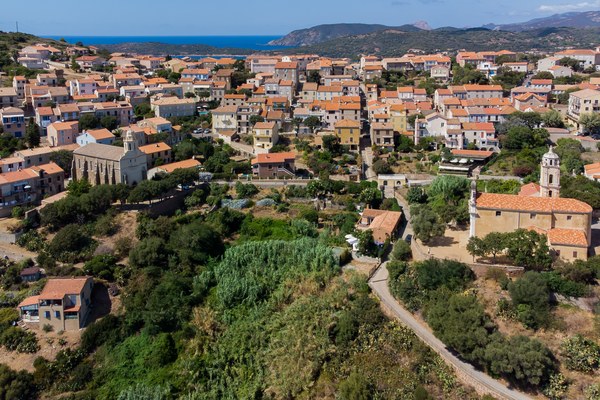
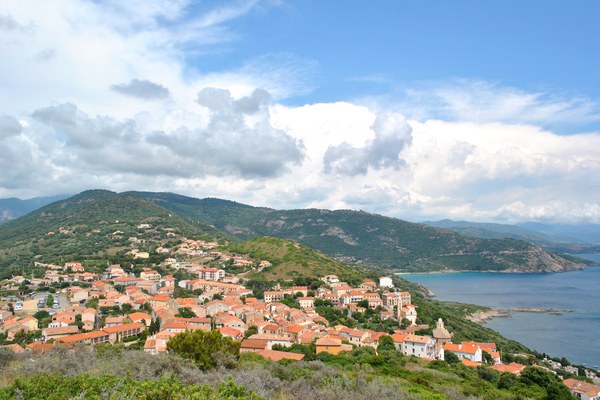
Cargèse sits on a headland above the sea and has a history all of its own. The village was built for Greek settlers from Mani in the Peloponnese, who came to Corsica as early as 1676, and two churches still stand on either side of a small valley: the Latin church and the Greek Catholic church. They quite literally look at each other.
The Gulf of Sagone and the beaches around Cargèse are calmer and more family-friendly than much of the coast further north. This is a good place to stay if you want the beach by day and short trips to Piana and Porto.
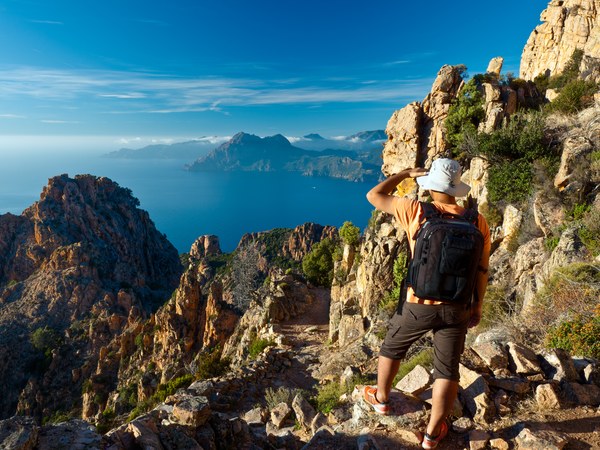
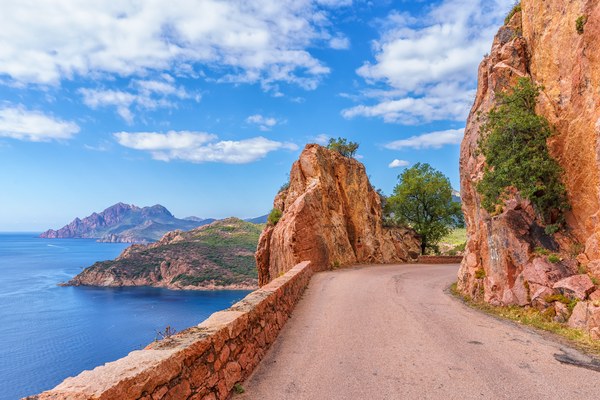
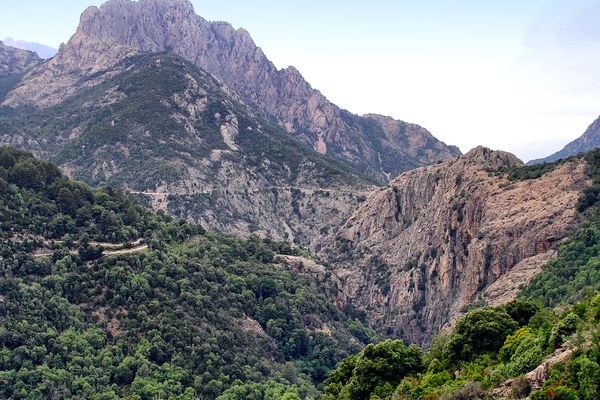
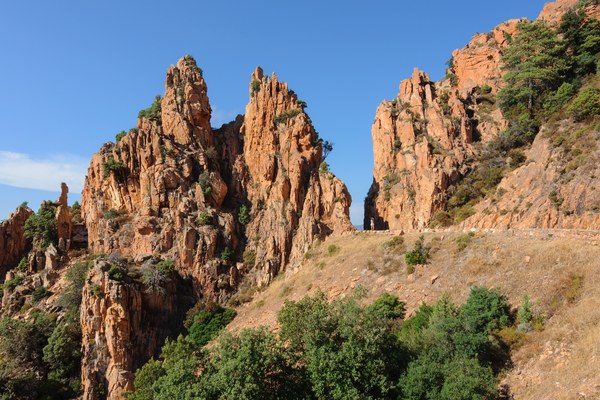
The Calanche de Piana is the west coast’s great attraction: reddish granite formations sculpted by wind and weather into towers, arches and figures, several hundred metres above the sea. The D81 runs right through them, and every bend reveals a new view.
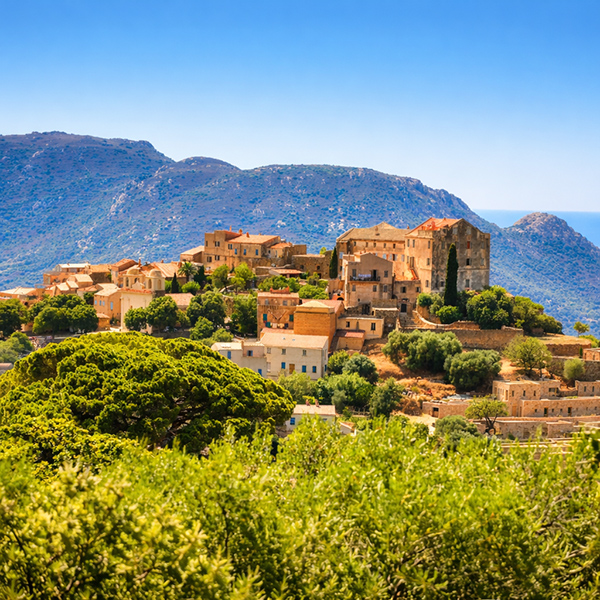
The village of Piana itself is one of the most beautiful in Corsica, with a church square, stone houses and views over the whole Gulf of Porto. Paths also lead from here into the Calanche and out towards Capu Rossu, a red headland topped by a Genoese tower. The walk there takes around three and a half hours there and back, with no water along the way.
Porto – the Genoese tower and the gulf that brings it all together
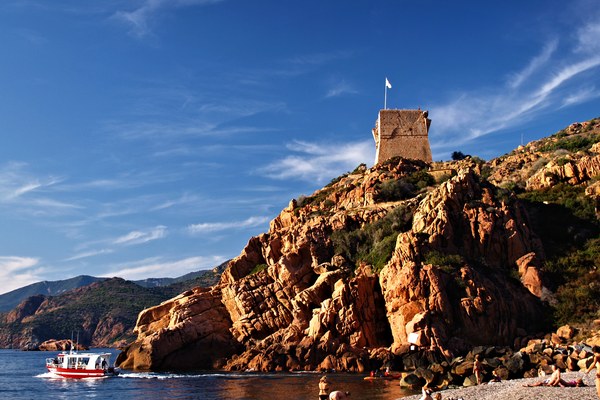
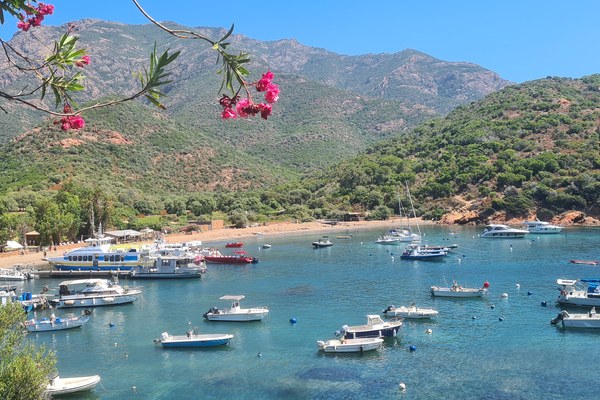
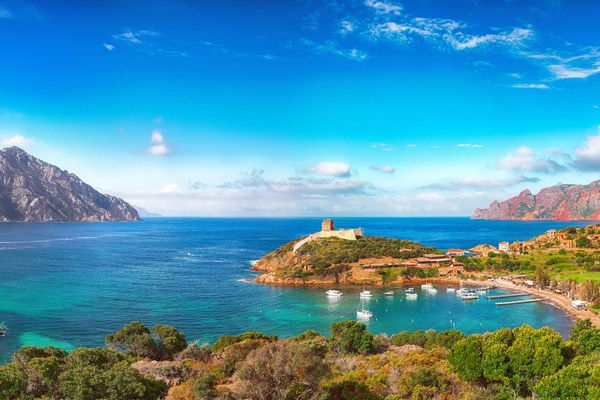
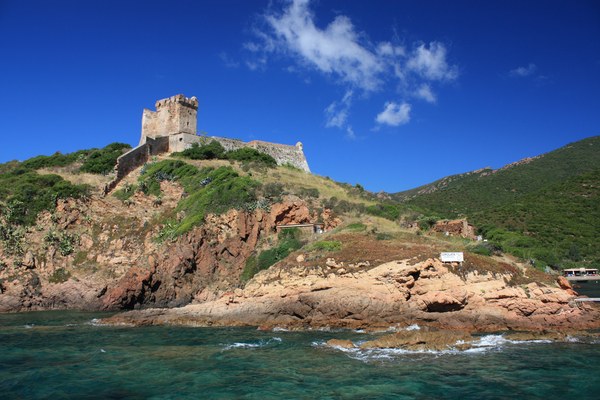
Porto is a small town at the head of the Gulf of Porto, with a square Genoese tower on a red rock, a pebble beach and a harbour where the boat trips depart. The town is not beautiful in itself, but its setting is hard to beat.
As a base, Porto is practical: you have the Calanche to the south, Girolata and Scandola to the north, and the Spelunca gorge and Evisa straight up in the mountains. Two or three nights here give you time for the sea, the road and the mountains.
Girolata and Scandola – the coast you can only see from the sea
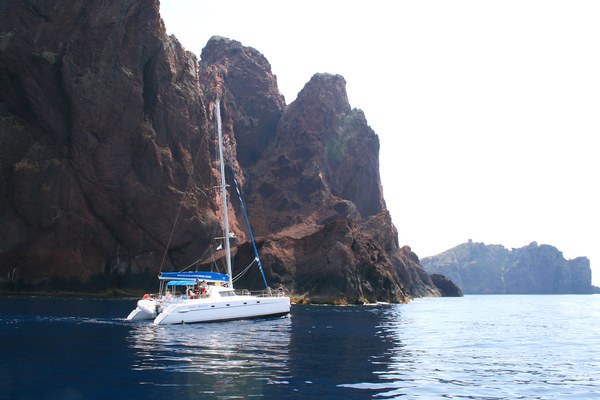
The Scandola nature reserve is a volcanic peninsula of dark red cliffs, caves and columns that drop straight into the sea. It is strictly protected: landing, fishing and diving are prohibited, and there is no road. The only way to experience it is from a boat – and for many visitors the boat trip from Porto is their best memory of all of Corsica.
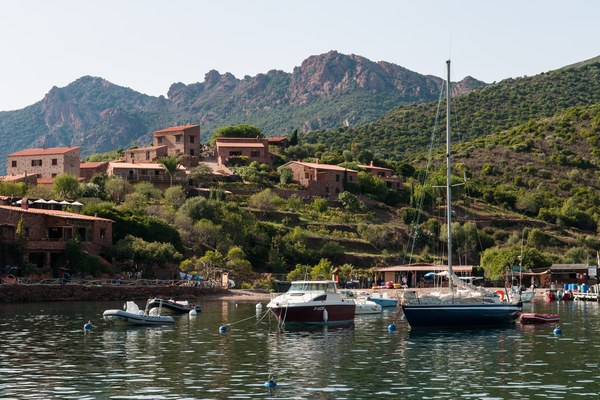
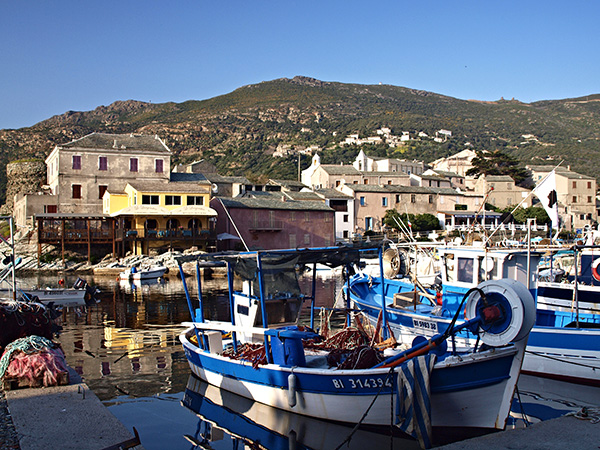
Many of the trips stop at Girolata, a small fishing village with a Genoese fort that has no road access either. You can also walk there: the path from the Col de la Croix on the D81 takes an hour and a half to two hours each way, and the reward is lunch by the water once the day boats have left.
Spelunca, Evisa and Aïtone – the mountains just behind the coast
Behind Porto the land rises steeply towards the mountains. The Spelunca gorge between Ota and Evisa is a deep, red valley with old Genoese stone bridges and a mule track that was once the link between the villages.
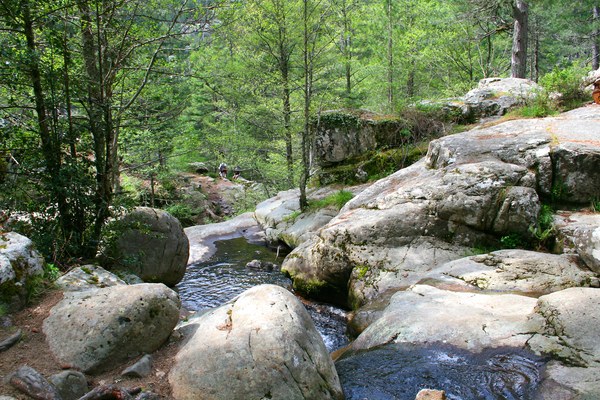
Evisa is known for its chestnuts and sits around 800 metres above sea level, so it is noticeably cooler than on the coast. A little higher up lies the Aïtone forest, with tall Laricio pines and cold natural pools in the river – a good place to cool off on a hot summer’s day.
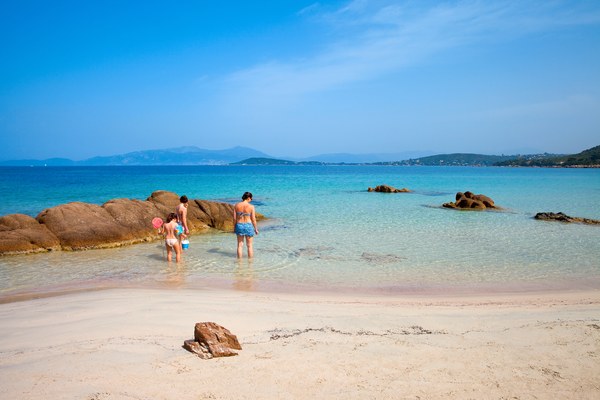
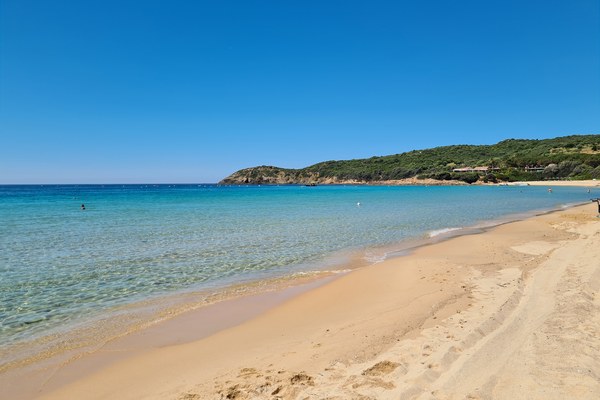
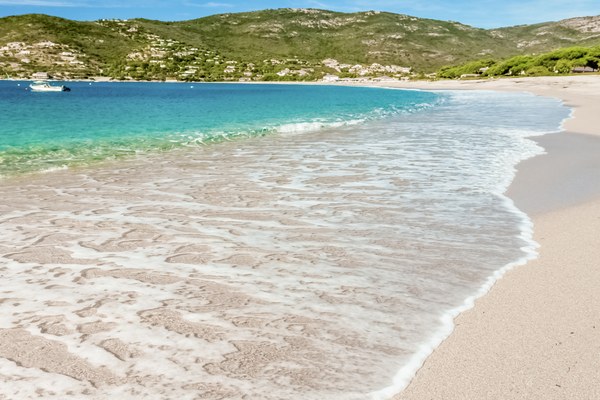
The west coast is better known for its cliffs than its beaches, but it has some genuinely good ones. Plage d'Arone south of Piana is the largest and finest: long and sandy with clear water, at the end of a winding road down from the village.
Near Porto lies the pebble beach of Bussaglia, and below Piana is the little cove of Ficajola, reached by a steep road and a short path. Further south, the Gulf of Sagone and the beaches around Cargèse offer sand and calmer water.
The road along the west coast is one of the most beautiful in Corsica, but it calls for patience. Through the Calanche the D81 is narrow, with low walls, sharp bends and coaches that have to squeeze past each other. North of Porto the road towards Galéria and Calvi becomes narrower still.
Drive early or late, use the passing places to let others by, and allow twice as long as the map suggests. That way the drive becomes part of the holiday rather than an ordeal.
The food on the west coast follows the landscape. By the sea, fresh fish, octopus and lobster are on the menu, while the mountain villages offer charcuterie, brocciu cheese, wild boar and dishes made with chestnut flour from the forests around Evisa.
Ajaccio has its own wine appellation, where the sciaccarellu grape produces light, spicy reds and fine rosés. Combine a long lunch in Girolata or Porto with an evening on the church square in Piana – it is as much a part of the trip as the views.
Plan the rest of your trip
Map
See places and hotels
Open the map to find destinations and hotel suggestions along the west coast.
Boat trip
Scandola and Girolata
Find boat trips from Porto, Calvi and Ajaccio to the reserve and the village with no road.
The route runs from Ajaccio to Porto at a relaxed pace, with a day on the water and a day in the mountains. From Porto you can continue to Calvi and the Balagne or drive back to Ajaccio.
Day 1
Ajaccio, Parata and Cargèse
Driving time: approximately 1–1.5 hours
Start in Ajaccio with the old town and a trip out to Pointe de la Parata. Then drive north along the Gulf of Sagone to Cargèse, where you can swim and have dinner by the harbour.
Ajaccio’s old town
Views of the Sanguinaires
Overnight in Cargèse or Sagone
Day 2
Piana, Arone and the Calanche
Driving time: approximately 1–2 hours
Drive to Piana and take a detour down to Plage d'Arone for a morning swim. In the afternoon, drive through the Calanche to Porto, stopping for short walks among the cliffs.
A swim at Arone
Paths in the Calanche
Sunset in Porto
Day 3
Boat trip to Scandola and Girolata
Driving time: no driving
Leave the car behind. Take the boat from Porto out to the Scandola reserve and on to Girolata, where many trips stop for lunch. The afternoon is free for swimming and a quiet evening by the harbour.
Boat trip from Porto
Lunch in Girolata
Opt for a small boat if you can
Day 4
Spelunca, Evisa and Aïtone
Driving time: approximately 1 hour
Drive up into the mountains behind Porto. Walk part of the path through the Spelunca gorge, have lunch in Evisa and finish with a cold dip in the natural pools of the Aïtone forest before driving on.
The stone bridges of Spelunca
Lunch in Evisa
A swim at Aïtone
Restaurants on the west coast
A selection of places from Ajaccio and Cargèse to Piana, Porto and Girolata.
Three to five days gives you time for the Calanche, a boat trip to Scandola, a day in the mountains and a few relaxed evenings without long stretches of driving.
Where is the best place to stay?
Porto and Piana are the best bases for the Calanche, Scandola and Girolata. Cargèse and Sagone suit those who want a beach, and Ajaccio those who want a town and a short trip to the airport.
Can you go ashore at Scandola?
No. Scandola is a strictly protected nature reserve where landing, fishing and diving are prohibited, and anchoring is heavily restricted. The boat trips run along the cliffs. Many trips stop instead at nearby Girolata.
Is the road through the Calanche difficult?
It is narrow and winding, with low walls and oncoming coaches, but it is not dangerous if you drive slowly. Avoid the middle of the day in the high season.
When is the best time to go?
May, June and September offer pleasant warmth and less traffic. Boat trips to Scandola usually run from spring until the end of October.