html Perpignan travel guide | The Castillet, the palace and the Côte Vermeille | Frankrike.no Skip to content
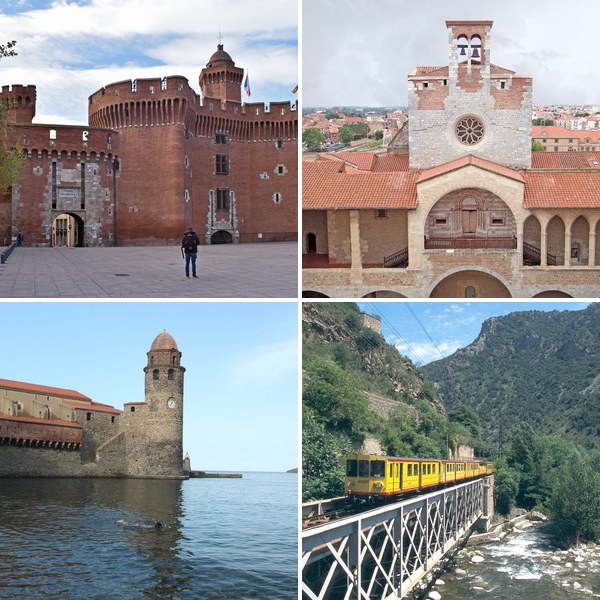
Montage of Le Castillet, the Palais des Rois de Majorque, the church of Notre-Dame-des-Anges in Collioure and the Yellow Train on a bridge in the Têt valleyPyrénées-Orientales · Catalan city between mountains and sea
France travel guide

Perpignan

Perpignan is the prefecture of the Pyrénées-Orientales, the Catalan part of Occitanie, with the Le Castillet city gate from 1368 and the palace where the Kings of Majorca held court from 1276, when the city was the capital of the kingdom.

The old town has the Cathédrale Saint-Jean-Baptiste with the Campo Santo cloister cemetery, the Rigaud museum and the Loge de Mer from 1397, and the food market on the Place de la République is open Tuesday–Sunday in the mornings.

The beach at Canet is around 11 kilometres east. By regional train you reach Collioure in around 20 minutes and Villefranche-de-Conflent, where the Yellow Train (Train Jaune) starts, in around 50 minutes.

The Castillet and the palaceThe cathedral and the Campo SantoCollioure and the Yellow Train
Best forCatalan culture, a medieval city, museums, markets, a Mediterranean beach, train journeys and day trips along the coast and up into the mountains
Ideal forCouples, adults, families, culture enthusiasts, train travellers and anyone on a tour of Occitanie
Easy to exploreThe old town, the Castillet, the cathedral and the markets on foot; regional trains to Collioure and Villefranche; liO buses for €2 on many routes
Excellent base forCollioure and the Côte Vermeille, Villefranche-de-Conflent and the Yellow Train, Céret, Salses and the beaches at Canet
Highlights

Discover Perpignan

Climb the 142 steps of the Castillet, see the palace of the Kings of Majorca, the cathedral with the Campo Santo, the Rigaud museum and the Loge de Mer, and head out to the beach at Canet. You explore the old town on foot.

Suggested itineraries

Perpignan in 1, 3 or 5 days

Choose how long you are staying, and combine the old town and the museums with the coast, the mountains and the Yellow Train.

A classic day in Perpignan

One day is enough for the market, the cathedral, the Castillet and the palace, all on foot.

MorningStart at the food market on the Place de la République, which is open Tuesday–Sunday from 7.30am to 1pm, and walk on to the cathedral and the Campo Santo.
Late morningClimb the 142 steps of the Castillet. From October to May the museum opens at 11am and is closed on Mondays, and in summer it opens at 10.30am every day.
AfternoonHave lunch in the old town, and walk to the Palais des Rois de Majorque, where one of the guided tours starts at 3pm.
EveningCross the Place de la Loge in the evening, and have dinner at Manat or Lazare Escarguel, which both have a Bib Gourmand. Manat is closed on Tuesdays and Wednesdays.
Choose the right area

Where should you stay in Perpignan?

The choice is between staying in the centre by the Castillet, by the station, at a spa hotel south of the centre, in Collioure or in Banyuls-sur-Mer. It decides the walking distance, the train connections and the price.

In the heart of the city

The centre and the old town

The 4-star Mercure Perpignan Centre is on the Cours Palmarole just north of the Castillet, and the 4-star Dali Hôtel is on the Boulevard Jean Bourrat, within walking distance of the old town.

The shortest walk to the Castillet, the cathedral and the markets, and everything in the old town can be reached on foot.
Trains and day trips

By the station

The 4-star Kyriad Prestige is on the Boulevard Saint-Assiscle by the station, and the 3-star Hôtel PB – Paris-Barcelone is right opposite, around 1.3 kilometres from the centre.

Suits anyone who wants to take the train to Collioure and Villefranche in the morning.
Spa and park

South of the centre

The 4-star Villa Duflot Hôtel & Spa is in a park by the Porte d'Espagne, around three kilometres south of the centre.

Quiet and with a spa, but a car is useful for getting into the old town.
On the Côte Vermeille

Collioure

Maison Nova is the only five-star hotel in Collioure, and Les Roches Brunes and La Casa Païral have 4 stars. Collioure is around 25 kilometres south-east of Perpignan.

Suits anyone who wants to stay by the sea and take the train into Perpignan, around 20 minutes.
The wine town on the coast

Banyuls-sur-Mer

The 4-star Villa Camille Hotel & Spa is in Banyuls-sur-Mer, around 31 kilometres south-east of Perpignan, near the wine cellars and the marine reserve.

Suits anyone who wants to combine wine and snorkelling, and the train runs along the coast to Perpignan.
Selected places to stay

Places to stay in and around Perpignan

Here are some of our selected places to stay in and around Perpignan, from 3 to 5 stars, in the centre, by the station and along the Côte Vermeille. Compare walking distance to the Castillet and the railway station.

Maison Nova – Boutique Hôtel & Spa in Collioure★★★★★
Collioure

Maison Nova – Boutique Hôtel & Spa

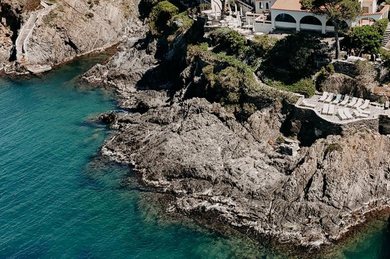
Collioure's only five-star hotel – small, with a spa and a pool.

Villa Duflot Hôtel & Spa in Perpignan★★★★
South of the centre

Villa Duflot Hôtel & Spa

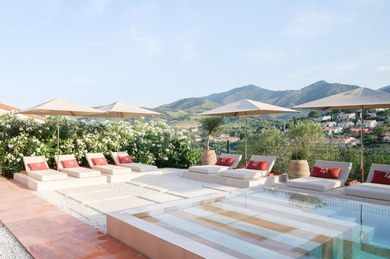
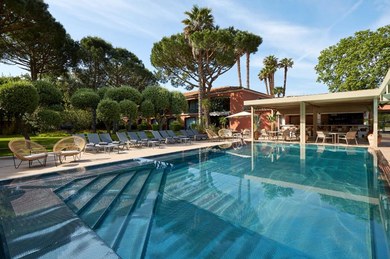
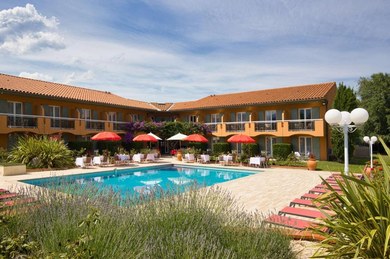
A four-star spa hotel with a pool in parkland south of the centre.

Dali Hôtel in Perpignan★★★★
East of the old town

Dali Hôtel

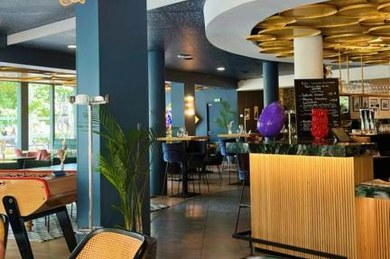
A four-star hotel with a restaurant, within walking distance of the Castillet.

Mercure Perpignan Centre in Perpignan★★★★
City centre

Mercure Perpignan Centre

A four-star chain hotel in the heart of the centre, a couple of minutes from the Castillet.

The map shows our selected hotels in Perpignan and along the coast to the south. Click a marker for a photo and more information.
Camping and motorhomes

Camping near Perpignan

The coast between Le Barcarès and Argelès-sur-Mer has over 130 classified campsites within 35 kilometres of Perpignan. In the city itself is the 4-star Roussillon Camping Catalan.

Mountains, a marine reserve and a railway

The landscape around Perpignan

The mountain to the west

Canigó

From Perpignan you can see the Canigó to the west. The flame in the Castillet is carried up to the summit every year and lights the Midsummer bonfires. For cycling routes, see our guide to cycling in France.

Marine reserve since 1974

Cerbère-Banyuls

Cerbère-Banyuls was France’s first purely marine reserve. It covers 650 hectares along 6.5 kilometres of coast, and in July and August you can snorkel for free on the underwater trail at Peyrefite.

The Têt valley and the Conflent

The Yellow Train

The Yellow Train climbs to Bolquère-Eyne at 1,593 metres, France’s highest metre-gauge line. Read more about the mountains in our guide to the Pyrenees, where Perpignan is also included.

Car hire from Perpignan Airport

A car for your day trips

Perpignan Airport (PGF) is about 7 km from the centre as the crow flies. With your own car you can more easily reach Céret, the Conflent and the mountain villages.

Coast, mountains and fortresses

Four good day trips from Perpignan

Perpignan lies between the Mediterranean and the Pyrenees. To the south-east is Collioure on the Côte Vermeille, to the west the Têt valley climbs to Villefranche-de-Conflent, to the south-west is Céret, and to the north stands the fortress at Salses.

Continue your journey

More destinations from Perpignan

Perpignan fits naturally into a tour of Occitanie, with Carcassonne and Toulouse to the north-west and Montpellier to the north-east.

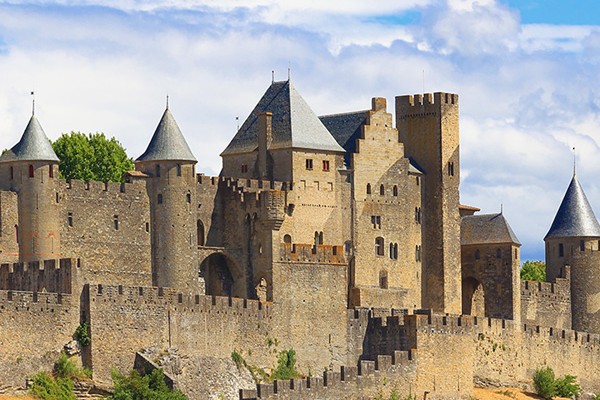
The towers of the Château Comtal in Carcassonne
The medieval city in the Aude

Carcassonne

Combine Perpignan with the walls and towers of La Cité in Carcassonne, around 71 kilometres north-west as the crow flies.

Open the Carcassonne guide →
The Place de la Comédie in Montpellier with the opera house, outdoor tables and people on the square
The city of the Hérault

Montpellier

Travel on north-east to the Place de la Comédie and the old town of Montpellier, around 129 kilometres away as the crow flies.

Open the Montpellier guide →
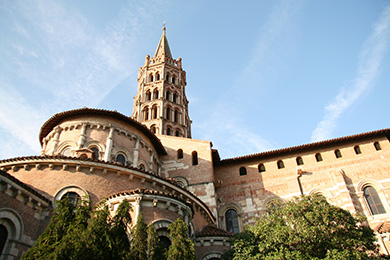
The Basilica of Saint-Sernin in Toulouse with its octagonal tower
The capital of Occitanie

Toulouse

Continue to the Basilica of Saint-Sernin and the centre of Toulouse, around 155 kilometres north-west of Perpignan as the crow flies.

Open the Toulouse guide →
Read more

Read our inspiring articles about France

Find inspiration in travel guides, touring itineraries and personal tips from across France. Discover cities, villages, food and wine experiences, nature and new destinations.

City gate · From 1368

Le Castillet and the Casa Pairal

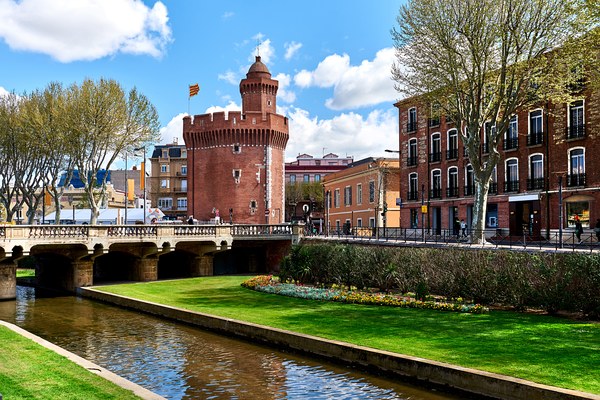
Le Castillet with the red-brick gate tower, the bridge over the La Basse canal and the flower beds in front
Image from Frankrike.no.

Le Castillet is the red-brick city gate in the middle of Perpignan, built from 1368 in the Aragonese period in brick and marble from Baixas. Under Louis XI it was given the terrace and the brick tower with its dome.

In the seventeenth and eighteenth centuries the Castillet was a prison. The Porte Notre-Dame next to it dates from the same period as the city gate.

Today the tower houses the Casa Pairal, the museum of the city’s history and Catalan traditions. The exhibition on giants, correfocs and capgrossos runs until June 2027.

142 steps lead up to the top, with views all around. The flame from the Canigó is kept here all year, and it lights the Midsummer bonfires, Sant Joan.

From 1 October 2026 to 31 May 2027 the museum is open Tuesday–Sunday from 11am to 5.30pm and closed on Mondays. From 1 June to 30 September it is open every day from 10.30am to 6.30pm.

Tickets cost €2, and under-26s go free. On the first Sunday of the month it is free for everyone. The address is the Place de Verdun.

City gate from 1368142 steps€2, free under 26Closed Mondays in winter
See the Castillet at the tourist office →
Royal palace · Built from 1276

Palais des Rois de Majorque

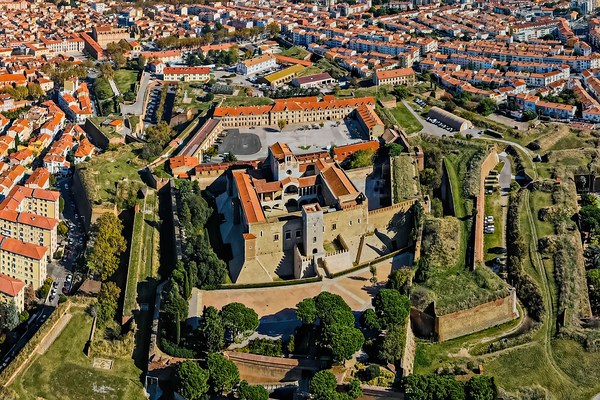
The Palais des Rois de Majorque seen from the air with the courtyard, the chapel tower and the ramparts around it
Image from Frankrike.no.

The palace was built from 1276 by King James II of Majorca, when Perpignan was the capital of the Kingdom of Majorca. The court lived here until the kingdom was absorbed into Aragon in 1344.

The article on Collioure and the Côte Vermeille tells you about the Château Royal in Collioure, where the court had its summer residence.

The palace was later a fortress and garrison until the twentieth century. It became a monument historique in 1913, was restored in 1943–1960 and has been owned by the department since 1958.

See the esplanade and the medieval gardens, the barbican, the courtyard of honour and the ‘salle basse’. Guided tours run at 11am and 3pm.

Tickets cost €9, reduced €7, and under-25s go free. From October to June it is free for everyone on the first Sunday of the month.

The daily opening hours have not been published, and the palace is closed on 15–16 December and 25 December 2026, so check before you go. The entrance is on the Rue des Archers.

Built from 1276€9, free under 25Guided tours 11am and 3pmCheck the opening times
See the palace on the department’s website →
Cathedral · Begun 1324

The Cathédrale Saint-Jean-Baptiste and the Campo Santo

The choir of the Cathédrale Saint-Jean-Baptiste with the high altar, the tall stained-glass windows and the patterned vault
Image from Frankrike.no.

The cathedral was begun in 1324 by Sancho of Majorca. Work stopped after the fall of the kingdom in 1344, the Black Death and a lack of money, and the church was completed in 1509. It only became a cathedral in 1602.

The bell tower with its wrought-iron campanile dates from 1737–1743, and the statue of John the Baptist above the portal is from 1952.

Inside are an eleventh-century marble font and the tomb of King Sancho, in the passage beneath the organ. The neo-Gothic windows date from 1847–1867.

The Campo Santo next door is the Saint-Jean cloister cemetery from the first third of the fourteenth century, which the tourist office calls unique in Europe. The Chapelle de la Funeraria has stained glass by Shirley Jaffe.

Every summer since 2003 there has been a carillon festival here.

The tourist office does not give opening hours or prices for the cathedral and the Campo Santo, so check before you go.

Begun 1324Cathedral since 1602Campo SantoOn foot
See the cathedral at the tourist office →
Art museum · Reopened 2017

Musée d'art Hyacinthe Rigaud

The entrance to the Musée d'art Hyacinthe Rigaud with the curved stone façade and the open gate into the courtyard
Photo: Ymblanter, CC BY-SA 4.0

Hyacinthe Rigaud was born in Perpignan on 18 July 1659 and became portrait painter to Louis XIV and the royal family.

The museum is in two town houses, the hôtel de Lazerme and the hôtel de Mailly, on the Rue Mailly, and reopened in 2017 after several years of renovation.

Here hangs the self-portrait ‘Au Turban’ from 1698, and the Retable de la Trinité shows Catalan Gothic art.

The modern collection has works by Aristide Maillol, Raoul Dufy, Gustave Violet and Louis Bausil.

Every year there is a major summer exhibition that runs until November. The museum is currently showing Joan Miró, Etienne Terrus and a loan from Dalí, among others.

We have not been able to confirm the opening hours and prices, so check the museum’s website before you go.

Rigaud born 1659‘Au Turban’ from 1698Maillol and DufyCheck the opening times
See the museum’s website →
Merchants’ exchange · From 1397

The Loge de Mer and the Place de la Loge

The Loge de Mer in pale stone with pointed-arch windows, a roof balustrade and the weathervane shaped like a ship
Photo: Ymblanter, CC BY-SA 4.0

The Loge de Mer was built in 1397 as a merchants’ exchange and the seat of the maritime consulate, the Consulat de Mer, which ruled on cases concerning trade by sea.

The Gothic building is a monument historique and forms an ensemble with the town hall next door, the Place de la Loge and the statue on the square.

The department’s tourist office states that the Loge de Mer is temporarily closed, and that admission is free when it is open.

The Place de la Loge is in the middle of the old town, around 130 metres south of the Castillet.

The Perpignan Centre du Monde tourist office is on the Place François Arago, a few minutes’ walk away.

See the Gothic façade with its pointed-arch windows from the square, even when the building is closed.

From 1397Monument historiqueTemporarily closedOn foot
See the Loge de Mer →
Beach · Around 11 km east

Canet-en-Roussillon and the beach

Canet-Plage from the air with the marina, the long sandy beach and the Albères mountains in the distance
Photo: Photographe anonyme pour Ville de Canet-en-Roussillon, CC BY-SA 4.0

Canet-Plage is on the Mediterranean, around 11 kilometres east of the centre of Perpignan as the crow flies.

Sankéo is the bus network of Perpignan Méditerranée, so check the route and departures to Canet there.

The coast between Le Barcarès and Argelès-sur-Mer has over 130 classified campsites within 35 kilometres of Perpignan, and the 5-star Le Brasilia is at Canet-Plage.

The tourist office in Canet is called Canet Tourisme.

From the marina you look south towards the Albères mountains on the border with Spain.

If you would rather have cliffs and small coves than a long sandy beach, the Côte Vermeille is further south.

Approx. 11 km eastSandy beachThe MediterraneanHalf day
See Canet at the tourist office →
Perpignan · One star

La Galinette

The Place de la République in Perpignan with colourful house fronts and outdoor tables under parasols
Photo: Jorge Franganillo, CC BY 3.0

La Galinette is on the Rue Jean-Payra in Perpignan and holds one star in the Michelin Guide.

The chef Christophe Comes grows vegetables, citrus fruit and olives on two hectares of organic land, and the garden shapes the menu.

Michelin describes creative cooking with local olive oil, where the food waste is composted. The price level is three euro signs.

The restaurant is open Wednesday–Saturday, with lunch from 12pm to 2pm and dinner from 7.30pm to 9.30pm, and is closed Sunday–Tuesday.

The Rue Jean-Payra is around half a kilometre from the Loge de Mer, within walking distance of the Castillet.

Book ahead, especially for dinner at weekends.

One starRue Jean-PayraCreative cookingClosed Sun–Tue
See La Galinette →
Perpignan · Bib Gourmand

Manat

The Campo Santo with the Gothic arched niches and the south side of the cathedral behind
Photo: Cayambe, CC BY-SA 3.0

Manat is on the Rue Cité-Bartissol near the cathedral in Perpignan and holds a Bib Gourmand in the Michelin Guide.

The Bib Gourmand is Michelin’s mark for restaurants with particularly good value for money, and the price level is two euro signs.

The Franco-Japanese couple Yuka and Marc Meya make small dishes for sharing, where Catalan produce meets Japanese flavours and techniques.

The restaurant is small and in an old stone house with an open kitchen, and it has a large sake list.

Manat serves dinner only, from 7pm to 10pm on Mondays and Thursday–Sunday, and is closed on Tuesdays and Wednesdays.

Book ahead, especially at weekends.

Bib GourmandBy the cathedralCatalan and JapaneseDinner only
See Manat →
Perpignan · Bib Gourmand

Lazare Escarguel

The La Basse canal in Perpignan with rows of plane trees and outdoor tables along the quays
Photo: Fabricio Cardenas, CC BY-SA 4.0

Lazare Escarguel is on the Rue Lazare-Escarguel near the Castillet and holds a Bib Gourmand in the Michelin Guide.

The restaurant is run by the young couple Charles and Élise Lagrange, and the price level is two euro signs.

Michelin describes discreet, modern cooking with fresh seasonal food and a short list of regional wines by the glass.

The restaurant has a terrace in a patio.

It is open Tuesday–Saturday, with lunch from 12pm to 2pm and dinner from 7.30pm, and is closed on Sundays and Mondays.

Book ahead, especially at weekends.

Bib GourmandBy the CastilletModern cookingClosed Sun–Mon
See Lazare Escarguel →
Perpignan · Bib Gourmand

Le Garriane

The station in Perpignan with the clock and the Dalí sculpture on the roof
Photo: Monster1000, CC BY-SA 3.0

Le Garriane is on the Rue Valette near the railway station in Perpignan and holds a Bib Gourmand in the Michelin Guide.

The name combines the first names of the founders, and the Australian chef Garry cooks seasonal dishes with international touches.

The menu has vegetarian and vegan options, and the price level is two euro signs.

In the morning and afternoon it is also a café, and lunch is served from 12pm to 1.45pm.

The restaurant is closed on Sundays. The Rue Valette is around 1.2 kilometres west of the Castillet.

It is a good choice before or after a train trip to Collioure or Villefranche.

Bib GourmandBy the stationVegetarian optionsClosed Sundays
See Le Garriane →
Collioure · One star

La Balette

The Anse de la Balette in Collioure with sailing boats and Fort Saint-Elme on the hill, seen from the Château Royal
Photo: Damusmedia, CC BY-SA 4.0

La Balette is at the hotel Le Relais des Trois Mas on the Route de Port-Vendres in Collioure and holds one star in the Michelin Guide.

The chef Laurent Lemal makes original dishes from very local produce, and the desserts are made by Julie.

Michelin highlights the red onions from Toulouges and the view over the bay at Collioure. The wine list features local winegrowers, and the price level is four euro signs.

Collioure is around 25 kilometres south-east of Perpignan as the crow flies, around 20 minutes by train.

The restaurant is open Wednesday–Sunday and closed on Mondays and Tuesdays.

Book well ahead, and combine dinner with a day in Collioure.

One starCollioureCreative cookingAbout 25 km from Perpignan
See La Balette →
Céret · One star

Fario

The Porte de France in the old town of Céret with the round gate tower and a plane tree in front
Photo: Damusmedia, CC BY-SA 4.0

Fario is on the Rue Saint-Ferréol in Céret and holds one star in the Michelin Guide.

The chef Kevin de Porre previously worked at Contraste in Paris and has returned to his home area.

He serves a surprise menu with seafood and vegetables, without ingredients that are not local, such as chocolate and coffee. The price level is four euro signs.

Céret is around 27 kilometres south-west of Perpignan as the crow flies.

Fario serves dinner Tuesday–Saturday and lunch Wednesday–Saturday, and is closed on Sundays and Mondays.

Book ahead, and combine dinner with the art museum in Céret.

One starCéretSurprise menuAbout 27 km from Perpignan
See Fario →
Coastal town · Côte Vermeille

Collioure

Collioure seen from the sea with the Château Royal on the left, the houses and the boats in the bay
Image from Frankrike.no.

Collioure is on the Côte Vermeille, around 25 kilometres south-east of Perpignan as the crow flies, and the train there takes around 20 minutes.

The Château Royal was the summer residence of the court of the Kings of Majorca, and Vauban built the outer wall. Tickets cost €9, and in July and August the castle is open from 9.30am to 6.30pm.

Matisse came to Collioure in the spring of 1905 and Derain in the summer, and their paintings gave Fauvism its name at the Salon d'Automne that autumn.

The church of Notre-Dame-des-Anges is closed for restoration, Fort Saint-Elme is private and has been closed since 2023, and the art museum is closed until 2028.

There is no free parking in Collioure apart from the blue zone, with a maximum of one hour, so consider taking the train or liO bus 540.

From May to September a free shuttle runs from the Cap Dourats park-and-ride.

Approx. 20 min by trainChâteau Royal €9Fauvism 1905Full day
Read the article →
Fortified town · World Heritage

Villefranche-de-Conflent and the Yellow Train

The ramparts of Villefranche-de-Conflent with the covered wall walk, a stone bridge over the river and Fort Libéria on the hillside above
Photo: H. Zell, CC BY-SA 3.0

Villefranche-de-Conflent is in the Conflent valley, around 45 kilometres west of Perpignan as the crow flies. The town was founded in 1092, and the regional train there takes around 50 minutes.

Vauban remodelled the town and Fort Libéria in 1669–1681, and the ramparts, the fort and the Cova Bastera cave have been on the UNESCO World Heritage List since 2008.

The wall walks are open every day from February to December and cost €5.50 in 2027. The steps up to Fort Libéria are called ‘the 1,000 steps’, but there are 734.

The Yellow Train (Train Jaune) runs from Villefranche-Vernet-les-Bains to Latour-de-Carol, around 63 kilometres in around 3 hours, and reaches 1,593 metres at Bolquère-Eyne, France’s highest metre-gauge line.

The train usually closes for periods in spring and autumn, and the dates for 2027 have not been announced, so check before you go. The open carriages only run in summer.

Book well ahead in summer. From Latour-de-Carol there are trains on to Toulouse and Barcelona.

World Heritage 2008734 stepsApprox. 3 hrs by trainCheck before you go
Read the article →
Art town · Cherries

Céret

The Pont du Diable in Céret with the great stone arch over the river Tech and the hills behind
Photo: Hawobo, CC BY-SA 3.0

Céret is around 27 kilometres south-west of Perpignan as the crow flies and calls itself the cherry capital. The first cherries are sent to the President of the Republic, and the town celebrates them at the cherry festival in May.

If you want to go further up into the mountains, read our article on the Yellow Train and Villefranche-de-Conflent, another day trip from Perpignan.

Picasso, Juan Gris, Léger and Chaïm Soutine stayed in Céret, and the tourist office calls the town a beacon of Cubism.

The Musée d'art moderne de Céret has works by Matisse, Picasso, Chagall and Miró. Tickets cost €10, and those aged 18 and under go free.

From September to June the museum is open Tuesday–Sunday from 10am to 6pm, and in July and August every day from 10am to 7pm. The Picabia exhibition runs until 29 November 2026.

The museum has announced that the ground floor will close temporarily, without giving dates, so check before you go.

Cherries in MayMuseum €10Matisse and PicassoFull day
See Céret at the tourist office →
Fortress · Built 1497–1503

Forteresse de Salses

The Forteresse de Salses with its low, round bastions of reddish-brown brick and stone
Photo: Krzysztof Golik, CC BY-SA 4.0

The Forteresse de Salses is in Salses-le-Château, around 16 kilometres north of Perpignan as the crow flies. It was built in 1497–1503 for Ferdinand of Aragon and Isabella of Castile.

The architect was Ramiro López. The fortress changed hands several times in 1639–1642, and after the Treaty of the Pyrenees in 1659 the border was moved around 60 kilometres south. Vauban wanted to demolish it, but it was too expensive.

From October to March it is open from 10am to 12.45pm and 2pm to 5.15pm, and from April to September from 10am to 6.30pm. It is closed on 1 January, 1 May, 1 November, 11 November and 25 December.

Tickets cost €9, and under-18s go free. The same applies to 18–25-year-olds from the EU or with permanent residence there.

If you want to see more fortresses, read our article on the Yellow Train and Villefranche-de-Conflent, where Vauban built Fort Libéria.

Parking by the fortress is prohibited, but the commune has a car park. You can also take the train to Salses-le-Château or bus 503 and walk around ten minutes.

Built 1497–1503€9, free under 18Train or bus 503Half day
See opening times and tickets →