
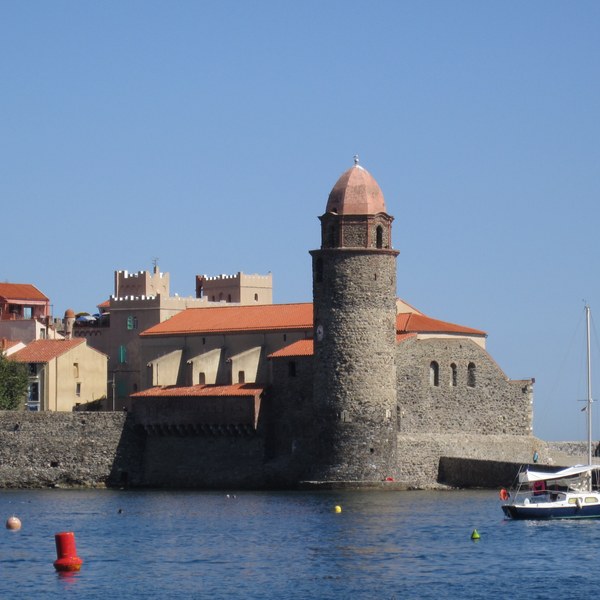
The Côte Vermeille is the coast from Argelès-sur-Mer to the Spanish border. The train from Perpignan stops at Argelès-sur-Mer, Collioure, Port-Vendres, Banyuls-sur-Mer and Cerbère, and in Collioure the station is a stone’s throw from the centre. The tourist office in Collioure has the website tourisme-collioure.com.
Château Royal – the castle by the harbour
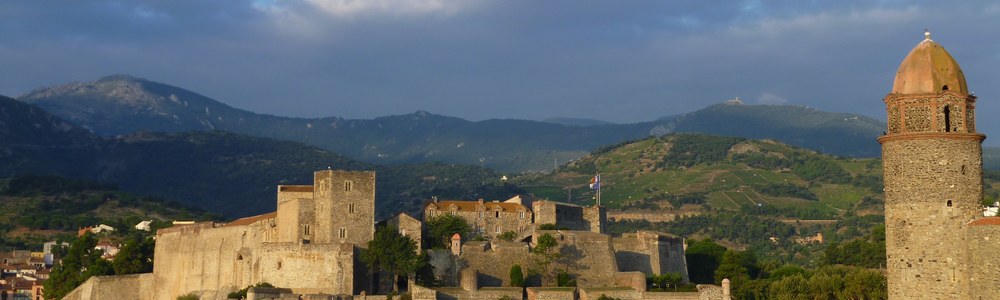
Château Royal was begun by the counts of Roussillon and the kings of Aragon and extended over around six hundred years, under three nationalities. From 1276 to 1344 it was the summer residence of the court of the kings of Majorca, who had Perpignan as their capital.
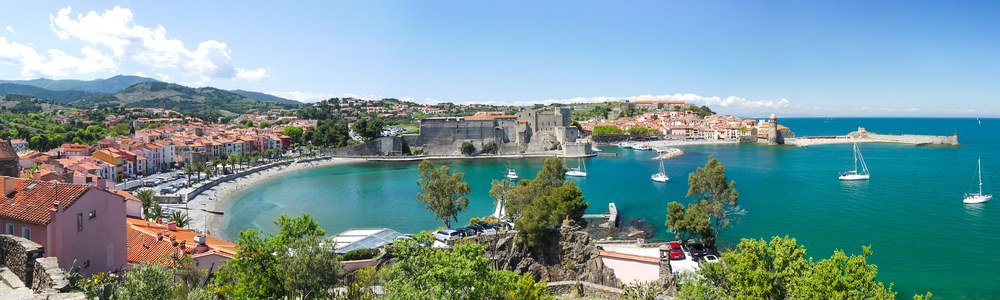
- 17th century: Vauban built the outer ring wall, demolished the medieval town inside the walls and laid out a glacis – today the Le Glacis car park.
- 1922: the castle became a monument historique.
- 1939: the castle became a prison, and the first prisoners were Spanish Republican refugees.
- 1952: the department became the owner, and still is.
- Opening hours: 10am–5pm from 1 November 2026 to 31 March 2027, 10am–6pm in April–June and September–October 2027 and 9.30am–6.30pm in July and August 2027. Last entry is 45 minutes before closing.
- Closed: 1 January, 1 May, 15–16 August and 25 December.
- Ticket: 9 euros, 7 euros with the Pass Découvertes. Guided tours at 10.30am and 2.30pm.
- Address: Quai de l’Amirauté. The liO 540 bus stops at “Le glacis”.
Notre-Dame-des-Anges and the bell tower
The first church in Collioure, Sainte-Marie, is mentioned in 1023 and stood inside Château Royal. It was demolished after Vauban’s rebuilding in 1672. The foundation stone of Notre-Dame-des-Anges was laid by the water on 18 July 1684, and the work lasted until 1690.
- The bell tower (1693): the church took over the old lighthouse. The base is from the 13th century, when the tower was a harbour light and watchtower, and later it was a prison.
- The dome: the Tuscan dome on top was added in 1810.
- Inside: the high altar was made by Joseph Sunyer, who began on 6 October 1698, and the church has eight chapels.
Fort Saint-Elme and Fort Miradou
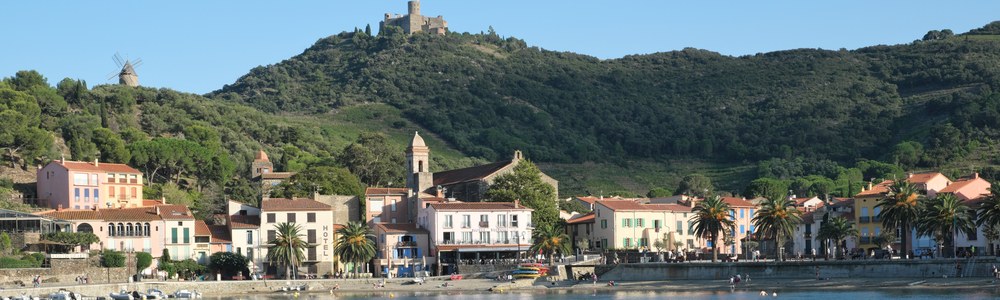
On the hill south-east of the town stands Fort Saint-Elme. There was a watchtower here as early as the 9th century, and in 1538 the site was strengthened by the Italian architect Benedetto de Ravenne under Charles V, as a five-pointed star. Vauban later added a counterscarp and a ditch.
- 1903: the fort was demilitarised.
- 1927: listed as a monument historique on 2 April.
- 1950: restored after the damage of the Second World War.
- Since 2023: private and closed to visitors while it is being renovated.
You can walk up and see the fort from outside. The tourist office reckons on around 40 minutes from the centre, via the Parc Pams, the Gloriette and the windmill. Fort Miradou in the town is a military base and is also closed to the public.
Moulin de Collioure – the windmill and the olive oil
The windmill above the town dates from the 14th century, and the tourist office calls it the oldest windmill in the region. The permit to operate it is dated 11 February 1337. Around 1900 it was a ruin, and the municipality finished restoring it in June 2001.
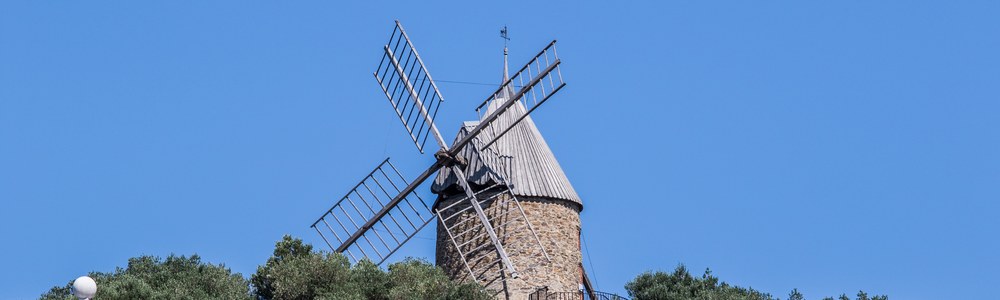
Today the mill makes olive oil from Collioure olives, pressed in Millas. There are tours on Wednesdays and Sundays from 10am to 12pm from April to September.
Matisse, Derain and Fauvism in 1905
Henri Matisse came to Collioure in the spring of 1905 on the advice of Paul Signac, and André Derain followed in the summer. In under three months Matisse produced over 15 canvases, 40 watercolours and around 100 drawings, and Derain 30 canvases, 20 drawings and around 50 sketches – over 100 works in all.
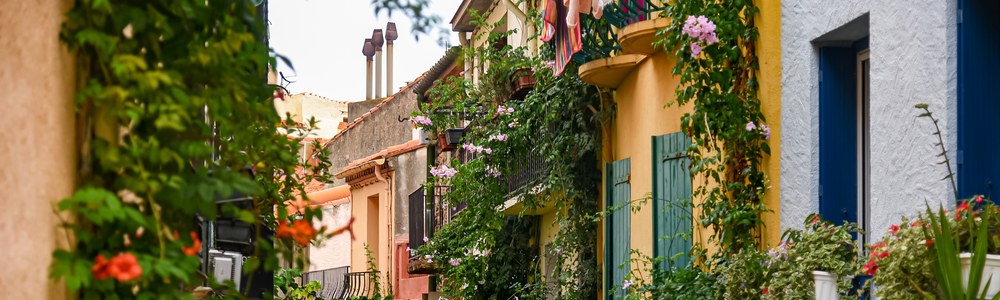
In the autumn of 1905, at the Salon d’Automne in Paris, the critic Louis Vauxcelles used the expression “Donatello au milieu des fauves” – Donatello among the wild beasts. From “fauves” came the name Fauvism. You will find more painters and museums in Great artists in France.
The Chemin du Fauvisme and the art museum
The Chemin du Fauvisme is a walk through Collioure past reproductions of the paintings by Matisse and Derain, set up where the pictures were painted. The tourist office and the “Vitrine sur le fauvisme” sell a booklet for 6 euros, and the app “Collioure le voyage commence” shows the way. From April to All Saints’ Day there are also guided tours.
The Musée d’art moderne de Collioure is in the Villa Pams, 4 route de Port-Vendres. The villa was originally called “Château Tiné”, Senator Gaston Pams bought it in 1947, and the municipality took it over in 1981. The museum opened on 20 September 1985, and the collection was started by the Russian painter Jean Peské from 1934.
The anchovies
Collioure is known for its anchovies, and two salting houses are still at work in the town. “Anchois de Collioure” was given protected geographical indication (IGP) status in 2004.
- Anchois Roque: Alphonse Roque settled in Collioure as a cooper and salter in 1870, and his son Léon founded the family business in 1922. Shop and tours at 17 route d’Argelès.
- Anchois Desclaux: has made anchovies in Collioure since 1903 and has a small eco-museum with free tours and tastings every day from 9am to 12pm and 2pm to 6pm, at the Carrefour du Christ (D114).
The beaches and the coves
Collioure has three beaches with lifeguards in summer and several small rocky coves. In 2025 there were lifeguards from 10.30am to 5.30pm from 29 May to 30 June and 1–22 September, and from 10.30am to 6.30pm in July and August.
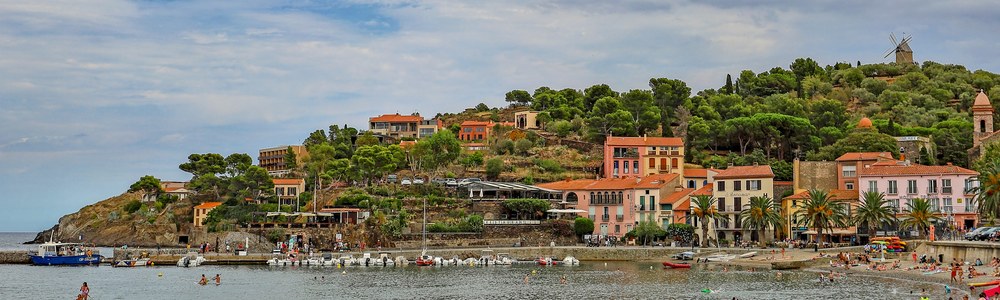
- Saint-Vincent: sand and pebbles, behind the church. Lifeguards.
- Boramar: between the church and the castle, sheltered from the wind. Lifeguards.
- Faubourg (Port d’Avall): sand. Lifeguards.
- L’Ouille: sand and pebbles towards Le Racou, with a footpath.
- Crique de la Balette: rocks, below the starred restaurant La Balette.
- Les Batteries and Les Roches Bleues: rocks, towards Port-Vendres.
You will find more beaches along the coast in The best beaches in France.
Parking, the summer bus and motorhomes
Collioure has no free parking apart from the blue zone in the centre, where you can park free for up to one hour – but not on Wednesday and Sunday mornings, when there is a market. Everything else is paid:
- Barrier car parks, open 24 hours: Glacis (Place du 8 mai), Château d’eau and Cap Dourats (both route de Madeloc) and Stade (route du Pla de las Fourques).
- Street parking with a ticket: paid from 8am to midnight, maximum 6 hours.
- Cap Dourats: the park-and-ride car park, open all year, around 20 minutes’ walk from the centre.
- Free bus (navette): between Cap Dourats and rue du Miradou, May–September only. In May it runs only at weekends, and from 4 July to 31 August it runs every day from 10am to 11.30pm. From 13 September to 30 April it does not run, and dogs are not allowed.
The dates for the bus are from the last season the tourist office published, without a year – check before you go. For motorhomes there are 20 spaces at Cap Dourats, by the tennis courts, all year: 20 euros per 24 hours from 1 April to 30 October and 15 euros from 1 November to 31 March. The spaces cannot be reserved.
The Côte Vermeille – Port-Vendres, Paulilles and Cerbère
From Collioure the train continues south to Port-Vendres, Banyuls-sur-Mer and Cerbère. The distances below are as the crow flies from Perpignan.
- Port-Vendres (26 kilometres): the only deep-water port in the department, with pleasure boats, fishing, trade and cruise ships. The Mémorial SOLDIS, inaugurated in 2022, commemorates 652 French soldiers who disappeared in Algeria. The tourist information office is at 1 quai François Joly.
- Paulilles: the bay belongs to Port-Vendres and lies on the road towards Banyuls. By the beach lies Les Clos de Paulilles, a 90-hectare wine estate run by the Cazes family, with a bistro recommended by Michelin.
- Banyuls-sur-Mer (31 kilometres): the wine, Maillol and the marine reserve – see below.
- Cerbère (36 kilometres): the border municipality facing Portbou in Spain and the terminus for the train from Perpignan.
The long-distance path GR10 crosses the Pyrenees from Hendaye on the Atlantic and ends in Banyuls-sur-Mer on the Mediterranean. We have not found an official source for the coast path on towards Spain. More about the mountains in The French Pyrenees.
Banyuls – the wine and Maillol
Banyuls is a vin doux naturel, and Banyuls AOC was recognised by decree on 6 August 1936. Banyuls Grand Cru followed in 1962 and Collioure AOC in 1971. The vineyards lie in Banyuls, Cerbère, Collioure and Port-Vendres.
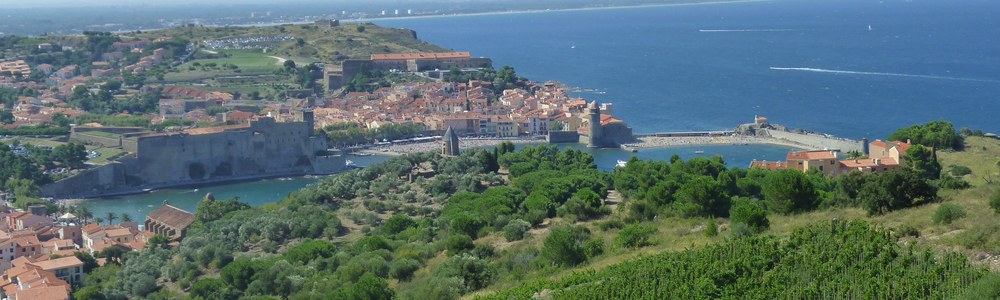
- Terres des Templiers: the large cellar, formerly the Cellier des Templiers, at the Grande Cave, 8 route du Mas Reig in Banyuls. Tours and tastings are free and need no reservation. The cellar has 518 hectares of vineyards and a shop in Collioure, 18 rue Saint-Vincent.
- Open in winter: 2 November 2026–2 January 2027 and 26 January–31 March 2027, Monday–Saturday 10am–1pm and 2.30pm–6.30pm. Closed 4–25 January 2027.
- Open in summer: 1 April–31 October 2027, every day 10am–7.30pm.
- Musée Maillol: at La Métairie in the Roume valley. Maillol’s grave lies in the garden and is freely accessible all year. In 2026 the museum is open from 2 May to 31 December, 10am–12pm and 2pm–5pm, closed on Mondays and public holidays, and tickets cost from 7 euros – check 2027 before you go.
Maillol’s statues also stand on the seafront promenade in Banyuls. We have gathered the wines from the rest of the region in the wine guide to Languedoc-Roussillon.
The marine reserve and the underwater trail
The Réserve naturelle marine de Cerbère-Banyuls was created on 26 February 1974 as the first purely marine reserve in France. It covers 650 hectares along 6.5 kilometres of coast and around 2 kilometres out to sea. In a zone of 65 hectares all human activity is forbidden, and in the rest fishing and diving are regulated – fishing requires an annual permit.
- The underwater trail (sentier sous-marin): at the Peyrefite beach between Banyuls and Cerbère.
- When: July and August only, and free.
- What: 250 metres with five signs in the water. You must be able to swim.
- Equipment: fins, mask and snorkel can be hired from 12pm to 5pm every day in July and August.
The dates for 2027 have not been announced. You will find the dive centres at Cerbère and Banyuls in Diving in France.
From Perpignan by train and bus
Train: the liO train (TER) on the Perpignan–Cerbère line takes approx. 20 minutes to Collioure. We have not found an official fare, but liO sells a limited number of tickets at 1 euro. The train also stops at Port-Vendres, Banyuls-sur-Mer and Cerbère.
Bus: the liO 540 bus between Perpignan and Banyuls-sur-Mer stops at “Le glacis” by the castle. The journey takes approx. 1 hour, and many of the bus routes in the department cost 2 euros. We have not found the 2026 timetables.
Car: it is around 25 kilometres as the crow flies from Perpignan. Read about the parking above before you drive – in summer you can use the Cap Dourats park-and-ride car park and take the free bus in.
By air: there are no direct flights from the Nordic countries to Perpignan. Perpignan-Rivesaltes has flights from Paris Orly with Transavia all year, or you can take the train or a hire car from Barcelona, Girona, Montpellier or Toulouse. More about the city in the travel guide to Perpignan.
Eating and sleeping
Collioure has one Michelin star: La Balette at the hotel Le Relais des Trois Mas, above the Crique de la Balette cove, where Laurent Lemal cooks with local produce – including the red onions from Toulouges. Michelin also recommends Le 5ème Péché on rue de la Fraternité, with Japanese-Catalan food from a chef from Tokyo, and Mamma at the hotel Les Roches Brunes. In Port-Vendres, Les Jardins du Cèdre and Les Clos de Paulilles are recommended. Banyuls has no Michelin restaurants today.
Maison Nova is the only five-star hotel in Collioure. With four stars there is La Casa Païral in the middle of the town, Les Roches Brunes on the cliffs with a view towards the castle and Le Relais des Trois Mas. In Banyuls the four-star Villa Camille has the highest guest score of the classified hotels. If you want to stay in Perpignan and take the train, you will find the hotels in the travel guide to Perpignan.
Onward from the Côte Vermeille
From Perpignan the train also runs up the valley to Villefranche-de-Conflent, where the Yellow Train starts – read more in The Yellow Train and Villefranche-de-Conflent. Carcassonne, 123 kilometres from Perpignan according to the tourist office, is in the travel guide to Carcassonne, and you will find more train journeys in The most beautiful train journeys in France.
4 days on the Côte Vermeille
With four days you can do Collioure and Port-Vendres on the first day and follow the coast south to Banyuls, Paulilles and Cerbère on the next. The train stops at Collioure, Port-Vendres, Banyuls-sur-Mer and Cerbère, so in summer you can leave the car behind.
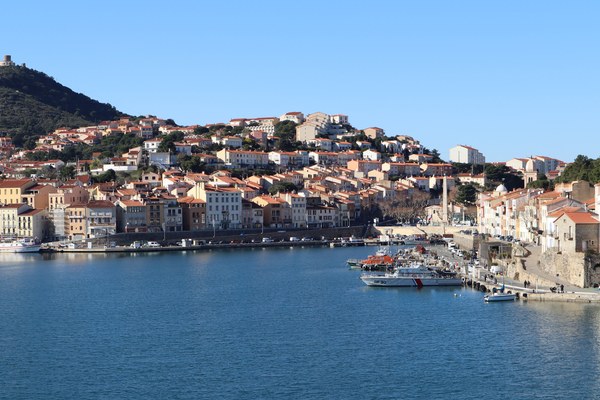
Collioure and Port-Vendres
Start at Château Royal when it opens, and follow the Chemin du Fauvisme through the town. Walk up past the windmill to see Fort Saint-Elme from outside, and take the train one stop on to the harbour in Port-Vendres.
- The castle: 9 euros
- The Fauvism booklet: 6 euros
- Fort Saint-Elme is private and closed
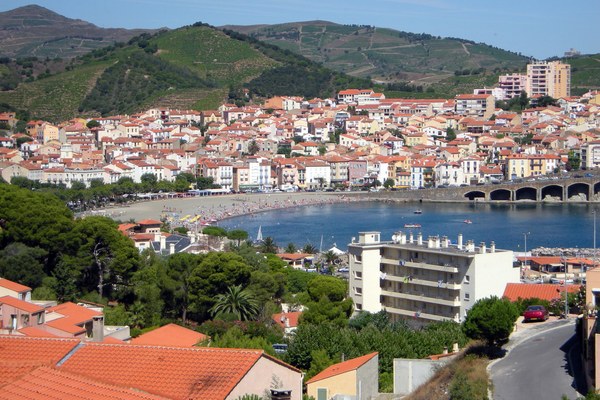
Banyuls and Maillol
Take the train to Banyuls-sur-Mer. Taste the wines at Terres des Templiers, see Maillol’s statues on the seafront promenade and head up the Roume valley to the Musée Maillol and the grave in the garden.
- Tastings without reservation
- Maillol’s grave: free access
- Check the museum’s opening hours
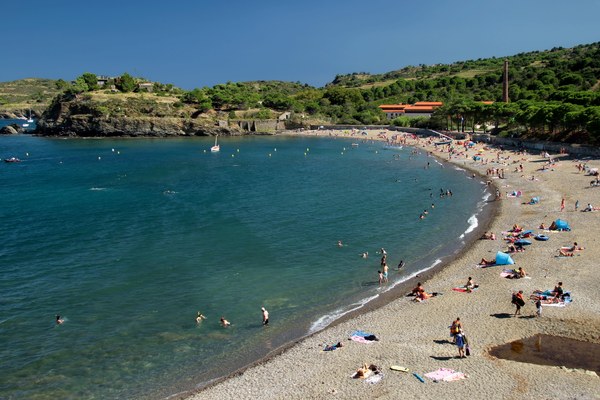
Paulilles and the underwater trail
Spend the day by the sea: the bay of Paulilles between Port-Vendres and Banyuls, and in July and August the underwater trail at Peyrefite in the marine reserve. You can have lunch at Les Clos de Paulilles by the beach.
- Underwater trail: July–August only
- Snorkel hire from 12pm to 5pm
- Les Clos de Paulilles: closed on Mondays
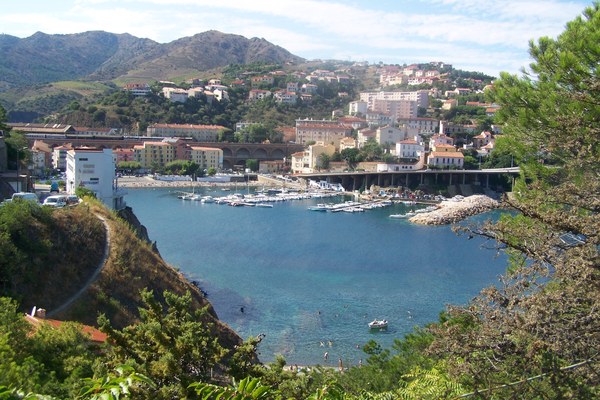
Cerbère and the anchovies
Take the train to the terminus at Cerbère on the border facing Portbou. On the way back, get off in Collioure, taste anchovies at Desclaux or Roque and finish on one of the beaches by the castle.
- Desclaux: free tours and tastings
- Roque: 17 route d’Argelès
- Boramar is sheltered from the wind