html Besançon travel guide | Vauban’s citadel, La Boucle and the Jura | Frankrike.no Skip to content
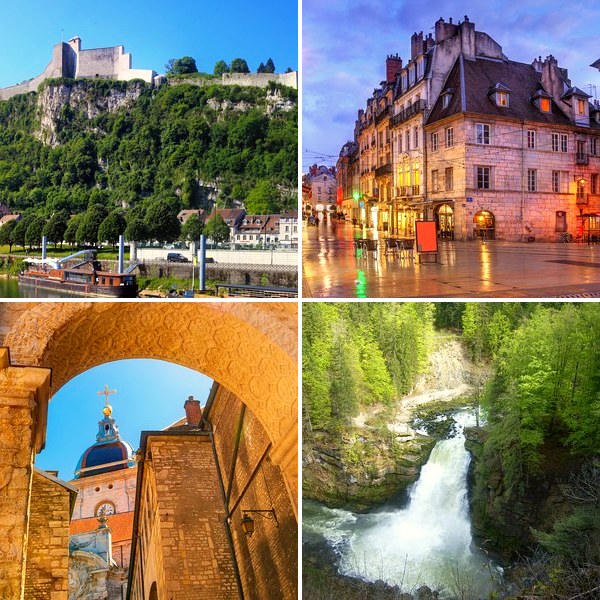
Montage of the citadel of Besançon on the cliff, a corner building in evening light after rain, the arch of the Porte Noire with the cathedral’s bell tower and the Saut du Doubs waterfallDoubs · Citadel, river loop and watchmakers
France travel guide

Besançon

Besançon is the main city in the Doubs, in the historic region of Franche-Comté. The old town, La Boucle, lies in an almost closed loop of the river Doubs, below Vauban’s citadel, which stands over 100 metres above the city.

The citadel, the city wall and Fort Griffon have been on the UNESCO World Heritage List since 2008, together with eleven other fortified sites by Vauban. The Romans called the city Vesontio, and the Porte Noire triumphal arch was built around the year 175.

The tourist office calls Besançon the watchmaking capital of France, and the Musée du Temps in the Palais Granvelle tells the story. Regional trains run to Arbois and the Jura wine in around 40 minutes, and to the east in the Doubs valley lies the Saut du Doubs waterfall.

Vauban’s citadelLa Boucle and the DoubsJura wine and the Saut du Doubs
Best forWorld Heritage and fortifications, an old town in a river loop, watchmaking history, museums, Jura wine and Comté, cycling along the Doubs and day trips by train
Ideal forCouples, adults, families, history enthusiasts, cyclists, wine travellers and anyone travelling by train
Easy to exploreLa Boucle on foot; free buses and trams on Saturdays; direct TGV from Paris to Viotte in approx. 2 hr 30 min; regional trains to Arbois, Dole and Morteau
Excellent base forArbois and Jura wine, Villers-le-Lac and the Saut du Doubs, Ornans and the Loue valley, Arc-et-Senans and Salins-les-Bains
Highlights

Discover Besançon

Walk up to Vauban’s citadel, follow the Quai Vauban, see the clocks in the cathedral and the Palais Granvelle, and walk under the Roman Porte Noire. The boat around the river loop goes through the tunnel under the citadel.

Suggested itineraries

Besançon in 1, 3 or 5 days

Choose how long you are staying, and combine the citadel and La Boucle with Jura wine, the Doubs valley and the saltworks in Arc-et-Senans.

A classic day in Besançon

One day is enough for the citadel, the Porte Noire, the cathedral and one museum in La Boucle. Check the day of the week, as the museums close on different days.

MorningWalk up to the citadel, approx. 30 minutes on foot from the city with steps, or take the Ginko Citadelle bus from Chamars from March to early November.
Late morningSee the museums and the ramparts at the citadel. The animals in the zoo are brought in 1–1.5 hours before closing time.
AfternoonWalk down to the Porte Noire, the Square Castan and the cathedral, and on along the Grande Rue to the Musée du Temps. The Musée du Temps and the astronomical clock are closed on Mondays, the art museum and Victor Hugo’s birthplace on Tuesdays.
EveningEat in La Boucle. Loiseau du Temps, in an eighteenth-century granary, is recommended in the Michelin Guide and is closed on Sundays and Mondays.
Choose the right area

Where should you stay in Besançon?

The choice is between the old town of La Boucle, the area right below the citadel, Parc Micaud and Viotte station outside the loop, the château in Geneuille or the saltworks in Arc-et-Senans. It decides the atmosphere, the distance to the train and how easily you get around on foot.

The old town

La Boucle

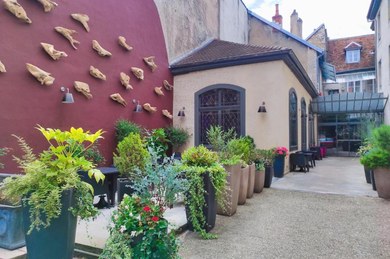
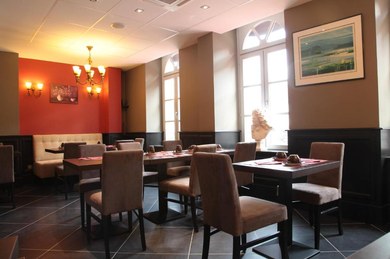
The 3-star Hôtel de Paris is on the Rue des Granges, the 3-star Logis Hôtel Vauban with 13 rooms is on the Quai Vauban, and the 2-star Hôtel du Nord is the inexpensive option.

Everything in the old town on foot, and a short distance to the museums and restaurants.
Below the citadel

By the cathedral and the citadel

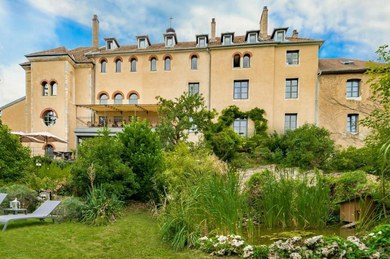
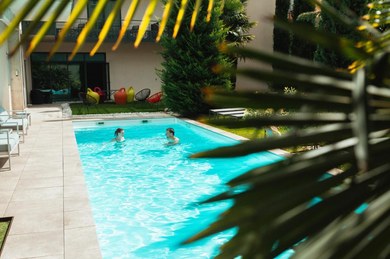
The 4-star Hôtel Le Sauvage, with a spa and grounds, is in the former convent of the Poor Clares, and the 3-star Best Western Citadelle is close by.

Closest to the Porte Noire, the cathedral and the footpath up to the citadel.
By the trains

Parc Micaud and Viotte

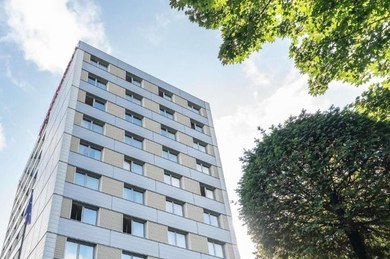
The 4-star Mercure Parc Micaud is by the Doubs, around 200 metres from Mouillère station, and the 4-star Logis Hôtel Victor Hugo & Spa is by Viotte station.

Handy for trains to Arbois, Dole and Morteau, and around one kilometre from La Boucle.
Château in parkland

Geneuille

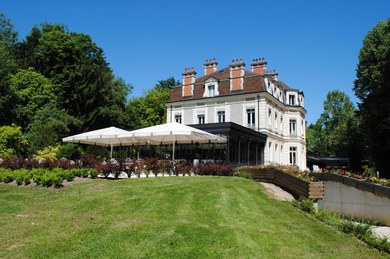
The 4-star Château de la Dame Blanche is a château in parkland with a restaurant, a spa and cabins, around 11 kilometres north of La Boucle as the crow flies.

Closest to Besançon Franche-Comté TGV station, around three kilometres away.
In the World Heritage Site

Arc-et-Senans

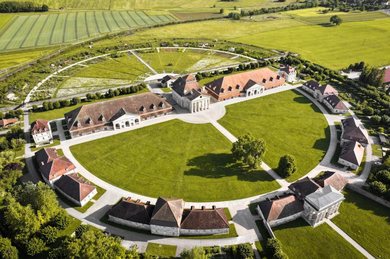
The 3-star La Saline Royale has 31 rooms inside the royal saltworks, designed by the architect Jean-Michel Wilmotte.

Quiet evenings in the saltworks, around 29 kilometres from Besançon as the crow flies.
Selected places to stay

Places to stay in and around Besançon

Here are some of our selected places to stay in Besançon, Geneuille and Arc-et-Senans, from 2 to 4 stars. Besançon has three four-star hotels and none with five stars. Compare the location, the distance to the train and the distance to La Boucle.

Hôtel Le Sauvage in Besançon★★★★
La Boucle

Hôtel Le Sauvage

A four-star hotel with a spa and a park in a former convent at the foot of the Citadel.

Mercure Besançon Parc Micaud in Besançon★★★★
Parc Micaud

Mercure Besançon Parc Micaud

A four-star hotel with a bar by Parc Micaud and the river Doubs, just outside La Boucle.

Château de la Dame Blanche in Geneuille★★★★
Geneuille

Château de la Dame Blanche

A four-star château hotel in a park in Geneuille, with a restaurant, a spa and cabins.

The map shows our selected hotels in La Boucle, by Parc Micaud and Viotte, in Geneuille and in Arc-et-Senans. Click a marker for a photo and more information.
Camping and motorhomes

Camping near Besançon

The nearest is the 3-star Camping de Besançon-Chalezeule, around 4.6 kilometres from La Boucle by EuroVelo 6 and open from 3 April to 1 November 2026. Domaine La Roche d'Ully in Ornans has 4 stars, and Les Promenades in Quingey says it is open all year.

Wine, river and cycle path

The landscape around Besançon

Wine below the hills

Jura wine

The wine region is 80 kilometres long, and vin jaune spends at least six years and three months in the barrel. Read the article on Jura wine and Arbois.

River and waterfall on the border

The Doubs valley and the Saut du Doubs

The Doubs, over 430 kilometres long, forms the Saut du Doubs on the Swiss border and flows through Besançon. The 27-metre waterfall can be dry. Read the article on the Doubs valley.

Cycling along the Doubs

EuroVelo 6

EuroVelo 6 follows the Doubs, and the stage from Baume-les-Dames to Besançon is 34 kilometres. Find more rides among the cycle routes in France.

Car hire from EuroAirport Basel-Mulhouse

A car for your day trips

EuroAirport Basel-Mulhouse (MLH) is 150 kilometres from Besançon via the A36, according to the tourist office. With your own car you can also reach the Saut du Doubs, Ornans and the villages of the Jura.

Wine, waterfall, art and salt

Four good day trips from Besançon

South-west of Besançon lie Arc-et-Senans with the saltworks and Arbois with the Jura wine, to the south Ornans in the Loue valley, and to the east Villers-le-Lac and the Saut du Doubs on the Swiss border.

Continue your journey

More destinations from Besançon

Besançon fits into a tour of Eastern France, with Dijon and Beaune in Burgundy to the west and Colmar in Alsace to the north-east.

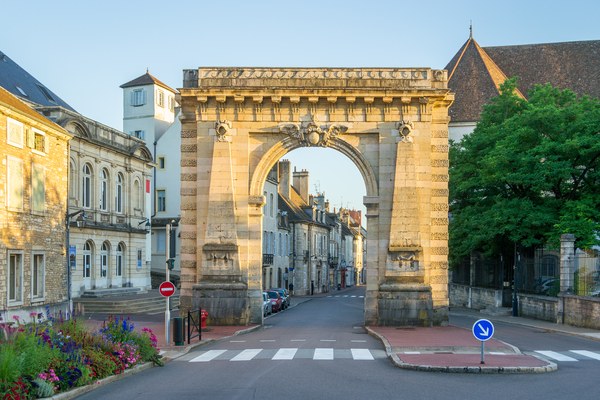
The Porte Saint-Nicolas in Beaune, the triumphal arch in golden light with a street behind and flower beds in front
The wine town in Burgundy

Beaune

Continue to the Hôtel-Dieu and the wine cellars of Beaune, and compare the Burgundies with the wine of the Jura.

Open the Beaune guide →
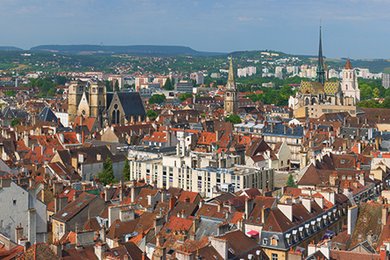
View over the roofs of Dijon, with church towers and spires
The capital of Burgundy

Dijon

Travel on to the ducal palace, Les Halles and the start of the Route des Grands Crus, around 75 kilometres west of Besançon as the crow flies.

Open the Dijon guide →
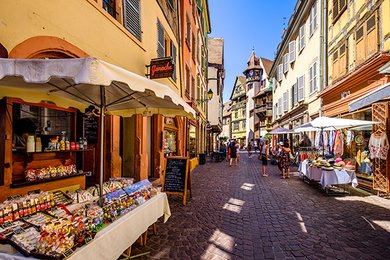
A cobbled street in Colmar with market stalls and half-timbered houses in the sunshine
The wine town in Alsace

Colmar

Combine Besançon with the half-timbered houses, the canals and the wine route in Colmar and Alsace.

Open the Colmar guide →
Read more

Read our inspiring articles about France

Find inspiration in travel guides, touring itineraries and personal tips from across France. Discover cities, villages, food and wine experiences, nature and new destinations.

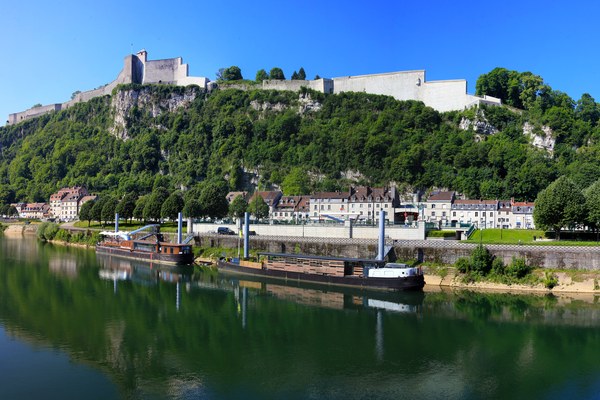
Citadel · World Heritage since 2008

Citadelle de Besançon

The citadel of Besançon on the hill above the Doubs, with pale fortress walls above the wooded cliff, houses along the quay and two barges on the river
Image from Frankrike.no.

The citadel stands over 100 metres above the city and covers 11 hectares. The fortifications of Besançon were built in the years 1668–1692, and the citadel itself says it was completed in 1684.

On 7 July 2008 the fortifications of Vauban were added to the UNESCO World Heritage List, twelve sites in all. In Besançon they include the citadel, the city wall and Fort Griffon, not the whole city.

There are three museums inside the walls. The Muséum has an aquarium, an insectarium with over 60 species, the Noctarium and a zoo, and the Musée de la Résistance et de la Déportation reopened in September 2023. The Musée comtois is closed until 27 February 2027.

The citadel is open from 10am to 5pm except on Mondays from 1 November 2026 to 3 January 2027 and from 27 February to 31 March 2027, from 9am to 6pm in April–June and from 9am to 7pm in July–August 2027. It is closed from 4 January to 26 February 2027, and also on 25 December and 1 January.

In 2026 tickets cost €13.50 for adults from 1 April to 1 November, and they cost €9.50 until 31 December 2026. The museums are included, and children under 4 go free. The prices for 2027 have not been published.

On foot it takes around 30 minutes from the city, with steps. The Ginko Citadelle bus runs from Parking Chamars from March to early November, takes under 10 minutes and is free on Saturdays. Dogs are not allowed.

World Heritage 2008€13.50 (summer 2026)Closed 4 Jan–26 Feb 2027Over 100 m above the city
See opening times and tickets →
Old town · In the river loop

La Boucle and the Doubs quays

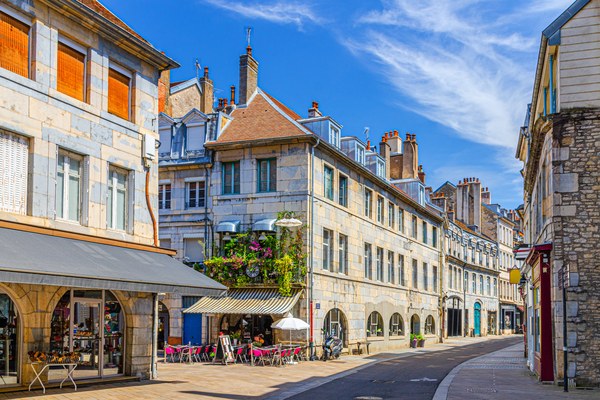
The Rue des Granges in Besançon in summer, with stone houses in blue-grey and ochre, arched shop windows and a café with pink chairs and flowers
Image from Frankrike.no.

La Boucle is the old town in the loop of the Doubs, below the citadel. Julius Caesar described the river loop, which is closed off by a hill, when the city was called Vesontio.

The article on Jura wine covers Arbois, a day trip of 37–43 minutes by TER from Besançon Viotte.

The Grande Rue is the main street through the loop, with the town hall at number 52, the Musée du Temps at number 96 and Victor Hugo’s birthplace at number 140.

The Quai Vauban is the quay that Vauban planned along the Doubs. The city wall is freely accessible, and across the river lies the Battant quarter below Fort Griffon.

The boat ‘Le Battant’ from the Pont de la République goes around La Boucle, through two locks and the tunnel under the citadel. The trip takes 1 hr 15 min and cost €15 for adults and €11 for children aged 4–16 in 2026.

In July and August the boat leaves at 10am, 11.15am, 2.15pm, 3.30pm and 4.45pm, and otherwise in April–June and September according to the calendar. The art museum is on the Place de la Révolution.

Free admissionBoat trip 1 hr 15 min€15 in 2026On foot
See La Boucle at the tourist office →
Cathedral · Clock from 1858–1860

Cathédrale Saint-Jean and the Horloge astronomique

The upper part of the astronomical clock in the cathedral of Saint-Jean in Besançon, in black and gold with figures in niches and a round dial
Photo: Morio60, CC BY-SA 2.0

The cathedral of Saint-Jean dates from the twelfth and eighteenth centuries and has two apses, one Romanesque and one from the eighteenth century. It has a round altar in white marble and Fra Bartolomeo’s ‘Virgin with Saints’ from 1512.

The cathedral is free and open from 9am to 6.30pm from All Saints to Easter and from 9am to 7pm the rest of the year.

The astronomical clock was made by Auguste-Lucien Vérité in 1858–1860. It has over 30,000 parts, 60 dials and 122 indications, is over five metres tall and weighs two tonnes. The clock was listed in 1991.

The clock has been stopped since a study in 2021 and is to be restored. It is still on show, and the visit explains the restoration. It is not known when the clock will run again.

The tours start at 10.30am, 11.30am, 2.30pm, 3.30pm and 4.30pm and take around 30 minutes. The clock is open from 1 April to 31 October and in the French school holidays, from 10am to 12.30pm and 2pm to 6pm, and is closed on Mondays.

Tickets cost €5, and entry is free for under-18s and for 18–25-year-olds from the EU. The address is 25 rue du Chapitre.

Stopped since 2021€5, free under 18Closed on MondaysOver 30,000 parts
See the clock and tickets →
Renaissance palace · Watchmaking museum

Palais Granvelle and the Musée du Temps

The courtyard of the Palais Granvelle with an arcade, windows in pale stone, a patterned tiled roof and a small tower
Photo: Wikipedro, CC BY-SA 4.0

The Musée du Temps is in the Renaissance Palais Granvelle, 96 Grande Rue. The tourist office calls Besançon the watchmaking capital of France.

It has the Leroy 01 watch from 1904, with 975 parts and 24 complications. It was the world’s most complicated watch until 1989, according to the tourist office. The museum also has a Foucault pendulum and a view from the tower.

Watchmaking and mechanical art in the Jura Arc, in France and Switzerland, were added to the UNESCO list of intangible cultural heritage on 16 December 2020.

The exhibition ‘L'empreinte du temps’ runs from 7 November 2026 to 7 March 2027, and Amédée Bernardin’s clock is on show until 30 April 2027.

The museum is open Tuesday–Friday from 2pm to 6pm from 2 November to 31 March outside the school holidays, and from 10am to 12.30pm and 2pm to 6pm in high season. On Saturdays, Sundays and public holidays it is open from 10am to 6pm, and it is closed on Mondays.

The combined ticket for the Musée du Temps, the art museum and Victor Hugo’s birthplace costs €9, €4.50 reduced. It is free for under-18s, for students and on the first Sunday of the month.

Palais GranvelleCombined ticket €9Closed on MondaysLeroy 01 from 1904
See the Musée du Temps →
Art museum · Collection from 1694

Musée des Beaux-Arts et d'Archéologie

The Musée des Beaux-Arts et d'Archéologie in Besançon, a long building in pale stone with arched windows by the tram tracks on the Place de la Révolution
Photo: Wikipedro, CC BY-SA 4.0

The museum calls its collection the oldest public one in France, from Abbot Boisot’s will of 1694, around a hundred years before the Louvre.

It is on the Place de la Révolution, in the former grain hall by Pierre Marnotte, where the collection has been since 1843.

The concrete ramps inside are by Louis Miquel, a pupil of Le Corbusier, and were built in 1967–1970. The museum reopened in 2018 after four years of rebuilding.

The collection has over 6,000 drawings.

In the low season the museum is open on Mondays, Wednesdays, Thursdays and Fridays from 2pm to 6pm, and in high season, from 1 April to 31 October and in the school holidays, from 10am to 12.30pm and 2pm to 6pm. At weekends it is open from 10am to 6pm, and it is closed on Tuesdays.

The combined ticket with the Musée du Temps and Victor Hugo’s birthplace costs €9, €4.50 reduced. Entry is free for under-18s, for students and on the first Sunday of the month.

Collection from 1694Combined ticket €9Closed on TuesdaysPlace de la Révolution
See the art museum →
Triumphal arch · Around the year 175

Porte Noire, Square Castan and Victor Hugo’s birthplace

The Porte Noire in Besançon seen from below in warm light, with reliefs on the arch and the cathedral’s bell tower in the opening
Image from Frankrike.no.

The Porte Noire is a Roman triumphal arch, built around the year 175 under Marcus Aurelius by the Sequani. It was originally over 16 metres high, with scenes from the battles against the Parthians.

The name comes from a fire in the Middle Ages. The gate is always open, and you walk through it on the way to the cathedral.

The Square Castan is the archaeological garden close by, on the way between the Grande Rue and the cathedral.

Victor Hugo was born at 140 Grande Rue on 26 February 1802. The house opened in September 2013 and is about his commitment to causes, not about furniture and mementoes.

Tickets cost €3.30, €2.20 reduced, and entry is free on Sundays and public holidays. The €9 combined ticket is also valid here.

The house is open every day except Tuesday, from 10.30am to 6pm from 1 April to 31 October, in the school holidays and at weekends, and otherwise from 10.30am to 5.30pm. It is closed on 1 January, 1 May, 1 November and 25 December.

Porte Noire approx. 175Always openHugo’s house €3.30Closed on Tuesdays
See the Porte Noire at the tourist office →
La Boucle · Recommended

Loiseau du Temps

The fountain on the Place de la Révolution in Besançon with running water in front of old houses in blue-grey stone with tiled roofs
Photo: Pline, CC BY-SA 3.0

Loiseau du Temps is at 27 rue des Boucheries, right by the Place de la Révolution, and is recommended in the Michelin Guide.

The restaurant is in a vaulted eighteenth-century granary and is run by the Bernard Loiseau group.

The cooking is modern and traditional, with dishes from Franche-Comté and Burgundy and a dessert trolley. The price level is two euro signs.

The restaurant is open Tuesday–Saturday from 12pm to 2pm and 7.15pm to 9pm, and closed on Sundays and Mondays.

It is close to the Quai Vauban in the old town.

Michelin gives no season, so book ahead and check before you go.

RecommendedRue des BoucheriesModern and traditionalClosed Sun–Mon
See Loiseau du Temps →
La Boucle · Recommended

Épicéa

The Quai Vauban in Besançon in evening sun, with golden rows of houses and arcades reflected in the Doubs and a bridge on the right
Photo: Wikipedro, CC BY-SA 4.0

Épicéa is at 11 rue Claude-Pouillet in La Boucle and is recommended in the Michelin Guide.

A couple run the kitchen and serve surprise tasting menus with foraged herbs and traceable produce.

The cooking is modern and creative, and the price level is three euro signs.

The restaurant is open on Tuesdays and Wednesdays from 7.30pm to 9pm and Thursday–Saturday from 12pm to 1.30pm and 7.30pm to 9pm, and closed on Sundays and Mondays.

The lane is close to the Doubs in the old town.

Michelin gives no season, so book ahead and check before you go.

RecommendedRue Claude-PouilletCreative tasting menuClosed Sun–Mon
See Épicéa →
La Boucle · Recommended

Le Saint Cerf

The west wing of the Palais de Justice in Besançon, with a round corner tower, a pointed slate roof and a richly decorated façade
Image from Frankrike.no.

Le Saint Cerf is at 1 rue Mégevand, around 200 metres from the Place du 8 Septembre, and is recommended in the Michelin Guide.

The restaurant is a modern bistro with seasonal produce, Asian touches and vegetarian dishes. The price level is two euro signs.

Michelin highlights it as a safe choice in the renewal of the Besançon food scene.

It is open Tuesday–Friday from 12pm to 2.30pm and 7.30pm to midnight, and closed on Saturdays, Sundays and Mondays.

The Musée du Temps and the Palais Granvelle are on the Grande Rue, around 300 metres away.

Michelin gives no season, so book ahead and check before you go.

RecommendedRue MégevandModern bistroClosed Sat–Mon
See Le Saint Cerf →
Below the citadel · Recommended

Le Sauvage

The choir of the cathedral of Saint-Jean in Besançon in winter, with tall windows, the bell tower behind and a bare tree
Photo: Wikipedro, CC BY-SA 4.0

Le Sauvage is at 6 rue du Chapitre, at the foot of the citadel, and is recommended in the Michelin Guide.

It is the restaurant at the 4-star hotel of the same name, in the former convent of the Poor Clares.

The cooking is modern, and the terrace faces the park. The price level is two euro signs.

The restaurant is open Tuesday–Friday from 12pm to 2pm and 6pm to 9pm and on Saturdays from 6pm to 9pm, and closed on Sundays and Mondays.

The Porte Noire is around 350 metres away, so the restaurant goes well with a visit there.

Michelin gives no season, so book ahead and check before you go.

RecommendedRue du ChapitreIn a former conventClosed Sun–Mon
See Le Sauvage →
Rivotte · Recommended

Le Manège

The Porte Rivotte in Besançon, the city gate with two round towers with red conical roofs and city wall on both sides
Photo: Zairon, CC BY-SA 4.0

Le Manège is at 2 faubourg Rivotte, at the foot of the citadel, and is recommended in the Michelin Guide.

The restaurant is in a former military riding school, and the chef is self-taught.

The cooking is modern, with regional produce in two menus. The price level is two euro signs, and there is a terrace.

It is open Tuesday–Saturday from 12pm to 1.15pm and 7.30pm to 9.15pm, and closed on Sundays and Mondays.

The restaurant is around 0.9 kilometres from the centre of La Boucle, close to the citadel.

Michelin gives no season, so book ahead and check before you go.

RecommendedFaubourg RivotteRegional produceClosed Sun–Mon
See Le Manège →
Arc-et-Senans · Bib Gourmand

Vertfeuille

The bell tower of the church of Saint-Bénigne in Arc-et-Senans against a blue sky
Photo: JGS25, CC BY-SA 4.0

Vertfeuille is at 9 place de l'Église in Arc-et-Senans and holds a Bib Gourmand in the Michelin Guide.

The Bib Gourmand is Michelin’s mark for restaurants with particularly good value for money.

The restaurant is a renovated village inn by the church, run by Léa Senot and Clément Bourdiaux, with guest rooms.

The cooking is modern, with regional produce and vegetarian menus, and the price level is two euro signs.

It is open Wednesday–Sunday from 12pm to 1.30pm and 7pm to 9pm, and closed on Mondays and Tuesdays.

The restaurant goes well with the Saline royale, around one kilometre away. Arc-et-Senans lies around 29 kilometres south-west of Besançon as the crow flies.

Bib GourmandArc-et-SenansRegional produceClosed Mon–Tue
See Vertfeuille →
Wine town · Jura

Arbois and Jura wine

The bell tower of the church of Saint-Just in Arbois with vines in the foreground
Photo: Wikipedro, CC BY-SA 4.0

Arbois lies in the Jura, around 42 kilometres south-west of Besançon as the crow flies. TER trains from Besançon Viotte take 37–43 minutes and run around 13 times a day.

The Arbois appellation dates from 15 May 1936, when the first six AOCs in France were adopted: Arbois, Cassis, Châteauneuf-du-Pape, Cognac, Monbazillac and Tavel.

The Jura has five permitted grapes: savagnin, chardonnay, poulsard, trousseau and pinot noir. Vin jaune is made from savagnin only and spends at least six years and three months in the barrel before being bottled in the clavelin, 62 cl.

Louis Pasteur’s house at 83 rue de Courcelles has had a new exhibition since 11 September 2026. The 2026 season ran from 7 February to 1 November, and tickets cost €9 for adults. Information about November varies, so check before you go. Times and prices for 2027 have not been published.

The wine museum in the Château Pécauld is open from 2pm to 6pm from November to February and from 10am to 12pm and 2pm to 6pm from March to October. It is closed on Tuesdays except in July and August and in January outside the school holidays, and costs €4.

The Grotte des Planches has been closed since 2011, but the Cascade des Tufs waterfall is freely accessible. The Percée du Vin Jaune wine festival is held on 6–7 February 2027 in Arlay.

Train 37–43 minAOC from 1936Vin jaune, 62 clFull day
Read the article →
Waterfall · The Swiss border

Villers-le-Lac and the Saut du Doubs

The Saut du Doubs in summer seen from the viewpoint, the waterfall between wooded mountainsides and a faint rainbow at the bottom
Photo: André Alliot, CC BY-SA 4.0

The Saut du Doubs is a 27-metre waterfall on the border between France and Switzerland. It was formed when a landslide blocked the river approx. 14,000 years ago.

The flow of water varies: in dry periods there may be little or no water, and in summer 2026 the waterfall was dry. Check the water level before you go in late summer.

Two boat companies run from Villers-le-Lac, from Easter to All Saints. Vedettes Panoramiques charges €17 for adults and €13 for children aged 3–13, and Bateaux du Saut du Doubs charges €18.90, and €13.90 for ages 3–12, according to the companies.

The boat covers 14 kilometres there and back through the basins between the cliffs, and from the quay you walk 400 metres to two viewpoints. Allow at least an hour for the stop. From the Swiss side boats run from Les Brenets.

On foot you walk 2.5 kilometres from the parking des Vions, and an 11-kilometre loop passes the Châtelot dam. The GR5 passes through.

Villers-le-Lac lies around 53 kilometres south-east of Besançon as the crow flies, and there is no public transport to the waterfall on the French side. The train from Besançon to Morteau takes around 1 hr 11 min–1 hr 25 min.

27 m highCan be dryBoats Easter–All SaintsFull day
Read the article →
Town · Courbet and the Loue

Ornans, the Loue valley and the Musée Courbet

Ornans with the old houses along the Loue, the cliff above the town and kayaks on the river
Image from Frankrike.no.

Ornans lies around 17 kilometres south-east of Besançon as the crow flies, in the valley of the river Loue. The painter Gustave Courbet was born here in 1819.

The Loue valley neighbours the Doubs valley. Read more about the river landscape in our article on the Doubs valley, which also covers Pontarlier, the Château de Joux and the Saut du Doubs.

The Musée Courbet has the largest public collection of Courbet’s works, according to the museum. It is open every day except Tuesday, from 10am to 6pm in June–September and from 10am to 12pm and 2pm to 5pm in November–May, on Mondays only from 2pm to 5pm outside the school holidays.

Tickets cost €6, €8 during the summer exhibition and €4 reduced, and they give reduced prices at the Saline royale and the citadel. The opening hours in October are not given, so check before you go.

The Atelier Courbet was free and open from 28 June to 30 September 2026, Wednesday–Sunday from 2pm to 6pm, and the Ferme Courbet in Flagey is free and open all year.

The source of the Loue near Ouhans is around 600 metres by footpath from the car park, around 33 kilometres from Besançon as the crow flies.

Approx. 17 kmMusée Courbet €6Closed on TuesdaysHalf day
See Ornans at the tourist office →
Saltworks · World Heritage since 1982

The Saline royale in Arc-et-Senans and Salins-les-Bains

The director’s house at the Saline royale in Arc-et-Senans with columns, a triangular pediment and a lawn in front
Photo: Wolfgang Moroder, CC BY-SA 3.0

The Saline royale is the royal saltworks by Claude-Nicolas Ledoux. Construction began in 1775 under Louis XVI, and the buildings stand in a semicircle in a park of 13 hectares.

The saltworks was added to the UNESCO World Heritage List in 1982, and in 2009 the site was extended to include the great saltworks of Salins-les-Bains.

It is open every day except 25 December and 1 January: from 10am to 5pm in November–March, from 9am to 6pm in April–June, September and October and from 9am to 7pm in July–August.

Tickets cost €15 from April to October and €13 from November to March, with €10 and €9 for children aged 6–15. If you come by train, you get a reduced price. The combined ticket with the Grande Saline costs €22.50.

Read more about the surrounding landscape in our article on the Doubs valley, which also includes the Saut du Doubs.

In Salins-les-Bains the Grande Saline has an underground gallery, €10.50 for adults. It is closed from 6 to 26 January, on 25 December and on 1 January, but check the dates. Arc-et-Senans is a stop on the TER between Besançon Viotte and Lons-le-Saunier, according to SNCF Connect.

World Heritage 1982€13–15Open all yearFull day
See the Saline royale →