
The Doubs is both a river and a department in the Bourgogne-Franche-Comté region. The waterfall and Morteau belong to the Pays Horloger tourist area, and the upper part of the valley, from Montbenoît to Mouthe, to Destination Haut-Doubs. The prices and dates in this guide are from the sources in autumn 2026 – check them before you go.
Saut du Doubs: 27 metres on the border
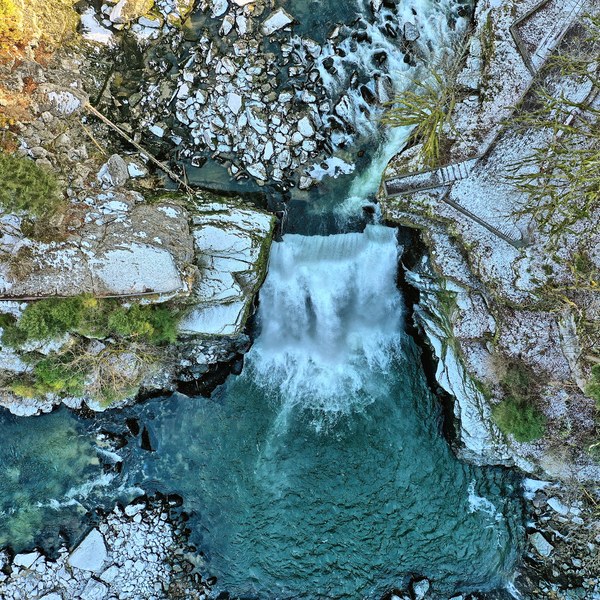
The Saut du Doubs is 27 metres high and lies on the border between France and Switzerland. According to the tourist office it was formed when a rockslide blocked the river approx. 14,000 years ago.
- The lake: Lac de Chaillexon on the French side and Lac des Brenets on the Swiss side are names for the same lake. It lies between Villers-le-Lac and the basins.
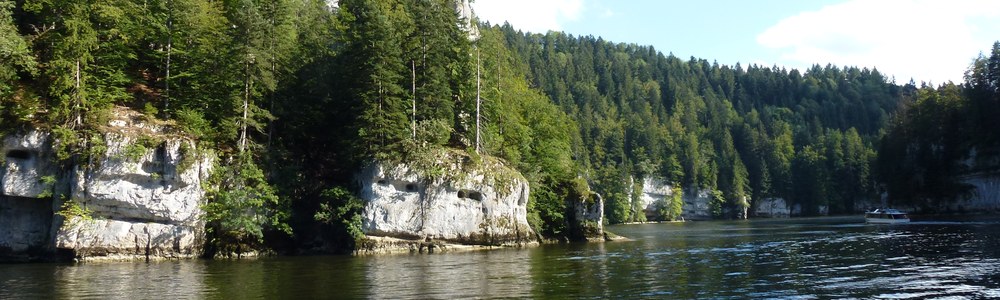
- The basins: in “les bassins du Doubs” the river is 100–200 metres wide and 30–40 metres deep between the rock walls.
- The waterfall: the boat does not go all the way. From the landing stage you walk 400 metres to the waterfall, where there are two viewpoints. Allow at least one hour.
The water flow: check before you go
The waterfall can be completely dry. The tourist office writes that the water is “rare ou absente” in dry periods, and it happens more often than many travel guides say:
- Summer 2026: the prefecture introduced a reinforced drought alert in the Doubs on 3 July, and the waterfall stopped flowing the same month. On 20 July boat traffic on the Lac des Brenets stopped, when the water stood 7 metres below normal, according to the news agency Keystone-ATS. In August it was still dry.
- Autumn 2026: on 14 November the Swiss boat company NLB was running again.
- 2018: the waterfall was dry for almost four months, according to the local newspaper Ma Commune.
- Winter: the waterfall rarely freezes, but the basins are often covered in ice.
Our advice: plan the trip for spring or after a spell of rain, and check the water level with the tourist office or the boat company – especially in late summer.
The boats from Villers-le-Lac
Two French companies run from Villers-le-Lac from Easter to All Saints’, when there is enough water. The boats to the waterfall leave from here and from Les Brenets in Switzerland – not from Besançon, where Vedettes de Besançon is a different company.
- Vedettes Panoramiques: hybrid and electric boats, approx. 1 hour and 14 kilometres return plus a stop of up to 1 hour 15 minutes. 17 euros for adults and 13 euros for children aged 3–13. In the high season 15 July–15 August at 10.15am, 11.30am, 1.45pm, 3pm and 4.15pm, otherwise one to four departures in April–October and on request in November–March. See vedettes-panoramiques.com.
- Bateaux du Saut du Doubs: 2 hours 15 minutes with a stop of approx. 1 hour. 18.90 euros for adults, 13.90 euros for children aged 3–12 and 4.90 euros for a dog. The company also has trips with dinner. Book on sautdudoubs.fr or by telephone on +33 3 81 68 13 25.
- From Switzerland: NLB runs from Les Brenets. You will find prices and timetables on nlb.ch.
On foot, by canoe and by horse
- The shortest path: from the des Vions car park you walk 2.5 kilometres down to the waterfall.
- The circular walk: loop no. 31 is 11 kilometres and passes the Barrage du Châtelot dam.
- GR5: the long-distance trail passes the waterfall.
- Without walking: horse and carriage (Calèches du Saut du Doubs) and electric scooter.
- On the water: canoe, kayak and paddleboard on the basins.
On the French side there is no public transport to the waterfall. From Switzerland there is a bus from Le Locle to Les Pargots and a train from Le Locle to Les Brenets. You will find more routes in hiking in France, and rivers to paddle in canoeing in France.
Morteau and the Doubs Horloger regional park
Morteau lies in the Val de Morteau, on the railway line from Besançon, and has given its name to saucisse de Morteau – a sausage with the IGP label. The Musée de la Vie d'Antan is in Montlebon.
The area is part of the Parc naturel régional du Doubs Horloger, which was created on 4 September 2021 and has 93 member municipalities. Horloger means watchmaker, and the craftsmanship of mechanical watchmaking in the Jura Arc in France and Switzerland has been on UNESCO’s list of intangible cultural heritage since 16 December 2020. More about the park on parcdoubshorloger.fr.
Montbenoît and the République du Saugeais
The abbey in Montbenoît goes back to the 11th and 12th centuries, and the choir with the choir stalls is from the 16th century. According to the tourist office it is open all year. The village lies in the République du Saugeais, an area of 12,800 hectares with roots in the 12th century.
In winter the Saugeais has cross-country skiing areas in Arc-sous-Cicon and Gilley. In Ville-du-Pont, Michelin recommends the restaurant L'Entre-Roches.
Pontarlier and absinthe
Pontarlier lies over 800 metres above sea level and was the town of absinthe: Pernod started the first distillery in 1805, and in the early 20th century there were approx. 20 distilleries with over 3,000 employees and more than 100,000 hectolitres a year, according to the tourist office.
- The ban: absinthe was banned in France by an act of 16 March 1915. The act was repealed on 17 May 2011.
- Route de l'Absinthe: a French-Swiss route between Pontarlier and the Val-de-Travers, on foot or by mountain bike, all year.
- Musée municipal (2 place d'Arçon): the town museum has its own absinthe section and a self-portrait by Courbet. We have not found opening hours and prices.
- Distillerie Guy: a distillery from 1890 – check distillerie-guy.fr for visits.
Château de Joux
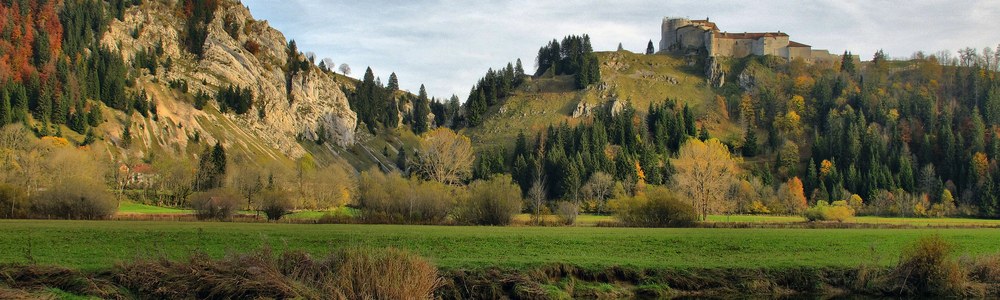
Above the gorge at La Cluse-et-Mijoux, 5 kilometres from Pontarlier, stands the Château de Joux, a fortress built over ten centuries.
- Open: closed in winter. The castle reopens on 26 March 2027.
- Prices in 2027: 9.50 euros for a self-guided visit, 5 euros for ages 6–15 and 27 euros for a family. A guided tour costs 10.50 euros.
- Works: the castle is being renovated in the period 2020–2030.
You will find tickets and times on chateaudejoux.com.
Lac de Saint-Point
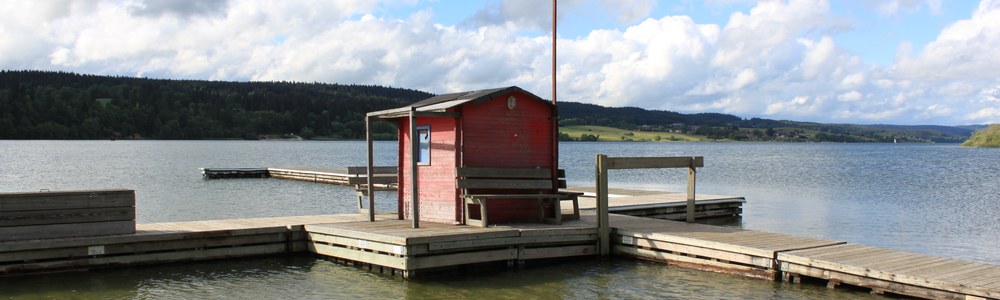
The Lac de Saint-Point is 7 kilometres long and, according to the tourist office, France’s third largest natural lake. On its shores lie Malbuisson, Les Grangettes and the Source bleue spring. In Malbuisson, Le Bon Accueil has one Michelin star.
The source in Mouthe
The Source du Doubs lies at 942 metres in Mouthe. The water comes up from a 55-metre siphon, and from here the river runs for over 430 kilometres. Mouthe is called “La petite Sibérie française”: the tourist office gives minus 36.7 degrees on 13 January 1968 and minus 41.2 degrees on 17 January 1985.
The neighbouring valley has its own source: the Source de la Loue near Ouhans, 600 metres by path from the car park. You will find the Loue valley and Courbet’s Ornans in the travel guide to Besançon.
The Doubs at Besançon and Baume-les-Dames
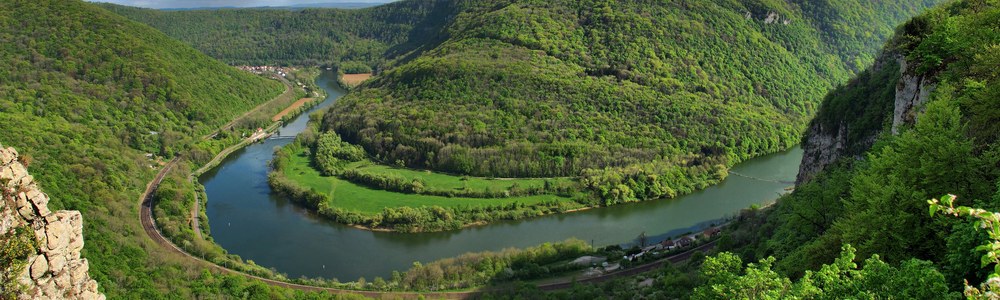
In its lower part the Doubs winds between wooded hills. In Besançon the river makes an almost closed loop around the old town, and further upstream lie Deluz, Baume-les-Dames (approx. 28.5 kilometres as the crow flies from Besançon) and Clerval.
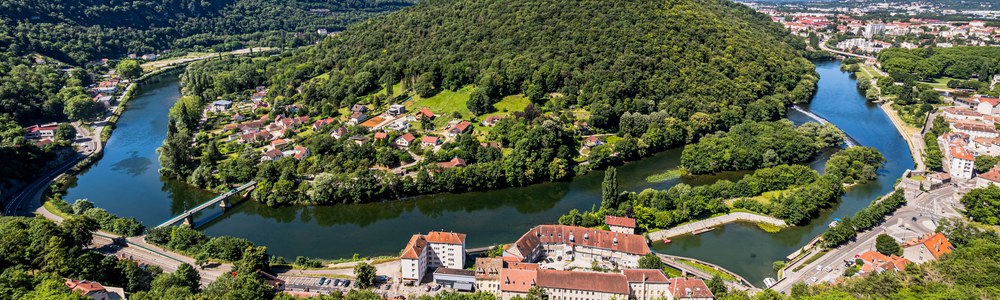
The boat trip around the loop in Besançon with Vedettes de Besançon goes through two locks and the tunnel under the citadel, takes 1 hour 15 minutes and costs 15 euros for adults and 11 euros for children aged 4–16 (2026).
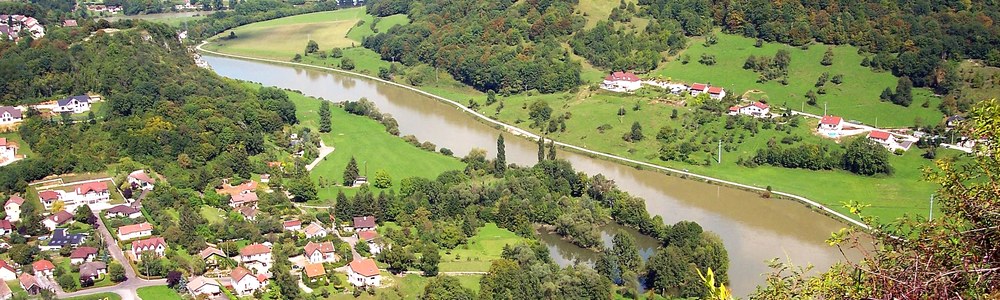
In Champlive, between Besançon and Baume-les-Dames, Michelin recommends Auberge du Château de Vaite, with morels, zander and chicken in vin jaune. The tourist office in Baume-les-Dames has the website ot-doubsbaumois.fr.
EuroVelo 6 along the Doubs
EuroVelo 6 follows the Doubs. The French section from Basel to Nevers is 570 kilometres, and between Montbéliard and Dole the route runs 150 kilometres through the Doubs valley:
- Montbéliard–Baume-les-Dames: 58 kilometres, approx. 3 hours 50 minutes.
- Baume-les-Dames–Besançon: 34 kilometres, approx. 2 hours 16 minutes. France Vélo Tourisme calls the stretch between Baume-les-Dames and Deluz one of the most beautiful.
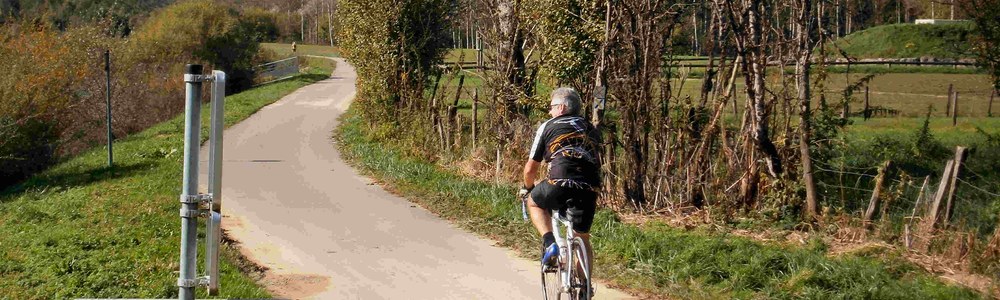
The TER between Besançon and Belfort runs approx. 15 times a day and stops in Montbéliard, so you can take the train one way. The stages are on France Vélo Tourisme, and you will find maps with elevation profiles in the most beautiful bike rides in France.
Winter in Métabief and Mouthe
- Métabief: 26 pistes totalling 26 kilometres (7 green, 10 blue, 8 red and 1 black), 14 lifts and 1,000–1,463 metres above sea level. A day pass in 2026–27 costs 34.90 euros for adults, 31.40 euros for young people and seniors and 28 euros for children, and the beginners’ area 18.90 euros. The season dates are not on the site – check station-metabief.com.
- Mouthe: a ski centre and cross-country trails.
- Mont d'Or: the cheese is sold 10 September–10 May.
The journey and the best time
- Train to Morteau: the ligne des Horlogers runs from Besançon to Morteau, Le Locle and La Chaux-de-Fonds. The line was modernised and reopened on 31 October 2024, and SNCF Connect shows 8 trains a day from Besançon to Morteau in 1 hour 11 minutes to 1 hour 25 minutes, from Mouillère station. We have not found notice of any closures in 2027.
- The last stretch to the waterfall: we have not found a bus from Morteau to Villers-le-Lac, and on the French side there is no public transport to the waterfall – expect to need a car.
- Car: Villers-le-Lac lies approx. 53 kilometres as the crow flies from Besançon, the Château de Joux approx. 49 and the source in Mouthe approx. 61. The Côte de Morre (RD571) out of Besançon has been closed at times for rockfall protection works – check the road reports on doubs.fr.
- By air: EuroAirport Basel-Mulhouse is 150 kilometres from Besançon via the A36. The airport lists direct routes from Copenhagen all year and from Oslo and Stockholm in summer. The car hire box on this page uses Basel-Mulhouse.
- From Paris: direct TGV from Gare de Lyon to Besançon Viotte in approx. 2 hours 30 minutes.
- Best time: the boats run from Easter to All Saints’ and the Château de Joux opens on 26 March 2027. For the waterfall, spring is a safer choice than late summer.
Eating and sleeping
In Villers-le-Lac, Hôtel-restaurant Le France has three stars, and Michelin recommends the restaurant. Les Cygnes also has three stars. In Bonnétage L'Étang du Moulin has one Michelin star, as does Le Bon Accueil in Malbuisson. You will find the hotels in Besançon in the travel guide to Besançon, and all the stars in our Michelin guide.
Onward from the Doubs valley
On the other side of Besançon lie the vineyards of the Jura – read Jura wine and Arbois. If you are continuing to Alsace, we have a travel guide to Colmar. Towards Burgundy we have a travel guide to Dijon.
4 days along the Doubs
With four days you follow the river upstream: the cycle route near Besançon, Morteau and the waterfall, the abbey in Montbenoît and finally the Château de Joux, the Lac de Saint-Point and the source in Mouthe. The route suits the end of March to October, when the boats are running and the castle is open.
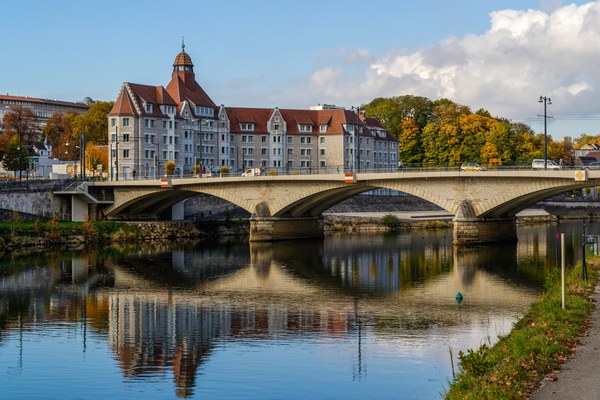
Besançon and Baume-les-Dames
Start at the loop of the Doubs in Besançon and cycle EuroVelo 6 upstream to Baume-les-Dames, 34 kilometres – or drive along the valley. If you do not want to cycle, you can take the boat trip through the tunnel under the citadel.
- 34 kilometres, approx. 2 hours 16 minutes
- Boat in Besançon: 15 euros
- Dinner: Auberge du Château de Vaite
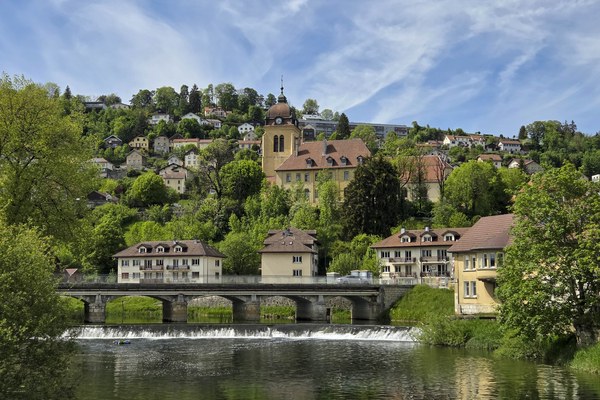
Morteau and Saut du Doubs
Drive via Morteau to Villers-le-Lac and take the boat across the Lac de Chaillexon and through the basins. From the landing stage you walk 400 metres to the waterfall. Check the water level first – if it is too low for boats, you can walk 2.5 kilometres from the des Vions car park.
- Boat: 17 or 18.90 euros for adults
- Allow 2 hours 15 minutes
- Loop no. 31: 11 kilometres
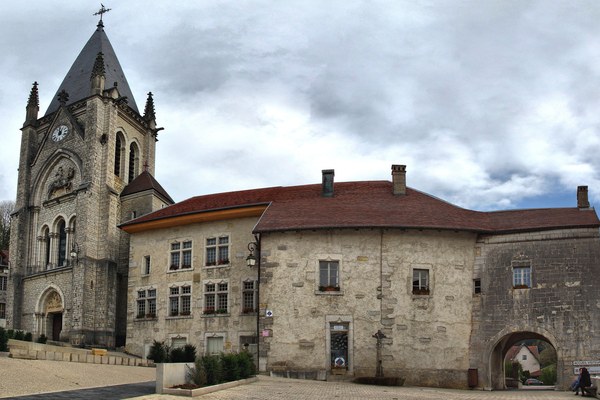
Montbenoît and Pontarlier
Continue up the valley to Montbenoît and see the abbey with the choir stalls from the 16th century, in the République du Saugeais. Drive on to Pontarlier, where the town museum tells the story of absinthe – check the opening hours – and walk part of the Route de l'Absinthe.
- The abbey: open all year
- Absinthe: banned 1915, act repealed 2011
- L'Entre-Roches in Ville-du-Pont: Michelin
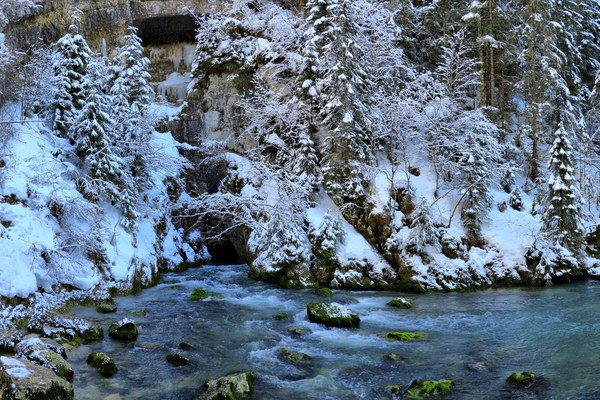
Joux, Saint-Point and the source
Visit the Château de Joux above the gorge at La Cluse-et-Mijoux, drive along the Lac de Saint-Point past Malbuisson and finish where the river begins: the Source du Doubs in Mouthe, at 942 metres.
- Joux: 9.50 euros, opens 26 March 2027
- Saint-Point: 7 kilometres long
- Le Bon Accueil: one star