html Narbonne travel guide | The cathedral, Roman times and the fortresses | Frankrike.no Skip to content
Montage of the cathedral and the Archbishops’ Palace seen from the air, the cloister garden at Fontfroide Abbey, houseboats on the Canal de la Robine at dusk with the palace keep behind, and the Tour Barberousse in GruissanAude · Roman town, cathedral and fortresses
France travel guide

Narbonne

Narbonne in the Aude has around 58,000 inhabitants, and the municipality stretches all the way to the sea at Narbonne-Plage. The town was founded in 118 BC as Narbo Martius, one of Rome’s first colonies outside Italy, and a section of the Via Domitia lies exposed in the middle of the Place de l'Hôtel de Ville.

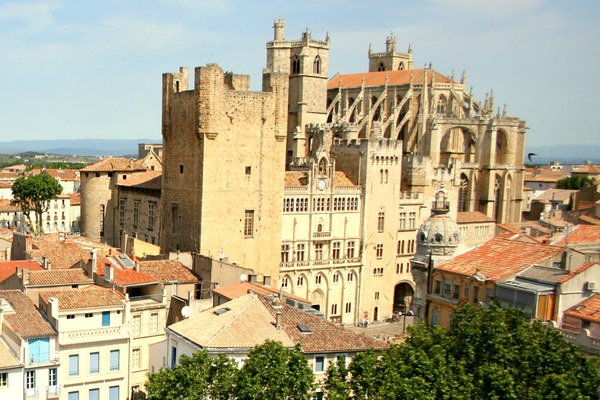
Narbonne Cathedral (Cathédrale Saint-Just-et-Saint-Pasteur) was never finished, but the vault of the choir is over 40 metres high. Next to it stands the Archbishops’ Palace with the Gilles Aycelin keep, and Narbo Via shows the Roman period. Les Halles from 1901 have around 60 stalls and are open in the mornings.

The fortresses of the Corbières were added to the UNESCO World Heritage List on 26 July 2026 as part of the “Forteresses royales capétiennes du Languedoc” (the “Royal Capetian Fortresses of Languedoc”), together with the castle and ramparts of Carcassonne and Montségur. Narbonne is also a good base for Gruissan, the beaches, La Clape and Fontfroide Abbey.

The cathedral and the Archbishops’ PalaceNarbo Via and the Via DomitiaThe fortresses of the Corbières
Best forRoman and medieval history, cathedral and museums, market, canal, beaches, wine from La Clape and the Corbières and day trips to abbeys and fortresses
Ideal forCouples, families, adults, history enthusiasts, food enthusiasts, beachgoers and anyone on a tour of Occitanie
Easy to exploreThe cathedral, the palace, the Via Domitia, the Horreum and Les Halles on foot; the TGV to Narbonne station; Citibus 11 to Narbonne-Plage and 12 to Gruissan
Excellent base forGruissan and La Clape, Narbonne-Plage, Fontfroide, Lagrasse, Peyrepertuse and Quéribus, Carcassonne
Highlights

Discover Narbonne

See the unfinished cathedral and the Archbishops’ Palace, walk on the Via Domitia, visit Narbo Via and the Horreum, shop in Les Halles and stroll along the Canal de la Robine. Narbo Via is free for all under-18s.

Suggested itineraries

Narbonne in 1, 3 or 5 days

Choose how long you are staying, and combine the cathedral and the Roman period with the beaches, La Clape, Fontfroide and the fortresses of the Corbières.

A classic day in Narbonne

In one day you have time for Les Halles, the cathedral and the palace, the Via Domitia, the Horreum and Narbo Via.

MorningStart in Les Halles, which open at 7am, and continue to the Place de l'Hôtel de Ville and the exposed section of the Via Domitia.
Late morningSee the cathedral and the palace, and climb the Gilles Aycelin keep. In November and December 2026 the palace is open from 10am to 12.45pm and 2pm to 5pm and closed on Tuesdays.
AfternoonGo down into the Horreum, and continue to Narbo Via, which is open from 10am to 6pm and closed on Mondays. The pass for the museum, the Horreum and Amphoralis costs €17.
EveningWalk along the Canal de la Robine and over the Pont des Marchands. From 28 November 2026 to 3 January 2027 the town holds the Christmas event Fééries de Noël.
Choose the right area

Where should you stay in Narbonne?

The choice is between the centre, the wine estates of La Clape, the beach at Narbonne-Plage, Gruissan, or Leucate further south. It decides the atmosphere, the parking and the price.

Cathedral and market halls

The centre

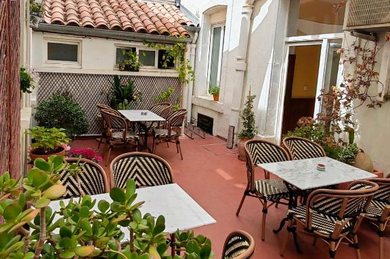
Le Mosaïque, with a pool, and Le C Boutique Hôtel & Spa have 4 stars, and the 3-star Hôtel La Résidence is around 150 metres from the palace. The Hôtel Galla Placidia is a small hotel and gallery with seven rooms.

Easiest without a car, with Les Halles, the palace and the Canal de la Robine within walking distance.
Wine estate hotels

La Clape

The 5-star Château L'Hospitalet, with 41 rooms, is on a wine estate between the town and Narbonne-Plage, and the 4-star Château Capitoul is by the road to Gruissan, with views over the vineyards and the Étang de Bages.

You need a car, but you get the vineyards, restaurants in the Michelin Guide and a short trip to the beach.
Beach

Narbonne-Plage

The 3-star Logis Hôtel de la Clape has a heated pool and is a short walk from the beach. The 2-star Hôtel de la Plage faces the sea by the Plage des Karantes, but is only open from March to October.

Summer and beach around 13 kilometres from the centre, with Citibus 11 to the town.
Circular village and beach houses

Gruissan

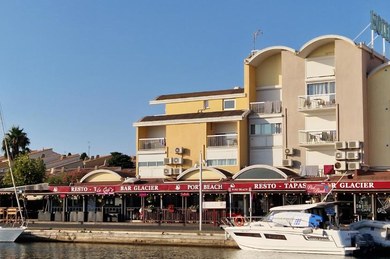
The 3-star Hôtel de la Plage is around 400 metres from the Plage des Chalets, and the 3-star Le Phoebus Garden & Spa has a spa open all year. The 3-star Hôtel Port Beach is by the marina.

By the sea and the beach houses, with free parking and Citibus 12 to Narbonne.
Further south

Leucate

The 4-star Le 19-21, with 19 rooms, is in the village of Leucate, around 30 kilometres south of Narbonne as the crow flies and close to La Franqui and Le Grand Cap.

You need a car, but it suits anyone who wants the wind and the beaches at La Franqui.
Selected places to stay

Places to stay in and around Narbonne

Here are some of our selected places to stay in and around Narbonne, in the centre, on the wine estates of La Clape and by the beaches. Compare the distance to the centre and the beach, the parking and whether the place is open in winter.

Château L'Hospitalet in Narbonne★★★★★
La Clape

Château L'Hospitalet

A five-star wine-estate hotel with 41 rooms, a spa and the restaurant L'Art de Vivre in La Clape.

Hôtel Le Mosaïque in Narbonne★★★★
Les Halles

Hôtel Le Mosaïque

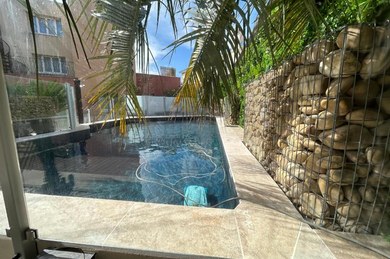
A four-star hotel with 15 rooms and a pool in the centre of Narbonne, near Les Halles.

Le C Boutique Hôtel in Narbonne★★★★
Canal de la Robine

Le C Boutique Hôtel

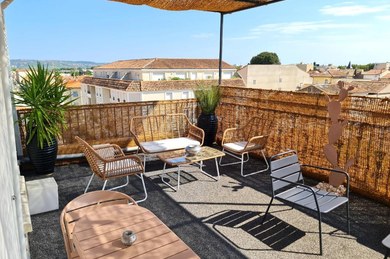
A small four-star boutique hotel with ten rooms, a spa and a terrace above the rooftops.

Hôtel La Résidence in Narbonne★★★
Cathedral

Hôtel La Résidence

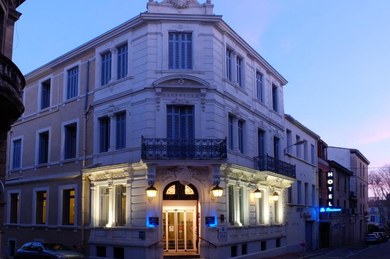
A three-star hotel with 26 rooms in a classic town house, a block from the cathedral.

Hôtel Galla Placidia in Narbonne★★★
Horreum

Hôtel Galla Placidia

A small three-star hotel and art gallery with seven rooms in the north of the centre.

Les Îlots de Gruissan in GruissanHotel
Gruissan

Les Îlots de Gruissan

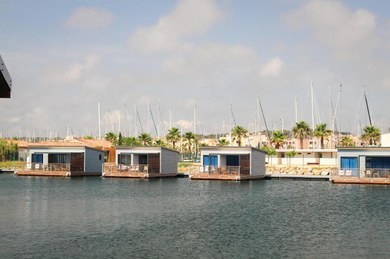
Rooms in small houses out on the water in Gruissan, each with a terrace over the water.

The map shows our selected hotels in Narbonne, in La Clape and along the coast. Click a marker for a photo and more information.
Camping and motorhomes

Camping near Narbonne

The 4-star La Nautique is by the Étang de Bages, around four kilometres south of the centre. Along the coast there are large campsites in Narbonne-Plage, Gruissan, Saint-Pierre-la-Mer and Port-la-Nouvelle, and Les Ayguades in Gruissan is by a Blue Flag beach.

Massif, lagoons and fortresses

The landscape around Narbonne

15,000 hectares

The Massif de la Clape

The limestone massif between Narbonne and the sea was an island in antiquity and has been protected since 1973. Read the article on Gruissan and the beaches.

Bird protection and nature park

The Étang de Bages-Sigean

The lagoon south of the town is shallow, and the flamingo is a key species in the bird protection area around it. Read more about Gruissan and the beaches.

World Heritage since 2026

The Corbières and the fortresses

Peyrepertuse, Quéribus and Termes stand on the ridges of the Corbières, built by the French kings after the crusade. Read the article on the fortresses of Languedoc.

Car hire from Perpignan Airport

A car for your day trips

Perpignan–Rivesaltes (PGF) is about 50 km from Narbonne as the crow flies, and the tourist office gives 46 minutes by car. With your own car you can also reach Fontfroide, Lagrasse and the fortresses of the Corbières.

Abbey, coast and fortresses

Four good day trips from Narbonne

South-west of the town lies Fontfroide Abbey, and further into the Corbières Peyrepertuse and Quéribus stand on the ridges and Lagrasse by its abbey. Towards the sea lies Gruissan with the Tour Barberousse and the beach houses on stilts.

Continue your journey

More destinations from Narbonne

Narbonne fits into a tour of Occitanie, with Carcassonne to the west, Sète to the north-east and Perpignan to the south.

La Cité in Carcassonne behind vineyards
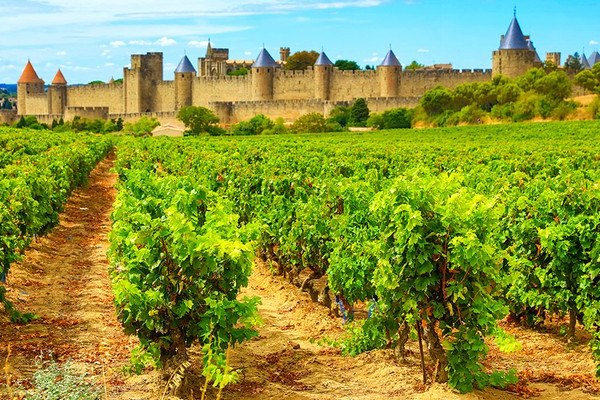
The fortified city in the Aude

Carcassonne

Combine Narbonne with La Cité and the double ramparts of Carcassonne, around 60 kilometres away by car or by train on the line towards Toulouse.

Open the Carcassonne guide →
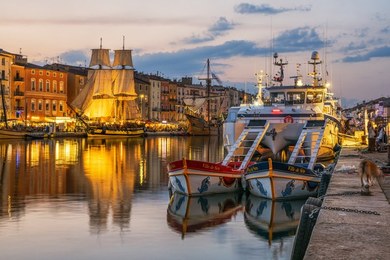
The Quai Général-Durand in Sète at the blue hour during Escale à Sète 2022, with the tall ship La Grace lit up, a trawler and jousting boats at the quay
The port town on the Étang de Thau

Sète

Travel on to the canals, Les Halles and the oysters of the Étang de Thau, around 60 kilometres north-east of Narbonne as the crow flies.

Open the Sète guide →
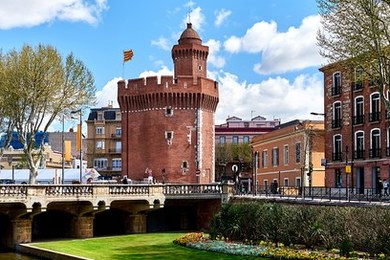
Le Castillet in Perpignan, the red brick gate tower with the flag, the bridge over La Basse, a lawn and brick houses
The Catalan city in the south

Perpignan

Travel on to the Le Castillet city gate and the old town of Perpignan, around 55 kilometres south of Narbonne as the crow flies.

Open the Perpignan guide →
Read more

Read our inspiring articles about France

Find inspiration in travel guides, touring itineraries and personal tips from across France. Discover cities, villages, food and wine experiences, nature and new destinations.

Cathedral · A vault over 40 metres

The cathedral and the Archbishops’ Palace

The Archbishops’ Palace with its square keep and the Cathédrale Saint-Just-et-Saint-Pasteur with the choir and the flying buttresses, seen from above over the rooftops of the centre
Photo: Ptitgonevx, CC BY-SA 3.0

The Cathédrale Saint-Just-et-Saint-Pasteur was begun in 1272, and the canons started using the choir in 1332. The vault of the choir is over 40 metres high.

The choir is the only part that was finished. The consuls refused to demolish the town wall so that the church could be built further, and the transept that was begun still stands unfinished in the Cour Saint-Eutrope.

The Archbishops’ Palace was both a residence and a fortress. The Palais Vieux has the La Madeleine chapel from 1273, and the Palais Neuf houses the museum with European painting from the sixteenth to the nineteenth century.

The Gilles Aycelin keep is 42 metres high and was built in 1295–1306. There are 162 steps up to the terrace, with views over the town, the hills and the lagoons.

The Pass Monumentale cost €12 in 2026, €8 reduced, and was free for under-18s. It is valid for a year for the art trail in the Palais Neuf, the treasury, the keep, Charles Trenet’s birthplace and one guided tour. Prices for 2027 have not been published.

From 12 November to 31 December 2026 the palace is open from 10am to 12.45pm and 2pm to 5pm, but closed on Tuesdays and on 25 December. The times for January–March 2027 have not been published.

A vault over 40 mA 42 m keepPass €12 (2026)Closed on Tuesdays
See the palace and the tickets →
Beach · Blue Flag

Narbonne-Plage and the Massif de la Clape

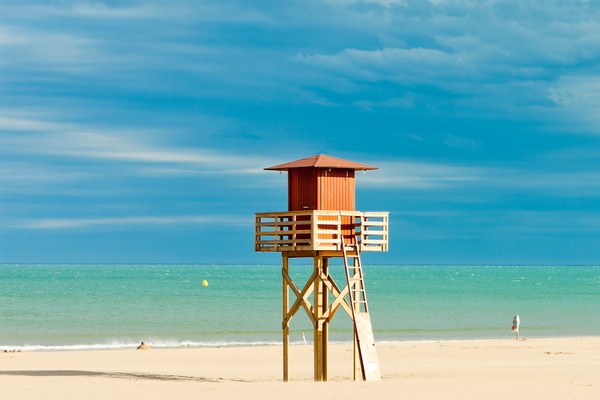
A lifeguard hut on stilts on a wide sandy beach at Narbonne-Plage, with turquoise sea
Image from Frankrike.no.

Narbonne-Plage belongs to the municipality of Narbonne and lies around 13 kilometres from the centre, on the other side of La Clape. The beach is 5 kilometres long and 150 metres wide, with four lifeguard posts.

The article on Gruissan and the beaches tells you more about the coast from Saint-Pierre-la-Mer to Leucate.

The Plage du Centre, the Plage des Karantes and the Plage du Languedoc are on the Pavillon Bleu list, and Narbonne-Plage has had the Blue Flag since 1988. The seafront promenade is 2.5 kilometres long.

The Massif de la Clape is a limestone massif of 15,000 hectares, around 15 by 8 kilometres, with the 214-metre Pech Redon as its highest point. In antiquity it was an island.

The Sentier des Exals runs for around 3 kilometres from Narbonne-Plage, and in Saint-Pierre-la-Mer, which belongs to Fleury, lies the Gouffre de l'Œil Doux, a water-filled shaft in the limestone.

Citibus line 11 runs from Narbonne to Narbonne-Plage. The Hôtel de la Plage by the Plage des Karantes is only open from March to October.

5 km of beachBlue Flag since 1988Four lifeguard postsCitibus 11
Read the article →
Market · Since 1901

Les Halles

A spice stall at the market in Narbonne, with open sacks of spices and beans and small signs
Image from Frankrike.no.

Les Halles are on the Boulevard du Docteur-Ferroul in the centre and opened on 1 January 1901, in a Baltard-style pavilion.

There are around 60 stalls here, and the halls replaced the market on the Place aux Herbes.

The idea came up in 1871, and it was almost 30 years before the halls were finished.

In 2026 the halls are open every day from 7am to 1.30pm, but on Mondays they are closed from 5 October to 30 November.

The “Les Halles” bus stop is right in front of the entrance, and the palace and the Via Domitia are a few minutes away on foot.

The tourist office at 31 Rue Jean-Jaurès is also within walking distance and has reopened after renovation.

From 1901Around 60 stalls7am–1.30pmOn foot
See Les Halles →
Museum · Roman Narbonne

Narbo Via and the stone wall

The stone wall in Narbo Via, with Roman reliefs and inscribed blocks in a tall metal shelving system
Photo: Zunkir, CC BY-SA 4.0

Narbo Via at 2 Avenue André-Mècle is the museum of Roman Narbonne, around 1.3 kilometres from the centre. The town was founded as Narbo Martius in 118 BC.

The stone wall is an automated shelving system that can display around 760 Roman stone blocks, according to Studio Adrien Gardère, which designed the exhibition.

The museum is open all year Tuesday–Sunday from 10am to 6pm and is closed on Mondays, 1 January, 1 May and 25 December.

A ticket costs €12, and the pass for the museum, the Horreum and Amphoralis costs €17 and is valid for a month. Under-18s go free, as does everyone on the first Sunday of the month from October to May.

With a liO train ticket less than seven days old the museum costs €6, and a combined ticket for Narbo Via and Fontfroide costs €19.

Amphoralis, the Gallic amphora workshop in Sallèles-d'Aude, has a winter break from 14 November 2026 to 8 February 2027.

Ticket €12Free under 18Closed on MondaysThree sites €17
See Narbo Via →
Roman road · Underground galleries

The Via Domitia and the Horreum

The Via Domitia in Narbonne, with dark, worn paving stones in the excavation, stone edges and steps up to the square
Photo: Didier Descouens, CC BY-SA 4.0

A section of the Via Domitia lies exposed in the middle of the Place de l'Hôtel de Ville. It was found in 1997, restored and opened to the public.

The Roman road linked Italy and Spain from the second century BC.

The Horreum at 7 Rue Rouget-de-Lisle consists of underground galleries from the first century BC, around five metres below today’s street level.

From October to April the Horreum is open Tuesday–Sunday from 10am to 12pm and 2pm to 5pm, with last admission at 4.30pm. It is closed on Mondays and on 1 January, 1 May and 25 December.

A ticket costs €6, or €3 with a liO train ticket less than seven days old, and the Horreum is included in the pass for the three Narbo Via sites.

The Horreum is around 200 metres from the Via Domitia, so both go well with the palace and the cathedral.

Found in 19975 m below the streetHorreum €6Closed on Mondays
See the Horreum →
Canal · World Heritage since 1996

The Canal de la Robine and the Pont des Marchands

The Canal de la Robine in Narbonne with the arched footbridge over the canal, rows of plane trees, flowers along the quays and yellow and pink house fronts reflected in the water
Image from Frankrike.no.

The Canal de la Robine runs through the centre of Narbonne and on through the lagoons to the sea at Port-la-Nouvelle, 32 kilometres according to the tourist office.

The canal was laid in an old bed of the Aude in the fourteenth century to supply the town’s mills with water, and in 1686 it was made into a canal towards the Canal du Midi. The Canal de Jonction at Sallèles-d'Aude came more than a hundred years later.

The Robine and the Canal de Jonction to Port-la-Nouvelle are part of the Canal du Midi World Heritage Site from 1996, but the Canal du Midi itself does not pass through Narbonne.

The Pont des Marchands is a bridge with houses and shops over the Robine, on the route of the Via Domitia. It is one of the few inhabited bridges in France.

The towpath is a cycle path from Narbonne to Port-la-Nouvelle, and you can take the train there and cycle back.

Near Port-la-Nouvelle lies the Île Sainte-Lucie, a nature reserve of 825 hectares, where dogs are not allowed.

32 km to the seaWorld Heritage 1996Pont des MarchandsCycle path
See the Robine at the tourist office →
Narbonne · Two stars

La Table Lionel Giraud

The keep of the Archbishops’ Palace and a church tower above the row of plane trees along the quay by the Canal de la Robine, with flower boxes on the railing
Image from Frankrike.no.

La Table Lionel Giraud is in Maison Saint-Crescent, 68 Avenue du Général-Leclerc by the Rond-point de la Liberté, around 1.5 kilometres south-west of the centre.

The Michelin Guide has awarded the restaurant two stars. Lionel Giraud received the first star in 2005 and the second in 2020, according to the website.

Michelin describes creative, local cooking with seafood and vegetables, in a former pilgrims’ hostel with arches and bare stone. The price level is four euro signs.

The set menus cost €125–225 according to the website, and the children’s menu for under-12s costs €40.

According to the website it is open Tuesday–Saturday from 12pm to 12.45pm and 7.30pm to 8.30pm. It is closed on Sundays and Mondays.

Book well ahead. The Cave à Vin & à Manger bistro is in the same building.

Two starsMaison Saint-CrescentCreative cookingClosed Sun–Mon
See La Table Lionel Giraud →
Narbonne · Bib Gourmand

Cave à Vin & à Manger

A belle époque commercial building in the centre of Narbonne, with a dome, arched windows, wrought-iron balconies and a street lamp
Image from Frankrike.no.

Cave à Vin & à Manger is in Maison Saint-Crescent, 68 Avenue du Général-Leclerc, in the same building as La Table Lionel Giraud.

The restaurant has a Bib Gourmand in the Michelin Guide, the mark for good food at a reasonable price.

Michelin describes bistro cooking with produce from Occitanie, and the price level is two euro signs. Lionel Giraud is also behind the bistro.

The wine cellar has around 1,500 wines according to the website, and the bottles can be bought to take away or drunk on site for a corkage fee.

According to the website the Cave à Manger is open Tuesday–Saturday from 12pm to 1.45pm and 7.30pm to 9.15pm. It is closed on Sundays and Mondays.

Book ahead, especially at weekends.

Bib GourmandMaison Saint-CrescentBistro and wineClosed Sun–Mon
See Cave à Vin & à Manger →
Fontjoncouse · Three stars

Auberge du Vieux Puits

Vineyards on the hillsides of the Corbières in the evening sun, with young shoots, bushes and trees in front
Photo: MikeAdler, CC BY 2.0

Auberge du Vieux Puits is at 5 Avenue Saint-Victor in Fontjoncouse, a village of around 140 inhabitants in the Corbières, around 23 kilometres south-west of Narbonne as the crow flies.

The Michelin Guide has awarded the restaurant three stars, the guide’s highest distinction.

Gilles Goujon runs the kitchen together with sons Enzo and Axel, and the signature dish is the egg with truffle. The cooking is creative, and the price level is four euro signs.

Auberge du Vieux Puits also has rooms in the village and by the pool, and a chocolate shop, Axel et la Chocolaterie.

Neither Michelin nor the front page of the website gives the opening days and the winter closure, so check before you go.

Book well ahead, and allow for around 33 kilometres by car from Narbonne.

Three starsFontjoncouseCreative cookingApprox. 23 km
See Auberge du Vieux Puits →
La Clape · Recommended

Méditerranéo – Château Capitoul

The Massif de la Clape seen from the air, with limestone escarpments, vineyards, a farm and wetland at the bottom
Photo: Lothur, CC0

Méditerranéo is at Château Capitoul by the road to Gruissan, around 7 kilometres south-east of the centre of Narbonne.

It is recommended in the Michelin Guide, without a star or a Bib Gourmand.

Michelin describes Mediterranean cooking in an art deco dining room with views over the vineyards and the Étang de Bages. The price level is three euro signs, and the chef is Valère Diochet.

Château Capitoul is a wine estate in La Clape that the same family has run for seven generations, and the hotel has 4 stars.

Michelin gives Wednesday–Friday from 7.30pm to 8.30pm and Saturday–Sunday from 12pm to 1.30pm and 7.30pm to 8.30pm. It is closed on Mondays and Tuesdays.

Book ahead, and combine dinner with a day in Gruissan.

RecommendedLa ClapeMediterranean cookingClosed Mon–Tue
See Méditerranéo →
La Clape · Recommended

L'Art de Vivre

Garrigue in La Clape in the evening light, with a winding road, the beach and the Mediterranean behind
Photo: Florian Pépellin, CC BY-SA 4.0

L'Art de Vivre is at Château L'Hospitalet by the road to Narbonne-Plage, in the middle of La Clape, around 9 kilometres east of the centre.

It is recommended in the Michelin Guide, without a star or a Bib Gourmand.

The chef, Laurent Chabert, cooks modern dishes from mostly organic, local produce, with vegetables from the restaurant’s own kitchen garden and fish from Gruissan and Port-la-Nouvelle. The price level is four euro signs.

The estate belongs to Gérard Bertrand, and the wines with the food come from the house. Château L'Hospitalet has 5 stars and 41 rooms.

Michelin gives Thursday from 8pm to 11pm and Friday–Sunday from 12pm to 3pm and 8pm to 11pm. It is closed Monday–Wednesday.

Book ahead, and combine dinner with a day on the beach at Narbonne-Plage.

RecommendedChâteau L'HospitaletKitchen gardenClosed Mon–Wed
See L'Art de Vivre →
Leucate · One star

Le Grand Cap

The lighthouse on Cap Leucate, a white tower with a red lantern room, low white houses, pine trees and an old fishing boat
Photo: H. Zell, CC BY-SA 3.0

Le Grand Cap is on the Chemin du Phare on the plateau in Leucate, around 31 kilometres south of Narbonne as the crow flies.

The Michelin Guide has awarded the restaurant one star.

Erwan Houssin runs the kitchen and Paméla Houssin the desserts. Michelin mentions herbs gathered on the cliffs, meat and fish from Languedoc and Roussillon and the dessert trolley. The price level is three euro signs.

The restaurant has views over the coast, and the sister restaurant is called Aphyllanthe.

It is open for lunch on Mondays, for lunch and dinner Thursday–Saturday and for lunch on Sundays, from 12pm to 1.30pm and 7.30pm to 9pm. It is closed on Tuesdays and Wednesdays.

Book ahead, and combine the meal with the beaches at La Franqui.

One starLeucateModern cookingClosed Tue–Wed
See Le Grand Cap →
Abbey · Founded in 1093

Fontfroide Abbey

The cloister of Fontfroide Abbey seen from inside, with rib vaults, round windows, paired columns and the clipped garden in the courtyard
Image from Frankrike.no.

Fontfroide Abbey lies around 11 kilometres south-west of Narbonne as the crow flies. Benedictines founded the abbey in 1093, and the Cistercians took over in 1145.

The papal legate Pierre de Castelnau was a monk here. The murder of Castelnau in 1208 triggered the Albigensian Crusade.

Gustave Fayet bought and restored the abbey in 1908. The gardens cover more than 8 hectares, with a rose garden.

The abbey is open every day from 1 November to 24 December and from 26 to 31 December 2026, and the times for January–March 2027 have not been published. A self-guided visit cost €14 in 2026 and a guided visit €17.50, and 6–25-year-olds paid €10 and €12.

Dogs are not allowed inside, but there is a free dog enclosure at the entrance. The La Table de Fontfroide restaurant is in the abbey.

The bus from Narbonne only runs in July and August. By car you take the Narbonne Sud exit and the D613 towards Lézignan.

From 1093Self-guided visit €14Gardens of 8 haHalf day
See Fontfroide →
Circular village · Beach houses on stilts

Gruissan

The Tour Barberousse on the rock above Gruissan, with the houses by the water, the lagoon and grass in front
Photo: Cecile Amiel, CC BY-SA 3.0

Gruissan lies around 11 kilometres south-east of Narbonne as the crow flies and has around 5,000 inhabitants. The streets of the circular village run in rings around the Tour Barberousse.

The tower was built in 1245–1247 by Archbishop Guillaume de Broa, and the name comes from the corsair Barbarossa, who died around 300 years later.

At Les Chalets 1,330 beach houses on stilts stand in 11 rows. Jean-Jacques Beineix filmed “37°2 le matin” (Betty Blue) here in 1985.

The Salin de Gruissan on the Île Saint-Martin is a 322-hectare salt works from 1910, with pink pools, flamingos and guided tours of around 2 kilometres.

The Plage des Chalets, Les Ayguades and Grazel have the Blue Flag, and all parking in Gruissan is free.

By the chapel of Notre-Dame-des-Auzils in La Clape stand 27 memorials to sailors lost at sea.

Tour Barberousse1,330 beach housesFree parkingApprox. 11 km
Read the article →
Fortresses · World Heritage 2026

Peyrepertuse and Quéribus

Peyrepertuse seen from the air, with the lower castle, the walls and the tower on the steep ridge and the valleys of the Corbières behind
Image from Frankrike.no.

Peyrepertuse stands on a ridge in the Corbières, around 50 kilometres south-west of Narbonne as the crow flies, and Quéribus stands on a 728-metre summit around 7 kilometres away.

Read more about the royal fortresses and the history behind them in our article on the fortresses of Languedoc, which also covers Termes, Puilaurens and Carcassonne.

Both are part of the “Forteresses royales capétiennes du Languedoc” World Heritage Site from 26 July 2026. They are often called Cathar castles, but what stands today is mainly royal fortresses built after the Albigensian Crusade, on the border with Aragon.

Peyrepertuse is open every day all year except 24, 25 and 31 December and 1 January, and Quéribus except 25 December and 1 January. Both cost €9 in 2026.

From the ticket office it is around 20 minutes up to Peyrepertuse, and from the car park to Quéribus around 10 minutes. There is no public transport, so you need a car.

The castles may close, or visits may be advised against, in strong winds and thunderstorms, so check the day before, and wear good shoes.

World Heritage 2026€9 each (2026)Open in winterFull day
Read the article →
Village · Abbey from 779

Lagrasse

Lagrasse with the old stone bridge over the river, the stone houses of the village and a square tower behind the trees
Photo: Piero d'Houin dit Inocybe, CC BY-SA 3.0

Lagrasse lies around 33 kilometres west of Narbonne as the crow flies and is on the list of “Les Plus Beaux Villages de France”. The market hall is from the fourteenth century.

The abbey was founded in 779 under Charlemagne and is the largest in the Aude. The bridge links the village and the abbey.

The abbey has two parts that are visited separately: the public part with the Les arts de lire cultural centre, and the private part, where a community of canons lives.

The public part is open until 23 December 2026, on Mondays and Wednesday–Friday from 1.30pm to 5.30pm and Saturday–Sunday from 10am to 6pm, and is closed on Tuesdays. The reopening in 2027 has not been announced.

Read more about the castles of the Corbières around the village in our article on the fortresses of Languedoc, which also includes Termes.

Fontfroide is around 35 minutes away by car, so the abbey and Lagrasse can be combined in one day.

Abbey from 779Plus Beaux VillagesClosed on TuesdaysHalf day
Read the article →