
The most important thing first: in winter some of the beach hotels are closed. The salt works have guided tours from February, and Notre-Dame-des-Auzils closes when La Clape is closed because of the fire risk. The Réserve africaine de Sigean is open every day all year round. The prices and times in this guide are from the sources in November 2026.
The circulade and Tour Barberousse
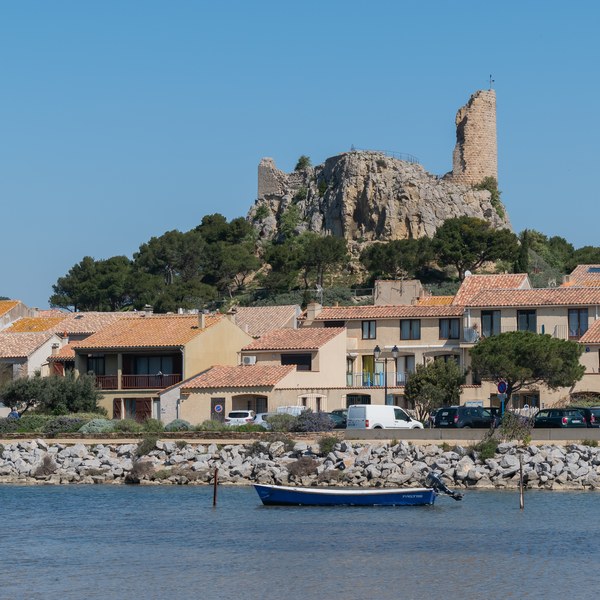
Gruissan has around 5,000 inhabitants. The old town is a circulade, a circular village: the streets run in rings around the tower. Circular villages like this arose in Languedoc around the year 1000 as a form of defence. The town wall with two gates was demolished in the 19th century.
- Tour Barberousse: built in 1245–1247 by Archbishop Guillaume de Broa. The tower is all that remains of the castle from the 11th century, which was part of the border defences in the 13th century and was demolished on the orders of Louis XIII.
- The name: after the corsair Barbarossa, who died in 1546 – approx. 300 years after the tower was built.
See the tourist office at gruissan-mediterranee.com.
The beach chalets on stilts and Betty Blue
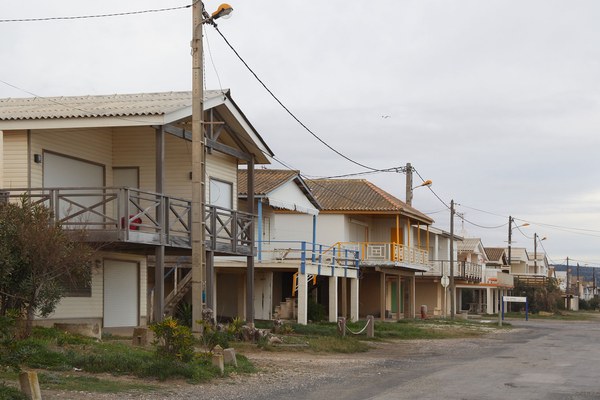
At Gruissan-Plage stand Les Chalets: 1,330 beach chalets in 11 rows. Approx. 300 more houses are not counted as chalets, because their owners own the plot. The first beach chalets came in the 1850s, at first without stilts. During the German occupation they were destroyed, and they were rebuilt in staggered rows, so that more of them got a view of the sea.
- Betty Blue: “37°2 le matin” was filmed here in 1985 by Jean-Jacques Beineix, with Béatrice Dalle and Jean-Hugues Anglade. The tourist office does not say which house was used.
- Gruissan, not Narbonne-Plage: the film’s houses on stilts stand in Gruissan.
- The beach: the Plage des Chalets is 1.8 kilometres and has a Blue Flag.
The salt works on the Île Saint-Martin
The Salin de Gruissan covers 322 hectares. Salt has been extracted here since approx. 100 BC, and the present salt works opened in 1910. The pink colour comes from a microalga rich in beta-carotene. In the basins you see flamingos, terns and avocets.
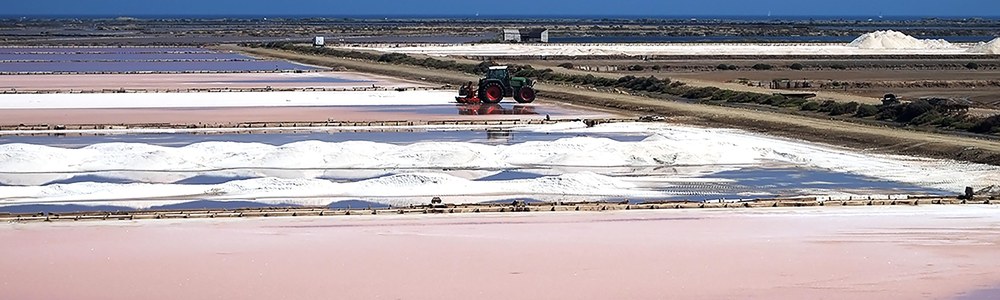
- Guided tour: approx. 1 hour and 15 minutes and 2 kilometres.
- February–March: Friday–Sunday at 11am and 3pm.
- April, May, October and November: every day at 11am, 3pm and 4.30pm.
- June–September: every day at 11am, 3pm, 4.30pm and 6pm.
- December–January: the tourist office gives no tours, and no price either.
- Also: fleur de sel and oysters, the restaurant La Cambuse du Saunier, a shop and free parking.
See lesalindegruissan.fr.
Notre-Dame-des-Auzils
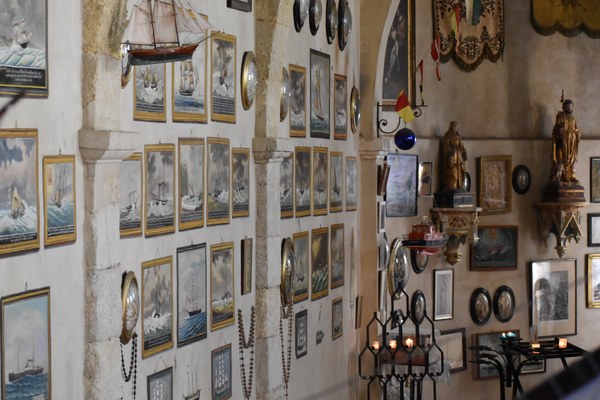
In La Clape, 3.5 kilometres from Gruissan, lies the chapel of Notre-Dame-des-Auzils. Monks from Cassan founded a priory here in 1080, and the present chapel probably dates from 1635. Along the “allée des naufragés” stand 27 memorials to sailors lost at sea. The oldest is from 1844.
- Inside the chapel: 73 votive paintings and 27 model ships. The oldest were stolen in 1967, and the chapel reopened in 1981.
- The pilgrimages: Easter Monday since 1797, when 32 sailors died on 28 February, and Whit Monday, after the cholera of 1835.
- Fire risk: the chapel is closed when the massif is closed because of the fire risk.
The harbour
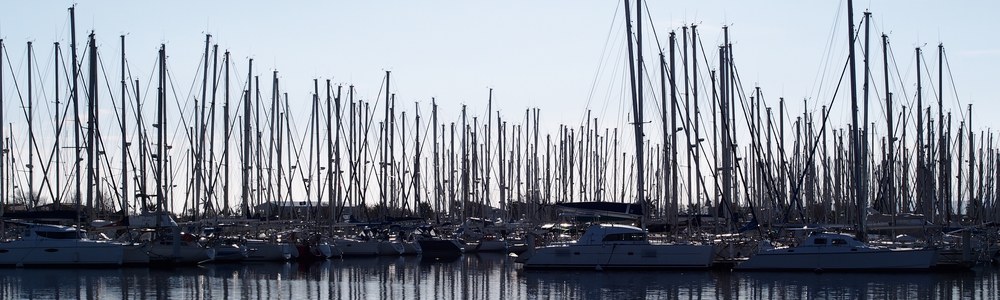
The marina in Gruissan has a Blue Flag. From Gruissan there is a boat to Port-la-Nouvelle, and you can cycle back along the Canal de la Robine and the cycle route “La Littorale”.
The Massif de la Clape and its wines
La Clape is a limestone massif of 15,000 hectares, approx. 15 × 8 kilometres, between Narbonne and the sea. The highest point is Pech Redon, 214 metres. In antiquity the massif was an island, “Insula Leci”. Most of it lies in the municipality of Narbonne.
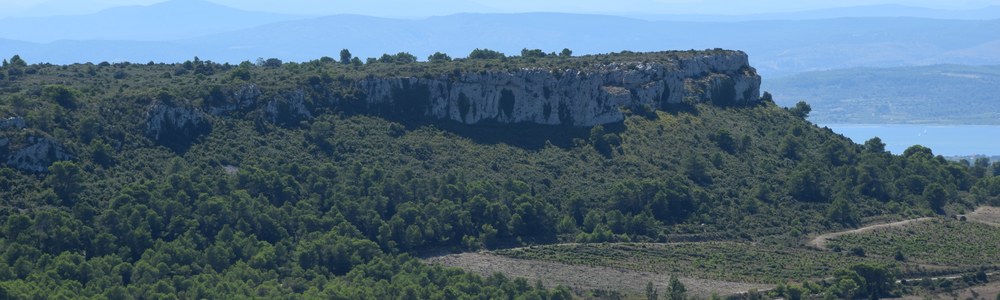
- Protection: a protected site since 1973 and a Natura 2000 site. Much of it is owned by the Conservatoire du littoral.
- Walks: six walking trails and 110 kilometres of mountain bike trails.
- The wine: La Clape became an appellation of its own (AOC) in 2015, for red and white wine.
- Gouffre de l'Œil Doux: a water-filled shaft in La Clape near Saint-Pierre-la-Mer.
La Clape, Corbières and Minervois are in the wine guide to Languedoc-Roussillon.
The beaches from Saint-Pierre-la-Mer to Port-la-Nouvelle
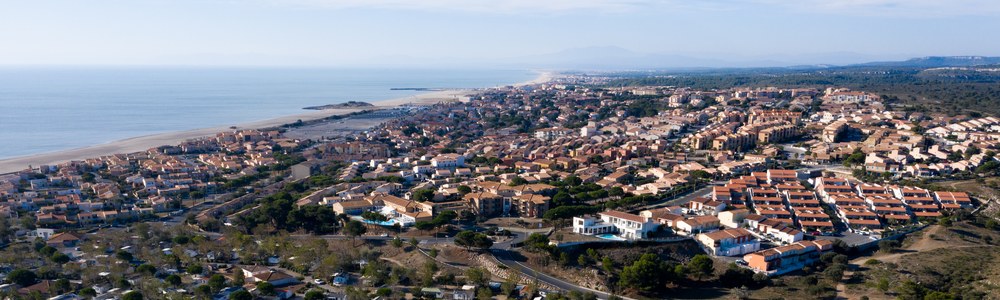
- Narbonne-Plage: belongs to the municipality of Narbonne. The beach is 5 kilometres long and 150 metres wide, with four lifeguard stations and a Blue Flag since 1988. The seafront promenade is 2.5 kilometres, the Sentier des Exals path approx. 3 kilometres, and the harbour has 600 berths.
- Saint-Pierre-la-Mer: belongs to Fleury. Both Saint-Pierre-la-Mer and Les Cabanes de Fleury have a Blue Flag.
- Gruissan: Les Chalets 1.8 kilometres, Mateille 1.8 kilometres, Les Ayguades 1.4 kilometres, Grazel 530 metres and La Vieille Nouvelle 4.5 kilometres. Four beaches have lifeguards, and all parking in Gruissan is free.
- Port-la-Nouvelle: the Plage du Front de Mer has a Blue Flag. The Île Sainte-Lucie lies close by.
See the tourist office on Narbonne-Plage. More beaches are in The best beaches in France.
Leucate, La Franqui and Les Coussoules
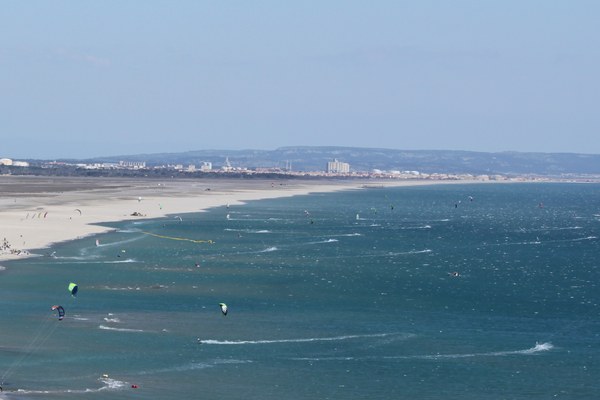
Leucate has 11 kilometres of sandy beach, and Port Leucate 4 kilometres. The tourist office in Leucate promises “une tramontane fidèle”, a faithful tramontane. La Franqui is a kitesurfing spot, and Les Coussoules is the beach for sand yachting (char à voile).
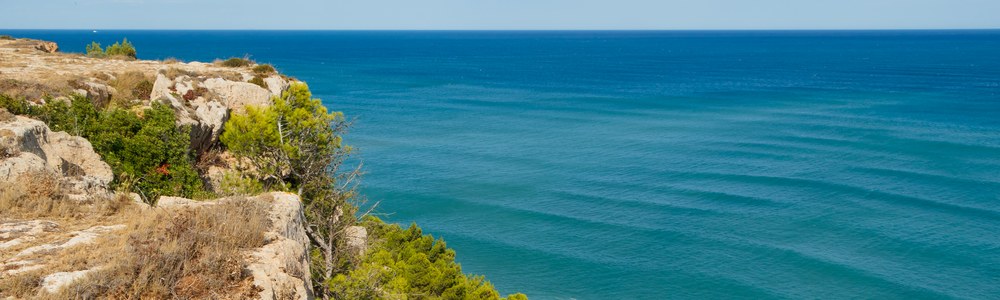
- Blue Flag 2026: Leucate Plage, La Franqui, Copacabana and Naturistes in Port Leucate, and Le Kyklos.
- Mondial du Vent: the wingfoil World Championship in Leucate in spring 2027. The date has not been published.
- Le Grand Cap: the restaurant on the Leucate plateau has one Michelin star.
The tramontane and the wind
The tramontane from the north-west is the hallmark of Leucate. In a strong north wind the Étang de Bages-Sigean partly empties through the grau, the opening to the sea, at Port-la-Nouvelle. We have not found the onshore wind, the marin, described in the official sources.
- Défi Wind: in Gruissan in spring 2027.
- Prince of Speed: speed records in La Palme in spring and summer 2027.
- Natur'Ailes: kite festival in Narbonne-Plage in spring 2027.
- The dates: none of the events have published a date for 2027 yet.
The lagoons
The nature park names six coastal lagoons: Bages-Sigean, Doul, Ayrolle, Campignol, Gruissan and Mateille. In the Ayrolle you see waders, gulls and terns.
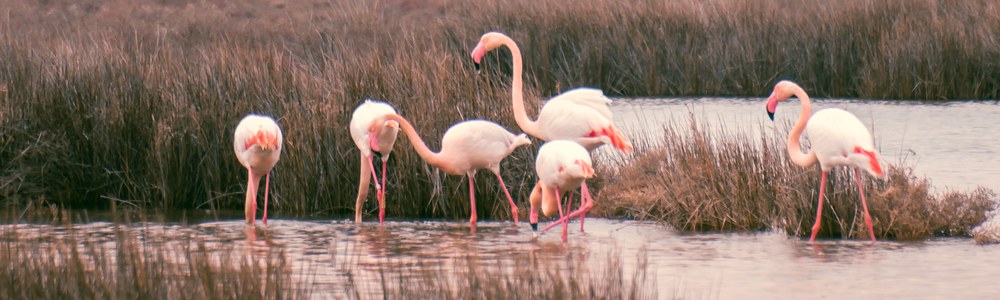
The Étang de Bages-Sigean and the flamingos
The Natura 2000 site around the Étang de Bages-Sigean covers 9,555 hectares, and the lagoons are shallow. In the bird protection area “étang du Narbonnais”, 12,314 hectares with approx. 83 bird species of European importance, the flamingo is a key species.
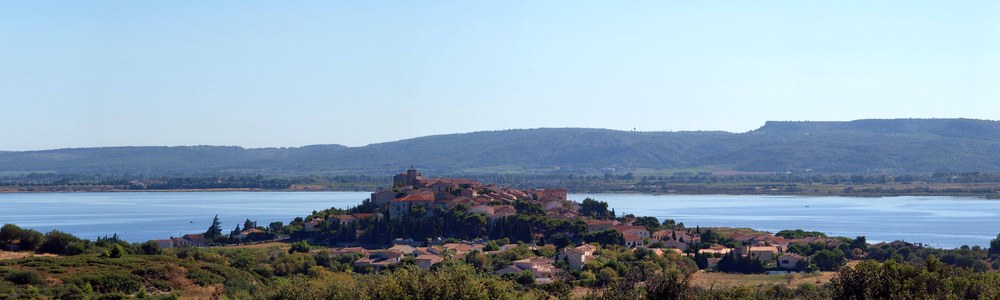
- The villages: Bages, with 720 inhabitants, and Peyriac-de-Mer lie by the lagoon.
- The flamingos: the tourist office has an experience of its own, “à la recherche des flamants roses”.
The Narbonnaise en Méditerranée nature park
The Parc naturel régional de la Narbonnaise en Méditerranée was created on 18 December 2003. The park has 22 municipalities, 70,000 hectares and 70,000 inhabitants, with the visitor centres Maison de la Narbonnaise and Maison de la Clape.
Île Sainte-Lucie
By Port-la-Nouvelle lies the Île Sainte-Lucie, a regional nature reserve since 25 September 2009. It covers 825 hectares: the island 255, the old salt works 330 and the beach 240 hectares. The area is owned by the Conservatoire du littoral.
- Getting there: on foot or by bike along the towpath of the Canal de la Robine, or by barge on the canal – from Narbonne or from the lock at Mandirac.
- Dogs: forbidden on the island. In the salt works and on the beach dogs are forbidden April–July and must be kept on a lead August–March.
Réserve africaine de Sigean
The safari park in Sigean is open every day all year round. It covers more than 350 hectares, with several thousand animals of over 160 species. The drive-through safari is 7 kilometres through 8 enclosures, and on foot you need approx. 3 hours.
- Winter 25 October 2026–27 March 2027: open from 10am. The ticket office and the drive-through safari close at 4pm, and the walking section at 5.30pm.
- Price until 31 January 2027: adults 34 euros, ages 4–14 24 euros. The park recommends buying tickets online.
Gruissan in winter
- Open: the Espace balnéo, the spa at Le Phoebus, the producers and the guided tours.
- The salt works: guided tours Friday–Sunday from February.
- The tourist office: Monday–Friday 10am–12pm and 2–4pm.
- Closed: some of the beach hotels. The Hôtel de la Plage in Narbonne-Plage is open only March–October.
- Narbonne: the Christmas market Fééries de Noël runs from 28 November 2026 to 3 January 2027.
When should you go?
- May–June and September: the beaches without crowds and the salt works with more tours every day.
- July–August: the most people on the beaches and the most bus departures to the seaside resorts.
- Spring: the wind events in Leucate, Gruissan and La Palme.
- November–March: Sigean, the harbour and La Clape are open, but some of the beach hotels are closed.
Getting to Gruissan and the beaches
- By air: Perpignan–Rivesaltes is 50 kilometres from Narbonne as the crow flies, approx. 46 minutes by car according to the tourist office. The car hire box on this page uses Perpignan, but the airport has no routes from the Nordic countries.
- From the Nordic countries: Ryanair flies Stockholm Arlanda–Béziers on Tuesdays and Saturdays in the summer season (30 March–30 October). Montpellier has routes to Oslo (June–August), Copenhagen (April–November) and Stockholm (May–October). The routes for 2027 have not been confirmed, so check with the airlines.
- Bus from Narbonne (Citibus): line 12 to Gruissan, 11 to Narbonne-Plage, 10 to Saint-Pierre-la-Mer, 13 to Sigean and Leucate, and 14 to Bages, Peyriac-de-Mer, Sigean and Port-la-Nouvelle. Single ticket 1.20 euros, day ticket 3 euros and 10 journeys 9 euros.
- By train: Port-la-Nouvelle and Leucate have railway stations. You can take the train Narbonne–Port-la-Nouvelle and cycle back along the Canal de la Robine.
- Parking: free everywhere in Gruissan.
The timetables are published by Citibus, which got a new route network on 1 September 2026.
Eating and sleeping on the coast
In La Clape there are two wine estate hotels. The four-star Château Capitoul has 8 rooms and the restaurant Méditerranéo, recommended in the Michelin Guide, with views over the vineyards and the Étang de Bages. The five-star Château L'Hospitalet has 41 rooms and the restaurant L'Art de Vivre, also recommended in the Michelin Guide. In Leucate, Le Grand Cap has one star.
In Gruissan, the three-star Hôtel de la Plage has 25 rooms, 400 metres from the Plage des Chalets, and the three-star Le Phoebus Garden & Spa has 50 rooms and a spa all year round. The campsite Les Ayguades has four stars and 268 pitches by the beach of the same name. More are in Camping in France.
Onward from the coast
Inland lie the fortresses of Languedoc, with Peyrepertuse, Quéribus and Carcassonne. Further south lies Perpignan, and north-east along the coast Sète. The Canal de la Robine to Port-la-Nouvelle is part of the World Heritage Site The Canal du Midi.
4 days in Gruissan and along the coast
Each day stands on its own, with Narbonne or Gruissan as a base. In December and January the salt works have no guided tours.
The tower, the salt works and the beach chalets
Walk up to Tour Barberousse from the circulade, take a guided tour of the salt works, and finish among the beach chalets at Les Chalets.
- Tour Barberousse: built in 1245–1247
- The salt works: approx. 1 hour and 15 minutes with a guide
- Les Chalets: 1,330 houses on stilts
La Clape and Notre-Dame-des-Auzils
Walk up to the chapel of Notre-Dame-des-Auzils, take one of the walking trails in La Clape, and taste the wines of the appellation at one of the estates.
- The chapel: closed when the massif is closed because of the fire risk
- La Clape: six walking trails and 110 kilometres of bike trails
- The wine: an appellation of its own since 2015
Sigean and Leucate
Drive through the Réserve africaine de Sigean in the morning, and continue to La Franqui and Leucate for the wind and the kites. Finish at the cliffs of Cap Leucate.
- Sigean: 7 kilometres of drive-through safari, open all year
- La Franqui: kitesurfing spot with the tramontane
- Le Grand Cap: one Michelin star
Narbonne-Plage and Saint-Pierre-la-Mer
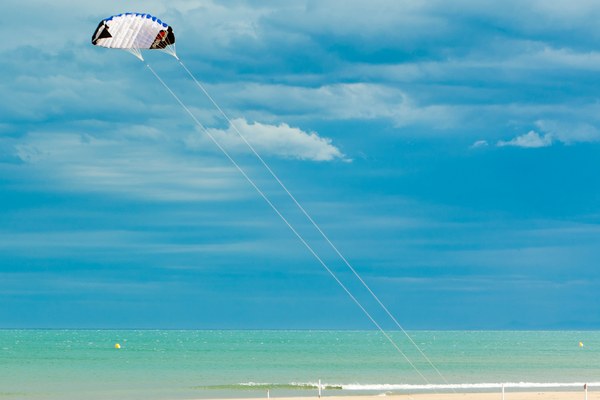
Walk the seafront promenade in Narbonne-Plage and the Sentier des Exals path, and continue to Saint-Pierre-la-Mer and the Gouffre de l'Œil Doux in La Clape.
- The seafront promenade: 2.5 kilometres
- Sentier des Exals: approx. 3 kilometres
- Bus: Citibus lines 11 and 10 from Narbonne