
The most important thing first: the canal has been closed to boats since 9 November 2026, and the dates of the winter closure 2026/27 have not been published. Check with VNF before you book a boat.
Closed to boats – check with VNF
Voies navigables de France (VNF), which runs the canal, stopped lock operations from Toulouse to the Étang de Thau on Monday 9 November 2026 to save water, according to the local press. VNF lists the closed stretches on its website.
- High season 2026: 25 March–1 November, with free navigation.
- Low season: the locks open only on request, on weekdays 8.30am–12pm and 1–4.30pm. You must give notice the day before by 3pm.
- Closed all day: 1 January, 1 May, 11 November and 25 December.
See vnf.fr and the official website of the World Heritage Site, canal-du-midi.com.
Riquet and the construction
- October 1666: the edict on the canal came from Saint-Germain. Pierre-Paul Riquet was given the commission on 14 October.
- 1 January 1667: the work began, and the first stone in Saint-Ferréol was laid on 18 April the same year.
- Up to 12,000 workers: the canal cost 17,160,000 livres. The king paid 8,485,000, the États du Languedoc 8,070,000 and Riquet 605,000.
- 1 October 1680: Riquet died in Toulouse and never saw the canal finished.
- 15 May 1681: the inaugural convoy left Toulouse.
- 1686–1694: Vauban inspected the canal in 1686, and in 1687–1694 came the improvements with 48 aqueducts and canal bridges.
Until the Revolution the canal was called the “Canal royal de Languedoc”. The port of Sète was founded on 29 July 1666 as the port for the canal, and Riquet took over the harbour works in 1669. The history is on the website of VNF.
The canal – 240 kilometres and 63 locks
The Canal du Midi is 240 kilometres long, from the Port de l'Embouchure in Toulouse to the Pointe des Onglous in Marseillan. It ends in the Étang de Thau, not in Sète: the boats cross the lagoon, approx. 15 kilometres, to Sète. Together with the Canal de Garonne, built in 1838–1856, the waterway from the Atlantic to the Mediterranean is called the “Canal des Deux Mers”.
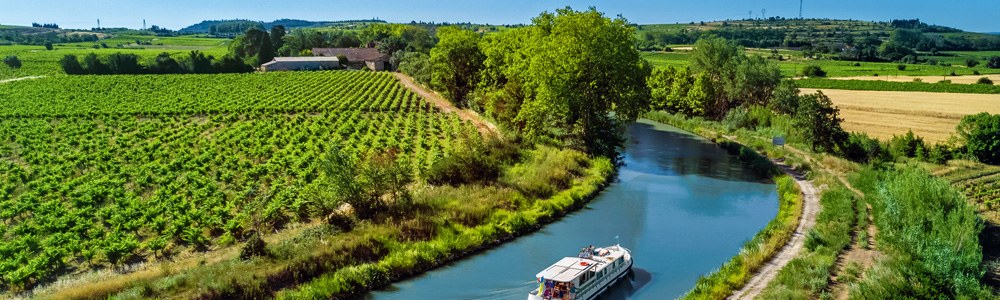
- Width and depth: 18 metres at the surface, 10 metres at the bottom and on average 1.90 metres deep.
- The drop: from the watershed at Naurouze to the sea the canal falls 189 metres.
- 63 locks: 45 single, 12 double, 4 triple, one quadruple (Saint-Roch in Castelnaudary, 9.42 metres) and one eightfold (Fonseranes). With the branch canals there are 77.
- Oval locks: Riquet’s lock chambers are oval and 30.5 metres long. From the 1970s the locks were lengthened by 10 metres for barges of 38.5 metres, but the programme stopped in 1984. The middle section, 140 kilometres, still has the dimensions from the 17th century.
- Three departments: the Haute-Garonne, the Aude and the Hérault. The water supply lies in the Tarn.
The World Heritage Site
The Canal du Midi was added to the UNESCO World Heritage List on 7 December 1996. The protected area is 360 kilometres with 328 structures – locks, aqueducts, bridges, spillways and tunnels – and 46 listed monuments.
- The canal itself: 240 kilometres.
- The Canal de Jonction and the Canal de la Robine to Port-la-Nouvelle: 36.5 kilometres.
- The water supply from the Montagne Noire: 76 kilometres.
- The Canal de Brienne: 1.5 kilometres, and half a kilometre of the river Hérault at Agde.
The water – the Montagne Noire, Saint-Ferréol and Naurouze
The highest point of the canal is the watershed at the Seuil de Naurouze. The water comes from the Montagne Noire through a feeder system of its own. VNF puts it at 76 kilometres, the tourist office at Thau at 81 kilometres.
- Bassin de Saint-Ferréol: built in 1667–1672. The first stone was laid here on 18 April 1667.
- Naurouze: from here the water flows both towards Toulouse and towards the Mediterranean.
Fonseranes – eight chambers and nine gates
The staircase of locks at Béziers is called “Les Neuf Écluses”, but it has 8 chambers and 9 gates, not nine locks. The drop is 21.5 metres over approx. 300 metres. It was built in 1667–1680.
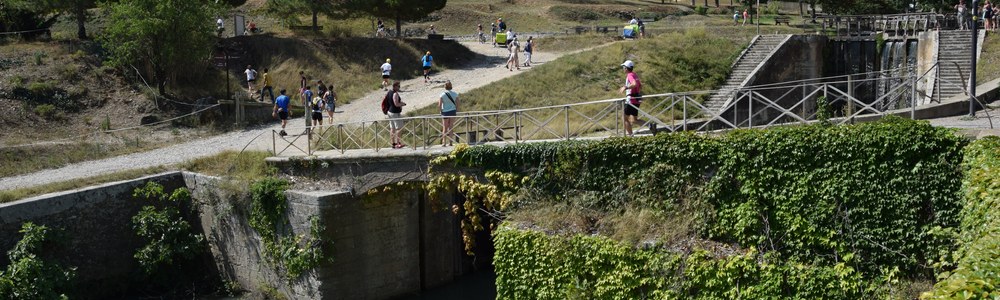
- Six chambers in use towards Thau: boats heading for Marseillan use six chambers. The seventh and eighth lead only to the Notre-Dame stretch after the Orb aqueduct.
- The water slope: a “pente d'eau” that was meant to lift the boats was built in 1979–1984 and has been abandoned.
- Lock times 2 May–30 September 2026: down 8.10–9.25am and 1.05–3.20pm, up 10.15am–12.15pm and 4.10–6.40pm.
- Spring and autumn 2026 (25 March–30 April and 1–24 October): down 8.40–9.25am and 1.15–3.15pm, up 10.15am–12.15pm and 4.05–5.45pm.
The Orb aqueduct
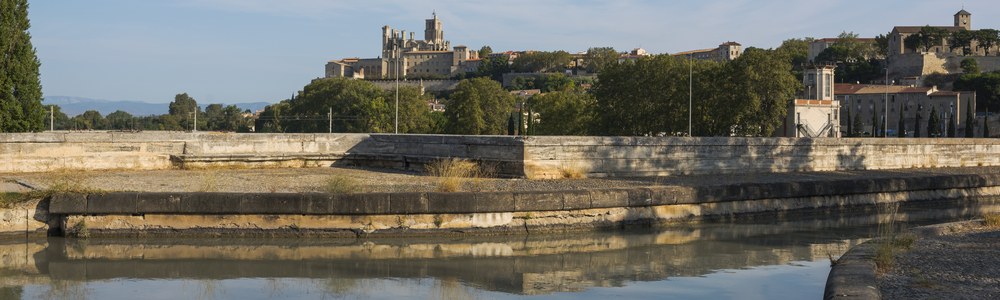
The Pont-canal de l'Orb in Béziers carries the canal over the river Orb. The aqueduct is 242 metres long with seven main arches and was designed by Urbain Maguès. The work began in 1853, the foundation stone was laid on 3 October 1854, and the aqueduct was inaugurated on 13 November 1857. Many guides give 1858.
The Répudre at Paraza in the Aude, from 1676, is regarded as the oldest canal bridge in France.
The Malpas Tunnel
Between Colombiers and Nissan the canal goes through the hill in the Malpas Tunnel, dug in 1679–1680. VNF regards it as the first navigable tunnel in Europe. The tunnel is approx. 160 metres long, 7 metres wide and 8.5 metres high. Beneath it runs a railway tunnel from 1855–1856.
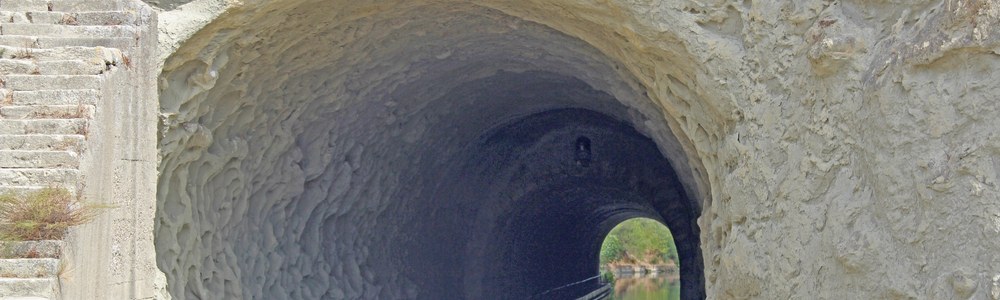
The Maison du Malpas in Colombiers has the telephone number +33 4 67 32 88 77.
Ensérune and the Étang de Montady
In Nissan-lez-Ensérune is the Oppidum d'Ensérune, a town from before the Romans, more than 2,500 years old, with an archaeological museum. North of it lies the Étang de Montady, a lake that was drained in the Middle Ages. The fields radiate from the centre and look like a star from above.
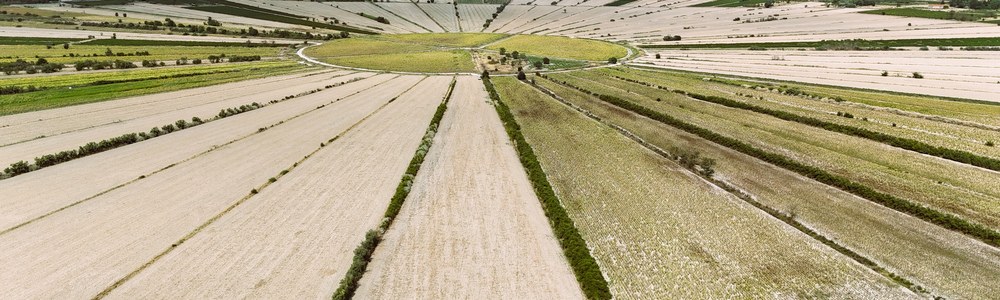
Opening times and prices are on enserune.fr.
The round lock at Agde
The lock at Agde is round, 30 metres in diameter and 5.20 metres deep, with three exits: towards Béziers, towards the Hérault and the Étang de Thau, and a short canal towards the sea at Grau d'Agde. It was built in 1675–1676 and opened in 1678. In 1978 a quarter of the circle was widened by 10 metres.
- Towards the sea in high season 2026: passages at 9.50am, 11.20am, 2.15pm, 4.15pm and 6pm.
- The town: the Cathédrale Saint-Étienne stands by the river Hérault, a short way from the lock.
Les Onglous – where the canal ends
At Les Onglous in Marseillan the Canal du Midi flows into the Étang de Thau. The lighthouse dates from approx. 1850. Across the lagoon it is 15 kilometres to Sète, and the boats must keep to the marked channel.
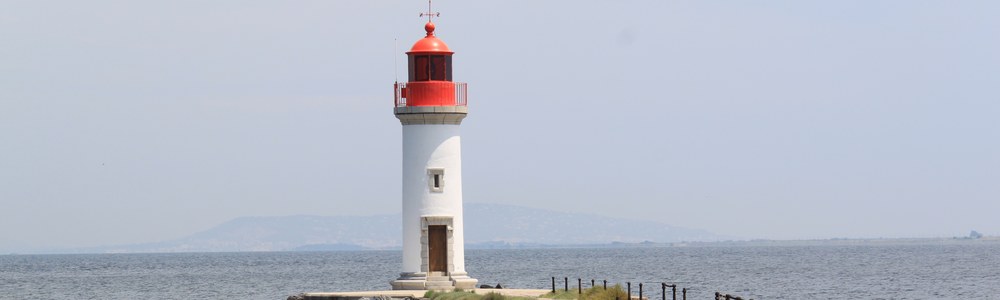
The lagoon, the oysters and Marseillan are in The Étang de Thau and its oysters.
The plane trees and the fungus
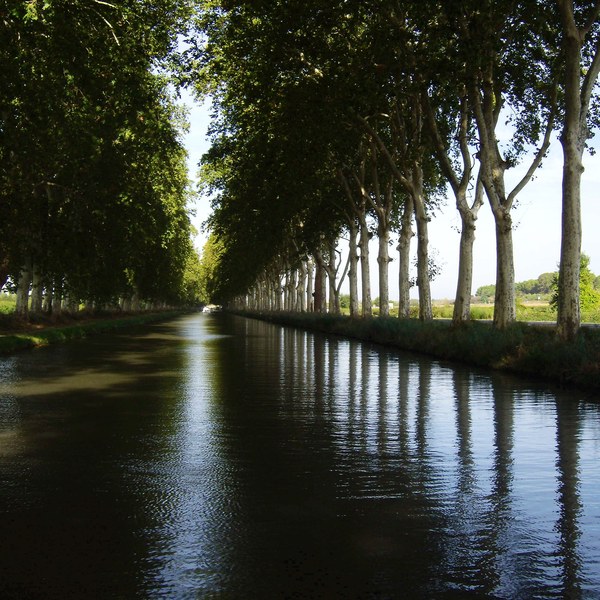
Of the 45,000 trees along the canal, 42,000 were plane trees. The fungus chancre coloré has spread since 2006 and kills a tree in two to five years. More than 75 per cent of the plane trees have been felled.
- New trees: approx. 21,000 trees have been planted since the winter of 2011–2012.
- More species: VNF has chosen seven tree species, among them the Turkey oak, chêne chevelu.
Houseboats on the Canal du Midi
You can hire a houseboat without a boating licence, for 2 to 12 people. The hire company gives instruction before you set off. The speed is at most 8 kilometres an hour, on average approx. 6.
- Bases: Port-Lauragais, Negra, Castelnaudary, Carcassonne, Argens, Lattes and Le Somail.
- Length: a weekend, four days, one or two weeks.
- The locks for pleasure boats 2026: 25 March–25 October 9am–12pm and 1–7pm, 26 October–1 November 8–11am and 12–6pm.
- Price: depends on the boat and the route. Ask the hire company.
- Canoes and paddleboards may not use the locks.
Remember the closure in winter. Paddling on the rivers is in Canoeing in France.
Day trips by boat
The tour boats leave from Sète, Béziers, Carcassonne, Castelnaudary and Toulouse, with trips of 1 hour 30 minutes to 2 hours or a full day. You can also hire an electric boat by the hour. We have not found common prices, so check with the tourist office where you start.
Cycling along the canal
“Le Canal des Deux Mers à vélo” is approx. 750 kilometres from the Atlantic to the Mediterranean. The Canal du Midi section is 240 kilometres, and then it is 18 kilometres to Sète.
- The surface: according to VNF, almost the whole stretch from Toulouse to Agde has a smooth or stabilised surface, and the rebuilding of the towpaths is nearing completion. VNF’s route planner shows the surface stage by stage.
- EuroVelo 8: follows only approx. 100 kilometres of the canal, from Portiragnes via the Canal de la Robine in Narbonne to Port-la-Nouvelle.
- The Lido: from the mouth of the canal in Marseillan a greenway runs along the sand to Sète.
- Luggage and accommodation: there is luggage transport and there are places with the Accueil Vélo label.
The Toulouse–Carcassonne stretch is in The 10 most beautiful bike rides, and more routes in Bike Routes in France.
The places along the canal
- Béziers: Fonseranes and the Orb aqueduct, with the Cathédrale Saint-Nazaire above the town.
- Capestang: the largest port on the canal between Béziers and Le Somail, with structures from the 17th century.
- Le Somail: a small hamlet by the canal with a bridge, an inn and a chapel, and one of the bases for houseboats.
- Castelnaudary: the Grand Bassin, the Saint-Roch lock with four chambers and a drop of 9.42 metres, and dry docks. The town is associated with cassoulet.
- Toulouse: the canal begins at the Port de l'Embouchure. The city is in the travel guide to Toulouse.
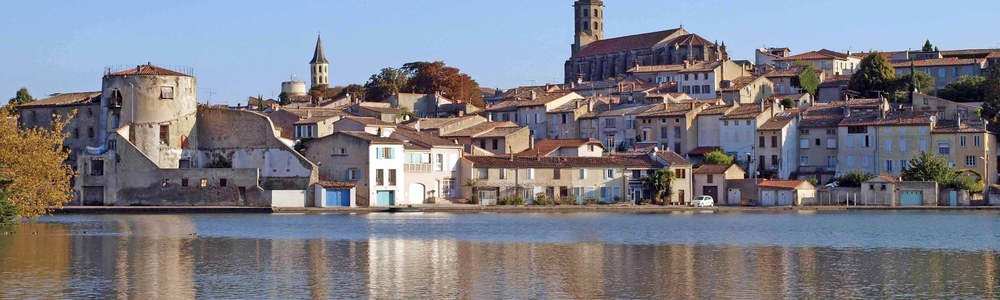
Carcassonne and the canal
In Carcassonne the canal port and the first lock are in the north of the town, right opposite the railway station, and the boat trips leave from there. From the port to the medieval city of La Cité it is approx. 1.7 kilometres as the crow flies. VNF reckons on approx. 30 minutes on foot from the station.
- Why the canal bypassed the town: Riquet wanted to take the canal past the town in 1670, but the consuls would not pay. It therefore ran 2 kilometres further north, along the Fresquel.
- Moved in towards the town: an agreement with the États du Languedoc in 1786 brought the route in towards Carcassonne. The aqueduct over the Fresquel was begun in 1802.
- Along the water: the Fresquel aqueduct and the double lock, the Port de Foucaud and the square André-Chénier. In the neighbouring town of Trèbes there is an aqueduct by Vauban.
- Houseboats: Carcassonne is one of the bases for hire.
The ramparts, the Château Comtal, the hotels and the day trips are in the travel guide to Carcassonne.
When should you go?
- May–June and September: high season, and Fonseranes has the longest lock times (2 May–30 September).
- July–August: the most people on the water and at Fonseranes.
- Late March–April and October: the locks are open, but Fonseranes has shorter times.
- November–March: locks only on request and the winter closure. From 9 November 2026 the canal is closed to boats.
Getting to the Canal du Midi
- By air: Montpellier-Méditerranée is 28.8 kilometres from Sète as the crow flies, approx. 30 minutes by car. The car hire box on this page uses Montpellier. Toulouse lies at the other end of the canal.
- Direct flights: the routes from the Nordic countries for 2027 have not been confirmed. Check with the airlines.
- By train: Sète is on the Bordeaux–Marseille line. Montpellier–Sète takes approx. 20 minutes and Paris–Sète approx. 3 hours and 30 minutes. With the liO ticket “Occitanie Rail Tour”, one day costs 10 euros and two days 20 euros.
- By car: from Sète it is 45 kilometres to Béziers, according to the tourist office.
There is more about the canal at Thau at the Archipel de Thau tourist office.
Eating and sleeping along the canal
In Béziers, Calice at 30 boulevard Bertrand-Duguesclin and L'Alter-Native at 12 rue Boieldieu each have one Michelin star. In Agde is the three-star Logis Hôtel Yseria with 16 rooms, 60 metres from the cathedral.
In Sète, the three-star Le Grand Hôtel has 43 rooms on the Canal Royal and the restaurant Quai 17 with a Bib Gourmand. Near the coast at Portiragnes, the campsite Les Mimosas has five stars and 400 pitches. You will find more in Camping in France.
Onward from the canal
In the east the canal ends at the lagoon in The Étang de Thau and its oysters, with Sète on the other side. In the west lie Carcassonne and Toulouse, and north-east of Sète Montpellier. The wines of the area are in the wine guide to Languedoc-Roussillon.
4 days along the Canal du Midi
Each day stands on its own. Check with VNF whether the locks are open, especially from November to March.
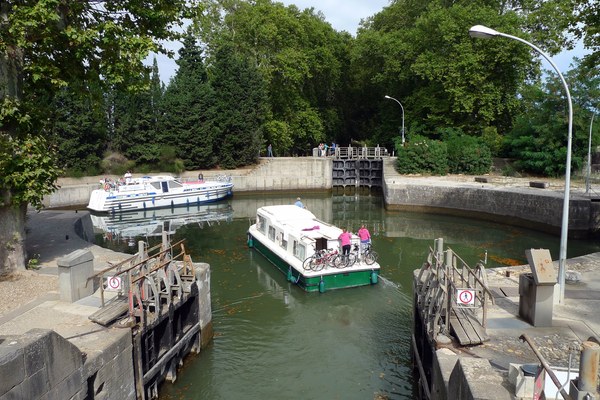
Agde and Les Onglous
See the round lock at Agde, and follow the path along the south bank of the canal through Bagnas. Finish at the Les Onglous lighthouse, where the canal meets the Étang de Thau.
- The round lock: 30 metres in diameter, opened in 1678
- Bagnas: the path along the canal is open to everyone
- Les Onglous: 15 kilometres across the lagoon to Sète
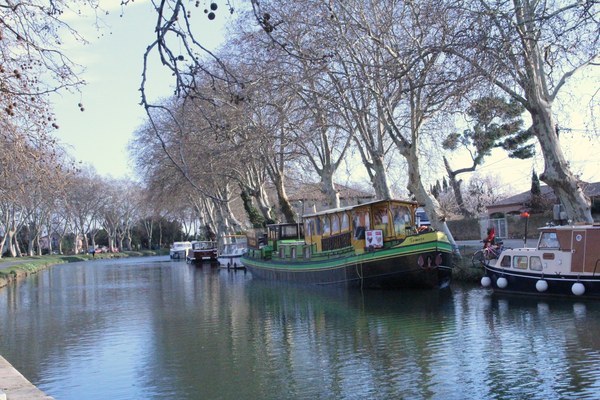
Le Somail and Carcassonne
Start in the hamlet of Le Somail by the bridge. Drive on to Carcassonne, take a boat trip from the canal port by the station, and walk up to La Cité in the afternoon.
- Le Somail: bridge, inn and chapel
- Carcassonne: the port right opposite the station
- To La Cité: approx. 30 minutes on foot
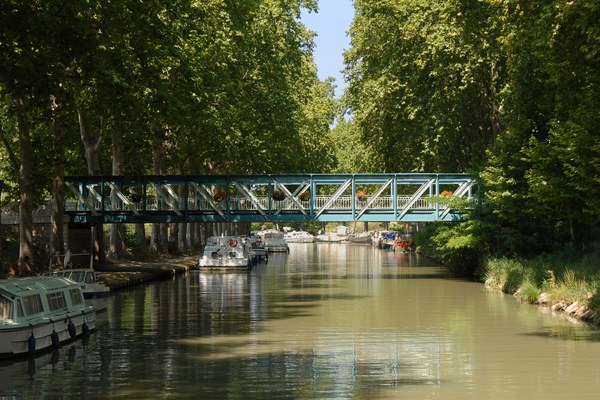
Capestang and Ensérune
Walk along the port in Capestang, and drive to the Oppidum d'Ensérune. North of Ensérune lies the Étang de Montady, which looks like a star from above.
- Capestang: the largest port between Béziers and Le Somail
- Ensérune: pre-Roman town and museum
- Check the times on enserune.fr
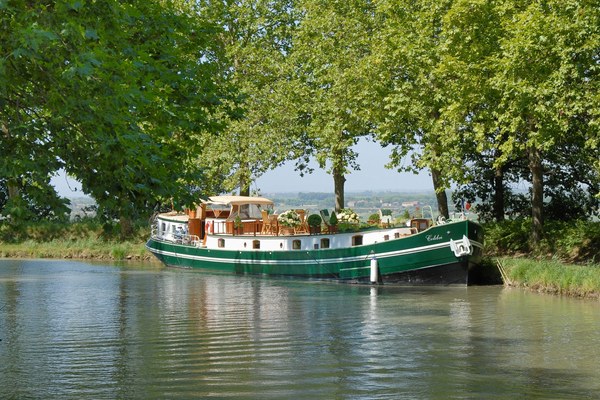
From Poilhes to Fonseranes
Follow the canal from Poilhes past the Malpas Tunnel at Colombiers and on to Fonseranes. Watch the boats in the staircase of locks, and walk over to the Orb aqueduct.
- Malpas: approx. 160 metres, from 1679–1680
- Fonseranes: 8 chambers and a drop of 21.5 metres
- The Orb aqueduct: 242 metres, inaugurated in 1857