
Arbois lies in the Jura department, in the Bourgogne-Franche-Comté region, approx. 42 kilometres as the crow flies from Besançon. The tourist office for Arbois, Poligny and Salins has the website coeurdujura-tourisme.com, and the wine producers’ joint organisation has jura-vins.com. The prices and opening hours in this guide are from the sources in autumn 2026 – check them before you go.
The wine region and the seven appellations
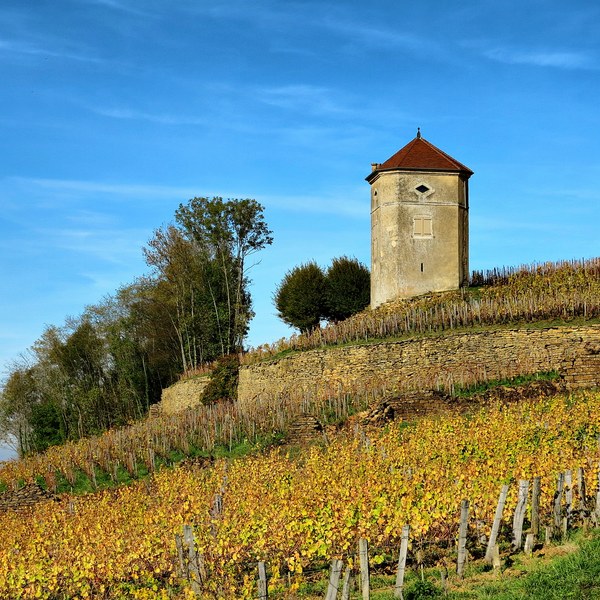
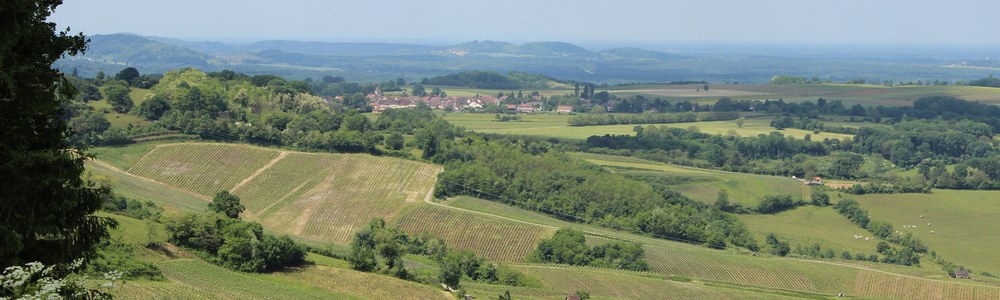
The vineyards lie along the Revermont, in a belt measuring 80 by 6 kilometres. The Jura has seven AOCs – four that follow the place and three that follow the product:
- Arbois: 15 May 1936, 766 hectares in twelve municipalities and approx. 29,100 hectolitres a year. Approx. 70 per cent of the red wine and 30 per cent of the white wine in the Jura comes from here.
- Château-Chalon: 29 May 1936, only vin jaune made from savagnin, approx. 60 hectares.
- L'Étoile: 31 July 1937, 67 hectares, mostly chardonnay. The name comes from the five hills and from the fossils in the soil.
- Côtes du Jura: 31 July 1937, 551 hectares in 105 municipalities, mostly white wine and crémant.
- Macvin du Jura, Crémant du Jura and Marc du Jura: the three product appellations.
You will often read that Arbois is France’s first AOC. According to INAO, which administers the appellations, six of them came in the same decree on 15 May 1936: Arbois, Cassis, Châteauneuf-du-Pape, Cognac, Monbazillac and Tavel.
The five grapes
Five grapes are permitted in the Jura:
- Savagnin: the grape in vin jaune, and the only one permitted there.
- Chardonnay: dominates in L'Étoile.
- Poulsard: also spelt ploussard.
- Trousseau and pinot noir.
Chardonnay and pinot noir are also the grapes of Burgundy – you will find more about them in the wine guide to Burgundy.
Vin jaune: a veil of yeast and a 62 cl bottle
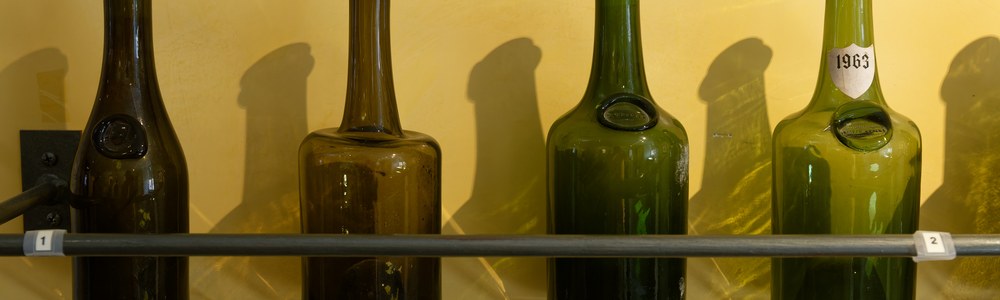
Vin jaune – “yellow wine” – is made only from savagnin. The wine spends at least six years and three months in oak barrels without being racked and without the barrel being topped up. A veil of yeast, “voile”, settles on the surface, which is why the producers say the wine matures “sous voile”.
- The bottle: a 62-centilitre clavelin, which is what is left of a litre after the years in barrel.
- Where it is made: in four AOCs – Château-Chalon, Arbois, L'Étoile and Côtes du Jura. So vin jaune does not come only from Château-Chalon.
- The control in Château-Chalon: a commission has checked the grapes every year since 1958. In 1974, 1980, 1984 and 2001 the producers gave up the appellation.
Vin de paille, macvin and crémant
- Vin de paille: the grapes are dried for at least six weeks on straw, on racks or hanging. 100 kilos give 15–18 litres of must, the wine spends three years in small barrels, and it has 14.5–17 per cent alcohol. AOC Côtes du Jura, Arbois and L'Étoile.
- Macvin du Jura: must blended with a third of marc, ten months in oak and 16–22 per cent. AOC since 14 November 1991, approx. 5 per cent of production.
- Crémant du Jura: sparkling wine made from hand-picked grapes. AOC since 9 October 1995, approx. 26 per cent of production.
Arbois: the town on the Cuisance
The river Cuisance runs through Arbois, and in rue du Vieux-Château the old houses hang out over the water. Above the town stands the bell tower of the church of Saint-Just:
- The church: a Romanesque nave from the 12th century with vaults from the 13th century.
- The tower: from the 16th century, originally 75 metres high. After the fire of 1651 it was 19 metres lower. The staircase has 209 steps – we have not found confirmation of whether you can climb it.
- Le Biou: the wine festival in Arbois. The date for 2027 has not been published.
The town’s website is arbois.fr.
Louis Pasteur’s house
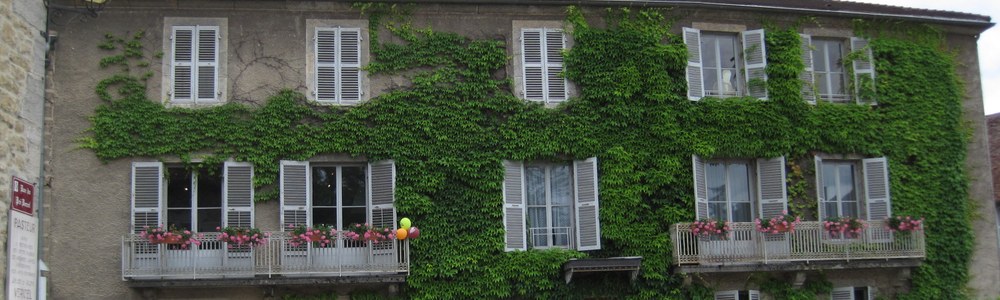
The Maison de Louis Pasteur at 83 rue de Courcelles is the family home that Pasteur extended and fitted out with a laboratory. The exhibition is about the rabies vaccine, pasteurisation and fermentation. The house has belonged to the Académie des sciences since 1992 and has been restored and extended since 2021.
- New in 2026: the house was reinaugurated on 11 September 2026 with the permanent exhibition “Les microbes, c'est la vie !”. Allow 1 hour 15 minutes to 1 hour 30 minutes.
- Open in 2026: from 7 February to 1 November, including public holidays. May–September 9.30am–12.30pm and 2pm–6pm, the other months 2pm–6pm. The sources differ on November.
- Prices in 2026: 9 euros for adults, 8 euros for students, 7 euros for ages 10–18 and 25 euros for a family. Free under 10. The combined ticket with the birthplace in Dole costs 13.50 euros.
- 2027: opening hours and prices have not been published, and the town warns that the prices may change – check before you go.
You will find the season and tickets at Jura Terre de Louis Pasteur.
The wine museum in the Château Pécauld
The Musée de la Vigne et du Vin du Jura opened in 1993 in the Château Pécauld, which was built between the 13th and 18th centuries. The museum explains the grapes, vin jaune and vin de paille, and around the château is a garden with vines.
- Open: March–October 10am–12 noon and 2pm–6pm, November–February 2pm–6pm. Closed on Tuesdays (except in July and August), on 1 January, 1 May and 25 December, and in January outside the school holidays.
- Prices: 4 euros, 3 euros reduced and free under 14. A pass for three museums costs 12.50 euros.
- Telephone: 03 84 66 40 45.
Wineries and tastings
The cooperative is a good place to start, and book or call before you go. If you are tasting in several places, let one person be the driver or take the train to Arbois.
- Fruitière Vinicole d'Arbois (Château Béthanie): one of France’s oldest wine cooperatives, founded in 1906 by 26 winegrowers. A guided tour with tasting costs 25 or 32 euros, and workshops from 16 euros. The opening hours differ between the sources – book on fruitiere-vinicole-arbois.fr.
- Domaine Rolet: a wine house in Arbois with the website domaine-rolet.com. It does not give opening hours for tastings – call first.
- Cave de la Reine Jeanne: is on the tourist office’s list of winegrowers, which is the place to find more.
The Reculée des Planches and the Cascade des Tufs waterfall
A reculée is a valley that ends in a vertical limestone wall. The Reculée des Planches at Les Planches-près-Arbois, south-east of Arbois, is the highest in the Jura, with walls of 245 metres. This is where the Cuisance rises, and here you find the Cascade des Tufs, approx. 3.7 kilometres as the crow flies from the town.
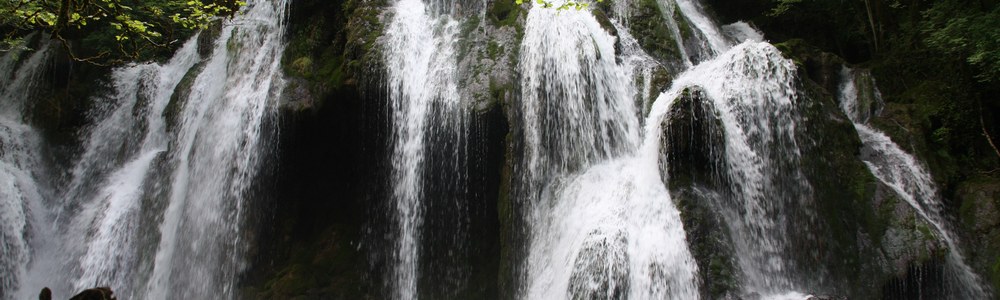
- Parking: only residents may park in the village. You walk 2 kilometres from Mesnay (Cartonnerie). In 2026 a free shuttle bus ran from 6 July to 30 August.
- Protection: the waterfall lies in a Natura 2000 area, and swimming is prohibited.
- Grotte des Planches: the cave has been closed since 2011. Many travel guides still list it as a sight.
- The name: there is also a waterfall called the Cascades des Tufs in Baume-les-Messieurs.
Château-Chalon
Château-Chalon is both a village and an appellation. The village is regarded as the place where vin jaune came into being, and it is a member of the association Les Plus Beaux Villages de France. Here stands the Romanesque church of Saint-Pierre, and the Maison de la Haute-Seille is open from April to October.
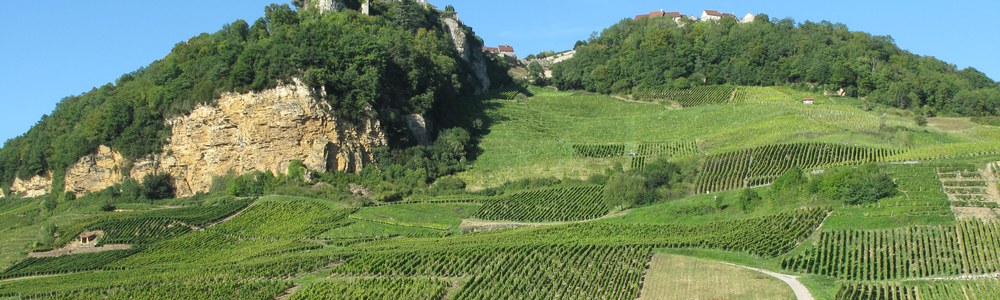
The village lies approx. 20 kilometres as the crow flies from Arbois. You will find visitor information on tourisme-chateauchalon.fr, and more places like it in the most beautiful villages in France.
Poligny and the Maison du Comté
Poligny lies approx. 9.5 kilometres as the crow flies from Arbois. At the Maison du Comté you learn how the cheese is made, and tasting is part of the visit.
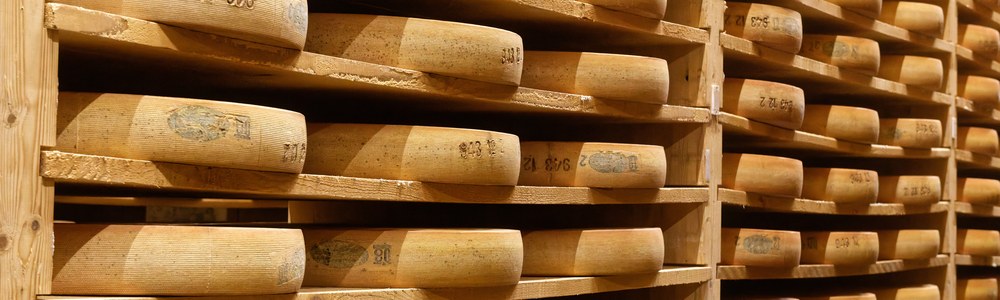
- The cheese: a 40-kilo cheese takes 400 litres of milk, only from the Montbéliarde and French Simmental breeds. It matures for at least four months, and it is made in approx. 140 fruitières, small village dairies.
- Open: every day 10am–6pm, in July and August 9.30am–7pm. The house is closed 14–29 November 2026 and reopens on 30 November, with the ticket desk open until 4.30pm. It is also closed on 1 May, 25 December and 1 January, and in January 2025 and 2026 it was closed for two weeks.
- Prices: 9.40 euros for adults, 7 euros for ages 6–18 and 28 euros for a family.
You will find tickets on maison-du-comte.com.
Baume-les-Messieurs
Baume-les-Messieurs is also one of Les Plus Beaux Villages de France. The village lies in a reculée, approx. 5 kilometres as the crow flies south of Château-Chalon.
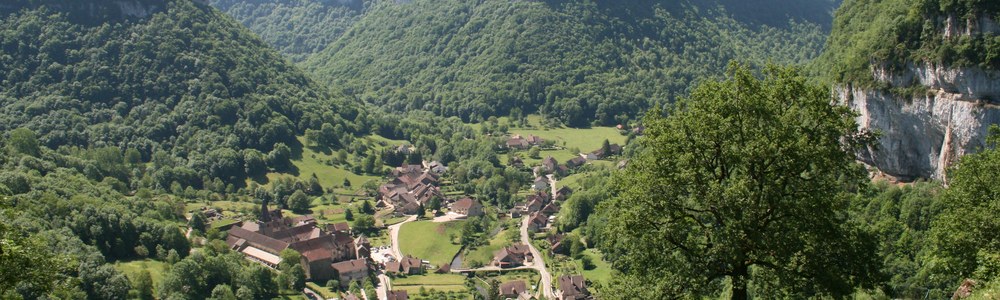
- The abbey: an imperial Benedictine abbey with a Flemish altarpiece. Guided tours 1 April–30 September and in the school holidays, 8.50 euros – or 6 euros without the altarpiece.
- Grottes de Baume: 1 April–30 September, 55 minutes, 10.50 euros for adults and 7 euros for ages 6–12. It is 11 degrees inside, so bring a jumper.
You will find the times on baumelesmessieurs.fr.
Salins-les-Bains and Dole
- Grande Saline in Salins-les-Bains: the saltworks with the underground gallery is a World Heritage Site together with the Saline royale in Arc-et-Senans. The guided tour takes one hour and costs 10.50 euros for adults, 6.50 euros for ages 13–18 and 6 euros for ages 6–12. Closed 6–26 January, 25 December and 1 January, but the site still shows 2025 dates – check with the Grande Saline.
- Saline royale in Arc-et-Senans: Claude-Nicolas Ledoux’s saltworks from 1775, approx. 14.5 kilometres as the crow flies from Arbois. You will find prices and opening hours in the travel guide to Besançon.
- Dole: Pasteur’s birthplace is closed 2 November–18 December 2026, open 19 December–3 January 2pm–6pm and again 13 February–7 November 2027. Admission costs 8 euros, 5 euros for ages 10–18. The TER from Besançon takes 22–27 minutes.
Food in the Jura
The town of Arbois highlights cockerel or hen with vin jaune and morels, and crème brûlée with vin jaune. Otherwise you will come across these on the menus:
- Cheese: Comté, Morbier, Cancoillotte and Bleu de Gex.
- Mont d'Or: this cheese is made 15 August–15 March and sold 10 September–10 May. So you will not find it in summer. More on mont-dor.com.
- Sausages: saucisse de Morteau, which has the IGP label, and saucisse de Montbéliard.
Percée du Vin Jaune 6–7 February 2027
The new vintage of vin jaune is celebrated on the first weekend of February. The festival has been held since 1997, and the location changes. In 2027 it is in Arlay on 6 and 7 February, with the 2020 vintage. When the 27th edition was held in Lons-le-Saunier, 33,000 visitors came.
The tickets are sold online only, and you should check the prices for 2027 on percee-du-vin-jaune.com. Arlay lies approx. 23 kilometres as the crow flies from Arbois.
Getting to Arbois
- Train: the TER from Besançon Viotte to Arbois takes 37–43 minutes, with approx. 13 trains a day. The station lies outside the town, approx. 1 kilometre as the crow flies from the centre. According to SNCF Connect, the Besançon–Lons-le-Saunier line also stops in Arc-et-Senans, Mouchard and Poligny.
- From Paris: direct TGV from Gare de Lyon to Besançon Viotte in approx. 2 hours 30 minutes, 11 trains a day.
- By air: EuroAirport Basel-Mulhouse is 150 kilometres from Besançon via the A36. The airport lists direct routes from Copenhagen all year and from Oslo and Stockholm in summer. Geneva is 170 kilometres away and Lyon 240. The car hire box on this page uses Basel-Mulhouse.
- Car: expect to need a car for Château-Chalon and Baume-les-Messieurs – we have not found any public transport there.
Best time: the Grottes de Baume and the abbey have guided tours from April to September, the Maison de la Haute-Seille is open April–October and the Maison Pasteur was open from February to November in 2026. February is the month for the Percée du Vin Jaune.
Eating and sleeping
In Arbois, Le Bistronôme has a Bib Gourmand, and Michelin recommends Circus and Les Caudalies. In Les Planches-près-Arbois Castel Damandre is recommended, in Pupillin La Table du Grapiot has one star, and in Dole La Chaumière has one star.
In Arbois, Les Caudalies, Hôtel des Cépages and Hôtel des Messageries have three stars. Castel Damandre in Les Planches has four stars, and Château de Germigney in Port-Lesney has five. If you want to stay in the city and take the train, you will find the hotels in the travel guide to Besançon. The starred restaurants in the whole country are in our Michelin guide.
Onward from Arbois
The river Doubs, the Saut du Doubs waterfall and the absinthe town of Pontarlier have their own guide: the Doubs valley and Saut du Doubs. If you want to continue with wine, we have the Route des Grands Crus, the travel guide to Beaune and the travel guide to Dijon.
4 days in the Jura around Arbois
With four days between April and September you have time for Arbois on foot, the waterfall in the Reculée des Planches, Château-Chalon, Baume-les-Messieurs and Comté cheese in Poligny. The first day you can manage by train from Besançon, the rest is easiest by car – and agree on who is driving before you taste.
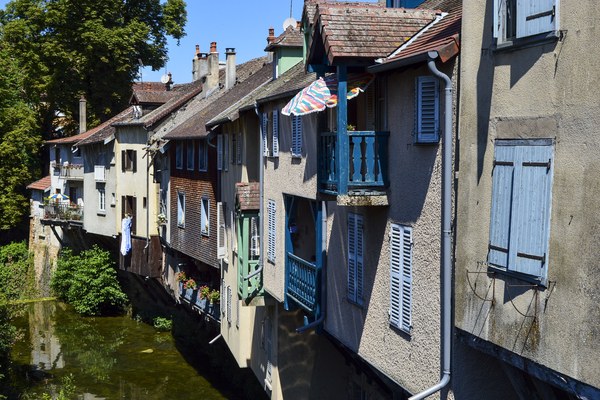
Arbois by train
Take the TER from Besançon Viotte, 37–43 minutes. See the houses above the Cuisance and the church of Saint-Just, learn about vin jaune in the Musée de la Vigne et du Vin and visit the Maison de Louis Pasteur. Finish with a guided tour and tasting at the Fruitière Vinicole, which you book in advance.
- The wine museum: 4 euros, closed Tuesdays
- Pasteur: 9 euros in 2026
- Dinner: Le Bistronôme (Bib Gourmand)
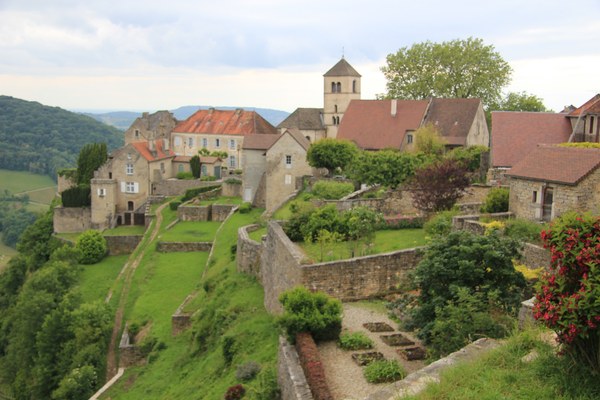
The waterfall and Château-Chalon
Walk from Mesnay into the Reculée des Planches to the Cascade des Tufs in the morning – it is a 2-kilometre walk from the Cartonnerie. Then drive to Château-Chalon, see the church of Saint-Pierre and the Maison de la Haute-Seille, and take a stroll round the village above the vineyards.
- Limestone walls of 245 metres
- Swimming prohibited at the waterfall
- Maison de la Haute-Seille: April–October
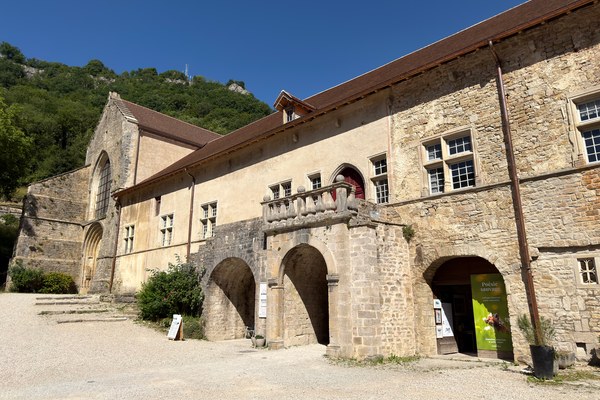
Baume-les-Messieurs
Spend the day in the reculée at Baume-les-Messieurs: a guided tour of the Benedictine abbey with the Flemish altarpiece, 55 minutes in the Grottes de Baume and a trip to the Cascades des Tufs waterfall.
- The abbey: 8.50 euros with the altarpiece
- The caves: 10.50 euros, 11 degrees
- Both: 1 April–30 September
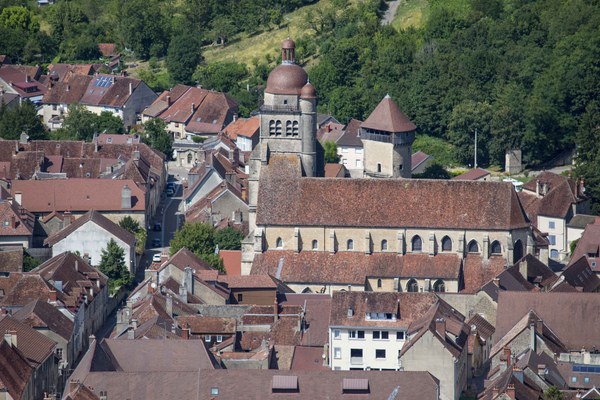
Poligny and Salins-les-Bains
Start at the Maison du Comté in Poligny, where you see how the cheese is made and get to taste it. Drive to Salins-les-Bains in the afternoon and join the one-hour guided tour of the Grande Saline, with the underground gallery.
- Maison du Comté: 9.40 euros
- Grande Saline: 10.50 euros with a guide
- You can swap Salins for Arc-et-Senans