
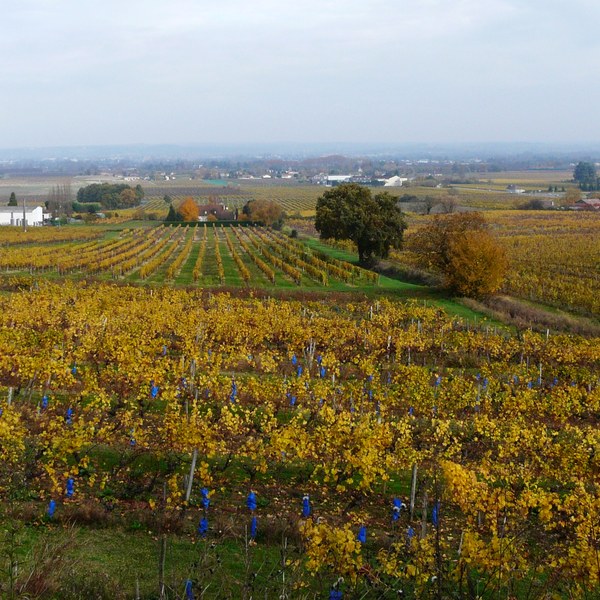
The most important thing first: from Bergerac it is approx. 12 minutes by car to Château de Monbazillac, and the wine house Quai Cyrano by the port in the town has free tastings all year. Château de Monbazillac is closed 2 November–20 December 2026 and in January and February, and several wine estates only receive visitors by appointment. The prices and times in this guide are from the sources in November 2026.
Before you go – car, bus and season
- By car: from Bergerac it is approx. 11 minutes to Tirecul la Gravière and Château de Tiregand, approx. 12 minutes to Château de Monbazillac, approx. 19 minutes to Château de Bridoire and approx. 36 minutes to Château des Vigiers in Monestier.
- Without a car: the town buses in Bergerac are free, and the wine house Quai Cyrano is by the port in the middle of the town. At Quai Cyrano you can hire a bicycle, and the V91 cycle route runs east along the Dordogne.
- Appointments: Domaine du Haut Pécharmant receives visitors by appointment. Check the opening times of the other wine estates before you go.
- Winter 2026/27: Château de Monbazillac has a Christmas event 21 December 2026–3 January 2027 and is closed in January and February. Quai Cyrano is open Monday–Saturday.
Ten AOPs for 17 wines
According to the winegrowers' joint organisation IVBD and the tourist office, the Bergerac area has 10 AOPs for 17 wines in seven terroirs and five colours. These are the appellations and the years they became AOCs:
- 1936: Bergerac and Monbazillac.
- 1937: Côtes de Duras, Montravel (white), Côtes de Montravel and Haut-Montravel.
- 1946: Pécharmant and Rosette.
- 1995: Côtes de Bergerac.
- 2001 and 2005: Montravel gained red wine in 2001, and Saussignac got a new decree in 2005.
The tourist office counts around 1,000 winegrowers, 150 wine merchants (négociants) and five cooperatives on around 9,000 hectares. The wine area has the Vignobles & Découvertes label, and the tourist office's “Route des Vins” has nearly 130 winegrowers. See Vins de Bergerac et Duras.
The grapes
- Red: merlot, which is the most widespread, cabernet sauvignon, cabernet franc and malbec, which is also called auxerrois or côt.
- White: sauvignon, sémillon and muscadelle. In Saussignac there can also be chenin, and in sweet Côtes de Duras chenin and mauzac.
- Blending: according to IVBD, the wines of Bergerac must be a blend of several grapes. In Duras this is not a requirement.
More about malbec is in Cahors wine.
Monbazillac – the sweet wine and noble rot
Monbazillac is a sweet white wine from around 2,300 hectares south of Bergerac. According to the château, that is more than a quarter of France's 8,000 hectares of vineyards for sweet wine, and in 2025 around 120 producers made around 8 million bottles. According to the tourist office, Monbazillac is the appellation in the world that makes the most sweet wine.
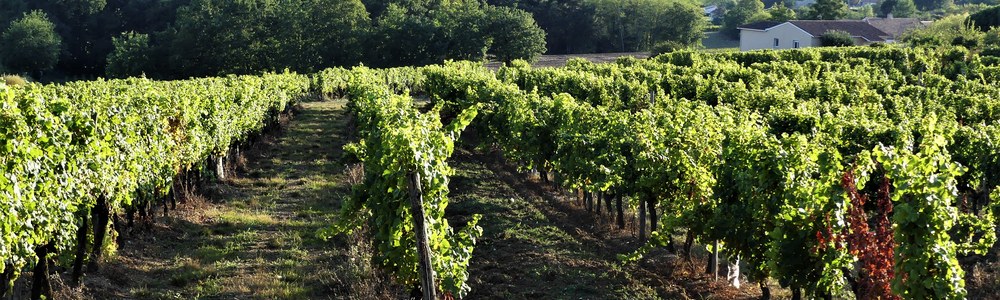
- The grapes: sémillon covers around 80 per cent of the area and makes up 60–98 per cent of the wine. The rest is sauvignon blanc, sauvignon gris and muscadelle.
- Noble rot: the vineyards lie on north-facing slopes 40–180 metres above sea level by the Dordogne. The morning mist from the river and the autumn sun give the fungus Botrytis cinerea, “pourriture noble”.
- Sélection de grains nobles: the term for the sweetest wines, with more than 85 grams of sugar according to IVBD.
- Not a copy: Monbazillac and Sauternes are both based on sémillon and botrytis, but Monbazillac has been its own AOC since 1936, with its own slopes by the Dordogne.
The AOC turns 90 in 2026, and IVBD celebrates with “La Folle Nuit du Monbazillac” at Espace Étincelle in Bergerac on 27 November 2026 (25 euros, reduced 10 euros).
The history – from the monks to phylloxera
IVBD tells a legend about the monks of Saint-Martin: they are said to have neglected the vines, and the mist and the autumn sun gave the grapes noble rot. IVBD compares the monks with the Tatin sisters and their famous cake. It is a story, not history.
- Roman times: according to IVBD, there has been wine here since around the year 281.
- 1255: the English king Henry III gave the Bergerac wines free passage to the Gironde estuary.
- 1865–1890: phylloxera. The vineyards shrank from 10,700 to 2,180 hectares.
- 1924–1936: a syndicate was founded in Duras in 1924, and the decree on the first AOCs came on 11 September 1936, according to the tourist office.
- 1953 and 2014: the winegrowers of Bergerac got their joint organisation in 1953. In 2014 it was merged with Duras to form IVBD.
Château de Monbazillac – the château the winegrowers own
Château de Monbazillac was built by Charles d'Aydie from 1550 and was finished 32 years later. The château is a monument historique and was a Protestant stronghold. The cooperative cellar Cave coopérative de Monbazillac bought it in 1960 for 400,000 new francs and opened it to the public in 1961. Today around 50 winegrowers are members and co-owners.
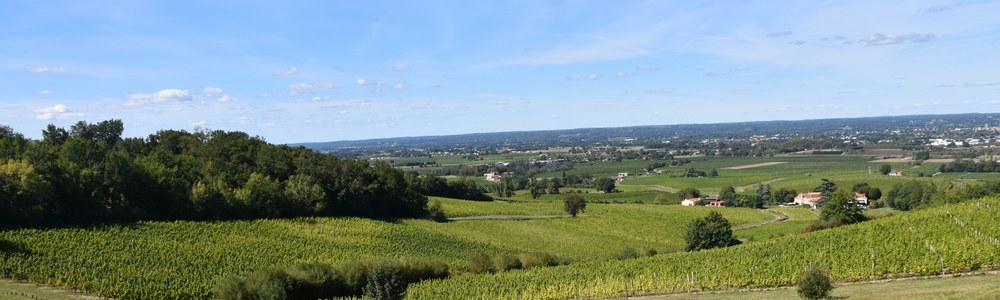
- The visit: approx. 1 hour and 30 minutes with a paper guide or an audio guide via QR code. There is a museum room about wine of 300 square metres, a wall of 6,000 bottles, contemporary art, a children's area and a view over Bergerac from the terraces. The restaurant is for visitors only.
- Prices 2026: Parcours Monbazill'Art 12 euros with one glass, Monba'licieux 18 euros with a tasting of three wines, and the annual pass Pass Monbassadeur 24 euros. Children 6–17 years 7.50 euros, family 32 or 44 euros. The prices for 2027 have not been published.
- Open 2026: weekends from 7 March and every day 1 April–1 November. Closed 2 November–20 December 2026.
- Christmas: Christmas event 21 December 2026–3 January 2027, 2–6 pm. The château is closed every year in January and February.
- The road: 7 kilometres and approx. 12 minutes from Bergerac. The tourist office recommends the old D13 road.
Quai Cyrano – the wine house in the Cloître des Récollets
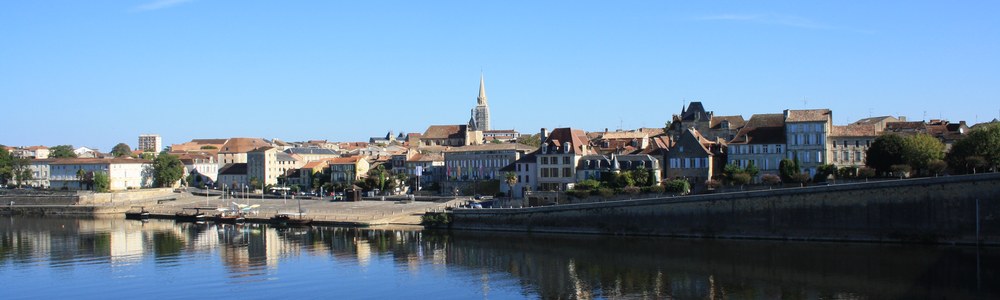
By the port in Bergerac, in the Cloître des Récollets, the tourist office and the wine house Espace Vin Bergerac-Duras share the 17th-century monastery. Together the place is called Quai Cyrano.
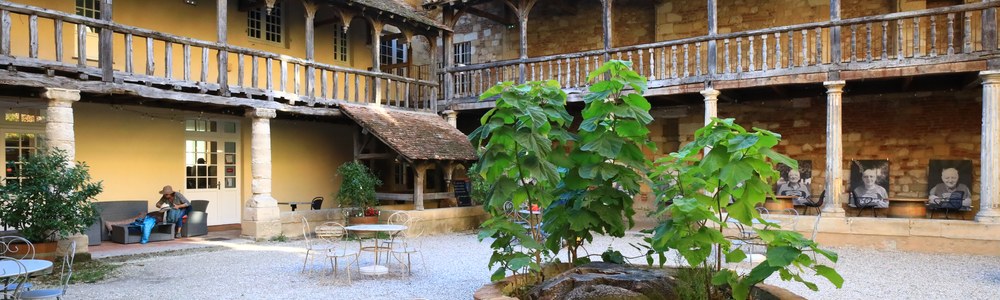
- Free tasting: admission is free, and each week you can taste a new series of nine wines: one rosé, two dry whites, two sweet and four reds.
- The shop: 150–160 wines from the winegrowers at producer prices, a wine bar and a roof terrace facing the Dordogne.
- Open: all year Monday–Saturday, every day in summer.
- More: wine courses, L'Expérience Cyrano about Rostand's play (4–8 euros, with tasting 5–10 euros) and the digital museum Micro-Folie.
- On the river: the gabarres leave from Quai Salvette 1 April–31 October 2026, 12.50 euros for adults and 9.50 euros for children under 12. In summer there are two extra trips with wine tasting, from Creysse and Bergerac, which must be booked.
See the tourist office's page about Quai Cyrano. The other wine house in the area is the Maison des Vins de Duras in Lot-et-Garonne.
The wine estates that welcome visitors
- Château Tirecul la Gravière (Monbazillac, approx. 11 minutes): a Monbazillac producer with, among others, “Cuvée Madame”. The opening times have not been given – check before you go.
- Château de la Jaubertie (Colombier, approx. 14 minutes): an organic wine estate in AOP Bergerac, with a guided tour of the vineyard and the cellars and a tasting afterwards. Times and prices have not been given.
- Vignoble des Verdots – Maison Wessman (Conne-de-Labarde, approx. 17 minutes): cellar tours, tastings and a restaurant.
- Alliance Aquitaine (Bergerac, 70 boulevard Santraille): a cooperative with around 90 winegrowers and a cellar with 400 oak barrels. Open Tuesday–Saturday 9 am–12 noon and 2–6 pm.
- Château de Mounet-Sully (Bergerac): a furnished monument historique, only for groups of at least six by appointment. 15 euros, with wine tasting 28 euros.
Pécharmant and Château de Tiregand
Pécharmant is red wine, not sweet wine. The appellation lies north and east of the town, in only four communes: Creysse, Bergerac, Lembras and Saint-Sauveur. The soil is sand and gravel, and according to IVBD around 45 producers make around 2 million bottles on around 460 hectares.
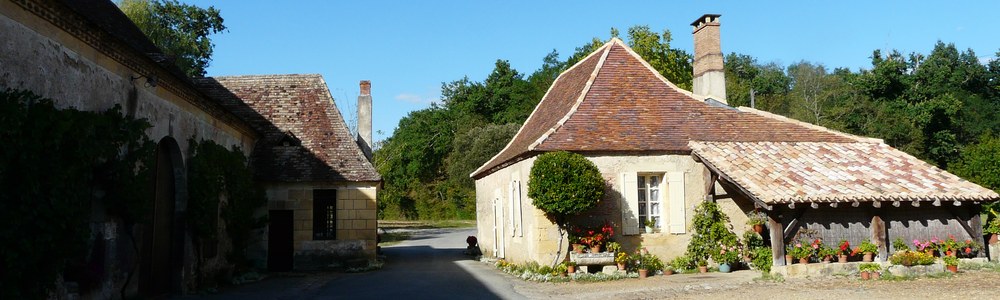
- Château de Tiregand (Creysse, approx. 11 minutes): a 19th-century château in the Pécharmant vineyards. Today it is mostly family activities and an escape game with Arsène Lupin (approx. 1 hour and 30 minutes). At Christmas it is open at weekends in December and in the holidays 5 December–3 January.
- Domaine du Haut Pécharmant (Bergerac): 35 hectares, in the family since 1929. Monday–Saturday 9 am–6 pm by appointment.
Château de Bridoire – a castle, not a wine estate
In Ribagnac stands Château de Bridoire, a castle without wine production. It was rescued after 30 years of decay and is today the “Château des jeux”, with 15 furnished rooms, dungeons, stables and 100 old games.
- Open 2026: 7 February–8 March and 4 April–2 November. The price varies.
- From Bergerac: 12 kilometres and approx. 19 minutes by car.
Saussignac, Rosette, Montravel and Duras
- Saussignac: sweet wine from four communes – Gageac-et-Rouillac, Saussignac, Razac-de-Saussignac and Monestier. Only 15–25 hectares, aged for 12 months, and most of it is organic.
- Rosette: a medium-sweet white wine from around 40 hectares north-west of the town, with around 16–20 winegrowers.
- Montravel: three AOPs – Montravel, Côtes de Montravel and Haut-Montravel – on around 110 hectares in Montaigne's country.
- Côtes de Duras: AOC from 1937, across the border in Lot-et-Garonne.
Further west, 81 kilometres and approx. 1 hour and 5 minutes by car from Bergerac, lies Saint-Émilion. The wine châteaux there are in the travel guide to Saint-Émilion, and more bastides are in Entre-deux-Mers and the bastides.
The wine festivals
- April: La Grappe de Cyrano and Châteaux en Fête. At Château de Monbazillac, Châteaux en Fête was 11 April–3 May in 2026.
- March–November: Jazz en Chais.
- Summer: Soirées Paradizillac at Château de Monbazillac 16 July–13 August 2026.
- 15 August: Fête de l'Huître & du Vin Blanc, with oysters and white wine.
- October: Vignobles en Scène. In Monbazillac in 2026 there was a 7-kilometre walk with an aperitif on 18 October.
The dates for 2027 have not been published yet.
Food with the wine
IVBD's first food suggestion for Monbazillac is pan-fried foie gras, and some restaurants in Bergerac have foie gras mi-cuit with Monbazillac on the menu. In Bergerac there is a market on Wednesday and Saturday mornings around Notre-Dame and the Place Louis-de-la-Bardonnie, the market hall is open Tuesday–Saturday all year, and from December to February there is a truffle market on Saturdays.
- From the Périgord: walnuts (Noix du Périgord, AOP), strawberries (Fraise du Périgord, IGP), duck, foie gras and truffles.
When should you go?
- May–June and September: the châteaux and the gabarres are open, and it is less crowded than in summer.
- July–August: everything is open, with the Soirées Paradizillac at Château de Monbazillac and the Fête de l'Huître & du Vin Blanc on 15 August. It is also the busiest time.
- October: the grape harvest in Monbazillac and Vignobles en Scène.
- Winter: the truffle market in Bergerac and free tastings at Quai Cyrano, but Château de Monbazillac is closed in January and February, and the gabarres do not run.
The journey to the wine area
- By air: Bergerac Airport is 10 minutes from the town, but has no routes from the Nordic countries – only from the United Kingdom and Rotterdam. Bordeaux Airport is 129 kilometres and approx. 1 hour and 40 minutes by car from Bergerac. The car hire box on this page uses Bordeaux.
- From the Nordic countries: Norwegian flies to Bordeaux from Oslo and Copenhagen in the summer 2026 programme, and SAS from Copenhagen from 15 May 2026, on Mondays and Fridays. No route has been found from Stockholm.
- By train: the TER line Bordeaux–Libourne–Bergerac–Sarlat runs along the Dordogne valley.
- By car: the A89 from Bordeaux and the N21 from Périgueux or Agen.
The airport city is in the travel guide to Bordeaux. See also Aéroport Bergerac Dordogne Périgord and Bordeaux Aéroport.
Eating and sleeping among the vineyards
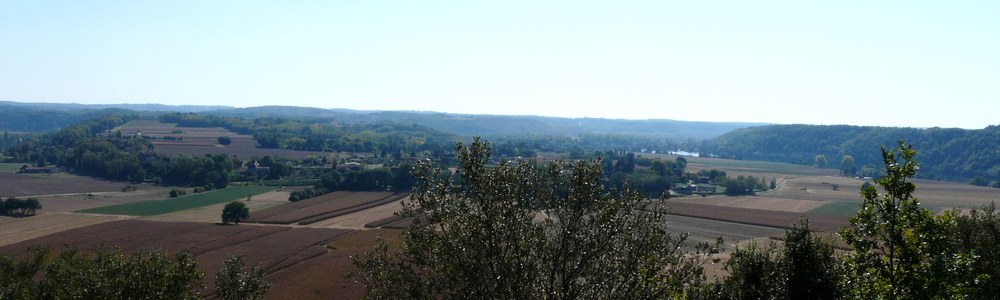
The Michelin Guide gives one star to three restaurants in the area. La Tour des Vents is by an old windmill on the height at Malfourat in Monbazillac, with a view over the vineyards and the Dordogne valley. The set menus cost 55, 75 and 95 euros, and the restaurant is open Wednesday–Saturday for lunch and dinner and on Sunday for lunch. Next door is the Bistrot de Malfourat. Les Fresques at Château des Vigiers in Monestier has Renaissance frescoes in the dining room, and the chefs are Didier Casaguana and Frédéric Leclet. Les Fresques is open on Monday and Thursday evenings and on Tuesday, Friday and Saturday for lunch and dinner. Le Vieux Logis in Trémolat is in an old tobacco-drying barn, with Vincent Arnould in the kitchen, and is closed 1 November–4 December 2026.
Maison Wessman has a Bib Gourmand in the Michelin Guide. The bistro is in the middle of the Les Verdots wine estate in Conne-de-Labarde, was conceived with Thierry Marx and has Antoine Beyris as head chef. It is open every day for lunch and dinner. In Bergerac, La Table du Marché Couvert, right opposite the market hall, has plenty of Bergerac wine on the wine list.
The four-star Château des Vigiers has two hotels with 65 rooms in total, golf and a spa, and the four-star La Chartreuse du Bignac in Saint-Nexans has 12 rooms between Monbazillac and Issigeac. In the Pécharmant area just outside the town is the three-star La Flambée, and at La Tour des Vents there are guest rooms and lodges all year. There are no classified hotels in Monbazillac itself. The four-star Yelloh! Village Pomport Beach lies in the vineyards south-west of Monbazillac, with a bathing lake and 210 pitches (open 5 May–4 September 2027), and the three-star Camping La Pelouse is by the Dordogne right opposite the old town of Bergerac (April–October). More sites are in Camping in France.
Onward from the vineyards
The old town, the Cyrano statues and the Musée du Tabac are in the travel guide to Bergerac. Monpazier, Beaumont, Eymet, Issigeac and Château de Biron are in The bastides of Périgord pourpre. Further east lie Sarlat and the rest of the Dordogne, and the wines further south-east are in the wine guide to Southwest France.
4 days in the Bergerac wine country
Each day stands on its own, with Bergerac as a base. Several wine estates only receive visitors by appointment – check the opening times before you go.
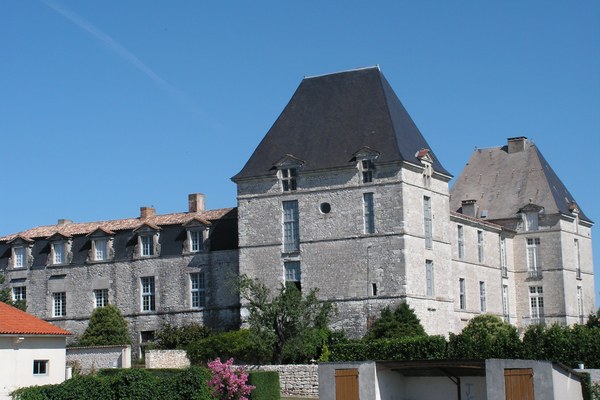
Saussignac and Monestier
Drive west to the vineyards of Saussignac, where the sweet wine comes from only 15–25 hectares, and on to Château des Vigiers in Monestier. Have lunch at Les Fresques on a Tuesday, Friday or Saturday.
- Château des Vigiers: approx. 36 minutes from Bergerac
- Saussignac: 15–25 hectares of sweet wine
- Les Fresques: one Michelin star
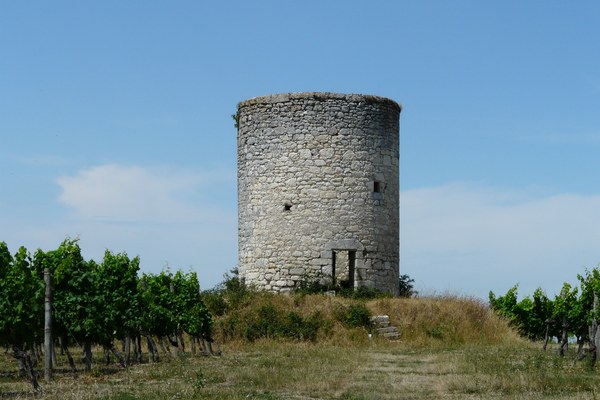
Monbazillac and Malfourat
Take the old D13 road to Château de Monbazillac and taste the wine at the château. Visit Tirecul la Gravière, and eat at La Tour des Vents by the Malfourat mill from Wednesday to Sunday.
- Château de Monbazillac: approx. 12 minutes from Bergerac
- Monba'licieux: 18 euros with three wines (2026)
- La Tour des Vents: set menus from 55 euros
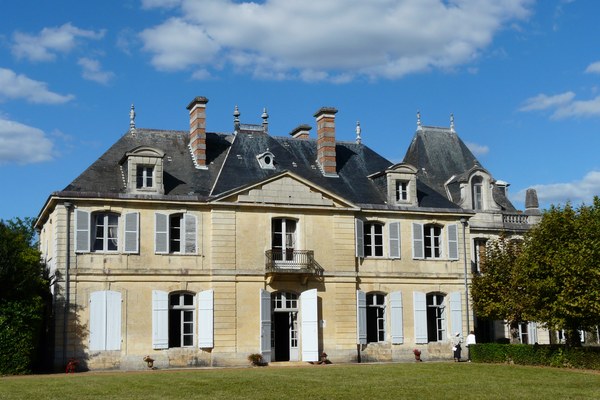
Bergerac and Pécharmant
Taste the week's nine wines for free at Quai Cyrano and take the gabarre on the Dordogne in season. Then drive to Château de Tiregand in Creysse and to Domaine du Haut Pécharmant by appointment.
- Quai Cyrano: Monday–Saturday all year
- The gabarres: 1 April–31 October 2026
- Château de Tiregand: approx. 11 minutes from Bergerac
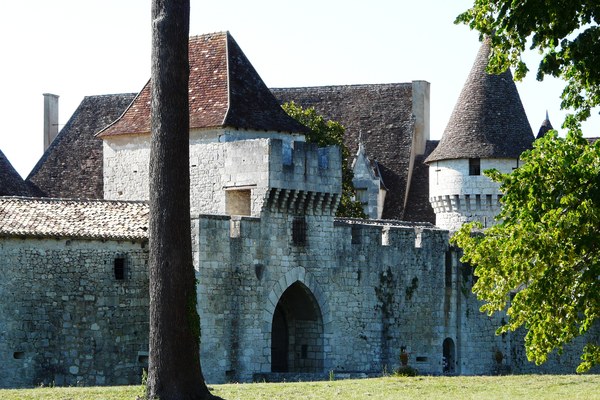
Bridoire, Jaubertie and Les Verdots
See Château de Bridoire in Ribagnac, visit Château de la Jaubertie in Colombier and finish at the Les Verdots wine estate in Conne-de-Labarde with a cellar tour and dinner at Maison Wessman.
- Bridoire: 4 April–2 November 2026
- Maison Wessman: Bib Gourmand, open every day
- Les Verdots: approx. 17 minutes from Bergerac