
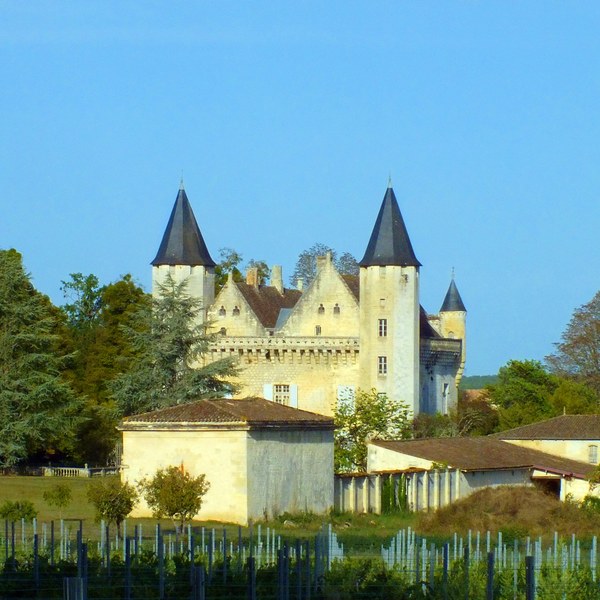
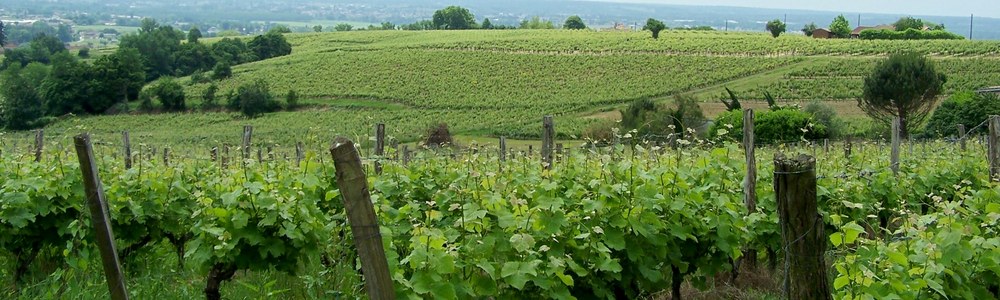
Entre-deux-Mers is less well known than Saint-Émilion and the Médoc, and that is part of its charm. Vineyards, small towns and arcaded squares lie close together, the distances are short, and you can cycle right across the area on a tarmac path along a disused railway. It pays to combine a couple of towns with a market or a château.
The wines between the Garonne and the Dordogne
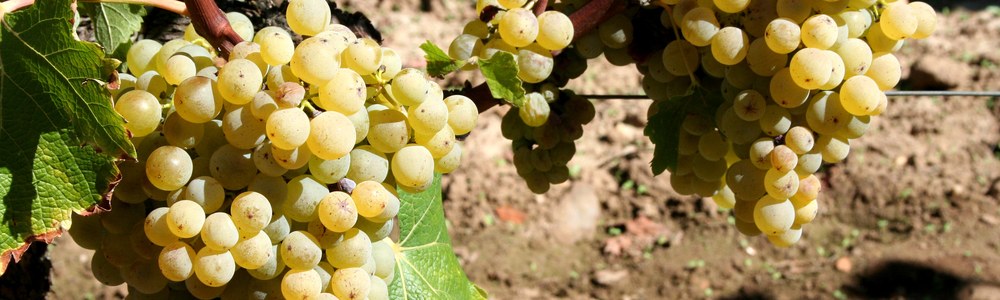
The AOC Entre-deux-Mers was created in 1937 as an appellation for white wine, made from Sauvignon Blanc, Sémillon and Muscadelle. White wine is still what the area is known for, and oysters from the Bay of Arcachon with a white Entre-deux-Mers is a classic pairing.
Many guides say that the red wine from here has to be sold as Bordeaux. That is out of date: from the 2023 vintage red wine can also use the AOC Entre-deux-Mers, and the first bottles went on sale in January 2025. Within the area there is also the sub-appellation Entre-deux-Mers Haut-Benauge.
Abbaye de la Sauve-Majeure
The Abbaye de la Sauve-Majeure in La Sauve is the ruin of a Benedictine abbey, 25 kilometres from Bordeaux. The abbey is thought to have been founded in 1079 by Gérard de Corbie. The Centre des monuments nationaux, which runs the site, calls it a masterpiece of Romanesque art. Most of the visit takes place in the open air.
The abbey is part of the World Heritage Site “Chemins de Saint-Jacques-de-Compostelle en France”, the pilgrim routes to Santiago de Compostela, which was inscribed on the UNESCO list in 1998. A ticket costs 7 euros, and according to the website it is free for visitors under 26. Check the opening days before you go, as the site is closed on certain days.
Sauveterre-de-Guyenne – four town gates
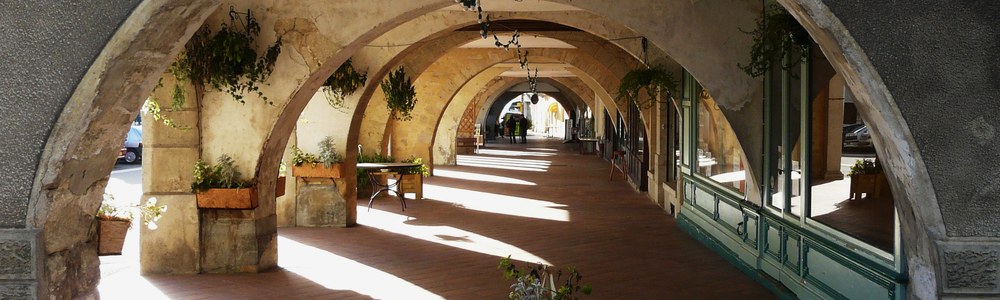
The bastides are planned medieval towns, and all three in this article have an arcaded square in the centre. Sauveterre-de-Guyenne was founded in 1281 by Edward I of England, who was also Duke of Aquitaine, and received its privileges in 1283. Four town gates still stand: Saubotte, de la Font, Saint-Romain and Saint-Léger.
In the middle of the town is the arcaded Place de la République, with the town hall and the tourist office. The town has around 1,900 inhabitants and is the end point of the Roger Lapébie cycle path.
Créon – the market and the bike station
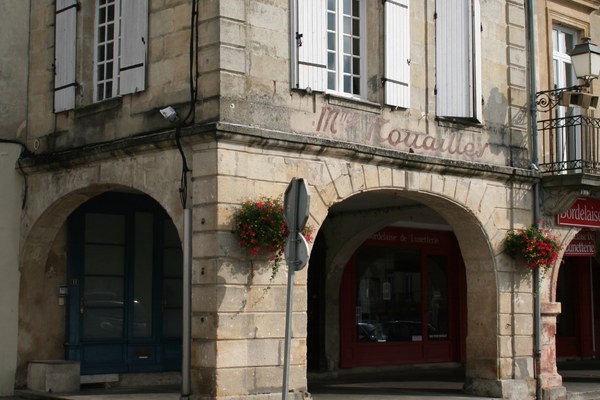
Créon was founded in 1315 by Amaury III de Craon, seneschal of Aquitaine. The Place de la Prévôté is around 70 metres long and has arcades on three sides. From what we have found, there is a market here on Wednesday mornings, a tradition dating back to 1315, with around a hundred traders in high season.
Créon lies on the old railway that is now the Roger Lapébie cycle path, and it got France’s first “station vélo”, a bike station that opened on 23 July 2003. The town has around 5,000 inhabitants and is a few kilometres from the abbey in La Sauve.
Monségur – the market hall and the jazz
Monségur was founded in 1265 by Eleanor, Queen of England. In the middle of the bastide stands the 19th-century market hall: the arcades date from 1866 and the covered hall from 1897, and it was listed as a historic monument in 2011.
On Wednesdays from mid-June to mid-September there is a night market, a tradition since 2007. On the first weekend in July the jazz festival “Les 24 heures du swing” takes place, which has been held since 1990. Monségur has around 1,600 inhabitants.
Cadillac-sur-Garonne and the ducal château
The town on the Garonne that many guides call Cadillac has officially been named Cadillac-sur-Garonne since 1 January 2023. Here stands the Château ducal de Cadillac, 35 kilometres south-east of Bordeaux. The château was built for the Duke of Épernon in the early 17th century, and from the 19th century until 1952 it was a women’s prison.
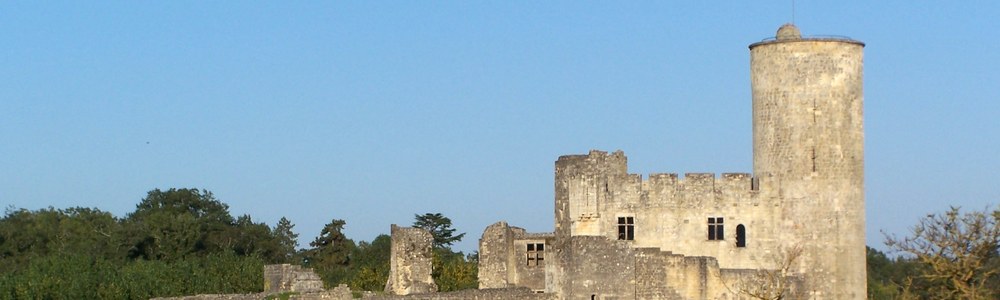
The château is run by the Centre des monuments nationaux, like La Sauve-Majeure. A ticket costs 7 euros, and according to the website it is free for visitors under 26. If you fancy more castles, the medieval fortress of Château de Rauzan, built on the orders of John Lackland, is open all year, either on your own or with a guide. Rauzan is also home to the Grotte Célestine, an underground river. The visit takes 40–45 minutes and costs 12 euros for adults and 6 euros for children.
Saint-Macaire – the medieval town on the Garonne
Saint-Macaire is often counted among the bastides, but it is not one. It is a fortified medieval town that grew up around a priory and a church, not a planned town. Remains of the town wall date from the 13th century, and the town gates Porte de Benauge from the 13th century and Porte du Thuron and Porte Rendesse from the 14th century are still standing.
The church of Saint-Sauveur-et-Saint-Martin was built between the 12th and the 17th centuries. In the middle of the town is the Place du Mercadiou, a trapezoid arcaded square of around 1,500 square metres. Saint-Macaire has around 2,000 inhabitants. Close by, in Langon, L’Atelier Flavien Valère has a Bib Gourmand in the Michelin Guide.
Castillon-la-Bataille and the battle of 1453
On the Dordogne, east of Saint-Émilion, lies Castillon-la-Bataille. Here the French army defeated the Anglo-Gascon army under John Talbot on 17 July 1453. The French brought artillery under the brothers Jean and Gaspard Bureau, and Talbot was killed. The battle is regarded as the last of the Hundred Years’ War and as one of the first to be decided by field artillery. Bordeaux surrendered in October of the same year.
Even so, that does not mean the battle ended the war. The Hundred Years’ War was not formally ended until the Treaty of Picquigny in 1475.
In summer the battle is re-enacted in the open air at the Château de Castegens in Belvès-de-Castillon, with 400 volunteer actors and 50 riders. In 2026 the show “La Bataille de Castillon” ran from 16 July to 15 August, at 10 pm, and tickets cost 32 euros for adults and 19 euros for children aged 5 to 11. We have not yet found the dates for 2027.
The Roger Lapébie cycle path
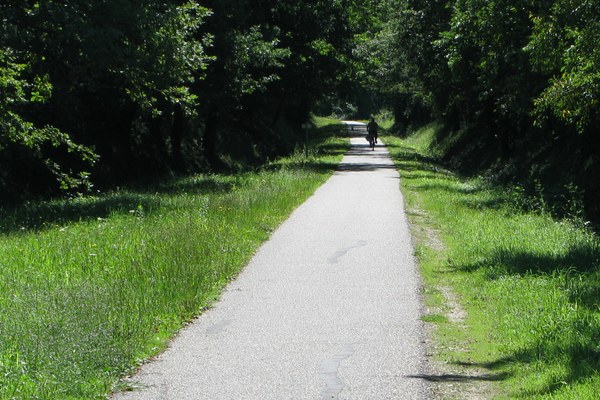
The Roger Lapébie cycle path is a tarmac greenway on a disused railway, named after Roger Lapébie, who won the Tour de France in 1937. It even has its own road number, the RD803.
The length is often given wrongly. The greenway itself, from Latresne to Sauveterre-de-Guyenne, is around 47 kilometres. If you count from Bordeaux, the route is 57.5 kilometres according to the Gironde tourist board, with the old station in Latresne at kilometre 10.5. The path runs through Créon and past La Sauve, and parts of it form part of EuroVelo 3, according to the cycling association AF3V – the same route as La Scandibérique through Saint-Émilion.
The markets
The market days in the small towns are a good reason to plan your trip for a particular day. From what we have found, there is a market in Créon on Wednesday mornings and in Sauveterre-de-Guyenne on Tuesday mornings. In Monségur there is a night market on Wednesdays in summer. On the other side of the Dordogne there is a market in Libourne on Tuesday, Friday and Sunday mornings.
The market days have not been confirmed by the town councils, and they may change. Ask at the tourist office or your hotel before you go.
Practical advice
A car gives you the most freedom between the towns, and the distances are short. La Sauve is 25 kilometres from Bordeaux and Cadillac-sur-Garonne 35 kilometres. If you are going to taste wine, it is wise to let someone else drive, or to take the bike.
The abbey in La Sauve and the château in Cadillac-sur-Garonne are free for visitors under 26, according to their websites. We have not been able to confirm whether this applies to all nationalities. There are no Michelin restaurants in Créon, Cadillac-sur-Garonne, Saint-Macaire, Sauveterre-de-Guyenne or Monségur. Nearby, L’Atelier Flavien Valère in Langon, Chez Pierrette in Meilhan-sur-Garonne and Côté Bastide in the bastide of Sainte-Foy-la-Grande have a Bib Gourmand.
Entre-deux-Mers with Saint-Émilion as a base
From Saint-Émilion it is a short trip to Castillon-la-Bataille, and across the Dordogne to Entre-deux-Mers. The travel guide has hotels and restaurants in the village. Château Fage in Arveyres, a four-star hotel at a wine château south of the Dordogne, lies between Saint-Émilion and Entre-deux-Mers. Read also about the wine châteaux and UNESCO landscape of Saint-Émilion.
Four good ways to experience Entre-deux-Mers
Entre-deux-Mers is best enjoyed with a couple of stops a day – a town, a market or a château, by car or by bike. Here are four suggestions that work well for a day or half a day.
Saint-Macaire and Cadillac-sur-Garonne
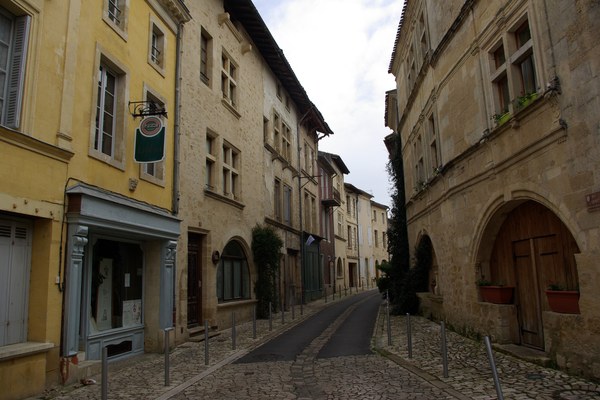
Walk through the town gates of Saint-Macaire and around the Place du Mercadiou in the morning, have lunch in Langon, and visit the ducal château in Cadillac-sur-Garonne in the afternoon.
- Château ducal: 7 euros, free for under-26s
- Bib Gourmand in Langon
- Saint-Macaire is not a bastide
The Wednesday market in Créon and the abbey at La Sauve
Come to Créon on a Wednesday morning, when the market is on in the arcaded square, and drive or cycle the few kilometres on to the ruins of the Abbaye de la Sauve-Majeure.
- Market on Wednesday mornings, according to local sources
- The abbey: 7 euros, free for under-26s
- Part of the pilgrim routes World Heritage Site
The Roger Lapébie path to Sauveterre-de-Guyenne
Start at the bike station in Créon and follow the greenway east to its end point in Sauveterre-de-Guyenne. Walk through one of the four town gates and take a break in the arcaded square before you cycle back.
- Tarmac path on a disused railway
- Latresne–Sauveterre: around 47 kilometres
- Bike servicing in Sauveterre
Castillon and the battle of 1453
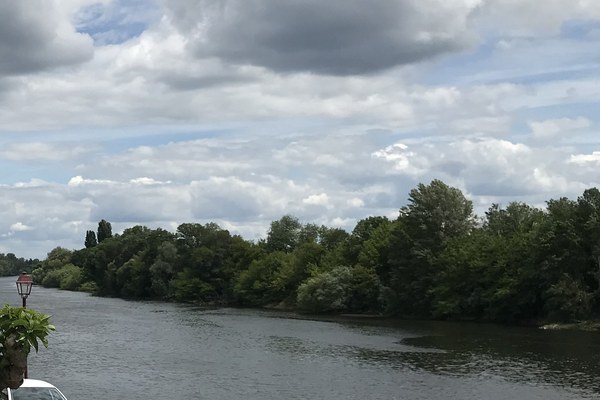
Visit Château de Pressac in the afternoon, where the château itself says the English surrendered after the battle, and see the open-air show “La Bataille de Castillon” at the Château de Castegens in the evening.
- The show: evenings in July and August
- 400 volunteers and 50 riders
- Book the tour at Pressac in advance