
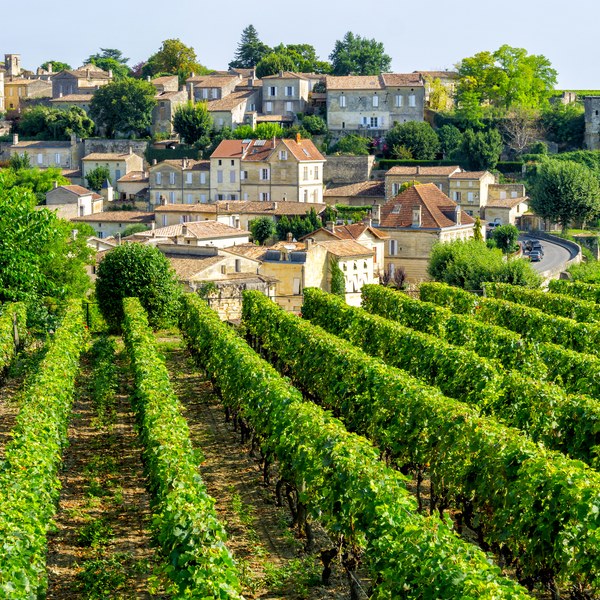
Many people come to Saint-Émilion for the village and stay for the vineyards. Around the medieval streets lie château after château, and several of them welcome visitors for tours and tastings. It takes a little planning: most of the châteaux want you to book in advance, and some of the most famous do not receive ordinary tourists at all.
The World Heritage Site – a whole wine landscape
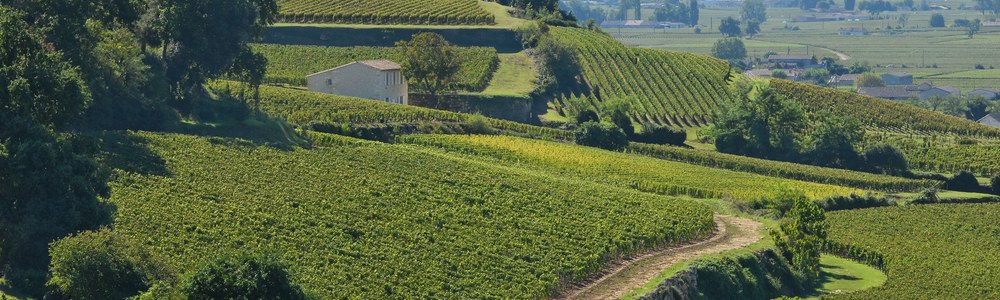
On 2 December 1999 the “Jurisdiction of Saint-Emilion” was inscribed on the UNESCO World Heritage List. The nomination was submitted in June 1998. The tourist office describes it as the first time a vineyard landscape was added to the list. So it is not just the village that is World Heritage, but the whole jurisdiction: 7,847 hectares, bounded by the Dordogne to the south and the Barbanne stream to the north.
The jurisdiction is made up of eight communes: Saint-Émilion, Saint-Christophe-des-Bardes, Saint-Étienne-de-Lisse, Saint-Hippolyte, Saint-Laurent-des-Combes, Saint-Pey-d’Armens, Saint-Sulpice-de-Faleyrens and Vignonet. It goes back to a charter granted by John Lackland in 1199. He was King of England and Duke of Aquitaine.
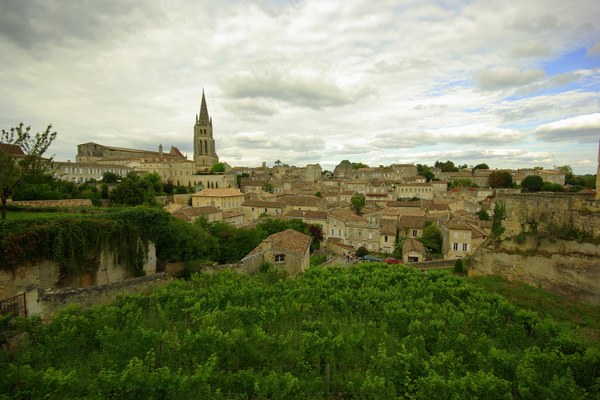
According to UNESCO, it was the Romans who brought winegrowing here. The area lay on the pilgrim route to Santiago de Compostela, and from the 11th century churches, monasteries and hostels were built along it.
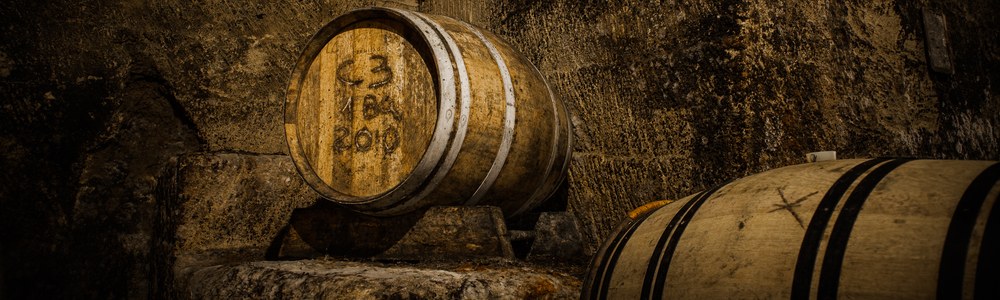
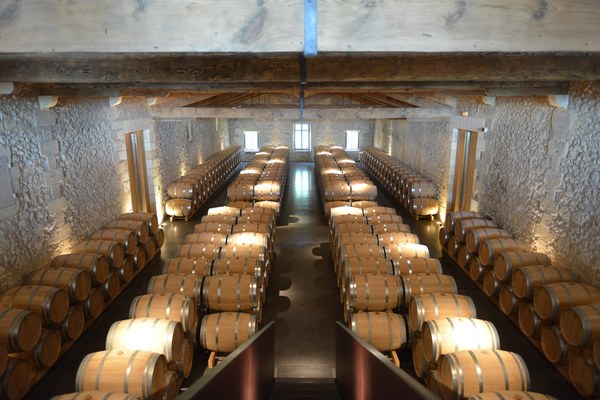
Beneath the vineyards lies another part of the story. The limestone plateau has almost 200 kilometres of underground tunnels left by quarrying, and several châteaux show visitors their tunnels and cellars. Down there it is around 13 degrees, so bring a jumper even in summer.
The appellations, the grapes and the soil
The tourist office counts twelve appellations in the Grand Saint-Émilionnais. The most important are Saint-Émilion and Saint-Émilion Grand Cru. Around them lie the four “satellites” Montagne-, Saint-Georges-, Puisseguin- and Lussac-Saint-Émilion, which have had the right to use the name since 1936. In addition there are Lalande-de-Pomerol, Crémant de Bordeaux, Côtes de Bordeaux, Bordeaux and Bordeaux Supérieur, among others.
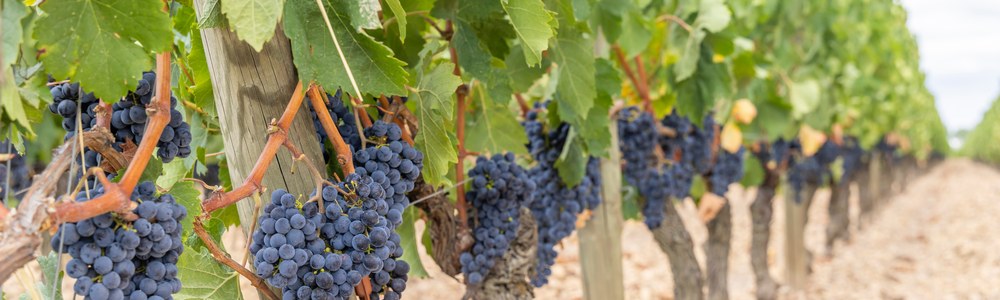
Merlot is the most important grape, blended with Cabernet Franc or Cabernet Sauvignon and a little Malbec. The soil changes a great deal over short distances: limestone, clay and chalk, sand and gravel.
The 2022 classification
Saint-Émilion got its first classification in 1954. The current one was published on 8 September 2022. It has 85 grands crus classés, and 14 of them are premiers grands crus classés.
At the top is Premier Grand Cru Classé A, and since 2022 only two châteaux hold that rank: Château Pavie and Château Figeac, which was promoted. Many guides still say that Ausone, Cheval Blanc and Angélus are also A châteaux. That is out of date. Cheval Blanc and Ausone announced in 2021 that they would not take part, and Angélus followed in January 2022. The three now stand outside the classification and cannot use the title from the 2022 vintage. Château La Gaffelière, which was a Premier B, also withdrew.
The reason was the criteria: the châteaux felt that marketing and wine tourism carried too much weight in the assessment. For you as a visitor, this means the classification tells you less about which châteaux are famous, and more about which ones have chosen to take part.
Châteaux that welcome visitors
Every day the tourist office has two to four “Châteaux du jour”, châteaux that are open for visits and tastings that day. Otherwise you need to book in advance. These châteaux have a regular offer:
Château Figeac, one of the two A châteaux, is at 3572 route de Libourne, on the border with Pomerol. The tour goes through the vineyard and the cellar and ends with a tasting of two or three wines. It costs 80 euros per person, and tours are offered in English and Spanish. In 2021 the château opened a new, partly underground cellar of 5,000 square metres.
Château La Dominique, a neighbour of Cheval Blanc, receives visitors by appointment only, for 40 euros per person. The cellar was designed by Jean Nouvel, and on the roof is the restaurant La Terrasse Rouge.
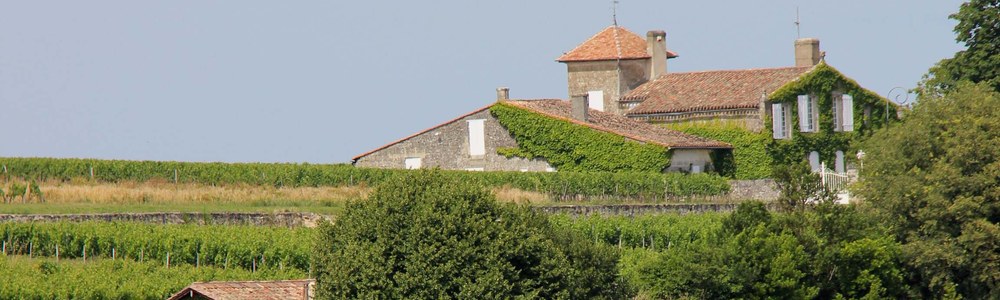
Château de Pressac in Saint-Étienne-de-Lisse has a tour of 1 hour and 15 minutes with a tasting of four wines for 28.50 euros. A private tour costs 75 euros per person for one to three people and 55 euros per person from four. The château itself states that the English surrender after the Battle of Castillon in 1453 took place here.
Château Soutard has tours of 45 minutes to 2 hours, at 15 and 23 euros, and three guest rooms. Château Villemaurine shows visitors the underground quarries right by the village, with a cellar carved out of the rock and a tasting. At Château Franc Mayne the tour goes through the underground tunnels, with lighting by Eric Le Collen.
If you want to combine wine with something else, Château Troplong Mondot has the starred restaurant Les Belles Perdrix, Château La Croizille a wine bar with a panoramic terrace and Château de Ferrand the art collection of Baron Bich of BIC, and lunch or dinner at the “Table Privée”. Maison Cardinale at Château Fleur Cardinale has a sensory tour that also suits families.
From wine château to royal palace
A «château» in Bordeaux is first and foremost a wine estate, often with a manor house among the vines. If you want to see the great castles of France – Versailles, Chambord and Chenonceau – we have gathered them in France’s most beautiful castles.


How to book – and who does not receive visitors
Most of the châteaux are booked directly, on the château’s website, by phone or by email. Figeac takes bookings by phone or email, and on its website under “Made to measure”. La Dominique has its own booking page, and Pressac takes bookings via chateaudepressac.com. The tourist office is registered as a travel agency and also sells private tours.
Some names you cannot count on getting in to see. Château Cheval Blanc itself says that tours of the château and the cellars are reserved for trade professionals. Pétrus in Pomerol does not receive visitors without a personal invitation. At Angélus and Ausone we have not found any public visitor offer.
Maison du Vin de Saint-Émilion
The Maison du Vin is at 1 Place Pierre Meyrat in the village and is open all year. It stocks more than 400 wines at the same price as at the châteaux.
The wine school, the École du vin, gives a 1 hour and 30 minute introduction to the wines of Saint-Émilion at 11 o’clock, for 25 euros. The “Salon Dégustation” is a one-hour tasting held by appointment only and for at least six people. The Maison du Vin also has a guided walk in the vineyards, “From vine to glass”. Contact: telephone 05 57 55 50 55, maisonduvin@vins-saint-emilion.com.
Pomerol – the neighbour without a classification
Pomerol lies north-west of Saint-Émilion, towards Libourne. The wine was recognised as an AO in 1928 and as an AOC in 1936, and in 2023 around 780 hectares were planted. Merlot clearly dominates. Pomerol has no official classification: a tax classification from 1943 was abolished the following year.
Even so, the names are among the best known in Bordeaux: Pétrus, Le Pin, Lafleur, Vieux Château Certan, L’Évangile and La Conseillante. Pétrus is on the route de Lussac, but does not receive visitors. For lunch, La Table de Catusseau at 86 rue de Catusseau is listed in the Michelin Guide.
We have not found any classified hotel in Pomerol itself. The hotels in Libourne are 3 to 5 kilometres from the vineyards.
Libourne – the bastide by the rivers
Libourne lies where the Isle flows into the Dordogne. The town was founded as a bastide by Roger de Leybourne, seneschal of Gascony for the English king, and the town plan was laid out between 1268 and 1270. Today it has around 25,000 inhabitants.
In the middle of the town is the arcaded square, the Place Abel-Surchamp. According to local sources there is a market there on Tuesday, Friday and Sunday mornings, and the Sunday market is the biggest, with around a hundred traders. We have not been able to confirm this with the town council, so check before you go. On some Fridays in summer there is a night market on the square from 7 pm to 11.30 pm. By the river stands the Tour du Grand Port.
Libourne station is 7 kilometres from Saint-Émilion, and the town is a practical alternative if you are travelling by train. On 24 July 2027 Libourne is the finish of stage 20 of the Tour de France, from Maubourguet.
The Jurade and the festivities in red robes
The Jurade de Saint-Émilion was founded by a charter from John Lackland in 1199. It was dissolved during the Revolution and re-established in 1948 as a wine brotherhood. Today it has more than 140 jurats, and more than 3,000 people have been inducted since 1948. The Conseil des Vins is responsible for the reputation and promotion of the wines through the Jurade.
The jurats put on their red robes twice a year. In 2026 the spring festival, the Fête de Printemps, was on Sunday 21 June. The Ban des Vendanges, which marks the start of the harvest and is usually held on the third Sunday in September from the Tour du Roy, was on Sunday 20 September, with a torchlight procession on Saturday 19 September. We have not yet found the dates for 2027, so check with the tourist office.
Other events in 2026 were the Portes Ouvertes on 1–3 May and the Fête des Vendanges on 10–11 October. The Salon des Vignerons, with more than 140 stands, is held on 28–29 November 2026.
Cycling and walking in the vineyards
The tourist office has 30 circular routes for walking and cycling. The walks are from 6 to 17 kilometres and cover the 22 communes of the Grand Saint-Émilionnais. The route guide can be bought or hired at the tourist office.
You can hire bikes from Les Cordeliers (e-bikes, 30 euros for half a day and 40 euros for a full day), from Véloce and from LOVELEC33. 26 businesses in the area carry the “Accueil Vélo” label. It is worth knowing that La Scandibérique, EuroVelo 3 from Trondheim in Norway to Santiago de Compostela, passes through Saint-Émilion and Saint-Sulpice-de-Faleyrens. The French section alone is more than 1,700 kilometres.
Along the way you can see the five 16th-century windmill towers at the Moulins de Calon in Montagne, visits by appointment, and the Menhir de Pierrefitte in Saint-Sulpice-de-Faleyrens, around 4,500 years old. If you would rather sit, there are vintage mopeds with Mob & Wine, electric tuk-tuks from Les Cordeliers and a little train from Espace Villemaurine on a ride of around 35 minutes through the vineyards.
When to go
The main events fall between May and October. The Ban des Vendanges on the third Sunday in September marks the start of the harvest, which runs through September and October, depending on the year. Many châteaux then have less on offer for visitors, so book well ahead.
In winter many places have shorter opening hours. The tourist office closes for lunch from November to March.
Practical advice
The regional TER train on line 33 Bordeaux–Sarlat takes around half an hour from Bordeaux to Saint-Émilion. The station is around 1.5 kilometres below the village, and not all trains stop there. Many stop only in Libourne, 7 kilometres away, where you have to take a bus or taxi onward. Bordeaux-Mérignac airport is 54 kilometres from Saint-Émilion.
A car gives you the most freedom between the châteaux. From the A89 it is 12 kilometres from the Libourne exit. Vehicles wider than 2 metres or heavier than 6 tonnes may not drive into the village, so motorhomes must park outside. Parking by the collegiate church and on the Place Bouqueyre costs 2 euros an hour, for a maximum of five hours, and at the Gendarmerie it is free. If you are going to taste wine, it is wise to let someone else drive, or to take the bike.
The wine châteaux with Saint-Émilion as a base
If you stay in Saint-Émilion, you have the Maison du Vin, the monolithic church and several châteaux within walking distance. The Hôtel de Pavie has five stars and the starred restaurant La Table de Pavie, and the Château Hôtel Grand Barrail has five stars in the middle of the vineyards towards Libourne. In and around the village there are four restaurants with Michelin stars. On the other side of the Dordogne begins Entre-deux-Mers and the bastides.
Four good ways to experience the wine châteaux
The wine châteaux are best enjoyed at a relaxed pace – one or two visits a day, by car, by bike or on foot. Here are four suggestions that work well for a day or half a day.
Wine school and a cellar in the rock
Start with the École du vin at the Maison du Vin at 11 o’clock, and after lunch walk to Château Villemaurine, where the tour goes through the underground quarries right by the village.
- Wine school: 1 hour and 30 minutes, 25 euros
- More than 400 wines at château prices
- Bring a jumper for the cellar
Figeac, La Dominique and Pomerol
Take the tour at Château Figeac in the morning, have lunch at La Terrasse Rouge on the roof of La Dominique, and drive on through the vineyards of Pomerol towards Libourne.
- Figeac: 80 euros with tasting
- La Dominique: by appointment only
- Pétrus does not receive visitors
By e-bike down towards the Dordogne
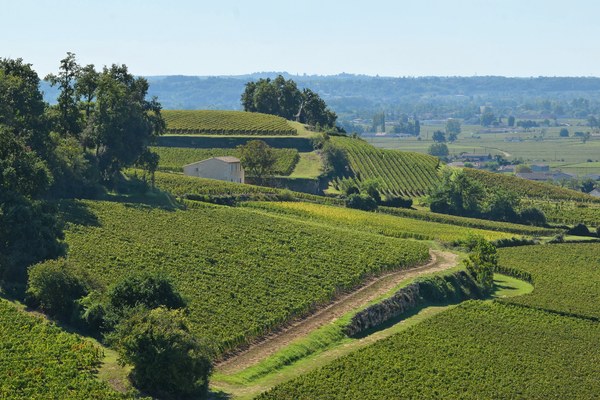
Hire an e-bike from Les Cordeliers and follow La Scandibérique through the vineyards to Saint-Sulpice-de-Faleyrens, where the Menhir de Pierrefitte stands. Fit in a château visit on the way.
- E-bike: 30 euros half a day, 40 euros a full day
- EuroVelo 3 – the same route that starts in Trondheim, Norway
- Book the château visit in advance
Below and above the village
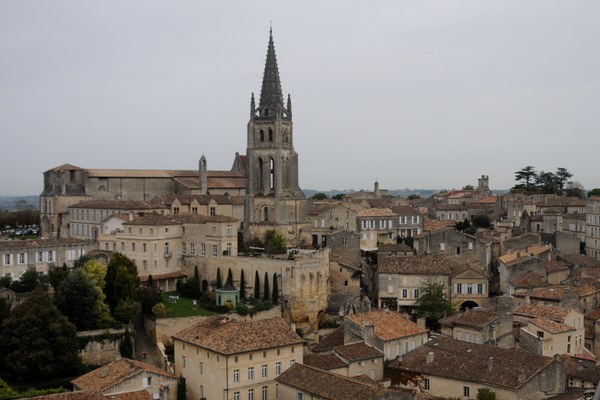
Take the “Saint-Émilion Souterrain” tour of the monolithic church and the catacombs, then climb the 196 steps of the bell tower for the view from the highest point in the village.
- The tour: 15 euros, guided only
- The bell tower: 2 euros at the tourist office
- Photography is not allowed underground