
Villefranche-de-Conflent lies in the Pyrénées-Orientales in France – not in Andorra or Spain – and so does the terminus, Latour-de-Carol, by the border. Both the TER train from Perpignan and the Yellow Train leave from Villefranche-Vernet-les-Bains station. The tourist office for the valley is Conflent Canigó, with the website tourisme-canigo.com.
The Train Jaune – France’s highest metre-gauge line
The line opened in 1910 and has 650 structures. According to the department’s tourist office, it is France’s highest metre-gauge railway line, and the whole journey from Villefranche to Latour-de-Carol takes approx. 3 hours.
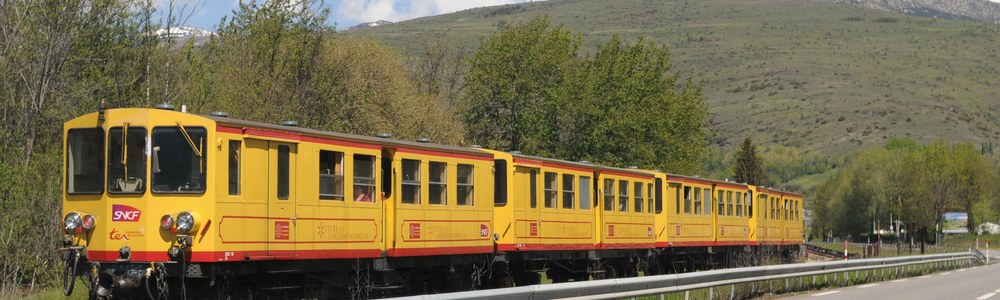
The timetable for 30 May–12 December 2026 has approx. 7–9 trains each way per day in summer, with more departures every day from 4 July to 30 August. An example: the train from Villefranche at 10.14am arrives in Latour-de-Carol at 1.13pm. The timetables from 13 December 2026 have not been published.
The stations and Bolquère-Eyne
Destination Train Jaune gives 21 stations, 8 of them regular stops, while the timetable lists 22 names. Reckon on just over 20 stations – at most of them the train only stops on request.
- Villefranche-Vernet-les-Bains (427 metres): the starting station down in the valley.
- Olette, Thuès and Fontpédrouse: stations on the way up the valley. The Pont Séjourné is near Fontpédrouse.
- Mont-Louis-La Cabanasse: around 1 kilometre, a 15–20-minute walk, to the fortified town of Mont-Louis. There is no bus.
- Bolquère-Eyne (1,593 metres): the highest station on the line.
- Font-Romeu-Odeillo-Via: the station for Font-Romeu.
- Latour-de-Carol-Enveitg (1,232 metres): the terminus, with liO trains on to Toulouse and Rodalies trains to Barcelona Sants.
Sauto station has no departures in the timetable for summer and autumn 2026, and we have not found the reason.
The Pont Séjourné and the Pont Gisclard
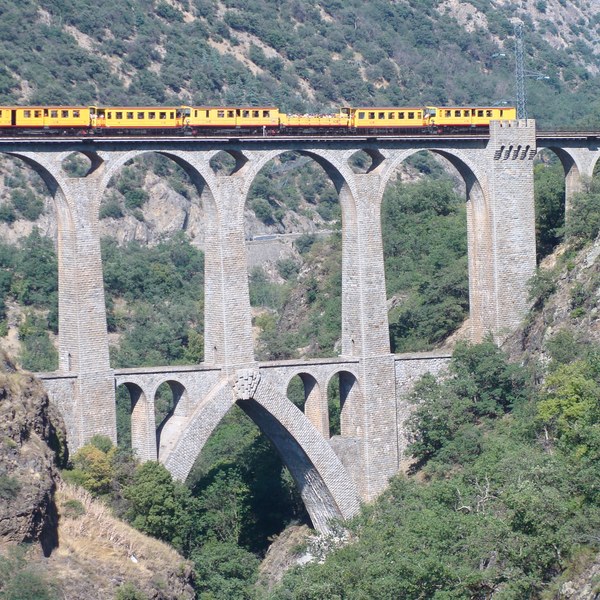
The Pont Séjourné is the stone viaduct where the train crosses the Têt near Fontpédrouse. It was listed as a monument historique in 1994.
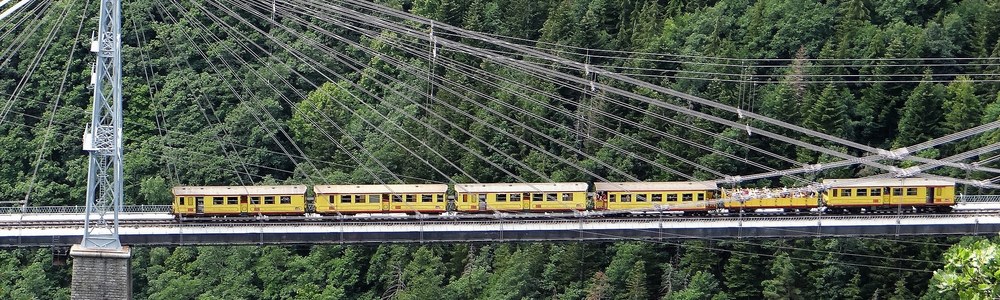
The Pont Gisclard was classified as a monument historique in 1997 and is the only railway suspension bridge still in service in France.
The open carriages
The carriages are open or closed depending on the season. The open carriages are offered in summer and in fine weather, not all year, and the department’s tourist office recommends them when the weather is fine. We have not found a source that says exactly when the open carriages run.
Tickets and reservation
- Price: Destination Train Jaune gives both 22.50 euros and 24.80 euros for Villefranche–Latour-de-Carol one way, and writes that prices may change. Villefranche–Mont-Louis is given as 12.10 euros.
- Discounts: 12–26-year-olds pay half price, and on the first weekend of each month, except July and August, the journey costs 1 euro. Dogs cost 7 euros.
- Buying: on trainlio.sncf.com, ter.sncf.com/occitanie or at the five stations that have a ticket office.
- Reservation: the department’s tourism website says reservation is compulsory, while Destination Train Jaune says it is recommended in the high season, July–August and the school holidays.
So the sources do not agree. Book well in advance in summer.
Closures in spring and autumn
The train stops running entirely for periods while the line is maintained. In 2026 the whole stretch Latour-de-Carol–Villefranche-Vernet-les-Bains was closed 23 March–10 April and 28 September–30 October. Destination Train Jaune writes that the line closes twice a year, in April and October.
The liO buses 560 (Font-Romeu–Perpignan), 521 (Perpignan–Vernet-les-Bains) and 520 (Perpignan–Prades) run in the area, but we have not found an official source on replacement buses in 2026.
Villefranche-de-Conflent – Vauban’s town on the World Heritage List
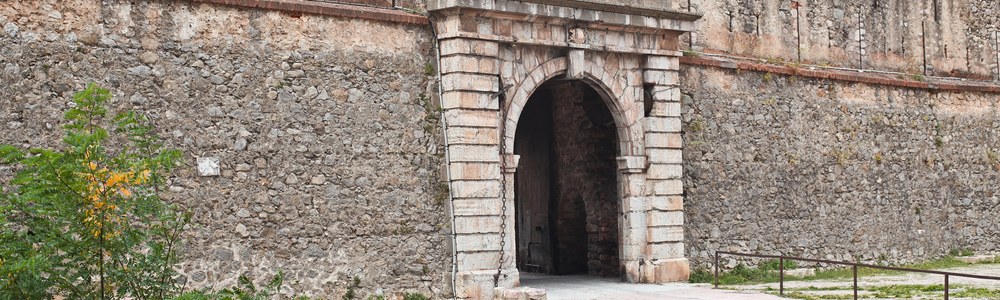
Villefranche-de-Conflent was founded in 1092 by Count Guillaume Raymond of Cerdagne, and the town walls were extended from the 11th to the 19th century. Vauban worked here from 1669 to 1681 and reshaped the medieval town in 1679.
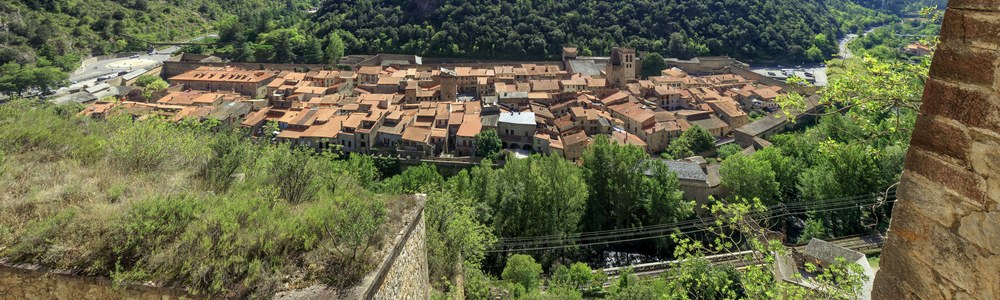
In 2008 the “Fortifications of Vauban” were added to the UNESCO World Heritage List, with 12 groups of fortifications. In Villefranche the listing covers the town walls, Fort Libéria and Cova Bastera, a casemated cave connected to the town by an underground staircase. Mont-Louis is a separate one of the 12.
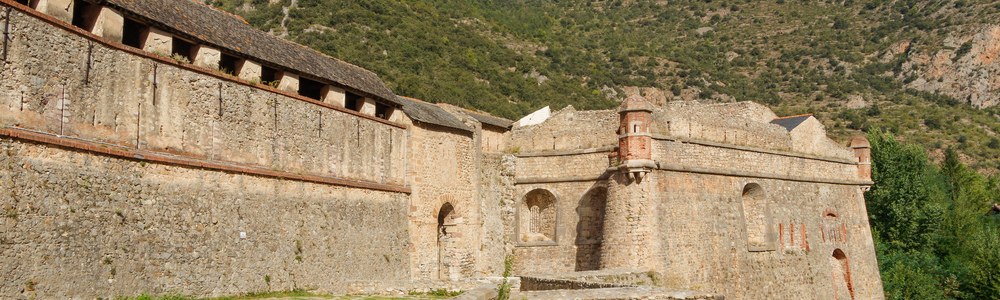
- The wall walks: open every day February–December. In 2026 they cost 5 euros, 2.50 euros for children aged 5–10 and 4.50 euros reduced. In 2027 the prices are 5.50 euros, 2.50 euros and 5 euros.
- Night walk by lantern: July and August, Mondays and Wednesdays at 9pm, from 10 euros.
- Entrance: 2 rue Saint-Jean.
Fort Libéria and the 734 steps
Fort Libéria was built by Vauban in 1681, with a garrison of 96 soldiers, and strengthened under Napoleon III in 1850–1856. The underground staircase was built in 1850–1853. It is called “les 1000 marches”, but the fort itself says it has 734 steps.
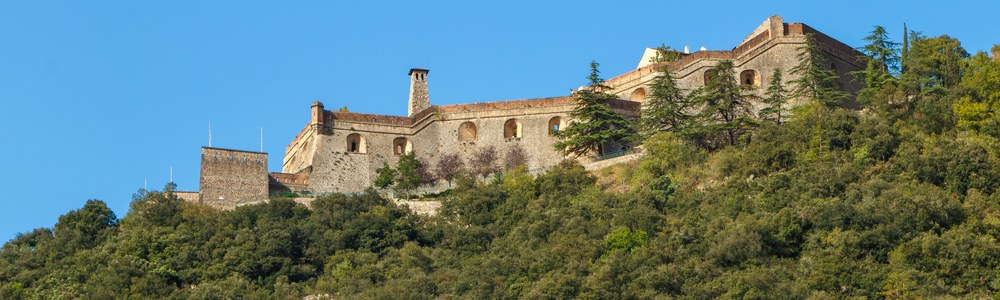
- Open all year: July–August 9am–8pm, May–June 10am–7pm and otherwise 10am–6pm, without a break.
- Price: adults 8 euros (reduced 7 euros), children aged 5–10 4.50 euros.
- Up by 4x4 shuttle: transport and visit 14 euros, children 5.50 euros.
Grotte des Canalettes
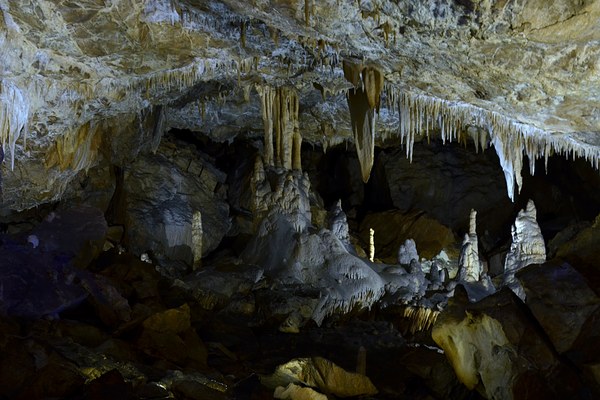
The stalactite cave Grotte des Canalettes lies by the road to Vernet-les-Bains, in Corneilla-de-Conflent just outside Villefranche. The Grandes Canalettes appear to have been merged with it into a single visitor site.
- The 2026 season: 28 March–1 November, every day – 10am–5pm until 30 June, 10am–5.30pm in July and August, 10am–5pm in September and 11am–4pm in October.
- Price: adults 14 euros, children aged 5–12 6–7 euros, under-5s free.
The cave is closed now, and the 2027 season has not been announced.
Prades, Saint-Michel-de-Cuxa and Canigó
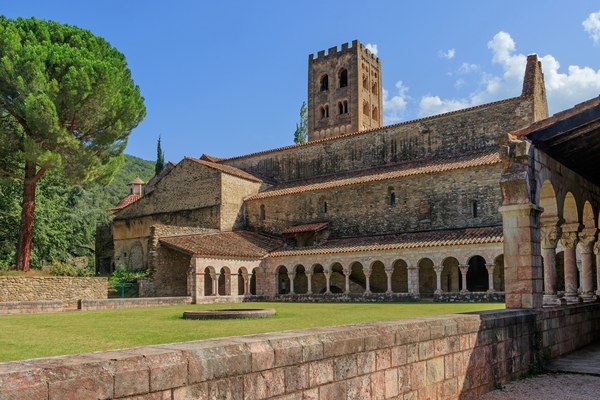
Prades lies around 40 kilometres west of Perpignan, a short way down the valley from Villefranche. The Abbaye Saint-Michel de Cuxa in Codalet near Prades was founded in the 9th century, and Benedictine monks live there today. You can see the cloister, the bell tower and the crypt, and there are guided tours all year when places are available.
Parts of the cloister stand in The Cloisters in New York, and the abbey is one of the venues of the Festival Pablo Casals, which has been held since 1950.
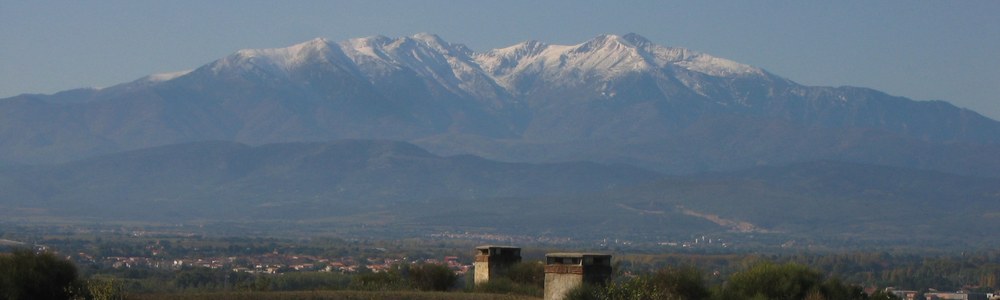
Canigó (Canigou) is called the sacred mountain of the Catalans. It is 2,784 metres high and has been a Grand Site de France since 2012. The flame kept burning all year in Le Castillet in Perpignan is carried up to the summit to be renewed and then down to the villages to light the Sant Joan bonfires.
Mont-Louis and Font-Romeu
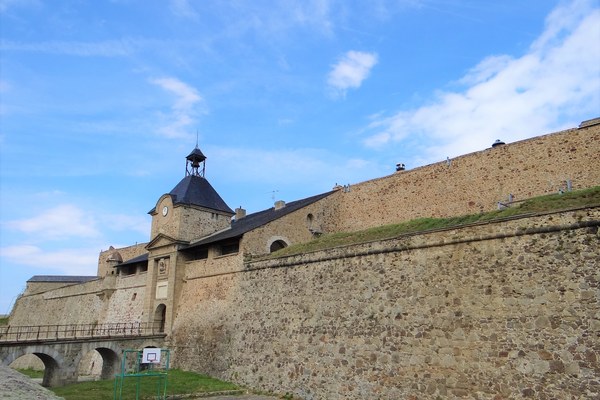
Mont-Louis was built by Vauban in 1679–1681, in two years, more than 1,600 metres above sea level, and is on the World Heritage List together with Villefranche. The citadel is still in military use and can only be visited with a guide, but the town is freely accessible.
The solar furnace in Mont-Louis dates from 1949, built by Félix Trombe, and was the world’s first double-reflection solar furnace – the model for the solar furnace in Odeillo.
Font-Romeu and Bolquère each have their own station on the line, Font-Romeu-Odeillo-Via and Bolquère-Eyne. More about the mountains and the villages in The French Pyrenees.
From Perpignan to Villefranche
Train: the TER train from Perpignan to Villefranche-Vernet-les-Bains takes approx. 50 minutes on average, and SNCF gives around 16 departures each way per day. We have not found an official fare, but liO sells a limited number of tickets at 1 euro. The Yellow Train leaves from the same station.
Bus: the liO buses 520 (Perpignan–Prades) and 521 (Perpignan–Vernet-les-Bains) run up the valley, and many of the bus routes in the department cost 2 euros. We have not found the journey time.
Car: it is around 45 kilometres as the crow flies from Perpignan to Villefranche.
By air: there are no direct flights from the Nordic countries to Perpignan. Perpignan-Rivesaltes has flights from Paris Orly with Transavia all year, or you can take the train or a hire car from Barcelona, Girona, Montpellier or Toulouse. More about the city in the travel guide to Perpignan.
Eating and sleeping
Villefranche-de-Conflent has no classified hotels. The nearest four-star hotel is the Best Western Le Vauban in Prades, around 6 kilometres away and close to Saint-Michel-de-Cuxa, and in Vernet-les-Bains the Hôtel du Portugal has three stars. If you want to stay in Perpignan and take the train, the Hôtel PB – Paris-Barcelone is right opposite the station, and the four-star Kyriad Prestige is by the TGV station.
In the Conflent, Michelin recommends Òliba in Molitg-les-Bains. In Perpignan, La Galinette has one Michelin star, and Lazare Escarguel, Manat and Le Garriane have a Bib Gourmand – more in the travel guide to Perpignan.
Onward from the Conflent
From Perpignan the train also runs south along the coast to Collioure – read more in Collioure and the Côte Vermeille. You will find more train journeys in The most beautiful train journeys in France, and if you want to continue north to La Cité, we have the travel guide to Carcassonne.
4 days in the Conflent and on the Yellow Train
With four days you can do Villefranche and the cave on the first day, Prades and the abbey on the second and the Yellow Train up to Mont-Louis and Latour-de-Carol on the last two. Check that the train is running – the line closes for periods in spring and autumn.
Villefranche and Canalettes
Walk the wall walks in Villefranche-de-Conflent, and climb up to Fort Libéria – or take the 4x4 shuttle. Visit the Grotte des Canalettes in the afternoon if it is open.
- The wall walks: 5 euros in 2026
- The staircase has 734 steps
- The cave: 28 March–1 November in 2026
Prades and Saint-Michel-de-Cuxa
Drive or take the bus down the valley to Prades and the abbey of Saint-Michel-de-Cuxa in Codalet. See the cloister, the bell tower and the crypt, and finish in Prades.
- Guided tours all year
- Benedictine monks live in the abbey
- Tourist office: tourisme-canigo.com
The Yellow Train to Mont-Louis
Take the Yellow Train from Villefranche across the Pont Séjourné and the Pont Gisclard to Mont-Louis-La Cabanasse, and walk into the fortified town. See the solar furnace, and join a guided tour of the citadel.
- Villefranche–Mont-Louis: 12.10 euros
- A 15–20-minute walk from the station
- The citadel: with a guide only
Bolquère-Eyne and Latour-de-Carol
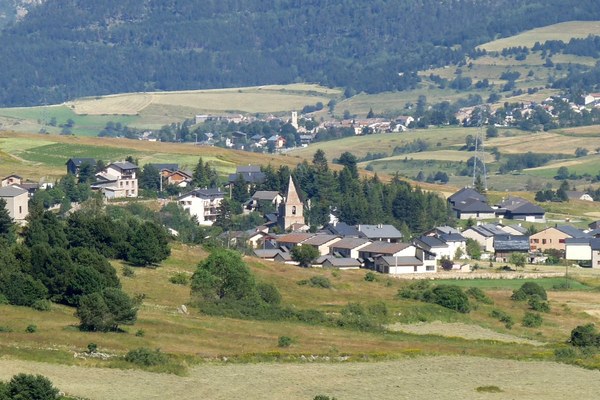
Continue on the train from Mont-Louis past Bolquère-Eyne, the highest station, and Font-Romeu-Odeillo-Via to the terminus at Latour-de-Carol. From there trains run on to Toulouse and Barcelona.
- Bolquère-Eyne: 1,593 metres
- Take water in the open carriages
- Book well in advance in summer