The best areas to stay on the island – and whether to choose a holiday home, a hotel or a campsite.
Corsica is big, the roads are slow, and every part of the island has its own character. That is why your choice of base matters more here than almost anywhere else: it decides how much time you spend on the beach, and how much you spend in the car.
This guide takes you through the areas one by one, explains who each suits, and helps you choose the right type of accommodation.
There is no single best place to stay in Corsica. If you want beaches and short distances, the Balagne and the south are the safest choices. If you want nature and views, the west coast and Cap Corse are better. And if you want to see the whole island, you should have two or three bases rather than one.
Find your area
What matters most to you? Pick what suits you and go straight to the area or type of accommodation.
Start with the kind of holiday you want. If your days are going to be about beaches and swimming, you should stay close to the best beaches – in the Balagne or in the south around Porto-Vecchio. Distances there are short, food, shops and activities are easy to find, and this is where the island has the most places to stay.
If you would rather have nature, views and a little adventure, the west coast and Cap Corse are a better fit. There are fewer beaches and the roads are narrower, but the landscape is the most spectacular on the island. The interior around Corte is for those who want to walk in the mountains.
Think about where you land, too. Corsica has four airports – Ajaccio, Bastia, Calvi and Figari – and a first or last night near the airport saves you a long drive.
Beaches and families: the Balagne or the south
Nature and views: the west coast or Cap Corse
Mountains and walking: Corte and the interior
Town life and a short trip to the airport: Ajaccio, Bastia or Calvi
Practical information on accommodation
In July and August Corsica is full, and the best places are booked months in advance. Many holiday homes are then only let by the full week, often from Saturday to Saturday. In May, June and September it is easier to find availability, and shorter stays are often possible.
Book early for July and August
Expect weekly rentals in the high season
Check the distance to the beach and the shops
Tourist tax per person per night comes on top
The tourist tax (taxe de séjour) is paid per person per night, is collected by the owner or the hotel and comes on top of the price – children under 18 are exempt. Many hotels and restaurants in the resorts close from around November until March or April. If you are travelling out of season, the towns – Ajaccio, Bastia and Corte – are the safest choices.
Saint-Florent and Cap Corse – peaceful and authentic
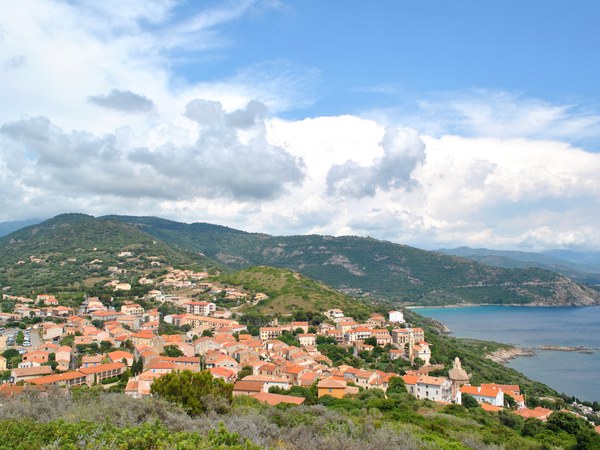
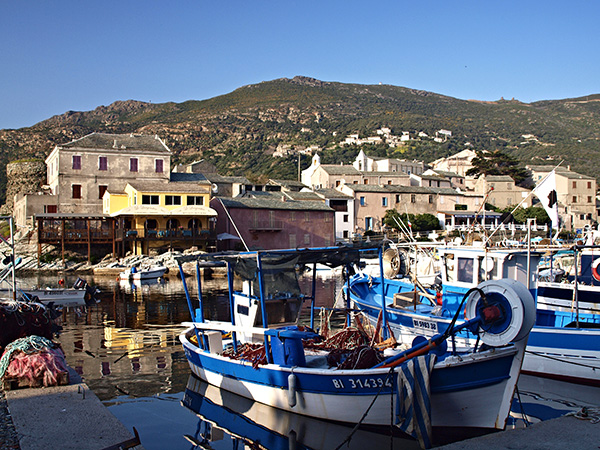
Saint-Florent is a pleasant harbour town with a marina, restaurants and boats to the beaches of the Agriates. From here you can reach Cap Corse, the vineyards of Patrimonio and Bastia in no time. The town suits couples and families who want a little life, but not too much.
On Cap Corse itself you stay in small villages and harbours, often in a holiday home or a small hotel. It is peaceful and beautiful, but a long way from the big beaches, and the roads are narrow.
Calvi and the Balagne – beaches and easy logistics
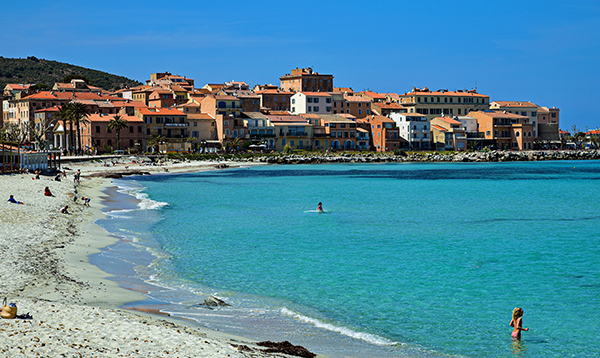
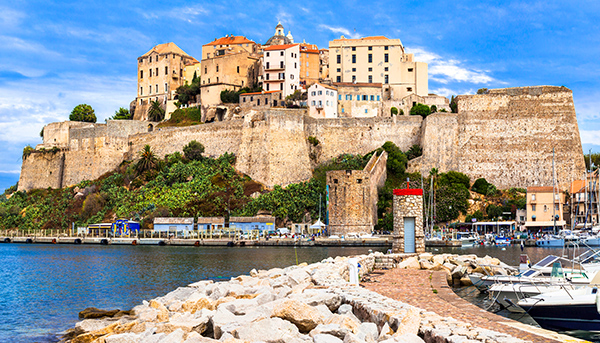
The Balagne is perhaps the easiest area to stay in on a first visit. Calvi has an airport, a citadel and a long sandy beach right by the town centre, and L'Île-Rousse is a lively beach town with a market and a train along the coast.
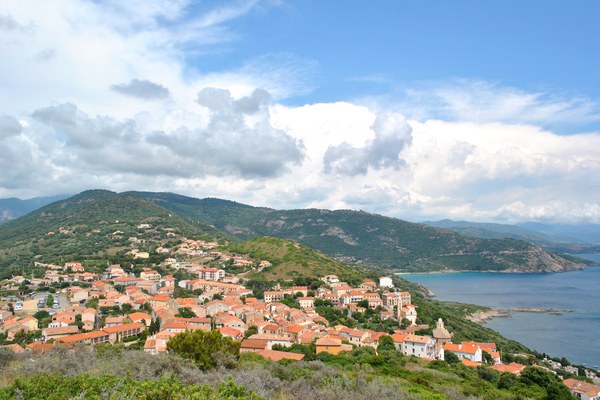
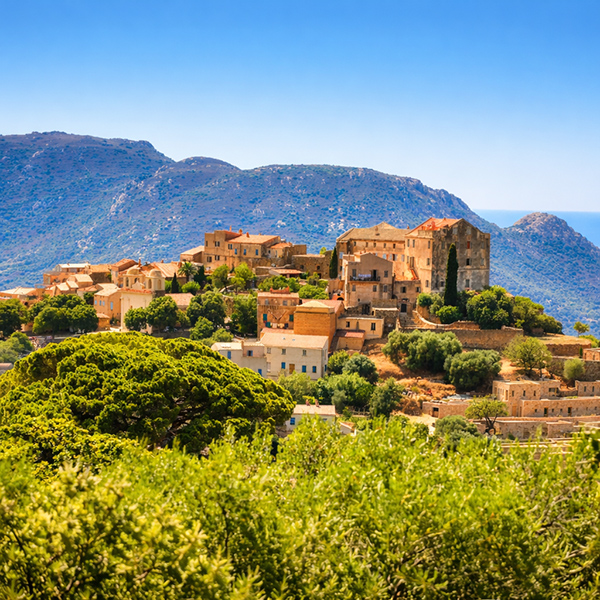
Between the towns lie smaller places such as Algajola, and in the hills above the coast are villages such as Pigna and Sant'Antonino, with views and quieter evenings. Here you will find everything from hotels in town to houses with pools in the villages.
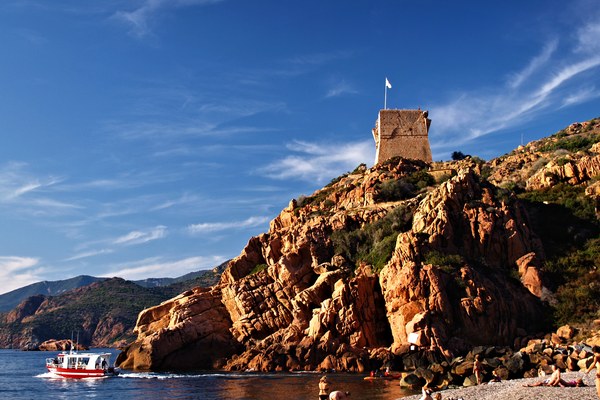
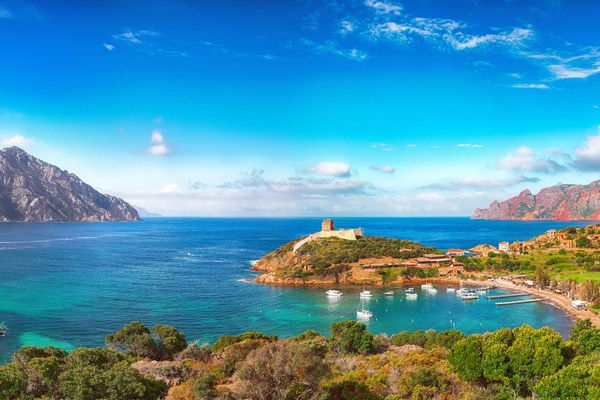
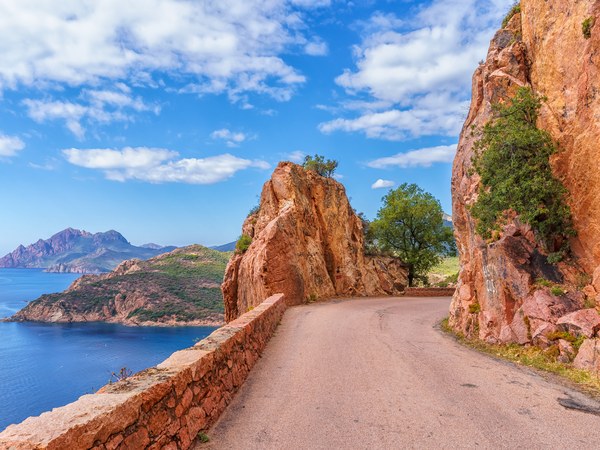
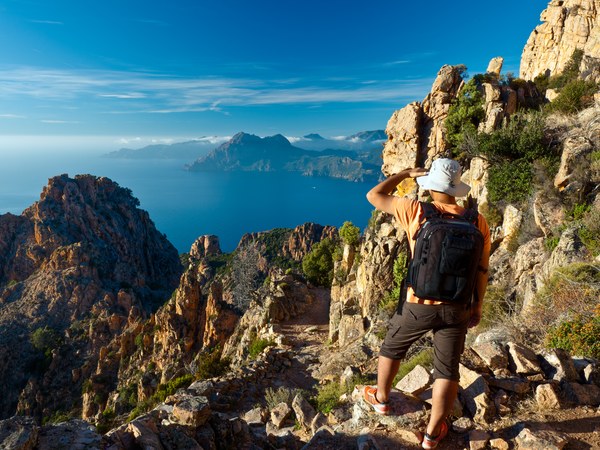
Stay in Porto or Piana if you want to experience the Calanche de Piana, the boat trip to Scandola and the mountains around Evisa. There are fewer beaches here, but the views and the scenery are second to none.
Cargèse and Sagone further south are a good compromise: quieter beaches and a short drive to both Piana and Ajaccio. The west coast is best suited to couples and active travellers who do not need a beach right outside the door.
Ajaccio is the best choice if you want to stay in a city. It has an old town, museums, a market and restaurants, and you can manage perfectly well without a car for the first few days. Along the Route des Sanguinaires west of the centre are hotels and beaches with views of the islands.
The city is also practical for a first or last night, with both an airport and a ferry port, and as a base for day trips to the west coast and the mountains.
Propriano and Valinco – peace in the middle of the south
The Gulf of Valinco and Propriano are a good alternative to the busier places further south. There are beaches, a pleasant harbour and a short drive to the stone town of Sartène and the mountain villages of the Alta Rocca.
From Propriano you can reach Bonifacio and Ajaccio in around an hour, making it a practical midpoint if you want to see a lot of the south without moving on.
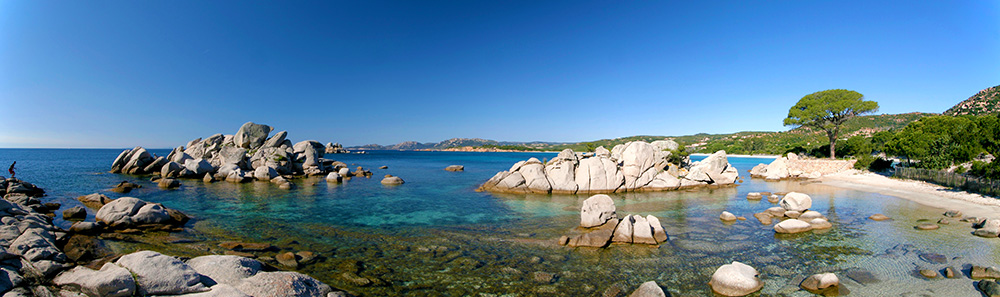
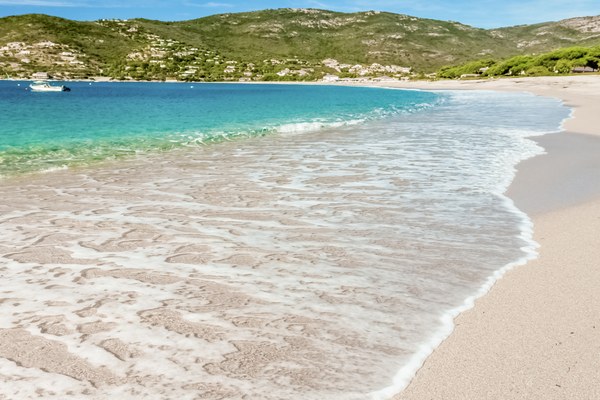
Southern Corsica has the island’s most famous beaches – Palombaggia, Santa Giulia and Rondinara – and water that is turquoise even on grey days. Porto-Vecchio is the most practical base, with an old town, restaurants and plenty of holiday homes around the town.
Bonifacio is a spectacular place to stay, with its old town on the cliffs, but it is more expensive and busier. Many people choose to stay somewhere between the two towns and drive to both. Figari airport lies between them.
Corte and the interior – mountains and cool nights
In the middle of the island lies Corte, the old capital, surrounded by mountains and deep valleys. Accommodation here is cheaper than on the coast, the nights are cooler, and the Restonica valley and the mountain trails are close at hand.
The interior works best as one of several bases rather than for the whole holiday – unless you are going walking in the mountains. The train between Bastia and Ajaccio stops in Corte.
Holiday homes – space, a kitchen and your own pace
In Corsica a holiday home is often the best choice, especially for families and groups and when you are staying a week or more. You get space, a kitchen and often a terrace, a pool or a view, and the price per person works out lower than in a hotel.
Choose the location carefully: a house in a hillside village gives you peace and views, but means using the car every day. A flat near the beach or the town centre makes it easier to walk to the beach, the shops and restaurants.
Corsica has plenty of campsites, from simple pitches in the woods to large sites with pools by the beach. Camping is well suited to a road trip by motorhome or with a tent, and many sites also have chalets and mobile homes for those without their own equipment.
Most campsites are open from April or May until September or October. Wild camping is effectively banned and can earn you a fine, and lighting fires is prohibited in summer. So plan where you will spend the night – especially with a motorhome in July and August.
If you have a week and want as much beach time as possible, one base is enough – in the Balagne or in the south. If you want to see more of the island, two bases are better: Calvi and Porto-Vecchio, for example, or Porto and Bonifacio. That way you avoid long day trips there and back.
With ten days or more, three or four bases give you a full loop around the island. Stay at least two nights in each place, or your holiday will be spent packing.
The coastal towns put you close to the beach, restaurants and shops, and you can often walk almost everywhere. The downside is more traffic and higher prices in the high season.
The villages in the hills above the coast are quieter, cooler in the evening and often have fantastic views. On the other hand, you have to drive down to the beach, and many villages have just one bar and a small shop. In return, you will find farm restaurants (fermes-auberges) serving food from their own farm. For many people a combination works best: a few nights by the sea, a few in a village.
Plan the rest of your trip
Map
See places and hotels
Open the map to find destinations and hotel suggestions all around the island.
Hotels
Hotels in France
See the hotels we have gathered for Calvi, Ajaccio, Bonifacio and the rest of the island.
Frequently asked questions about where to stay in Corsica
Where is the best place to stay on a first visit?
The Balagne, with Calvi and L'Île-Rousse, or the area around Porto-Vecchio in the south. Both have good beaches, short distances and plenty of accommodation to choose from.
Where should families stay?
Where the beaches are long and shallow and the distances short: Calvi, L'Île-Rousse, Algajola, Porto-Vecchio and the Gulf of Sagone. A holiday home with a pool makes the days easier.
Should you stay in one place or several?
For a week, one or two bases are enough. If you want to see the whole island, you should have three or four bases and stay at least two nights in each place.
Holiday home or hotel?
A holiday home is often best for families and for stays of a week or more. A hotel suits short stops on a road trip and those who want to stay in a town.
Can you wild camp in Corsica?
No, wild camping is effectively banned and can earn you a fine, including on the GR20, where you may only pitch a tent at the refuges. Use the campsites, which are found in every part of the island and are usually open from April or May until September or October.