Ready-made itineraries for 7, 10 and 14 days around the whole island – with realistic driving times, good bases and practical advice on ferries, flights and car hire.
Corsica is made for a driving holiday. In a single week you can see clifftop towns, white beaches, mountain passes and fishing villages – but the island is bigger, and the roads slower, than the map would have you believe.
This guide will help you choose the right length, order and bases, so that you spend your holiday enjoying the island rather than sitting behind the wheel.
The most common mistake in Corsica is planning as if it were anywhere else in southern Europe. A hundred-kilometre stretch can take two and a half hours, and the most beautiful roads are the narrowest. Choose fewer bases and more stops along the way instead – your road trip will be both more relaxed and more rewarding.
Choose your road trip
How much time do you have? Pick the length that suits you and go straight to the route.
Choose 7, 10 or 14 days and watch the car drive the route. Tap a number to see where you stay overnight.
The route is simplified and roughly follows the main roads. Allow more driving time than the map suggests.
Why a road trip in Corsica?
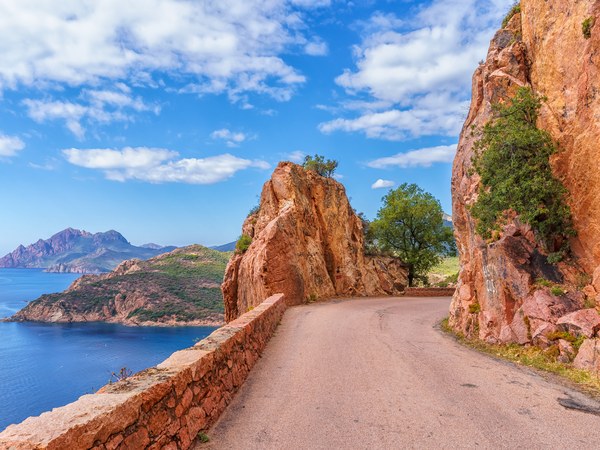
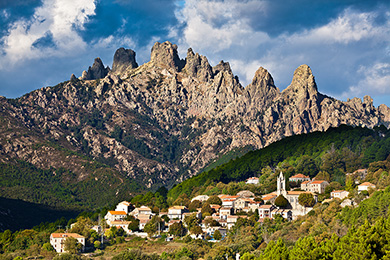
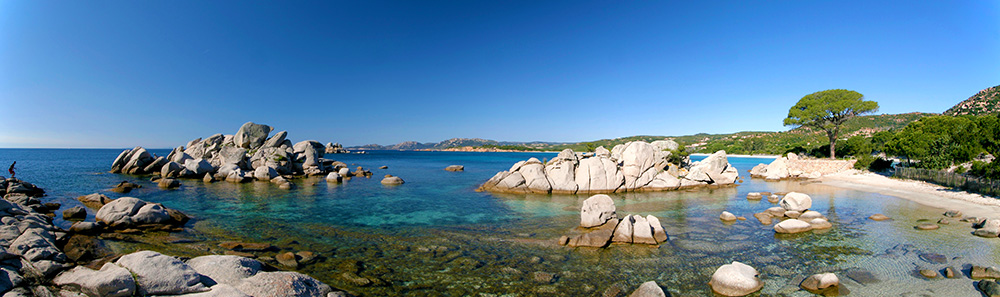
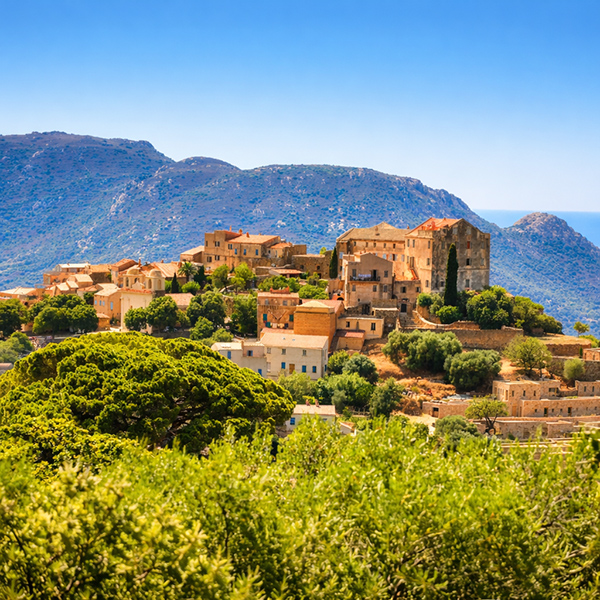
Corsica is only around 180 kilometres long, yet it has more variety than many countries. North and south, east and west each have their own character: granite and lagoons in the south, red cliffs in the west, vineyards and fishing villages in the north, and a mountainous heart that rises to over 2,700 metres.
A road trip lets you experience all of this in a single holiday. With a car you can stop wherever you like, make detours to beaches and villages, and stay in different places without depending on timetables.
Couples and friends who want to see as much of the island as possible
Families who want to combine the beach with day trips
Motorhome and camping travellers with their own vehicle
Anyone with a week or more
Practical travel information
Most visitors either fly into one of the island’s four airports – Ajaccio, Bastia, Calvi and Figari – and hire a car there, or arrive by ferry with their own car in Bastia, Ajaccio or one of the smaller ports. A road trip can start anywhere; what matters most is that the start and finish fit your flight or ferry times.
Expect an average speed of 40–50 km/h away from the main roads
Keep most daily stages under three hours of driving
Stay at least two nights in each place
Fill up the tank before Cap Corse, the west coast and the mountains
May, June and September are the best months for a road trip: warm but not too hot, and far less traffic than in July and August. It is also easier to find accommodation without booking every night months in advance.
A week is enough for a loop that takes in the big highlights, as long as you accept a few long days of driving. The route below starts in Bastia, but it could just as easily start in Ajaccio. With six nights and four bases there is time for both driving and beach days.
Bastia and Cap Corse (1 night in Saint-Florent) – Calvi and the Balagne (1 night) – the west coast via Galéria to Porto (1 night) – the Calanche, Piana and Cargèse to Ajaccio (1 night) – Sartène and Bonifacio (1 night) – Porto-Vecchio (1 night) – the east coast back to Bastia.
With ten days you can do the same loop at a more relaxed pace and add the interior. Spend two nights in Porto, giving you a full day for a boat trip to Scandola, and two nights in Bonifacio or Porto-Vecchio for the beaches in the south.
Finish with a night in Corte instead of driving straight up the east coast. From Corte you can walk into the Restonica valley, and the onward drive to Bastia is short. The alternative is to drive over the Col de Bavella from Porto-Vecchio, one of the most beautiful mountain roads on the island.
Two weeks is the ideal length for a road trip in Corsica. It allows four bases with three or four nights each, and half of your days free from long drives.
A good set-up is Saint-Florent or L'Île-Rousse for the north (Cap Corse, the Agriates and the Balagne), Porto or Piana for the west coast, Bonifacio or Porto-Vecchio for the south, and Corte for the mountains. Between bases you drive short stages with plenty of stops, and at each base you have time for the beach, a boat trip and a day of doing nothing at all.
With your own car or motorhome, you take the ferry from the mainland. The shortest crossing is Livorno–Bastia, around four hours, while Nice to Bastia takes around six hours. Ferries also sail from Toulon, Marseille and Savona, and from Genoa in summer. The crossings from Toulon and Marseille are often overnight.
Bastia is the most practical port for a road trip, as you can head straight out onto Cap Corse. Ferries also serve Ajaccio, L'Île-Rousse, Propriano and Porto-Vecchio, so you can arrive at one port and leave from another.
Corsica has four airports: Ajaccio, Bastia, Calvi and Figari, near Bonifacio. Most people fly in via Paris, Nice or another European city. There are also direct flights in summer: Norwegian, for example, flies weekly from Copenhagen and Stockholm to Bastia.
The simplest option is to pick up and drop off the car at the same airport. If you want to land in one place and fly home from another, the one-way fee varies between companies, and not all of them let you return the car in Figari – check the terms before you book. A small car is an advantage on the narrow roads.
It is possible to get around Corsica without a car, but you will have to leave a lot out. The narrow-gauge railway runs from Bastia via Corte to Ajaccio, with a branch line to L'Île-Rousse and Calvi, and the journey through the mountains is an experience in itself. The full Bastia–Ajaccio run takes just under four hours.
Buses link the towns, but they run infrequently and are poorly suited to reaching beaches and villages. Without a car, it is best to choose two or three towns along the railway – Bastia, Corte and Calvi or Ajaccio, for example – and use boats and local excursions from there.
The roads in Corsica are good, but winding, narrow and often steep. Away from the main roads between Bastia and Ajaccio and along the east coast, an average of 40–50 km/h is realistic. Bastia–Calvi takes around two hours, Calvi–Porto along the coast around two and a half, Porto–Ajaccio around two, Ajaccio–Bonifacio around two and a half, and Porto-Vecchio–Bastia along the east coast around two and a half hours. A loop around Cap Corse from Bastia takes at least four hours without stops.
Add at least half an hour per stage for photo stops, and drive the best-known stretches – the Calanche, Cap Corse and Bavella – early or late in the day. This matters even more in a motorhome: in season, coach and motorhome traffic through the Calanche has been regulated in the middle of the day.
The best road trip has few bases. Saint-Florent or L'Île-Rousse covers the north, Porto or Piana the west coast, Bonifacio or Porto-Vecchio the south, and Corte the interior. Ajaccio and Bastia work well for the first or last night, close to the airport and the ferry.
A holiday home is often the best choice when you are staying three or four nights in one place: you get space, a kitchen and often a view. Hotels are better suited to a single night en route. In the high season many places require a minimum one-week rental from Saturday to Saturday, so book well in advance.
Plan the rest of your trip
Map
See places and hotels
Open the map to find destinations and hotel suggestions all around the island.
Car hire
Hire a car at the airport
Compare car hire prices in Ajaccio, Bastia, Calvi and Figari.
Find campsites along the route and plan your motorhome trip.
7 days around Corsica – day by day
The classic loop, clockwise from Bastia. The days with the most driving have shorter stops, and the days on the coast leave time for a swim.
Day 1
Bastia, Cap Corse and Saint-Florent
Driving time: approximately 4 hours
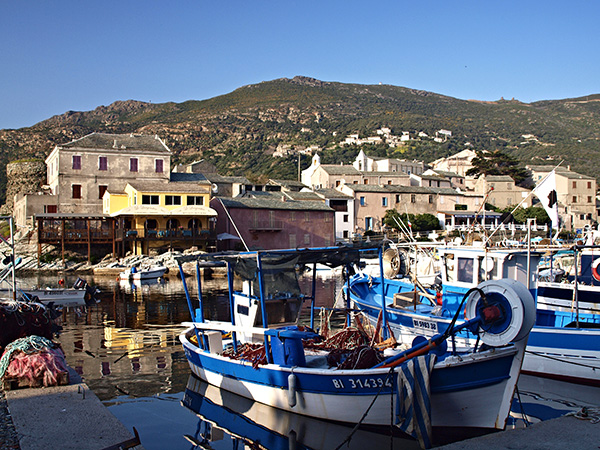
Drive around Cap Corse from Bastia, with lunch in Centuri and a stop in Nonza, then continue to Saint-Florent for an evening by the harbour.
Erbalunga and Centuri
Nonza and the west side
Overnight in Saint-Florent
Day 2
The Agriates, L'Île-Rousse and Calvi
Driving time: approximately 1.5 hours
Take the morning boat from Saint-Florent to Saleccia or Lotu, or drive straight through the Agriates. Spend the afternoon in L'Île-Rousse and the evening beneath the citadel in Calvi.
Boat to the Agriates beaches
L'Île-Rousse
Overnight in Calvi
Day 3
Galéria and the coast road to Porto
Driving time: approximately 2.5 hours
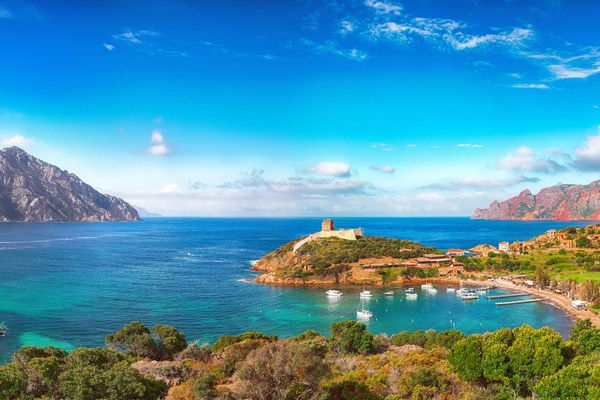
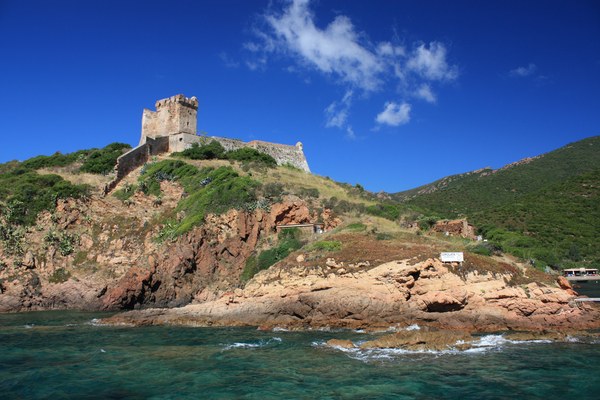
Drive the narrow coast road south via Galéria and over the Col de la Croix. Stop for the view towards Girolata before you descend to Porto.
The coast road via Galéria
Views towards Girolata
Sunset in Porto
Day 4
The Calanche, Piana and Ajaccio
Driving time: approximately 2 hours
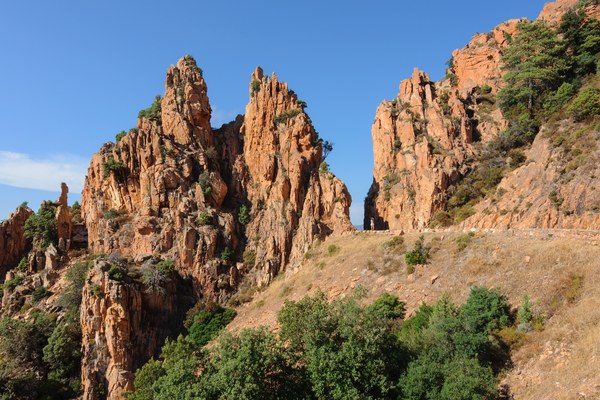
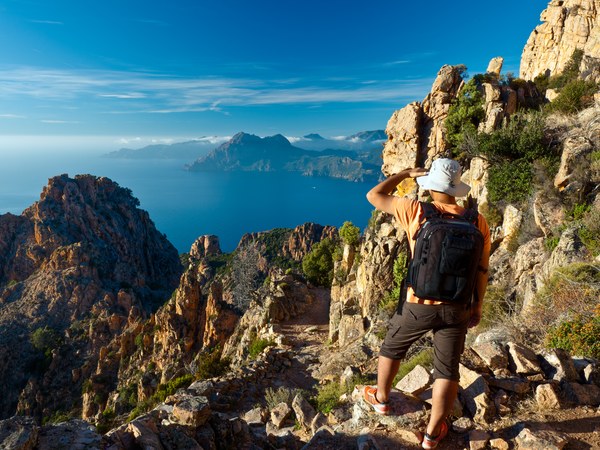
Drive through the Calanche de Piana early in the morning, stop for coffee in Piana and a swim in Cargèse, and reach Ajaccio in time for dinner.
The Calanche in the morning
A swim in Cargèse
Overnight in Ajaccio
Day 5
Sartène and Bonifacio
Driving time: approximately 2.5 hours
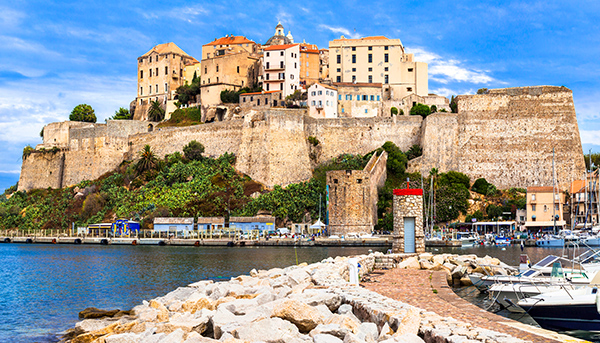
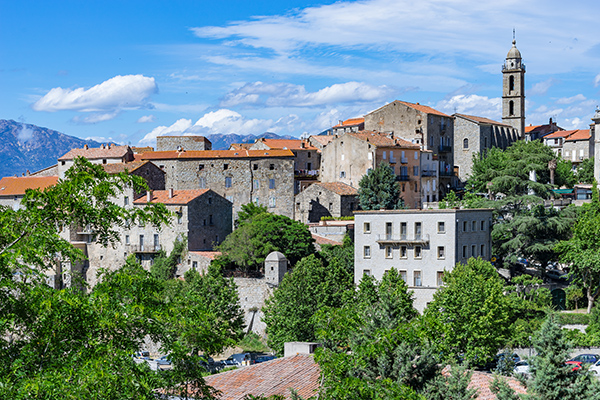
Head south via Propriano to Sartène, one of the most Corsican towns on the island. Continue to Bonifacio and walk along the cliffs in the evening.
The stone town of Sartène
The view at Roccapina
An evening in Bonifacio
Day 6
The beaches and Porto-Vecchio
Driving time: approximately 1 hour
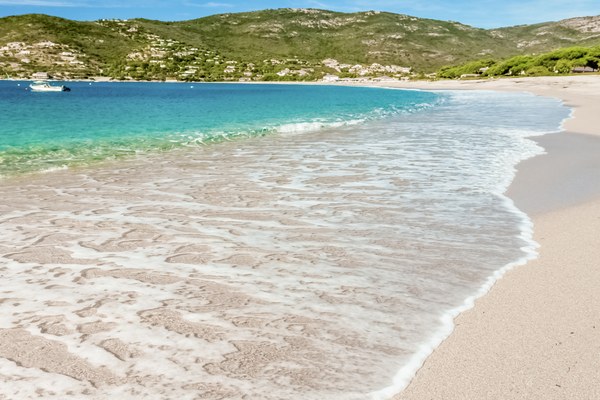
A relaxed day: Santa Giulia or Palombaggia in the morning, and Porto-Vecchio’s old town in the evening.
Palombaggia or Santa Giulia
Porto-Vecchio’s old town
A short driving day
Day 7
Bavella or the east coast to Bastia
Driving time: approximately 2.5–4 hours
Make a morning trip up to the Col de Bavella if you have time, or drive straight up the east coast back to Bastia and the ferry.
Frequently asked questions about a road trip in Corsica
How many days do you need?
A week is enough for the classic loop with the biggest highlights. Ten days gives you a more relaxed pace and time for the mountains, and two weeks is ideal if you want to see the whole island without long days of driving.
Which way round should you drive?
It makes little difference, but many people drive clockwise from Bastia: Cap Corse and the Balagne first, then the west coast, the south and back up the east coast. Start wherever suits your flight or ferry best.
How long does it take to drive around Corsica?
The driving itself, around the island along the coast, takes around 15–20 hours spread over several days. Expect an average of 40–50 km/h away from the main roads.
Can you get around without a car?
Yes, but you will be relying on trains and buses between the towns. The train runs between Bastia, Corte, Ajaccio and Calvi, while beaches and villages are hard to reach without a car.
When is the best time to go?
May, June and September bring pleasant warmth, a warm sea and less traffic on the roads. July and August are the hottest months, but also the busiest.