The other side of the island – mountain lakes, chestnut forests, river swimming and villages where time passes more slowly.
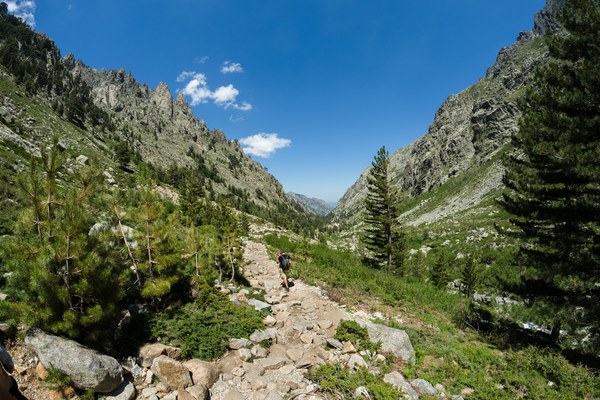
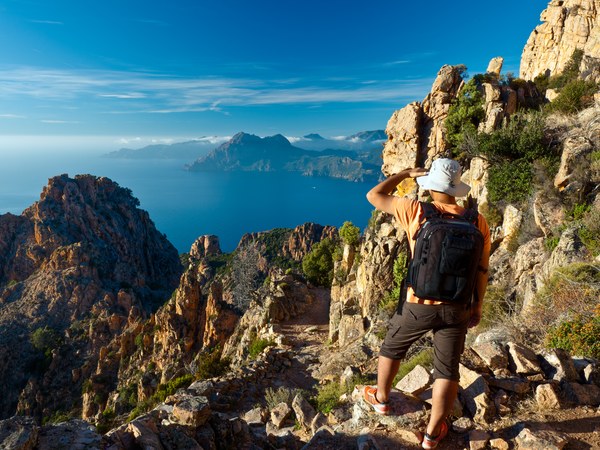
Corsica is often called a mountain in the sea. Around 120 peaks rise above 2000 metres, and just an hour’s drive from the beaches you can swim in clear river pools, walk to mountain lakes and stay in stone villages where the evenings are cool.
This guide covers the main mountain areas, from Corte in the middle of the island to the peaks of Bavella in the south – with walks for ordinary walkers, not just for those setting out on the GR20.
The interior is the part of Corsica most people only drive through. That is a pity. The mountains here are higher, the rivers clearer and the prices lower than on the coast, and even in August you can find a river pool or a trail almost to yourself. You do not need to be an experienced mountain walker: many of the finest spots are a short walk from the road.
Find your mountain Corsica
What do you want to experience? Pick what suits you and go straight to the area.
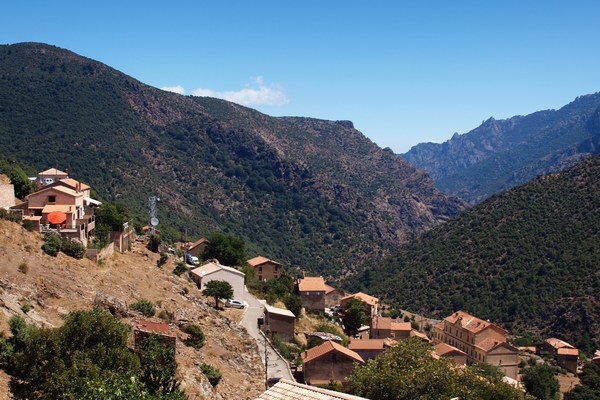
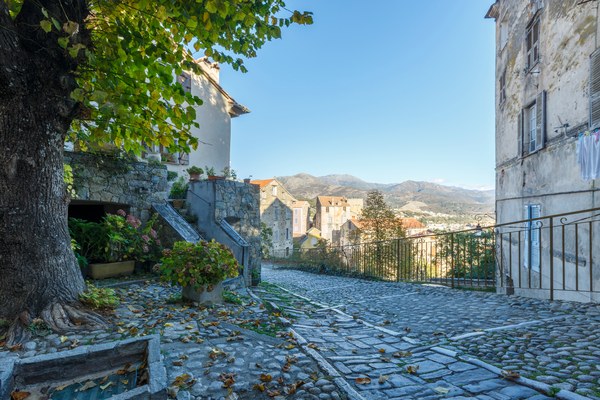
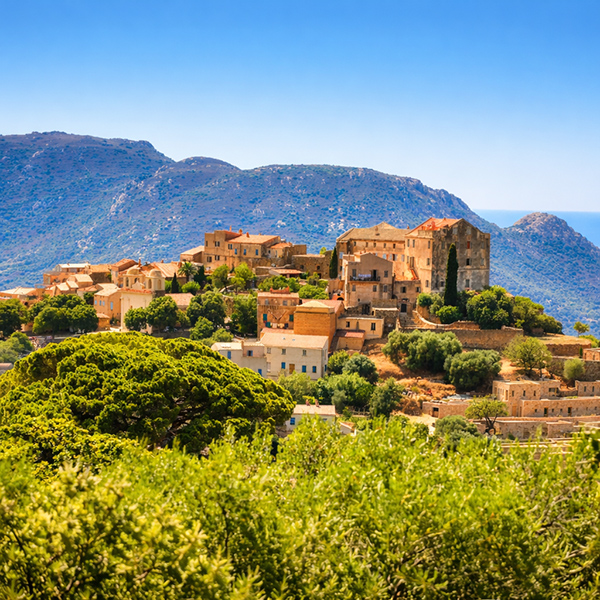
The mountains are a big part of what sets Corsica apart from other Mediterranean islands. This is where much of Corsican culture has survived: the language, the polyphonic singing, chestnut flour and cured meats from free-range pigs. The villages often sit on a ridge overlooking the valley, with a church, a bar and a small square in the middle.
For many people, though, the best thing is the water. The rivers run over smooth granite and form green pools where you can swim when it is thirty degrees on the coast. And because distances are short, you can easily stay by the beach and spend a day or two in the mountains – or the other way round.
River swimming in clear mountain water
Day walks to mountain lakes and waterfalls
Cooler nights than on the coast
Corsican culture, food and village life
Practical information on the mountains
A car is almost essential. The train runs to Corte and Vizzavona, but the valleys, the villages and the starting points for walks are best reached with your own car. The roads are narrow and winding, and you will often meet cows, goats and pigs on the road – expect a lower average speed than the map suggests.
Start your walks early – afternoon thunderstorms are common
Bring water, sun cream and good shoes
Snow in the high mountains until well into May and June
Check fire risk warnings in summer
June and September are the best months: the trails are free of snow, the rivers have water and there are fewer people. In July and August it is hot in the valleys and the best-known places are crowded, especially in Restonica. In winter many mountain roads and places to stay are closed. On days with a very high fire risk, the authorities close certain forest areas and trails, including at Bavella – check the warnings before you set off.
Corte – the mountain town at the heart of the island
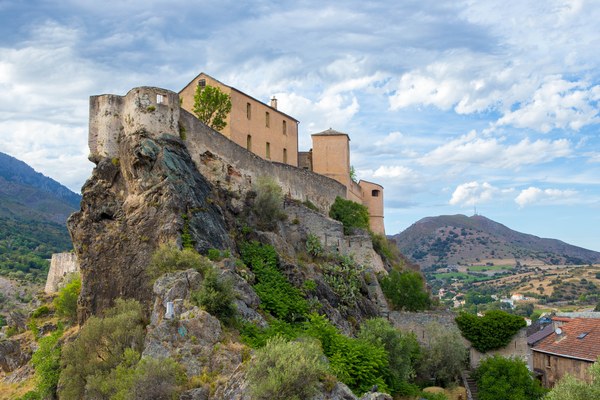
Corte was the capital of independent Corsica under Pasquale Paoli in the 18th century, and the town is still a symbol for Corsicans. The citadel towers on a rock above the old town, and inside it is the Museu di a Corsica, the island’s museum of culture and history. From the viewpoint by the citadel you look straight down into the valleys.
Paoli also founded a university here, and it is the students who bring the town to life in the evening. A trail leads straight from the town into the Tavignano gorge, one of the finest day walks in the interior. Corte is the most practical base for the mountains, with trains to both Ajaccio and Bastia.
The Restonica valley – river pools and mountain lakes
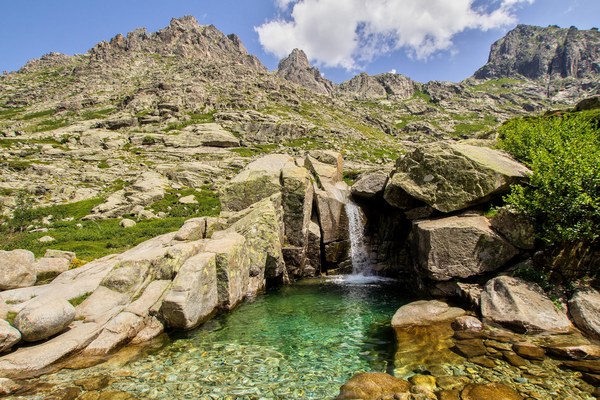
Just south of Corte, a narrow road leads into the Restonica valley. Along the river lie pools of green, ice-cold water between smooth slabs of granite. Since the storm of November 2023 the road has been closed to private cars beyond the Tuani campsite, and the upper section will not be rebuilt. In summer a bus runs from Corte railway station up the valley, and from there you walk up to the Grotelle shepherds’ huts, where the trail to the mountain lakes begins.
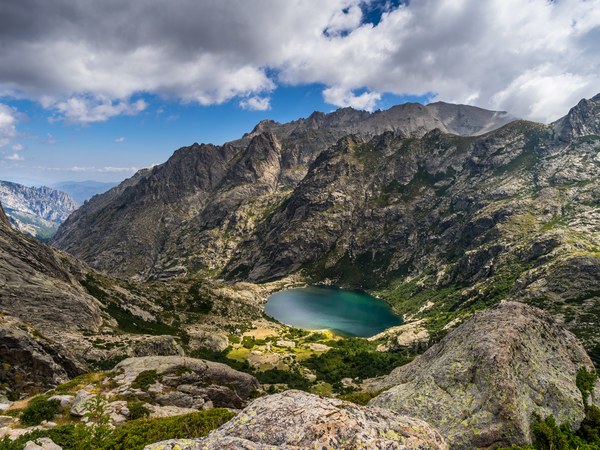
From Grotelle it is around an hour’s walk on to Lac de Melo, with a few steep sections fitted with chains and ladders. If you have the energy, carry on to Lac de Capitello, higher up beneath sheer rock walls. Including the walk from the bus, Melo and Capitello take around eight hours there and back, so this is a long and demanding day. Take an early bus, and check timetables and booking in advance.
Vizzavona lies high up in a large forest of Corsican pine and beech, on the road between Ajaccio and Corte. It has been a resort since the late 19th century, when the railway arrived and British tourists came here to escape the summer heat on the coast.
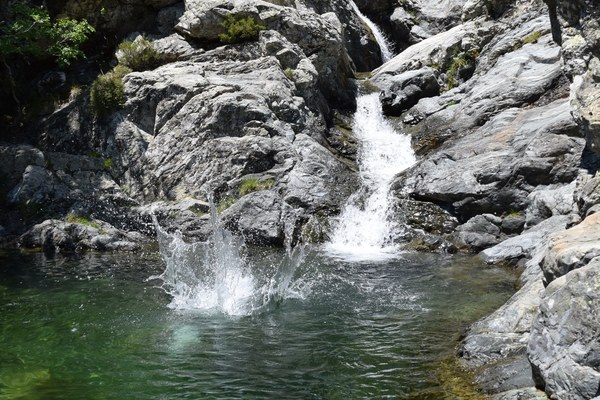
The most popular walk goes to the Cascade des Anglais, a series of waterfalls and pools on the Agnone river, which you reach on a short walk through the forest. Above the valley rises Monte d'Oro, one of the island’s highest mountains. Vizzavona also lies roughly halfway along the GR20, and many walkers finish or start their trek here.
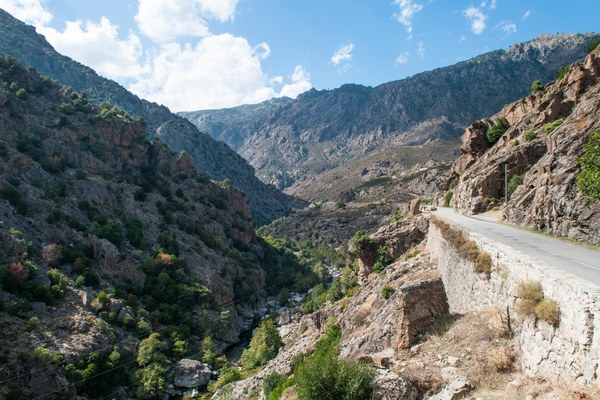
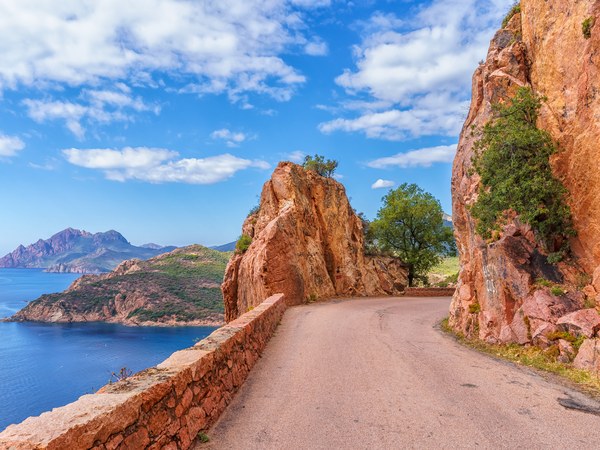
Niolo is a high mountain basin around the village of Calacuccia, surrounded by the island’s highest mountain, Monte Cinto, and the striking Paglia Orba. The road in from the Corte side runs through the Scala di Santa Regina, a dramatic gorge where the road is blasted into the red rock face above the Golo river.
From Calacuccia the road continues through the great pine forest of Valdu Niellu to the Col de Vergio, the highest road pass in Corsica, and on down towards Évisa and Porto. This is also where the walk to Lac de Nino begins – a mountain lake surrounded by green marshy meadows where wild horses and pigs graze. It is a long but rewarding day walk.
The Asco valley cuts into the mountains north-west of Corte. The road follows the river through a narrow gorge up to the village of Asco, and on to Haut-Asco, where the trail to Monte Cinto begins.
Near the village an old Genoese stone bridge spans the river, with pools that are popular swimming spots in summer. The valley is less well known than Restonica and often quieter – a good day trip if you are staying in the Balagne or around Corte.
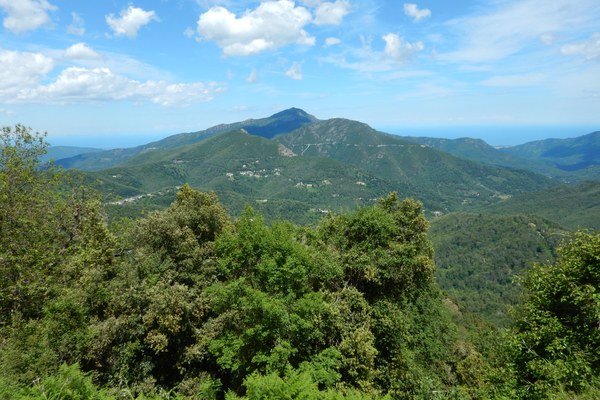
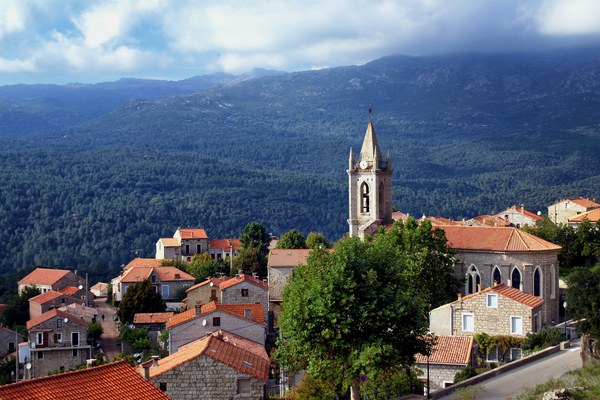
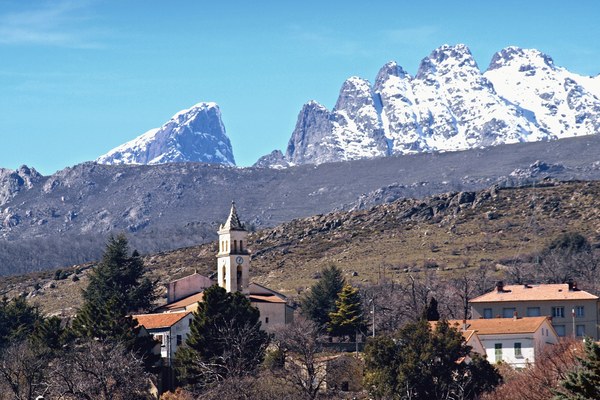
The Castagniccia, the land of chestnuts, lies in the green hills east of Corte. The chestnut forests were planted several hundred years ago, and for a long time chestnut flour was the very basis of the local diet. Today many villages are almost deserted, but the churches bear witness to a rich past – especially in La Porta, with its tall Baroque bell tower.
Pasquale Paoli was born in Morosaglia, and the house where he was born is now a museum. The roads are narrow and winding, but they take you through some of the most unspoilt countryside Corsica has to offer. In autumn the chestnuts are celebrated with markets and festivals in the villages.
The Alta Rocca is the mountain area behind the coast in the south, with villages such as Zonza, Quenza and Levie set in a green forest of oak and pine. It is cooler here than in Porto-Vecchio, and the restaurants serve chestnuts, wild boar and cheese from the surrounding farms.
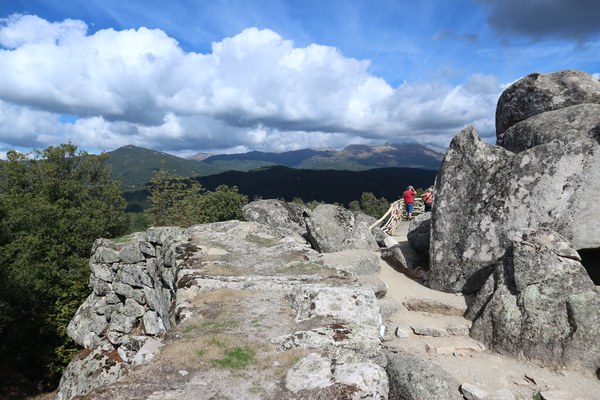
Near Levie lies Castellu di Cucuruzzu, a Bronze Age fortress built into the granite boulders, which you reach on a pleasant walk through the forest. The village is also home to the Alta Rocca museum. From here it is a short drive both to Bavella and down to Sartène and Propriano.
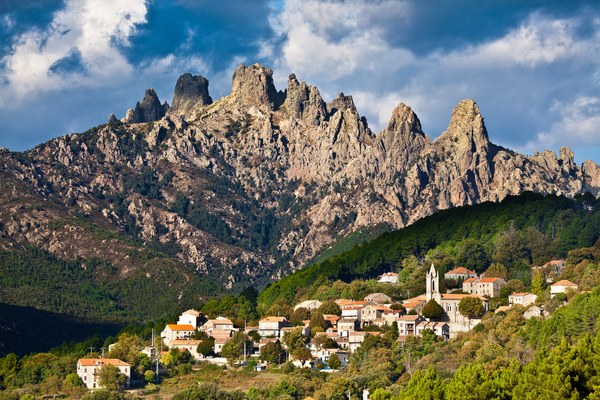
The Col de Bavella is one of the most photographed places in Corsica. From the pass you look straight up at the Aiguilles de Bavella, jagged peaks of red granite, with old, wind-bent pine trees in the foreground. In summer pigs and cows wander freely among the cars in the car park.
Several fine walks start from the pass, including the one to the Trou de la Bombe, a large, round hole right through a mountain ridge. The gorges around Bavella are also considered one of the best areas for canyoning in Europe. Porto-Vecchio and the beaches of the south are around an hour away, making Bavella a popular day trip.
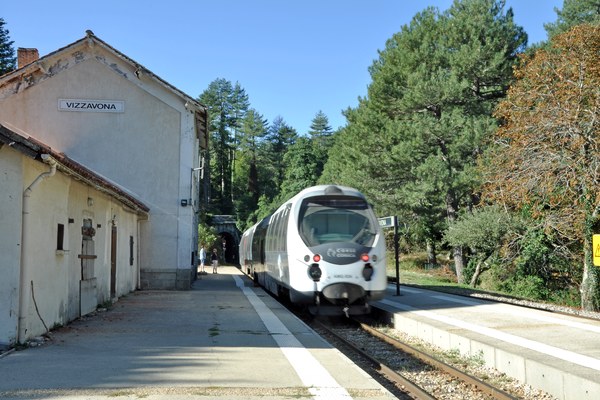
The narrow-gauge railway between Ajaccio and Bastia runs right through the mountains, via Vizzavona and Corte. Corsicans call it U Trinichellu – the little trembling train. Along the way it passes through long tunnels, over high viaducts and through forest that no road reaches.
The train is an experience in itself and a practical way to reach Corte without a car. From Ponte Leccia a branch line runs to L'Île-Rousse and Calvi. Get a window seat – and allow plenty of time for the journey.
The roads in the interior are often so narrow that two cars can barely pass each other, with sharp bends and drops without crash barriers. Drive slowly, sound your horn before blind bends and be ready for animals on the road. With a motorhome or a large car you should check the road in advance – especially in the Scala di Santa Regina, Asco and the Castagniccia.
The main road between Ajaccio, Corte and Bastia is good and fast. From Corte it takes around an hour and a half to Ajaccio and just over an hour to Bastia. Getting between the mountain areas takes longer than you think: from Corte to Bavella is a long day behind the wheel.
Mountain food in Corsica is simple and filling. Cured meats such as lonzu, coppa and figatellu come from pigs that roam freely in the forest, and the cheese is made from sheep’s and goat’s milk – many shepherds’ huts sell cheese direct. Brocciu, the fresh cheese, is used in everything from omelettes to cakes.
You will find chestnuts everywhere: in flour, bread, cakes, pulenda (chestnut porridge) and in beer. In autumn wild boar stew is on the menu in many villages. Try to eat at a ferme-auberge, a farm restaurant where most of the food comes from the farm itself.
Plan the rest of your trip
Map
See places and hotels
Open the map to find destinations and hotel suggestions in the mountains and all around the island.
Walking
The GR20 in Corsica
All about what may be Europe’s toughest long-distance trail – stages, refuges and the best time to go.
From Corte in the north to Bavella in the south – a route you can drive as part of a longer road trip, or cut down to two or three days.
Day 1
Corte and the Tavignano
Base: Corte
Walk up to the citadel and the museum in the morning, and take the trail into the Tavignano gorge in the afternoon. Have dinner in the old town.
The citadel and the Museu di a Corsica
The Tavignano gorge
An evening in the old town
Day 2
The Restonica valley
Base: Corte
Take an early bus from Corte up the valley and walk up to Lac de Melo, and on to Lac de Capitello if you wish – allow a full day. Swim in the river on the way down.
Bus from Corte
Lac de Melo and Capitello
River swimming
Day 3
Vizzavona and the Alta Rocca
Base: Zonza or Levie
Stop at the Cascade des Anglais in Vizzavona, then drive south over the mountains to the Alta Rocca. Visit Castellu di Cucuruzzu if time allows.
Cascade des Anglais
A long day of driving
Castellu di Cucuruzzu
Day 4
Bavella and down to the coast
Base: Porto-Vecchio
Go for a walk from the Col de Bavella in the morning, before the heat and the crowds, then drive down to the beaches around Porto-Vecchio.
Frequently asked questions about the mountains of Corsica
Where should you stay to experience the mountains?
Corte is the best base for Restonica, Niolo, Vizzavona and Asco – and the bus to Restonica leaves from the railway station there. In the south, Zonza and the villages of the Alta Rocca are closest to Bavella. If you are staying on the coast, you can reach a lot on day trips from Porto-Vecchio, Ajaccio and Bastia.
Do you need a car in the mountains?
Almost always. The train runs to Corte and Vizzavona, and in summer a bus runs from Corte into the Restonica valley, but the other valleys, the villages and the starting points for walks are best reached by car.
When is the best time to go?
June and September. The trails are free of snow, the temperatures are pleasant and there are fewer people. In July and August it is hot in the valleys and the best-known places are crowded, and afternoon thunderstorms are common.
Can you swim in the rivers?
Yes, the river pools in Restonica, the Tavignano, Asco and at the Cascade des Anglais are among the highlights. The water is cold, and after rain or thunderstorms the rivers can rise quickly – never swim in a river when there is thunder in the mountains.
Do you have to walk the GR20 to experience the mountains?
No. The GR20 is a demanding long-distance trek, but many of the finest places – Lac de Melo, the Cascade des Anglais, Bavella and the Tavignano – can be reached on day walks.
Are the mountain roads difficult to drive?
They are narrow, winding and often without crash barriers, and there are animals on the road. If you drive slowly, it is fine, but allow plenty of time. With a motorhome you should avoid the narrowest roads.