
The places lie in the Oise department, with Villers-Cotterêts in the Aisne and Royaumont in the Val-d'Oise. Distances are as the crow flies from Chantilly unless otherwise stated. The prices and times are from the sources in autumn 2026, and most have not published 2027 – check before you go.
Senlis – the town inside the Roman wall
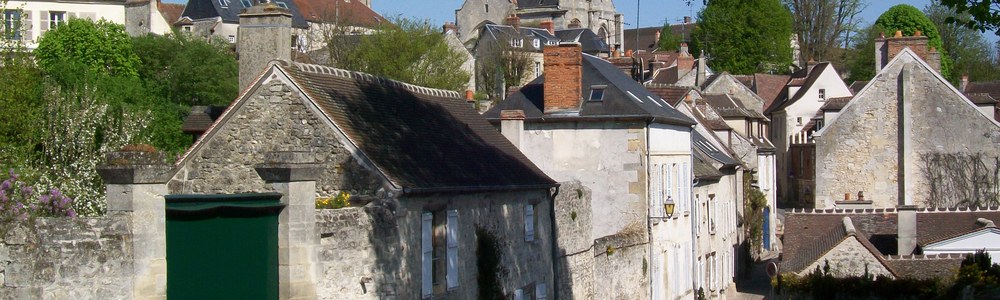
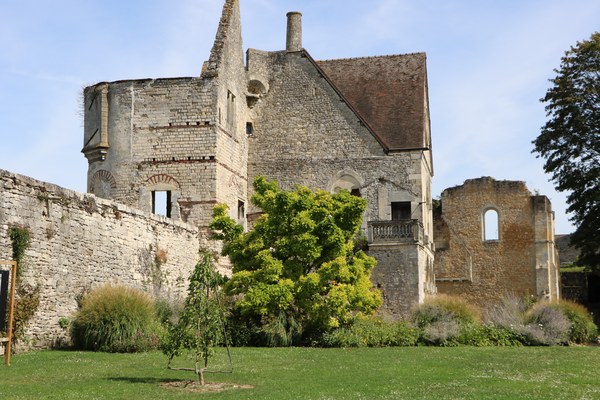
Senlis lies 8.5 kilometres from Chantilly. The Gallo-Roman wall from the 3rd century is 800 metres long and is regarded by the tourist office as one of the best preserved in France. It enclosed a castrum of 6 hectares, and you see it by rue de la Treille, in the park of the royal castle and in the Jardin de l'évêché. The Jardin du Roy is closed while work is under way on the royal castle.
- The arena: from the first century, with room for approx. 8,000. It is open only with a guide on some Saturdays from April to October, and during the archaeology days in June and the heritage days in September.
- Market: Tuesday and Friday 8am–noon, around Places de la Halle and Henri IV.
- Film town: over a hundred films have been shot in the area, among them “Peau d'âne”, “La Reine Margot” and “Séraphine”.
- The tourist office: closed on Mondays and 25 December 2026–3 January 2027.
There is more about the town at the Chantilly-Senlis tourist office.
Notre-Dame Cathedral
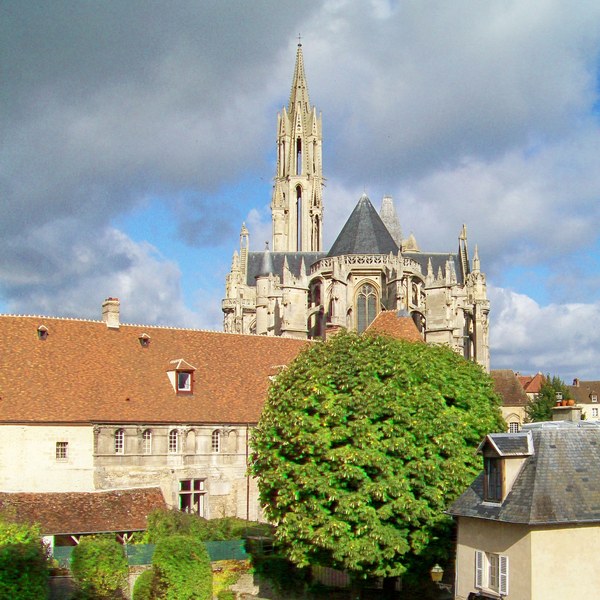
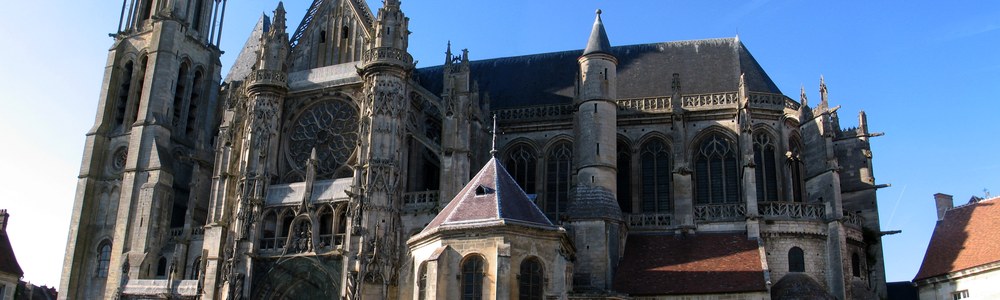
Building began in 1151. In 1504 lightning struck and the cathedral burned; it was rebuilt under Louis XII and Francis I and was finished around 1560. The west portal, the Portal of the Virgin, is Gothic sculpture from the 12th century. The spire is 78 metres high, while the church itself is 70 metres long and 24 metres high under the vault. That makes it one of the smallest cathedrals in France, according to the tourist office. It is open daily 9am–7pm.
The royal castle and Hugh Capet
The remains of the royal castle stand against the Roman wall and were rebuilt under Louis VI in the 12th century. In Senlis, Hugh Capet was elected king in 987 – he was crowned in Noyon. Parts of the castle are closed for safety reasons, but the park is open, and you can get a free audio walk at the tourist office. In April 2026 the castle was included in the Mission Stéphane Bern.
Queen Adelaide, the wife of Hugh Capet, founded the chapel of Saint-Frambourg in the late 10th century. The pianist Cziffra bought it in 1973, and today it has stained-glass windows by Miró. It is open for concerts, exhibitions and on certain weekends – see Fondation Cziffra. Saint-Vincent was founded by Anne of Kiev around 1060.
The museums in Senlis – what is open
- Musée d'Art et d'Archéologie in the former bishop’s palace: Wednesday–Sunday 10am–1pm and 2pm–6pm, 7 euros, reduced 4. Free up to and including age 25 and on the first Sunday of the month. Here you see the remains of a Roman dwelling.
- Séraphine Louis: her paintings are in Metz from 8 October 2026 until May 2027. The exhibition at the Centre Pompidou-Metz runs 31 October 2026–12 April 2027. In Senlis a video mapping is shown 1 November 2026–30 April 2027.
- Musée de la Vénerie: the hunting museum is closed for works. It was expected to reopen in the second half of 2026, but had not opened at the end of November.
- Musée des Spahis: Saturday–Sunday 10am–1pm and 2pm–6pm, free.
The museums are closed on 25 December and 1 January. See musees.ville-senlis.fr. If you want to follow the paintings, you will find the city in the travel guide to Metz.
Compiègne – the imperial town on the Oise
Compiègne lies 36 kilometres from Chantilly and is easy to reach by train from Paris. The palace is 10 minutes on foot from the station, and the buses in the town are free Monday–Saturday.
The Château de Compiègne and the park
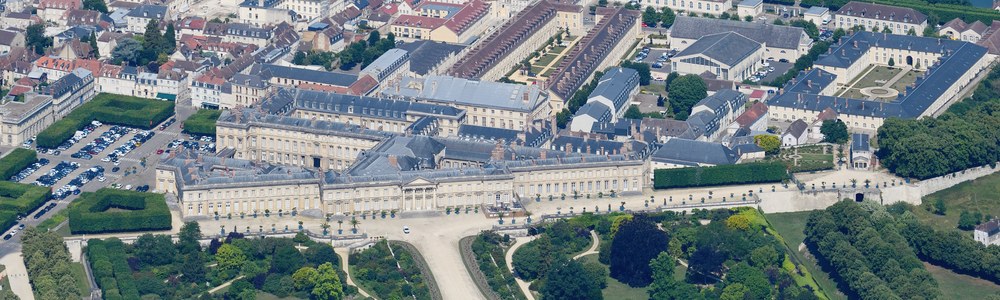
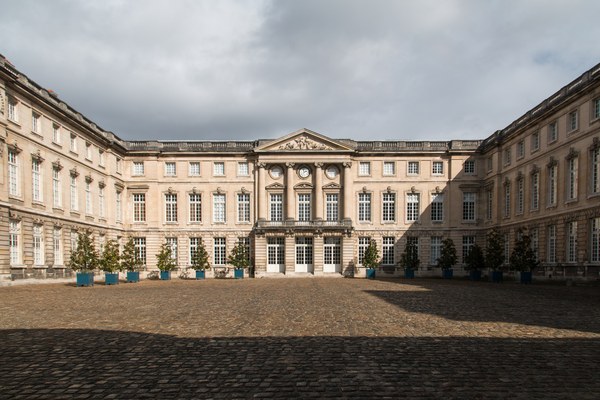
The palace was built by Louis XV and Louis XVI to designs by Gabriel from 1751. Napoleon I refurnished it in 1808–10, and Napoleon III invited guests here in autumn, in what were known as the “séries”. Alongside Versailles and Fontainebleau it is one of the three most important royal and imperial residences in the country, according to the palace.
- The apartments of the emperor and empress: every day except Tuesday 10am–6pm.
- Musée du Second Empire and Musée de l'Impératrice: Wednesday, Thursday, Saturday and Sunday 10am–noon.
- Musée national de la Voiture: Wednesday, Thursday, Saturday and Sunday 2pm–6pm, with approx. 100 horse-drawn vehicles, 30 cars and bicycles.
- Price: 8 euros, reduced 7, and 10 and 9 euros during exhibition periods. The tourist office gives 10–13 euros in 2026. Free under 26 and on the first Sunday of the month.
- Exhibition: “L'impératrice Eugénie en robe à pois” 19 September 2026–26 September 2027, 10 euros, reduced 9.
- Closed: 1 January, 1 May and 25 December. Rooms may be closed for private events.
The park is free and open 8am–5pm in November–February, 8am–6pm in spring until 15 April and from 16 September, and 8am–7pm from 16 April to 15 September. The Jardin des Roses is from 1820. From the park runs the Allée des Beaux-Monts, 4 kilometres long and around 60 metres wide. It was opened for Marie-Louise in 1810. That it was cut in a single night is a legend – it was finished in 1823. See chateaudecompiegne.fr.
The town hall, the Picantins and Joan of Arc
The town hall is from 1500–1530, between Gothic and Renaissance, and was restored in the 19th century. The equestrian statue of Louis XII is from 1869. In the tower hangs the bell Bancloque from 1303, and the three wooden figures, the Picantins, strike every quarter of an hour. They represent an Englishman, a German and a Fleming, the town’s old enemies. The ones you see today are the fifth generation, from 2002.
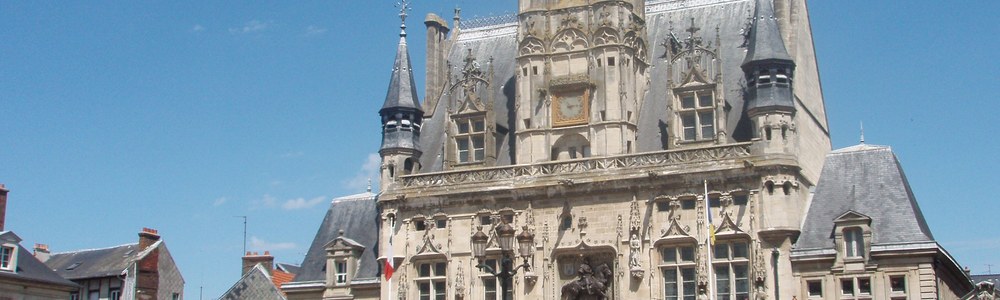
Joan of Arc was captured here on 23 May 1430, on the right bank of the Oise, during a sortie against the Anglo-Burgundian forces. The rest of the story is in Joan of Arc. The statue of her on the town hall square is from 1880. The cloister of Saint-Corneille, founded in 877, is free.
Musée de la Figurine and Musée Vivenel
- The Musée de la Figurine reopened on 23 May 2026 at a new address, 1 place d'Orléans. 7 euros, reduced 5. Older guides place it in the town hall.
- Musée Antoine Vivenel: 4 euros, reduced 3.
- Open at both: Tuesday, Saturday and Sunday 10am–1pm and 2pm–6pm, Wednesday–Friday 2pm–6pm.
- Pass: the Compiègne Pass Musées is valid for 72 hours and costs 12 euros, reduced 10. The museums are free on the first Sunday of the month and for under-26s.
See musees-compiegne.fr.
Mémorial de l'internement et de la déportation
In Royallieu in Compiègne there was a transit camp from 1941 to 1944. Close to 50,000 internees passed through it, and 45,000 were deported from the station in the town. Three of 24 buildings remain, and the memorial opened on 23 February 2008.
- Open: Tuesday, Saturday and Sunday 10am–6pm, Wednesday–Friday 2pm–6pm. Closed on Mondays, 1 January, 1 May, 14 July, 1 November and 25 December.
- Price: 4 euros, reduced 3, free for under-26s.
- Age: the tourist office recommends it from age 14.
- Parcours des déportés: 150 bronze studs in the ground mark the way from the station. The Wagon de la Déportation is shown separately.
The Armistice Clearing in the forest
The Armistice was signed on 11 November 1918 at 5.15am in Marshal Foch’s railway carriage 2419D, on an artillery railway track in the forest of Compiègne near the village of Rethondes, and took effect at 11am. On 21 June 1940 the German terms were read out to the French on the same spot, and on 22 June Keitel and Huntziger signed. Hitler had the carriage taken to Germany, where it was destroyed, and the clearing was blown up. Only the statue of Foch was spared.
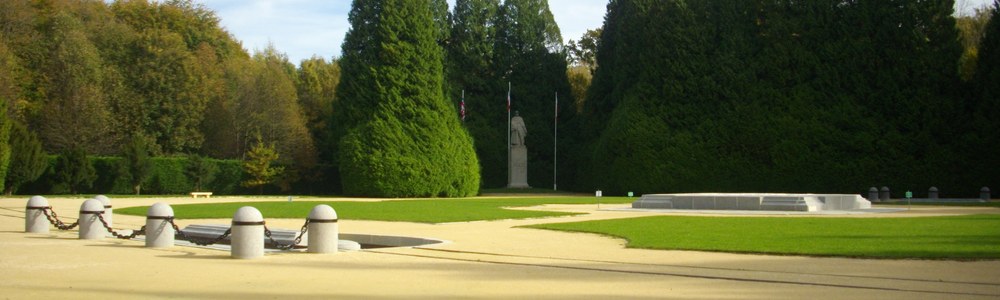
- The museum: rebuilt in 1950 and extended in 1992 and 2018. Over 800 stereoscopic photographs from the First World War and one of the taxis of the Marne. In the clearing, the Clairière de l'Armistice, stand the Alsace-Lorraine monument, the statue of Foch (1937) and the ring “L'alliance de la paix”.
- Open: 1 April–30 September every day 10am–6pm, October–March 10am–5.30pm and not Tuesdays. Last admission is at 5pm and 4.30pm.
- Closed: all of January and 11 November, when the commemoration is held. The times for 2027 have not been published.
- Price: 8 euros, ages 7–18 6 euros, under-7s free.
- Distance: 5.9 kilometres as the crow flies from the centre of Compiègne.
See musee-armistice-14-18.fr. We have written about the battlefields of the war in Douaumont and the Verdun battlefield and Vimy and the First World War battlefields.
Pierrefonds – Viollet-le-Duc’s castle
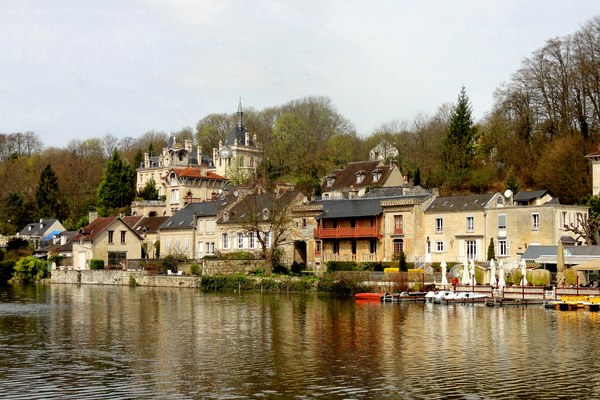
Louis d'Orléans began the castle in 1397, and it was finished in under ten years. In 1617 it was besieged and demolished under Louis XIII. From 1857 Viollet-le-Duc recreated it for Napoleon III, until the work stopped in 1870 without the interior being finished. What you see is therefore the 19th century’s interpretation of the Middle Ages. The BBC series “Merlin” and Luc Besson’s film about Joan of Arc were shot here.
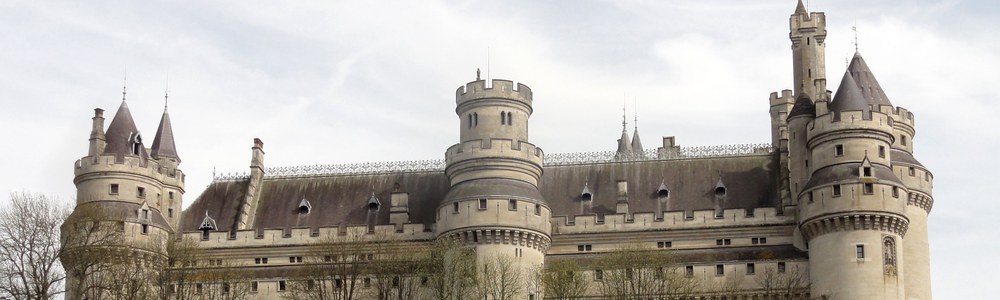
- Salle des Preuses: the 53-metre-long hall is being restored, and the reopening is expected in March 2027.
- Open: 2 May–4 September 9.30am–6pm, 5 September–30 April 10am–5.30pm. Last admission is one hour before. Closed on 1 January, 1 May and 25 December.
- Price: 9 euros, discounted price 7.50. Free for under-18s, for EU citizens aged 18–25, and on the first Sunday in January–March, November and December. With the Cité de la langue française 15 euros, and with Coucy as well 20 euros.
- Practical: dogs only in the park and on a lead, pushchairs only in the park. Free parking in rue Sabatier, 10 minutes on foot.
- Bus: lines 657 and 658 from Compiègne.
See chateau-pierrefonds.fr and more castles in France’s most beautiful castles.
The forest of Compiègne, Saint-Jean-aux-Bois and Morienval
The forest of Compiègne covers 14,357 hectares and is the third-largest state forest in the country. It has 300 kilometres of walking trails and 130 kilometres of cycle paths.
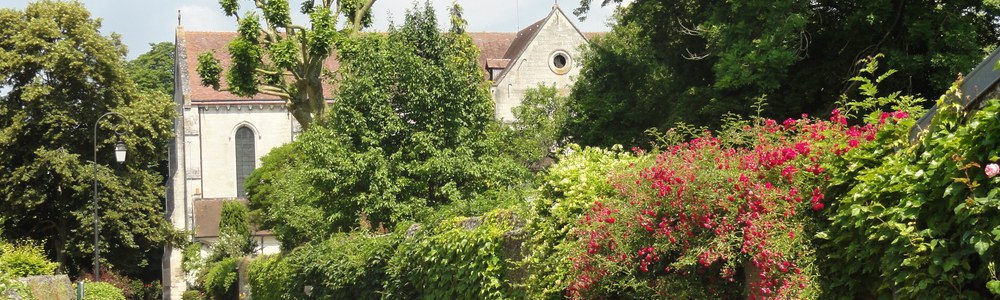
- Saint-Jean-aux-Bois: Queen Adelaide of Savoy founded the abbey in 1152. The church is from 1220, and the chapter house and the gate remain.
- Morienval: Romanesque abbey church with three towers and a sculpted choir, 34.7 kilometres from Chantilly. Free to visit on your own, but the opening hours are irregular.
- Longueil-Annel: the Cité des Bateliers, about life on the river barges, closes on 29 November 2026 and reopens on 2 March 2027.
The Compiègne-Pierrefonds tourist office has suggestions for walks.
Villers-Cotterêts – the language and Dumas
In the château of Villers-Cotterêts, Francis I signed in 1539 the ordinance that made French the language of administration. Today it houses the Cité internationale de la langue française, inaugurated by President Macron on 30 October 2023. It is open Tuesday–Sunday 10am–6.30pm, last admission one hour before, and closed on 1 January, 1 May and 25 December. The ticket costs 9 euros, 15 together with Pierrefonds. In 2027 it is free on 3 January, 7 February and 7 March. See cite-langue-francaise.fr.
Alexandre Dumas was born in the town in 1802, and the Musée Alexandre Dumas is about three generations of the family.
Royaumont Abbey
The Cistercian abbey was founded in 1228 by Louis IX, Saint Louis, and his mother Blanche of Castile. The church was demolished during the Revolution, and the abbey became a textile factory, a novitiate and from 1905 the home of the Gouin family, before the foundation took over in 1964. You see the cloister, the monks’ refectory, the kitchen, the ruins of the church and three gardens. It lies 8.4 kilometres from Chantilly.
- Open: April–October every day 10am–6pm (Monday–Friday closed 12.45pm–1.45pm), November–March Tuesday–Sunday 10am–5.30pm, and Mondays only in school holidays and on public holidays.
- Price: 11 euros, reduced 8, family 30, under-7s free. A guided tour costs 4.50 euros extra.
- Access: free parking, or the train to Luzarches (Transilien H) and a bus for 2.50 euros at weekends and on public holidays, which must be booked. The bus has a break 20 December 2026–29 January 2027.
- Music: the “Saison Royaumont” runs on Sundays from 27 September 2026 to 13 June 2027, with a winter break.
See royaumont.com.
Chaalis and Ermenonville
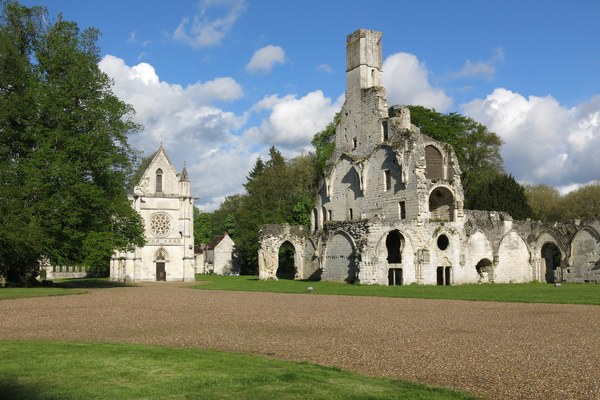
Chaalis in Fontaine-Chaalis was a Cistercian abbey, founded in 1137 by Louis VI. Today you see the church ruins, the Sainte-Marie chapel with Primaticcio’s frescoes and the rose garden. The château museum is under restoration and is only shown on the guided tour “Coulisses du chantier”. The Giotto panels from there hang in the château in Chantilly. Open 1 April–30 September 10am–6pm, otherwise weekends and school holidays 10am–5pm. 10 euros, reduced 7. See domainedechaalis.fr.
In Ermenonville Rousseau spent his last weeks, and he was buried on the Île des Peupliers in the park. The Parc Jean-Jacques Rousseau covers 62 hectares and has free access.
Parc Astérix and La Mer de Sable
- Parc Astérix in Plailly, 10 kilometres from Chantilly: the summer season of 2027 has not been published. The Christmas opening is 19 December 2026–3 January 2027, and the hotel L'Odyssée opens on 26 March 2027. See parcasterix.fr.
- La Mer de Sable in Ermenonville: family park. The season in 2026 was 11 April–1 November. See merdesable.fr for next year.
You will find more parks in Theme parks and water parks in France.
Cycling – La Scandibérique and the Avenue Verte
- EuroVelo 3, La Scandibérique: Noyon–Compiègne–Pont-Sainte-Maxence–Senlis. The Senlis–Ver-sur-Launette stage is closed on Tuesdays, Thursdays and Fridays on the “Route Longue” in the forest of Ermenonville.
- Avenue Verte London–Paris: 106 kilometres in the Oise, via Senlis and Chantilly.
- Compiègne–Pierrefonds: approx. 15 kilometres, via Vieux-Moulin or Saint-Jean-aux-Bois.
You will find more routes in The most beautiful bike rides in France.
The journey and the season
- Train to Compiègne: 29 trains a day from Paris, in 40 minutes at the fastest without a change. From Lille there are 22 with a change, in 2 hours 13 minutes at the fastest.
- Train to Villers-Cotterêts: 15 a day from Paris, in 50 minutes at the fastest without a change.
- Senlis has no train. Bus 645 runs from Chantilly, and bus 630 from Charles de Gaulle takes 25 minutes.
- Car: the A1, junction 8 “Senlis”. Senlis has over 1,300 parking spaces, with free spaces at Saint-Rieul, Cours Thoré-Montmorency and Cité Judiciaire. Pierrefonds, Morienval, Chaalis and Royaumont are easiest by car.
- By air: Charles de Gaulle is 22 kilometres as the crow flies from Chantilly and Paris-Beauvais 39. The car hire box on this page uses Charles de Gaulle.
- Season: April–October, when the gardens, Chaalis and Royaumont are open on more days. In January the Musée de l'Armistice and the château in Chantilly (4–22 January) are closed.
Eating and sleeping
In Senlis Michelin recommends Le Julianon, in a 17th-century house, with a menu that changes every day: lunch Tuesday–Friday and dinner Tuesday–Saturday, not Wednesday evening. In Compiègne it recommends Rhizome, with ingredients from under 200 kilometres away and organic wines, closed on Wednesday evening, Sunday and Monday. Also try the chocolate picantins in Compiègne, with hazelnuts in nougatine, and the caramel mâchicoulis in Pierrefonds.
Near Senlis is L'Aunette Cottage in Chamant, three stars with 14 rooms in five small houses and a heated pool. In the centre, Le Petit Bellon has three stars and a restaurant, 300 metres from the cathedral. In Compiègne, Alfred Hotels Compiègne (three stars) is by the Oise between the station and the centre, and in Pierrefonds Le Beaudon (three stars, 21 rooms) is 300 metres from the castle. The campsite Le Cœur de la Forêt in Pierrefonds has two stars.
Onward from Senlis and Compiègne
The museum with Raphael, the horses and the gardens are in The château and horse museum in Chantilly, and hotels and restaurants in the travel guide to Chantilly. Further north is Amiens, to the east Reims, and to the south Paris. The long view from Hugh Capet onwards is in The history of France.
4 days in Senlis, Compiègne and the forest
The route is by car and works with a base in Chantilly, Senlis or Compiègne. Make day 2 a Wednesday, Thursday, Saturday or Sunday, when all the museums in the palace are open. Day 3 should not be a Tuesday from October to March, and not in January, when the Musée de l'Armistice is closed.
Senlis
Walk along the wall by rue de la Treille, see the cathedral and the park of the royal castle, and visit the Musée d'Art et d'Archéologie after lunch.
- Market Tuesday and Friday 8am–noon
- The museum: Wednesday–Sunday, 7 euros
- The Musée de la Vénerie is closed
Compiègne
See the Musée du Second Empire and the apartments in the morning, the carriage museum from 2pm, and end at the town hall when the Picantins strike.
- The palace: 10 euros during the exhibition period, closed on Tuesdays
- The park is free
- Musée de la Figurine: 7 euros, closed on Mondays
The clearing, the forest and Pierrefonds
Begin at the Armistice Clearing, stop at the abbey church in Saint-Jean-aux-Bois and spend the afternoon in Pierrefonds, in the castle and by the lake in the village.
- Musée de l'Armistice: 8 euros, ages 7–18 6 euros
- Pierrefonds: 9 euros, last admission one hour before
- The Salle des Preuses is closed until March 2027
Chaalis, Ermenonville and Royaumont
See the church ruins and the rose garden in Chaalis, take a walk in Rousseau’s park in Ermenonville and end at Royaumont Abbey.
- Chaalis: weekends and school holidays in October–March
- The Parc Jean-Jacques Rousseau has free access
- Royaumont: 11 euros, under-7s free