
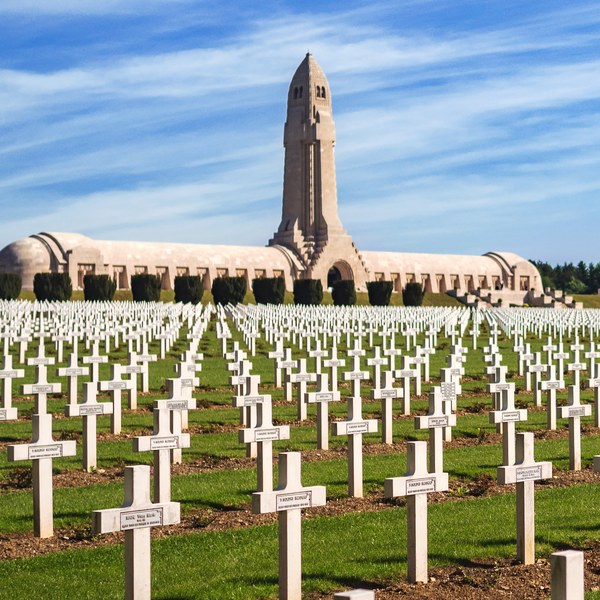
The memorial sites lie five to eight kilometres as the crow flies from Verdun, in the Meuse department in the Grand Est region. Several of the sites are burial grounds, and there is still ammunition beneath the forest floor. The prices and times in this guide are from the sources in autumn 2026 – check them before you go.
The Battle of Verdun – 21 February to 18 December 1916
The German opening bombardment began at 7.15am on 21 February 1916. The battle lasted 300 days, until 18 December. The Mémorial de Verdun writes that almost three quarters of the French army fought here, and that historians still discuss what the German objective was.
- 25 February: Fort de Douaumont is taken by German forces without a fight.
- 6 March: the attack is extended to the left bank of the Meuse, towards Mort-Homme and Côte 304.
- 8 May: an explosion in Fort de Douaumont kills 800–1,000 German soldiers.
- 22–24 May: a French attempt to retake Douaumont fails.
- 2–7 June: the siege of Fort de Vaux. Commandant Raynal surrenders on 7 June.
- 23 June: the largest German attack, in front of Souville, in Fleury and on Froideterre.
- 11–12 July: the last German attempt to take the town.
- 24 October: French forces retake Fort de Douaumont.
- 2–3 November: the Germans have left Fort de Vaux, and it is occupied without a fight.
- 15–18 December: the last French attack.
The dates are from the Mémorial de Verdun.
The losses
Around 300,000 dead and missing and about 400,000 wounded on both sides in 1916, according to the Mémorial de Verdun – the figures vary between sources. The museum’s overview of figures gives over 163,000 French and 143,000 German dead, and 216,000 and 190,000 wounded. The figure of 700,000, which you will often see, is the dead, missing and wounded combined. The losses of the two sides were almost equally great.
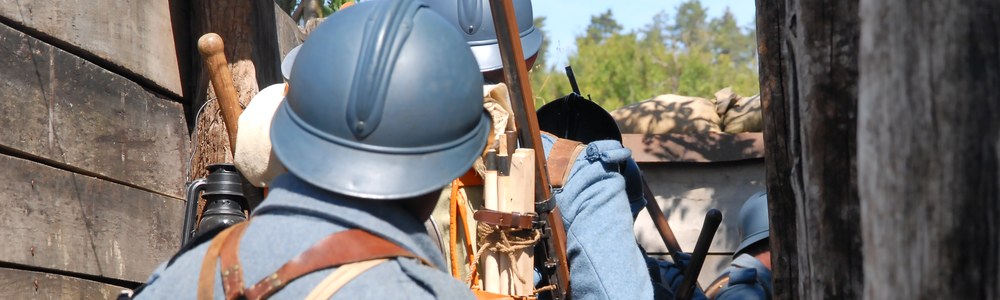
The picture above is from a historical re-enactment in our own time, not a picture from 1916.
Fleury and the destroyed villages
Nine villages were wiped out and never rebuilt: Beaumont-en-Verdunois, Bezonvaux, Cumières-le-Mort-Homme, Douaumont, Fleury-devant-Douaumont, Haumont-près-Samogneux, Louvemont-Côte-du-Poivre, Ornes and Vaux-devant-Damloup. Other sources say twelve – that is the number the Ministry of Defence gives for villages in the department that “died for France”, “mort pour la France”.
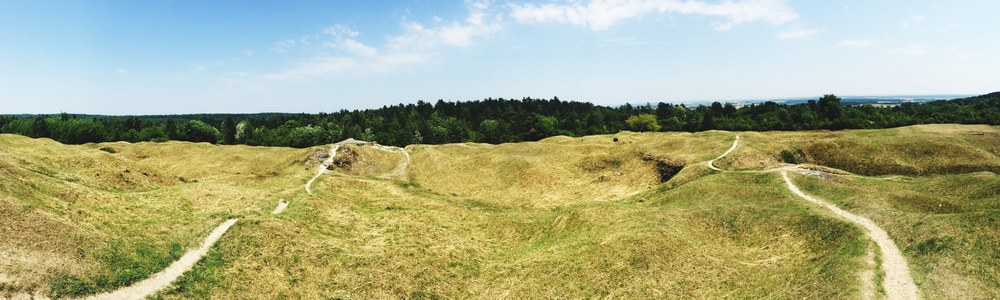
Fleury had 422 inhabitants in 1913. From June to August 1916 the village changed hands 16 times, before French forces finally retook it on 18 August. Today the paths run between craters in the forest, and stones and signs show where the houses stood and which trades people had. There is free access to the villages, where you will find chapels and memorials.
In Vaux-devant-Damloup the free app VIAVO shows the village in 3D on your phone. The area around it is the former zone rouge, which is now forest with the “Forêt d'Exception” label and Natura 2000 status. Near Fleury there is also the memorial stone to Lieutenants Herduin and Millant, who were shot without trial on 11 June 1916 and later rehabilitated. In autumn 2026 Meuse Attractivité asks people to keep away from it because of ash dieback in the forest.
The Douaumont Ossuary
The ossuary, the Ossuaire de Douaumont, holds the remains of approx. 130,000 unknown French and German soldiers. Bishop Ginisty of Verdun took the initiative, Pétain laid the foundation stone on 20 August 1920, the remains were transferred there in September 1927, and President Albert Lebrun inaugurated the building on 7 August 1932. The architects were Azéma, Edrei and Hardy.
The 137-metre-long cloister has 46 sarcophagi in 22 alcoves, one alcove for each sector of the battlefield. The stained-glass windows are by Georges Desvallières. The tower is 46 metres high, with a view, a bell and a beacon.
- Price (film and tower): adults 7 euros, children aged 8–16 3 euros, students 4.50 euros.
- Open in 2026: April–June and September 9am–6pm (weekends 10am–6pm), July–August 9am–6.30pm, October–November 9am–5.30pm (weekends 10am–5.30pm), December 9am–5pm (weekends 10am–5pm). Closed on 25 December.
- Winter 2027: 2–3 January 10am–5pm, otherwise probably closed in January. In February weekdays 9am–5pm and weekends 2pm–5pm.
- Time: allow approx. one hour. Last admission is one hour before closing. It is wheelchair accessible, except the tower.
The rules and times are on verdun-douaumont.com.
The necropolis in front of the ossuary
The official name of the French national cemetery is Fleury-devant-Douaumont. It was laid out in 1923–1936 and inaugurated on 23 June 1929, and has over 16,000 graves – 16,142 according to Meuse Attractivité, including six from 1939–45. There are 592 graves in the Muslim section. Nearby stand the Jewish monument from 1938 and the Muslim monument from 2006.
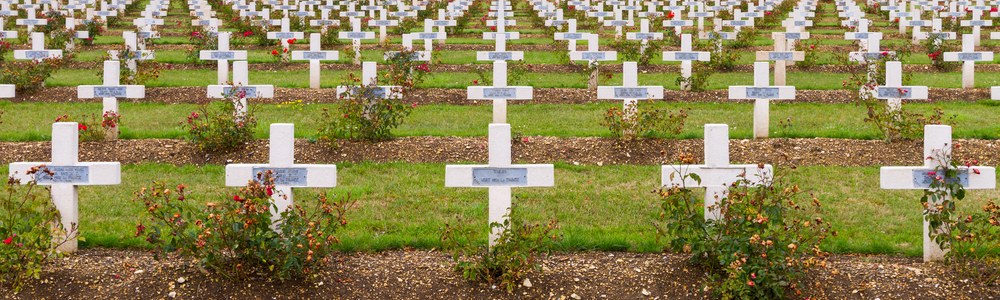
A plaque commemorates 22 September 1984 and the handclasp between President François Mitterrand and Federal Chancellor Helmut Kohl. François Hollande and Angela Merkel were here in 2016. You will find more about the cemetery at Chemins de mémoire, part of the French Ministry of Defence.
Fort de Douaumont
The fort was begun in 1884, stands 388 metres above sea level and covers close to 9 hectares. In 1888 it was given a layer of special concrete, and the turrets came in 1903–1913. It was German from 25 February to 24 October 1916. Inside the fort is a German mass grave with over 600 soldiers.
- Price in 2026: 8 euros, reduced 6.50 euros.
- Time: approx. 1 hour 30 minutes, including the outside.
- Inside: 12 degrees and wet floors. Only the upper level is wheelchair accessible. Dogs on a lead are allowed.
Fort de Vaux – reopened in July 2026
Fort de Vaux was built in 1881–1884. Commandant Raynal and the garrison withstood the siege from 2 to 7 June 1916, and the carrier pigeon Vaillant is also part of the story of the fort. It reopened on 4–5 July 2026 with a new exhibition, with sound through bone conduction and projections. Many older guides still say that it is closed.
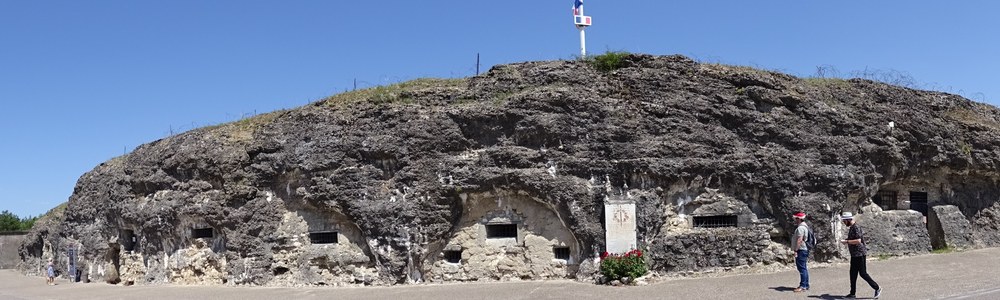
- Price in 2026: 8 euros, reduced 6.50 euros.
- Time: approx. 1 hour 15 minutes.
- Dogs: not allowed.
Mémorial de Verdun in Fleury
The museum opened in 1967 and was renovated in 2016. It stands where Fleury railway station was, 5.3 kilometres as the crow flies and around ten minutes by car from Verdun. The exhibition has over 2,000 objects and VR headsets, and from the roof terrace you look out over the battlefield. Allow 1 hour 30 minutes. There is a café here. It is the best place to start if you want to understand what you see out in the forest.
Opening hours and prices 2026 – the Mémorial and the forts
- Times for all three: 2 February–3 April and 21 September–31 December 9.30am–5.30pm, 4 April–20 September 9.30am–6.30pm. Last admission is 45 minutes before closing at the museum and 30 minutes before at the forts.
- Closed: 24 and 25 December 2026 and 1 January 2027. The Mémorial is also closed on 25 November 2026. In 2026 all three were closed 3 January–1 February.
- Single tickets: the Mémorial 14 euros (reduced 9), the forts 8 euros each (6.50).
- Combined ticket valid for 48 hours: the Mémorial and both forts 22 euros (17), the Mémorial and one fort 19 euros (14), both forts 14 euros (10).
- Family (two adults and one young person): 60, 50 or 38 euros. Free for under-8s.
- Discounts: the reduced price applies to ages 8–18, students and the unemployed, among others. The Museums-PASS is valid, and the “Pass 14-18” gives 4 euros off the Mémorial.
- Free: on 31 December 2026 and during the Journées du patrimoine in September.
The Trench of Bayonets – the monument and the legend
The concrete monument at the Trench of Bayonets, the Tranchée des Baïonnettes, was designed by André Ventre, with a gate by Edgar Brandt, and was a gift from the American George T. Rand. It was inaugurated on 8 December 1920 over seven unknown soldiers of the French 137th Infantry Regiment, who fell on 11–12 June 1916.
You will hear that the soldiers were buried alive standing up, with their bayonets sticking out of the ground. That is a legend. According to the Ministry of Defence, the Germans buried the fallen in trenches, and in 1919 the regimental commander found rifles without bayonets sticking up. The bayonets were added later, and the press spread the story. The tourist office writes that the bodies lay horizontally, and that the weapons were temporary grave markers. Access is free. Read more at Chemins de mémoire.
Other sites on the battlefield
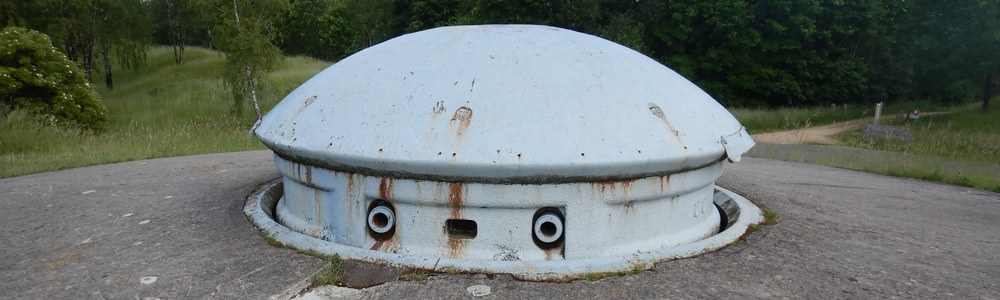
- Froideterre, Quatre Cheminées, Thiaumont and Souville: fortifications in the forest. We have not found an official source on access, so check the map of closed forest areas first.
- Faubourg Pavé in Verdun: 5,516 people are buried in the necropolis, 4,852 of them from the First World War. Here you will find the “Carré des 7 inconnus” – the seven unknown soldiers who were not chosen in 1920.
- Tranchée de Chattancourt: a reconstructed trench of 100 metres, 10.7 kilometres as the crow flies from Verdun. 5 euros, reduced 4 and children 3 euros. At weekends until 3 January 2027 10am–4pm.
- Ouvrage de la Falouse in Dugny: a fortification with 30 mannequins. 5.50 euros, children 2.50 euros, open 1 April–11 November.
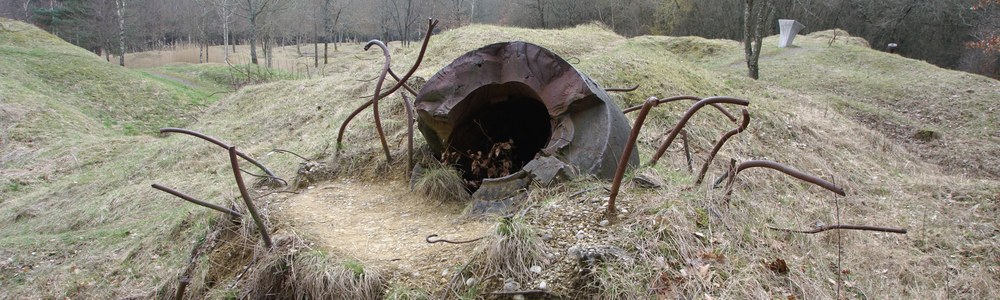
The Voie sacrée – the road from Bar-le-Duc
The road from Bar-le-Duc to Verdun was the only supply route. In ten months close to 2,400,000 men were transported here. The writer Maurice Barrès gave it the name “the sacred way” after the war. Today it is called the D1916, and along it stand kilometre stones with a helmet on top.
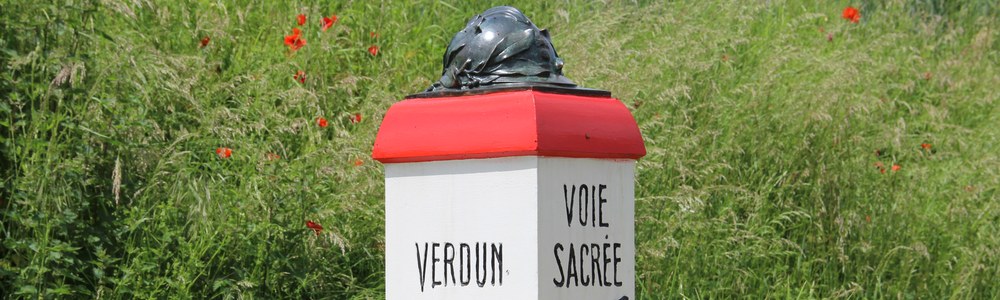
In Souilly, where the headquarters was, there is an exhibition in July and August 2027, Tuesday–Saturday 1.30pm–5.30pm. Junction 30 on the A4 motorway is named after the road.
The Citadelle souterraine in Verdun
Beneath the citadel in the town, 4 kilometres of galleries were dug from 1886. In 1916 they were a headquarters and an infirmary, with nine baking ovens, approx. 40,000 rations a day and 1,500 soldiers. On 10 November 1920 the soldier Auguste Thin chose the unknown soldier here, from among eight coffins. The tomb lies under the Arc de Triomphe in Paris.
- Price: adults 16 euros, reduced 13 euros, children 8 euros.
- The visit: 1 hour 30 minutes, with self-driving wagons and AR glasses for 35 minutes. The last departure is 1 hour 30 minutes before closing.
- Restrictions: not for children under 8, and not advised in the case of claustrophobia, pregnancy or heart problems. It is 8 degrees, and photography and animals are forbidden in the galleries.
- Open: November 9.30am–5.30pm and December 9.30am–5pm. In 2026 from April to June and in September and October 9am–6pm, July and August 9am–7pm. Closed on 24, 25 and 31 December 2026 and 1 January 2027. In 2026 it was closed 5 January–1 February, and the times for 2027 have not been published.
Book in high season on citadelle-souterraine-verdun.fr.
UNESCO 2023 – the memorial sites, not the whole battlefield
“Funerary and memory sites of the First World War (Western Front)” was inscribed on the World Heritage List on 20 September 2023: 139 sites, 96 in France and 43 in Belgium. There are eight sites in Grand Verdun, according to the tourist office. Among them are the ossuary, the necropolis, the Jewish and the Muslim monuments, Fort de Douaumont, the memorial stone to the men shot in Fleury and the Faubourg Pavé necropolis. Fort de Vaux and the Mémorial are not included. See UNESCO’s page.
Commemorations and “Des flammes à la lumière” 2027
- 1 November: ceremony at the Monument à la Victoire in Verdun, where the flame from the Arc de Triomphe is received.
- 11 November: ceremonies at Douaumont and the Mémorial. The programme for 2027 has not been published.
- Des flammes à la lumière 2027: the outdoor performance about the battle in the quarries in Haudainville on 26 June and 2, 3, 9, 10, 16, 17, 23, 24, 30 and 31 July, with over 200 volunteer actors. Stand 26 euros, under 16 18 euros, students and the unemployed 20 euros, family 76 euros. Carré Or 37 euros.
The gates open at 7pm, and you should be there by 9.30pm–10pm at the latest. The performance begins when it is dark, lasts 1 hour 20 minutes and also goes ahead in rain – umbrellas are not allowed. Tickets go on sale at the end of February 2027. With a performance ticket, the Mémorial and Fort de Douaumont cost 14 euros instead of 19. See spectacle-verdun.com.
Advice in the forest and at the graves
- Ash dieback: diseased ash trees can fall or lose branches, and several forest areas are closed or advised against. The tourist office has a map from 17 September 2026 on tourisme-verdun.com.
- The paths: keep to waymarked paths, also in areas that are considered safe.
- Ammunition: there is unexploded ammunition in the ground. Do not touch or take away anything you find.
- Animals: the rules differ. The ossuary admits only guide dogs, Fort de Douaumont dogs on a lead, Fort de Vaux none.
- Groups: giving talks to a group at the Mémorial and in the forts is reserved for guides and teachers. Others must apply.
- Money: there are no cash machines on the battlefield.
How to combine the sites
The Mémorial, the ossuary, Fort de Douaumont and Fort de Vaux take over five hours in total at the sites alone. That fills one full day, and a busy one. If you only have one day, the order is the Mémorial → Fleury → the ossuary and the necropolis → the Trench of Bayonets → Fort de Douaumont → Fort de Vaux. The combined ticket is valid for 48 hours, so two days are calmer.
The tourist office has guided tours by bus, by car and on foot, and the forestry agency ONF has the “Les Forêts de l'Histoire” walks. The dates and prices are in the ticket system on tourisme-verdun.com.
Getting to the battlefield
- Car: the A4, junction 30 “Voie Sacrée” from Paris and Reims and 31 “Verdun” from Strasbourg and Metz. Parking is free at the Mémorial, both forts and the ossuary.
- Train: Paris Est–Verdun has approx. 10 departures a day with at least one change, in 1 hour 40 minutes at the fastest. The most common is a TGV to Meuse TGV station in one hour and a bus to Verdun, 25 kilometres. From Metz there are 16 departures a day, in 1 hour 6 minutes at the fastest.
- From Verdun to the battlefield: we have not found a regular bus. Come by car, taxi, bike or guided tour. The cycle route La Meuse à vélo runs through the town.
- Cycling in summer: according to af3v.org, the D913B, 4.1 kilometres between Froideterre, Quatre Cheminées and the ossuary, was closed to cars as a trial 3 July–17 August 2026. Whether it will be repeated in 2027 is not known.
- By air: Luxembourg is 80 kilometres as the crow flies from Verdun, around 1 hour 30 minutes by car, and Paris Charles de Gaulle 206 kilometres. The car hire box on this page uses Charles de Gaulle.
Best time: April–October, when the sites have their longest opening hours. You will find more about the journey in The most beautiful train journeys in France and The most beautiful bike rides in France.
Eating and sleeping
Near the ossuary is L'Abri des Pèlerins, 300 metres away, in a stone building from the late 1920s. It is the only place to eat at the ossuary and is run by ADAPEI with employees with disabilities. It is open 10am–6pm, closed on Wednesdays, and in 2026 from 23 January to 22 December. On the road from Verdun, in Bras-sur-Meuse, L'Artaumarce serves lunch Tuesday–Sunday and dinner Tuesday, Thursday, Friday and Saturday.
In Verdun, Les Jardins du Mess is the town’s only four-star hotel, in the former officers’ mess by the Meuse. Hôtel de Montaulbain has three stars and ten rooms in the middle of the old town. Closer to the battlefield are Les Orchidées (three stars) with a pool and restaurant, and in Vacherauville Le Relais du Mess with 13 rooms. You will find more hotels and restaurants in the travel guide to Verdun.
Onward from the battlefield
You will find the American offensive of 1918, the mine warfare at Vauquois and the river valley in The Argonne and the Meuse valley. We have written about the front in the north, with the Canadian monument, in Vimy and the First World War battlefields, and about the long view in The history of France. The cities nearby are Metz, Nancy and Reims, all 1 hour to 1 hour 15 minutes by car from Verdun.
4 days on the Verdun battlefield
The route has one main area a day and plenty of time for each, with Verdun as a base. It assumes a car and suits April to October. Buy the combined ticket on day 2, and it will also cover day 3.
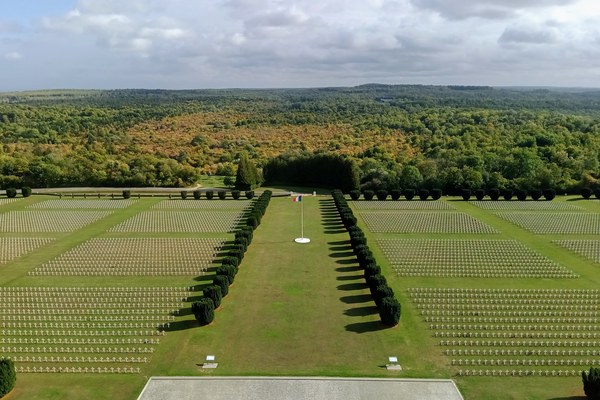
The ossuary, the necropolis and the Trench of Bayonets
See the film, go up the tower and take your time among the graves, by the Muslim and the Jewish monuments. The Trench of Bayonets is close by.
- 7 euros including the film and the tower
- Photography and mobile phones are forbidden inside the ossuary
- Last admission one hour before closing
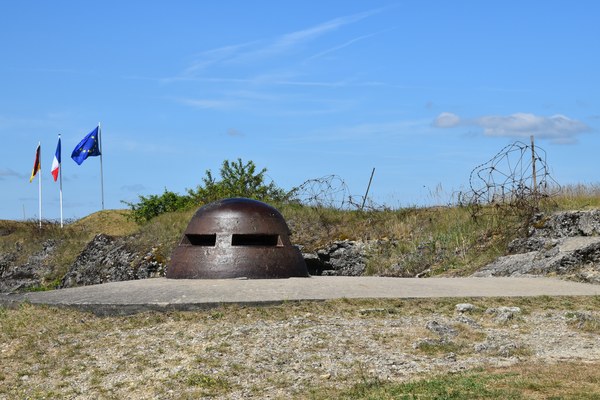
Fort de Douaumont and Fort de Vaux
Visit Fort de Douaumont in the morning and the new exhibition in Fort de Vaux after lunch. See the forts from the outside, too.
- Combined ticket with the Mémorial: 22 euros for 48 hours
- 12 degrees and wet floors in Douaumont – bring a jacket
- Dogs on a lead in Douaumont, not in Vaux
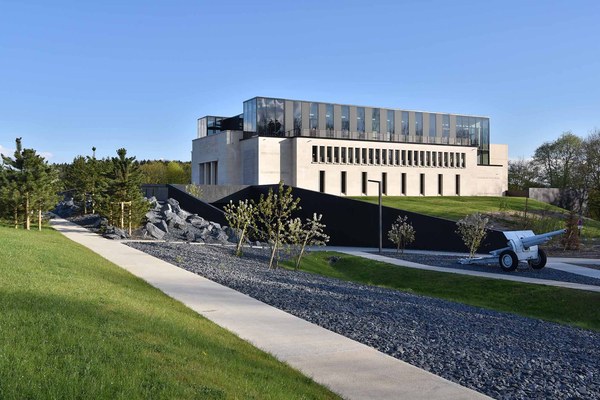
The Mémorial and the Citadelle souterraine
Spend the morning at the Mémorial and on the roof terrace. In the afternoon, take the wagons through the Citadelle souterraine in Verdun, where the unknown soldier was chosen in 1920.
- Allow 1 hour 30 minutes at each place
- Citadelle: 16 euros, not for children under 8
- Closed in January (2026)
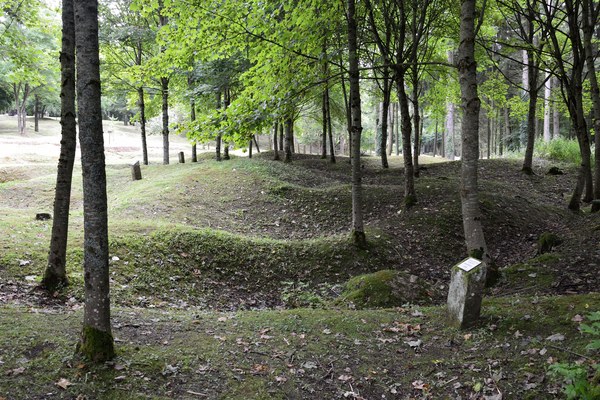
Fleury, Vaux-devant-Damloup and Faubourg Pavé
Walk the paths in Fleury, see Vaux-devant-Damloup with the VIAVO app and end by the seven unknown soldiers at Faubourg Pavé in Verdun.
- Free access to the villages
- Check the map of closed forest areas first
- Keep to waymarked paths