
Arras lay on the front line during the First World War, and 80 per cent of the town was destroyed. Around the town lie the memorial sites to soldiers from many countries – Canadians, Britons, New Zealanders, Australians, French and Germans. Most of them are within 15 kilometres, and the major memorial sites are free. The distances are short, but outside the town a car is the easiest option.
The Battle of Arras – April and May 1917
At 5.30am British time on 9 April 1917, British and Commonwealth forces attacked along a front of around 20 kilometres, from Vimy in the north to Bullecourt in the south. Canadians, English, Scots, Newfoundlanders and Australians fought under the British commander-in-chief Haig. According to the tourist office, the aim was to draw German forces away ahead of General Nivelle’s French offensive at the Chemin des Dames.
The battle lasted until the middle of May 1917. The tourist office gives a figure of around 4,000 casualties a day for five weeks, on all sides of the front.
Along what the tourist office calls the “Chemins de mémoire” lie the memorial sites of the different forces: Vimy for the Canadians, the memorial to the British 37th Division and the Newfoundland Memorial in Monchy-le-Preux, the Australian “Digger” and the Musée Jean et Denise Letaille in Bullecourt, the memorial to the 9th (Scottish) Division in Athies and the Faubourg d’Amiens Cemetery in Arras. Every year on 9 April at 6.30am French time, the “Cérémonie du lever du jour” – the dawn ceremony – is held at Wellington Quarry.
The Battle of Vimy Ridge, 9–12 April 1917
The attack on Vimy Ridge began at 5.30am on Easter Monday, 9 April 1917. According to Veterans Affairs Canada, the first wave of 15,000–20,000 Canadian soldiers advanced through snow and sleet behind an artillery barrage that moved forward ahead of them (the “creeping barrage”). It was the first time all four divisions of the Canadian Corps fought together.
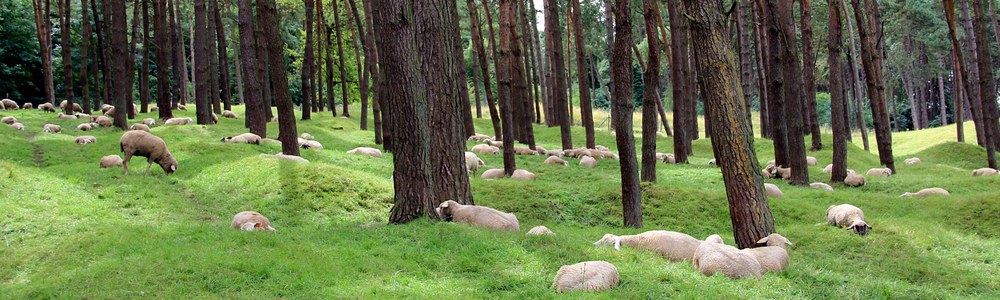
- 10 April: Hill 145, the main summit where the memorial stands today, was taken in the morning.
- 12 April: the last German position, “the Pimple”, was taken. The Germans withdrew 3 kilometres to the east.
- The losses: of the around 100,000 Canadians who served there, more than 10,600 became casualties, and nearly 3,600 of them were killed.
The Battle of Vimy Ridge was not a Canadian battle alone. It was part of the British offensive at Arras, with a British corps on the southern flank, and according to Veterans Affairs Canada together they took more ground, more prisoners and more artillery than in any earlier British offensive of the war. Four Canadians were awarded the Victoria Cross.
The fighting for the ridge in 1914 and 1915 had cost hundreds of thousands of casualties. Before the battle, tunnels with rails, water pipes and lighting were dug beneath the ridge.
The Canadian National Vimy Memorial
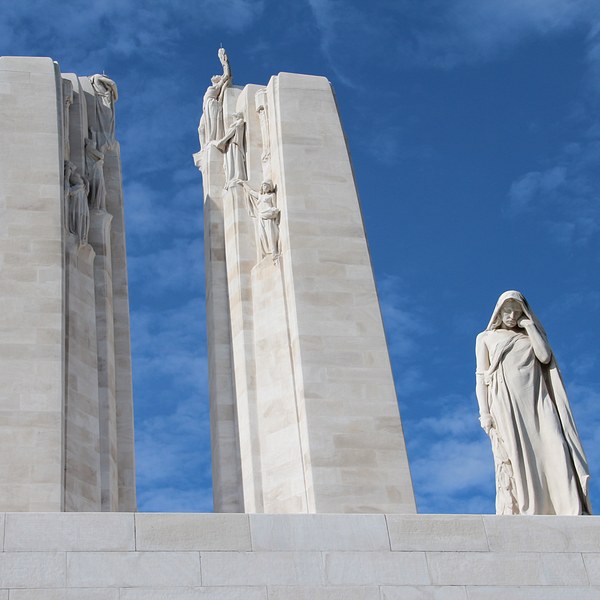
The memorial stands on Hill 145, around 10 kilometres north of Arras as the crow flies, in Givenchy-en-Gohelle. It was designed by the architect Walter Seymour Allward and built between 1925 and 1936 from more than 6,000 tonnes of limestone. The two pylons are 27 metres high and represent Canada and France, and the memorial has 20 symbolic sculptures. King Edward VIII unveiled it on 26 July 1936.
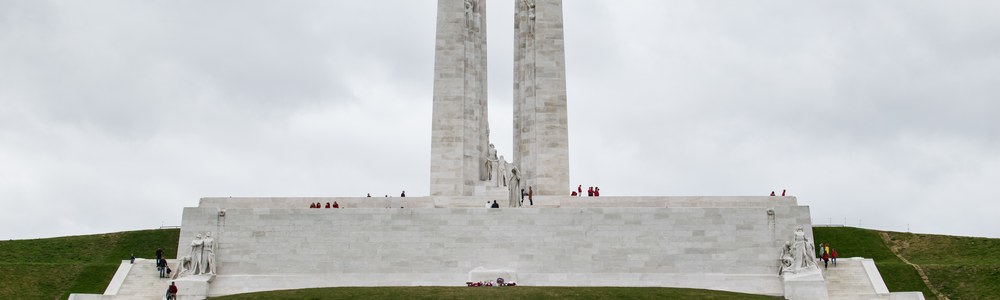
The memorial bears the names of 11,285 Canadians who were posted as missing, presumed dead, in France. The 6,994 missing Canadians in Belgium are listed on the Menin Gate. France granted the land beneath the park to Canada in perpetuity, and the site covers around 100 hectares. The memorial also appears on the Canadian 20-dollar note.
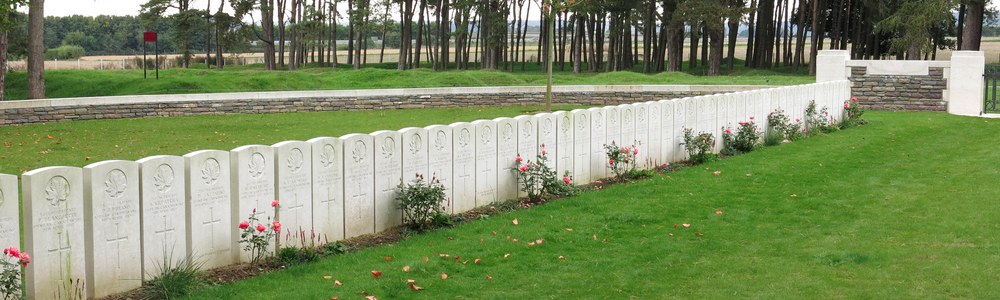
More than 7,000 Canadians are buried in 30 cemeteries within 20 kilometres of Vimy.
Visiting Vimy – the trenches and the tunnel
All the Canadian memorial sites are free to visit and open every day. Veterans Affairs Canada recommends allowing up to two hours for the memorial, the cemeteries and the visitor centre. There is a picnic area and toilets, and only guide dogs and service dogs are allowed.
- Guided tour of the trench and tunnel: 30 minutes, free, with student guides. It cannot be booked – you sign up at the visitor centre, on a first-come, first-served basis.
- The ground: uneven and narrow, down to 10 metres below the surface. Children under 12 must be accompanied by an adult, and one adult can bring two children.
- The visitor centre, 1 April–30 September: Monday noon–6pm, Tuesday–Sunday 10am–6pm.
- The visitor centre, 1 October–31 March: Monday 11am–5pm, Tuesday–Sunday 9am–5pm. The centre is closed from mid-December to early February. In 2027 it is open from 29 January to 10 December.
Parking: P1, closest to the memorial, is closed from 12 November 2026 to 31 March 2027. Use P2 by the visitor centre, P3 by the D55E2 or P4 by the cemeteries. From October to March the gates open at 9am, the entrance to the visitor centre closes at 4.30pm, and you must be out by 5pm.
Wellington Quarry – the tunnels beneath Arras
From November 1916 to March 1917, around 500 tunnellers from New Zealand, among them Māori, linked up the old chalk quarries beneath Arras. They dug 8 kilometres in six months, around 80 metres a day, and the network was connected to around 20 kilometres of passages beneath the town. The passages were named after towns in New Zealand, such as Wellington, Nelson and Blenheim. From December 1916, 43 Māori pioneers also worked there, together with sappers from the Cook Islands.
Up to 24,000 soldiers could be quartered underground. On the morning of 9 April 1917, nearly 20,000 men were gathered beneath Arras before they went up to the attack.
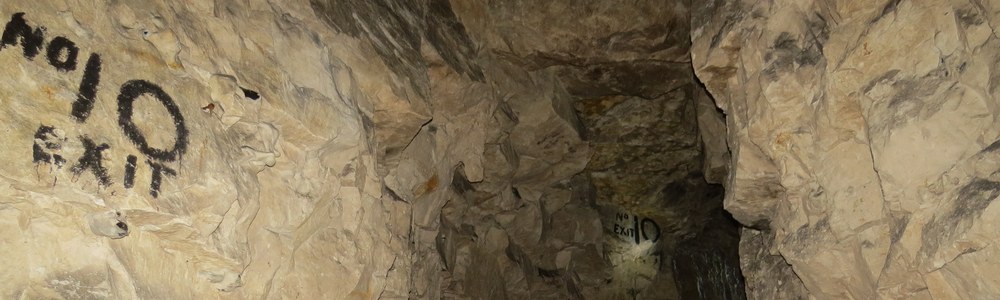
- The visit: a glass lift takes you 20 metres down. The tour has a guide and an audio guide, lasts 1 hour and 30 minutes and ends with a film about the battle of 9 April 1917. The audio guide and the film are in French, English, German and Dutch.
- Open: every day 9.45am–12.30pm and 1.30pm–6pm. Closed on 25 December 2026 and 1–29 January 2027.
- Price: 10.20 euros, reduced 5.70 euros. The City Pass gives you Les Boves, the belfry and Wellington from 10.60 euros, and with a valid TER Hauts-de-France ticket for the same day you get 15 per cent off.
- Booking: strongly recommended, especially at weekends and on public holidays. A maximum of 17 people per tour, and you should arrive ten minutes before.
Wellington is accessible for people with reduced mobility and has a hearing loop. Dogs are not allowed, and it is cold underground, so bring warm clothes. The museum opened in 2008, got a new exhibition in 2021 and has had more than one million visitors. The address is Avenue Fernand Lobbedez, around one kilometre from the station, and bus 7 stops at Jean Jaurès.
Notre-Dame-de-Lorette – France’s largest military cemetery
On the plateau above Ablain-Saint-Nazaire lies the Nécropole nationale de Notre-Dame-de-Lorette, France’s largest military cemetery. The cemetery was established from 1920, and more than 42,000 soldiers lie here, brought together from more than 150 cemeteries. The basilica and the lantern tower were designed by Louis-Marie Cordonnier. French forces retook the plateau in May 1915.
- Open: October–March 8.30am–4.15pm, April–May 9am–5.30pm, June–August 9am–6.30pm and September 9am–5.30pm.
- In winter: the chapel and the tower are closed from 1 December.
- Price: free.
Anneau de la Mémoire – 579,620 names
Next to the cemetery stands the Anneau de la Mémoire, the Ring of Remembrance that President François Hollande inaugurated on 11 November 2014. The architect Philippe Prost designed a ring 345 metres in circumference, which projects 56 metres out over the slope. The 500 steel panels bear the names of those who fell in Nord-Pas-de-Calais in 1914–1918, from around 50 countries.
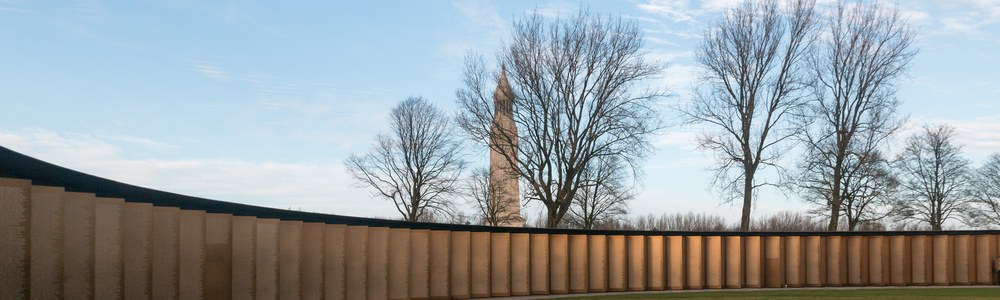
The visitor booklet gives 579,620 names – nearly 580,000. The names are listed in alphabetical order, with no distinction of nationality, rank, sex or religion. The first is a Nepalese sailor, the last a German soldier, and the youngest was 14 years old. The names come from sources including the Commonwealth War Graves Commission and the German Volksbund, and they are written in a typeface of their own, “Le Lorette”, created by Pierre di Sciullo.
Access is free, and the ring is lit until 11pm. The tourist office reckons on 15 minutes by car from Arras.
Mémorial’14-18 – the history centre in Souchez
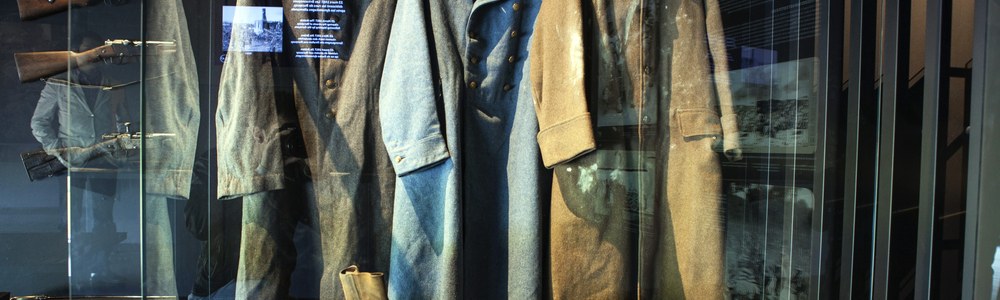
At the foot of Lorette, in Souchez, is the Centre d’Histoire of the Mémorial’14-18 – formerly called “Lens’ 14-18”. The building in black concrete and glass was designed by Pierre-Louis Faloci, and the exhibition shows the war in Nord-Pas-de-Calais with more than 300 large-format photographs, films and animated maps.
- Price: free admission. Audio guide 3 euros, in French, English, German and Dutch.
- 1 April–10 November: Wednesday–Friday 10am–1pm and 2pm–6pm, Saturday–Sunday 11am–1pm and 2pm–6pm.
- 11 November–31 March: Wednesday–Sunday 1pm–5pm.
- Closed: Monday and Tuesday, all of January, and on 1 January, 1 May, 14 July and 25 December.
The address is 102 rue Pasteur in Souchez, with parking off the chemin de Lens. Without a car, take a direct train to Lens, from Arras among other places, and the Allobus “Sites de Mémoire” on-demand bus from the station in Lens.
Neuville-Saint-Vaast, La Targette and the German cemetery
Neuville-Saint-Vaast, ten minutes north of Arras, was a front-line village from 1914 to 1917, and it was from here that the Canadians attacked on 9 April 1917. The tourist office recommends a car, as the memorial sites are spread out.
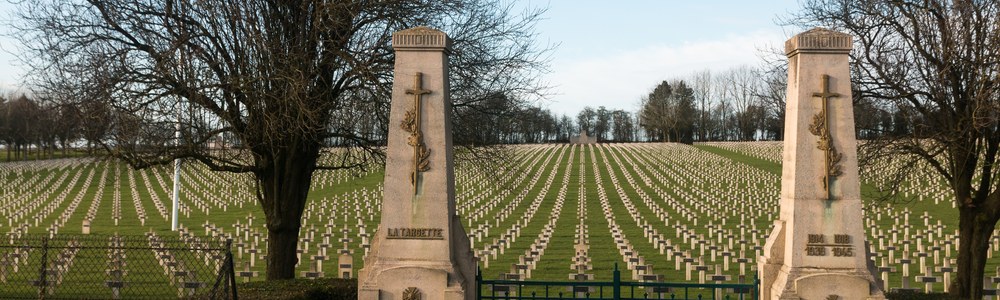
- Nécropole nationale de La Targette: the French national cemetery with 8,000 graves and an ossuary holding 4,000 of the fallen. Next to it lies La Targette British Cemetery.
- The German cemetery at Maison-Blanche: 44,833 German soldiers, moved from around 110 war cemeteries. It is the largest German military cemetery in France – with more graves than Lorette, on 8 hectares against 13.
- In the village: the Flambeau de la Mémoire from 1932, the Monument des Fraternisations, the Art Deco Cité des Mutilés and the private Musée militaire de la Targette, which charges admission.
If you want to walk, the Sentier du Souvenir is 13 kilometres. By car, follow the 29.5-kilometre “Circuit des Hauts-lieux de la Grande Guerre en Artois”.
The Arras Memorial and the CWGC cemeteries
In the Faubourg d’Amiens Cemetery on the boulevard du Général de Gaulle, near the citadel, stands the Arras Memorial. According to the Commonwealth War Graves Commission (CWGC), it bears the names of nearly 35,000 British, South African and New Zealand soldiers with no known grave who fell in the area from spring 1916 to 7 August 1918 – most of them in the Battle of Arras in 1917. Missing Canadians are listed on the Vimy Memorial, missing Australians at Villers-Bretonneux.
The memorial was designed by Edwin Lutyens with sculptures by William Reid Dick and was unveiled on 31 July 1932. On the same site stands the Arras Flying Services Memorial, with the names of 991 airmen with no known grave from the whole of the Western Front. The cemetery has around 2,650 graves.
In Beaurains, around 4 kilometres from the centre, is the CWGC Visitor Centre (7 rue Angèle Richard). Here you can see the workshops for engraving, joinery and metalwork, and learn about the work of finding and burying soldiers. Visits are by guided tour only and must be booked: 12 euros per person. Parking is free, and the centre is accessible for people with reduced mobility.
The Australian memorial site at Villers-Bretonneux and the Somme battlefields are covered in the travel guide to Amiens.
110 years on – 9 April 2027
Spring 2027 marks 110 years since the Battle of Arras and the Battle of Vimy Ridge. That means more activity than usual, but also closed areas:
- Vimy, 29 March–12 April: increased activity. From 5 to 8 April, access around the memorial is restricted.
- Vimy, 9 April: only those who have pre-registered are admitted to the ceremony, and the visitor centre, the tunnels and the trenches are closed all day. Registration opens in autumn 2026.
- Wellington Quarry, 9 April: the “Cérémonie du lever du jour” at 6.30am. The new memorial park opens in April.
- Trail des Braves, 4 April: the race has 3,590 places – as many as the Canadian soldiers killed on 9 April 1917.
- United Pipers for Peace: 15–16 May.
The same spring, the lion returns to the top of the belfry in Arras after restoration – more in The Christmas market and the belfries of Arras. You will find more tips for a spring trip in France in April.
At the memorial sites
The cemeteries are burial grounds, and the memorials bear the names of the fallen. Veterans Affairs Canada asks visitors to walk between the rows of graves in the cemeteries, and only guide dogs and service dogs are allowed into the Vimy park. Dogs are not allowed in Wellington Quarry.
The Vimy site management writes: “Do not touch rusted shells, mortars or grenades” – do not touch rusty shells or any other ammunition.
Both the Mémorial’14-18 and Wellington Quarry have their own ethical guidelines for the memorial sites. Read them when you arrive.
Practical – distances, trains and driving
Distances from Arras as the crow flies: Wellington Quarry 1.1 kilometres, the Arras Memorial 1.3 kilometres, the CWGC centre around 4 kilometres, Maison-Blanche 5.9 kilometres, La Targette 6.9 kilometres, the Vimy Memorial 9.9 kilometres, the Mémorial’14-18 in Souchez 12.6 kilometres and Notre-Dame-de-Lorette around 13 kilometres.
Train: the TGV from Paris-Nord to Arras takes around 50 minutes, from Lille 20 minutes and from Paris-Charles de Gaulle airport 50 minutes. The station is in the centre.
Flying and driving: Lille-Lesquin is 35 minutes from Arras by car. From Paris it is 1 hour and 50 minutes by car and from Lille 40 minutes, on the A1 and A26 motorways.
Without a car: you can reach Wellington Quarry and the Arras Memorial on foot or by bus from the centre, and Souchez by train to Lens and the on-demand bus. We have not found an official bus connection to the Vimy Memorial, so for Vimy, La Targette and Lorette a car is the easiest option.
When: spring, around 9 April, is the time of the commemorations. Avoid January: Wellington and the Mémorial’14-18 are closed, and the visitor centre at Vimy does not open until 29 January 2027.
Eating and sleeping
Most people stay in Arras. By the station is the Mercure Arras Centre Gare (four stars), and in the historic centre L’Univers (four stars). If you have a car, the four-star Best Western Plus Le Fairway is in Anzin-Saint-Aubin on the road towards Lorette and Vimy, and the Hôtel Louvre-Lens (four stars) is in Lens, 13 kilometres from Lorette.
No restaurants in Arras itself are listed in the Michelin Guide. North of Lorette is Le Cercle in Nœux-les-Mines, and south-west of Arras Origine in Gouy-en-Artois – both recommended by Michelin.
You will find more hotels and restaurants in the travel guide to Arras.
Beyond the battlefields
Arras is more than its memorial sites: the Flemish squares, the belfry and Les Boves are covered in The Christmas market and the belfries of Arras. The long sweep of French history, from Gaul to the republic, is gathered in The history of France, and Lille, 20 minutes away by TGV, in the travel guide to Lille. The Battle of Verdun in 1916 has a guide of its own.
4 days at Vimy and the battlefields
With four days you can take one area a day and sleep in Arras every night. Everything is within 15 kilometres, but outside the town you need a car. In winter the visitor centre at Vimy is closed from mid-December, and Wellington and the Mémorial’14-18 are closed in January.
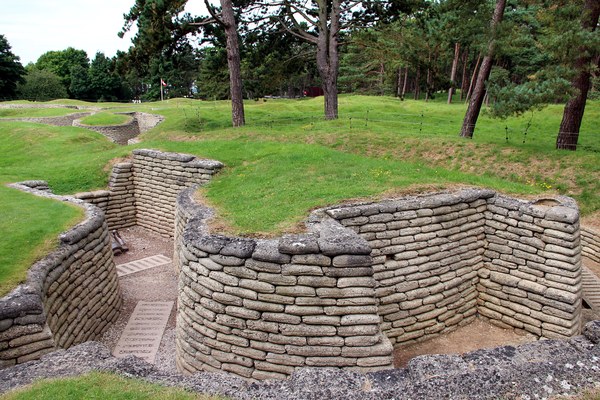
The Vimy Memorial and La Targette
Drive the 10 or so kilometres north to the Vimy park. See the memorial with the 11,285 names and one of the Canadian cemeteries, and stop at La Targette and the German cemetery at Maison-Blanche on the way back.
- Vimy is free and open every day
- Allow up to two hours in the park
- P1 is closed until 31 March 2027
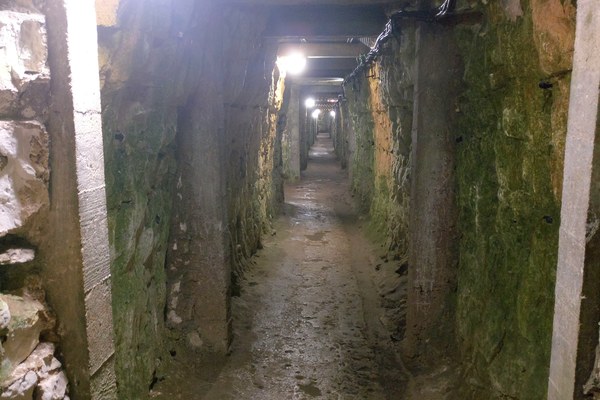
Underground – Vimy and Wellington
Arrive early at the visitor centre at Vimy and sign up for the tour of the trench and the tunnel. In the afternoon, take the glass lift 20 metres down into Wellington Quarry in Arras.
- The Vimy tour: 30 minutes, free
- Wellington: book in advance
- Bring warm clothes
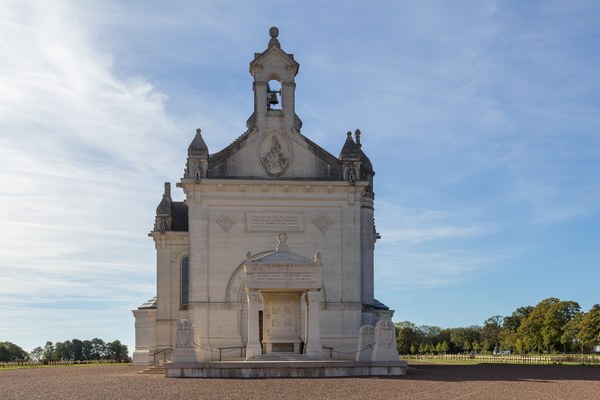
Notre-Dame-de-Lorette and Souchez
Walk through the cemetery at Lorette and along the Anneau de la Mémoire, and visit the history centre of the Mémorial’14-18 down in Souchez in the afternoon.
- Lorette and the ring: free
- The history centre: free, closed Monday and Tuesday
- The ring is lit until 11pm
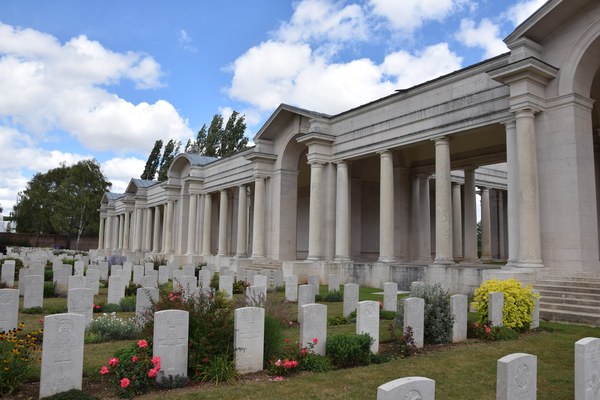
The Arras Memorial and the CWGC centre
Visit the Arras Memorial and the Faubourg d’Amiens Cemetery by the citadel, and take a pre-booked tour of the CWGC centre in Beaurains in the afternoon.
- Arras Memorial: nearly 35,000 names
- The CWGC centre: 12 euros, by booking only
- Free parking in Beaurains