
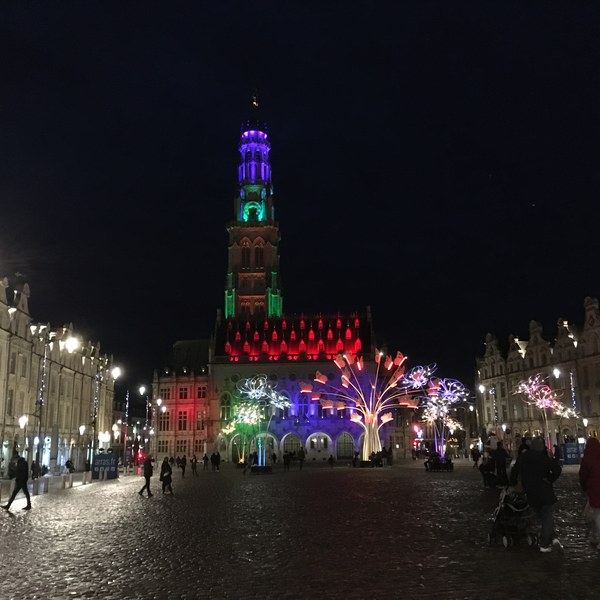
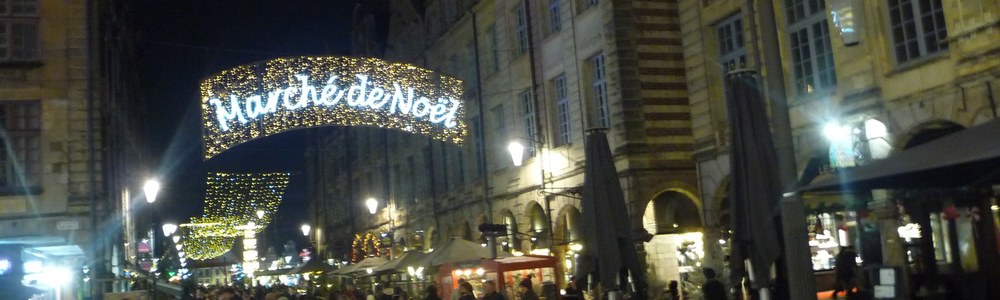
The tourist office calls the Christmas market in Arras the largest north of Paris. It stands in the middle of a town that was 80 per cent destroyed in the First World War and rebuilt as it had been – including the squares and the belfry you see today. The station is less than ten minutes’ walk from the squares, so you do not need a car.
The Christmas market 2026 – Ville de Noël
The Ville de Noël d’Arras runs from Friday 27 November to Sunday 27 December 2026. The dates change from year to year, so do not count on the market lasting until New Year.
- Sunday–Thursday: noon–9pm.
- Friday and Saturday: noon–10.30pm.
- Christmas Eve, 24 December: noon–5pm. Christmas Day: closed.
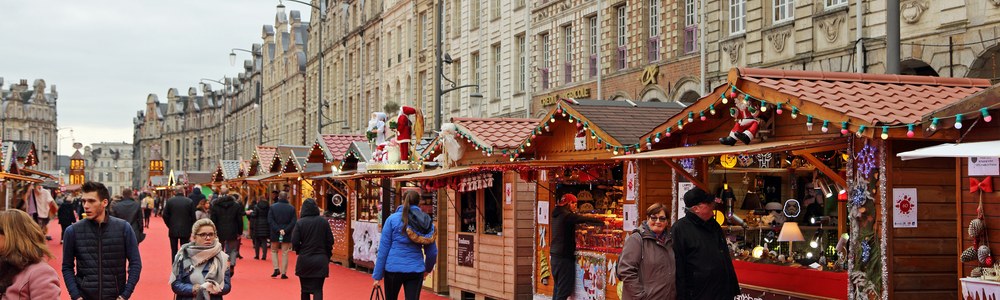
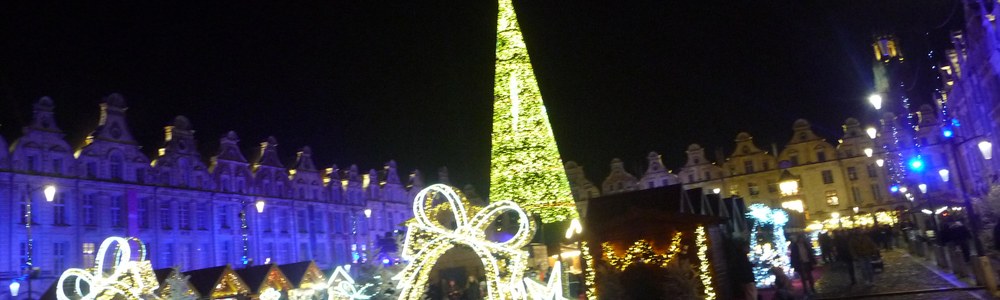
The main market is on the Grand’Place, but according to the tourist office’s magazine it spreads from the Place des Héros to the place du Théâtre and from the place d’Ipswich to the Grand’Place. Father Christmas’s winter home is on the place d’Ipswich. The magazine mentions both an ice rink and a big wheel in 2026, but not the height of the wheel or the prices.
How many stalls there will be in 2026 has not been announced. In 2025 there were around 150 stalls on the Grand’Place and the Place des Héros, and the town’s call for stallholders for 2026 had room for up to 155. Among the things to eat, the magazine mentions oysters with a glass of wine and pastries.
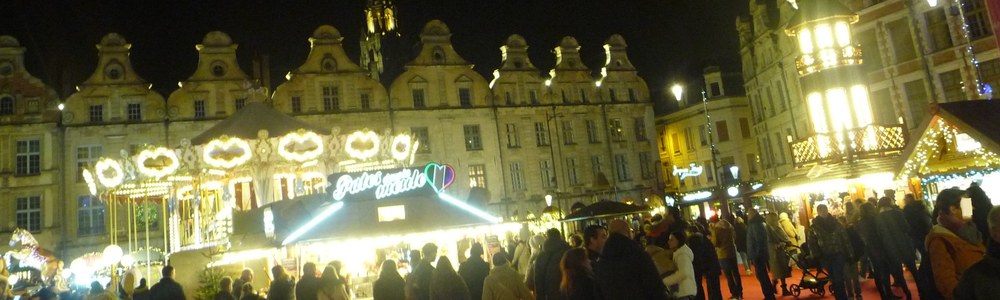
During the market the belfry is open subject to availability, because demand is high. The tourist office’s calendar also has a separate event in which Saint Nicholas comes down from the belfry – check the date for 2026 when you arrive.
The Grand’Place and the Place des Héros
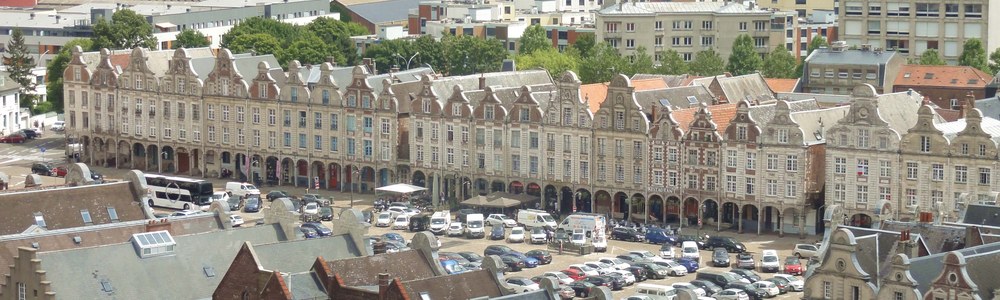
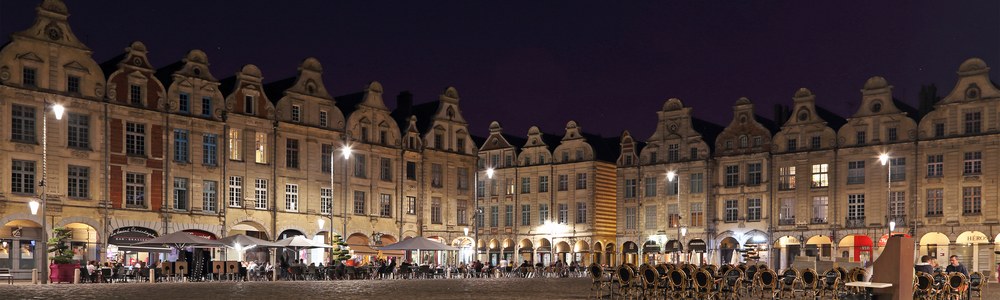
Arras has two large squares with the rue de la Taillerie between them, and the tourist office describes them as a single ensemble. Around them stand 155 façades with 345 columns, all listed as monuments historiques. The houses are in the Flemish Baroque style, with arcades at street level and gables with volutes at the top, and the façades date from the 17th and 18th centuries. An edict from Philip II of Spain in 1583 required building in stone and brick.
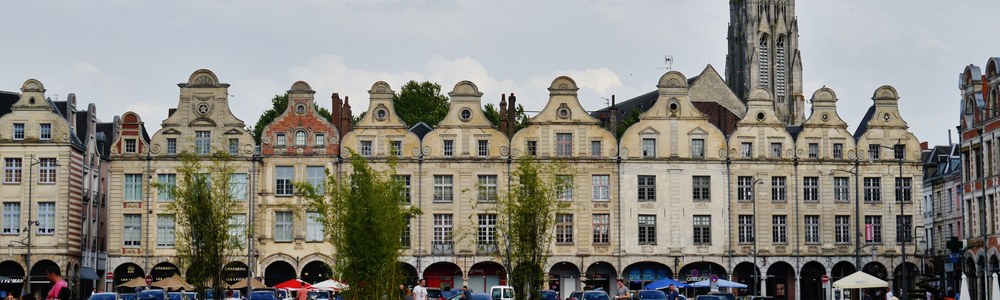
- Grand’Place: a grain market was held here from the 11th century to the early 20th century, and in the 18th century it was the largest in France. Look out for the carved ears of grain on the façades.
- Place des Héros: “the little square”, formerly the Petit Marché, has seen trade since the 12th century and is car-free. Its name honours Resistance members from the Second World War.
- Burguets: the openings in the façades are entrances to the cellars beneath the squares, Les Boves.
The houses were destroyed in the First World War and rebuilt to match the originals. The squares are listed, but they are not World Heritage – the belfry is. On the corner of the rue de la Housse, Timescope shows medieval Arras in virtual reality, with the Chapelle de la Sainte-Chandelle and the Maison Rouge.
Outside the Christmas season, there is a market on the squares on Wednesday and Saturday mornings – on the Grand’Place, the Place des Héros and the Place de la Vacquerie, with more than 200 stalls at the foot of the belfry.
The Hôtel de Ville – Gothic outside, Art Deco inside
The town hall on the Place des Héros is Flamboyant Gothic on the outside and Art Deco on the inside. The interior was designed by the architect Pierre Paquet, and the town hall was inaugurated in 1932. With a guide you can see the halls when they are not in use:
- Salle du Conseil: with Hungarian oak that was paid as war reparations.
- Salle des Mariages: with a painting by Louis Jaulmes.
- Salle des Fêtes: with a fresco by Hoffbauer with 800 figures.
The halls alone cost 6.40 euros (reduced 4.10 euros). The Pass Hôtel de Ville gives you Les Boves, the belfry and the halls from 9.10 euros. The tourist office is in the town hall and is open every day 9.30am–12.30pm and 2pm–6pm, but closed on 1 January and 25 December.
The belfry – a lift and 43 steps to the view
The belfry is 75 metres high. It was begun in 1463 and completed in 1554 to a design by Jacques Le Caron, with the crown of Charles V and the lion of Arras at the top. On 21 October 1914 it was destroyed by German artillery, and Pierre Paquet rebuilt it to match the original in 1924–1932.
A lift takes you up to the bells, and then you climb 43 steps to the first crown. The viewing level is around 45 metres above the ground, and from here you can see the cathedral, the citadel, Lorette and Vimy. Between the second and third crowns hangs a carillon of 37 bells that plays “Iras-tu vir el’ fête d’Arras” every hour on the hour.
- Closed now: the belfry is closed for works until 26 November 2026 inclusive (another page on the tourist office’s website says until 27 November). During the Christmas market it is open subject to availability.
- Closed in January: the belfry and Les Boves are closed throughout January and reopen on 18 February 2027.
- Open otherwise: every day 9.30am–noon and 2pm–5.30pm. The visit takes around 20 minutes, the last visit is 30 minutes before closing, and there is a maximum of 19 people per visit. You do not need to book. Closed on 1 January, 25 December and in bad weather.
- Price: 6.90 euros, reduced 4.40 euros for students, children aged 6–18, people with disabilities, veterans and jobseekers. With a valid TER Hauts-de-France ticket for the same day you get 15 per cent off.
The belfry is not recommended if you have a fear of heights, and it is not accessible for people with reduced mobility – a virtual tour is shown in the basement instead.
World Heritage – the belfries of Belgium and France
UNESCO inscribed the belfries of Flanders and Wallonia in 1999 and extended the listing in 2005 with 23 belfries in northern France and Gembloux in Belgium. Today “Belfries of Belgium and France” comprises 56 belfries: 33 in Belgium and 23 in France.
The belfry was the tower of the town council – the third tower in the town, alongside the lord’s keep and the church tower. In Arras it is the belfry itself that is World Heritage, with the bells and the carillon, not the whole town hall and not the squares. The fact that the belfry was rebuilt after the First World War does not change that: UNESCO counts the reconstructions after the world wars as part of the authenticity of the whole series.
Arras has one more World Heritage Site. The citadel, built in 1668–1670 on the orders of Louis XIV, is one of the twelve groups in the “Fortifications of Vauban”, inscribed in 2008.
Les Boves – the cellars beneath the squares
Beneath the squares lie Les Boves, old chalk quarries dug from the early Middle Ages, in the 9th and 10th centuries. First they were quarries, then they became storage cellars for the merchants on the squares, and during the bombing of the Second World War they became air-raid shelters. Before 9 April 1917, Commonwealth soldiers were quartered here. The passages lie 12 metres below ground and extend for around 20 kilometres beneath the town, at 11 degrees and 80 per cent humidity all year round.
- The tour: guided only, around 45 minutes, in French and/or English, a maximum of 18 people. It starts in the cellar beneath the tourist office in the town hall – arrive ten minutes before. You are given a helmet and a hairnet.
- Open: every day 10am–noon and 2pm–6pm. Closed on 25 December and from 1 January to 20 February 2027.
- Price: 6.90 euros, reduced 4.40 euros. Booking is strongly recommended.
- Not suitable: for pushchairs or people with reduced mobility, and not recommended if you suffer from claustrophobia. Bring warm clothes.
The tourist office also offers a storytelling tour of Les Boves (from 5 euros), a beer tour beneath the cobbles (from 14 euros) and an escape game, “Vidocq”. The City Pass gives you Les Boves, the belfry and Wellington Quarry from 10.60 euros.
The belfries of Douai, Béthune, Lille and Amiens
Arras is one of 23 French belfries on the World Heritage List. Four of the others can be reached on a day trip:
- Douai (around 23 kilometres): the town hall belfry, with a carillon of 62 bells. The belfry can only be visited with a guide through the tourist office in the Douaisis.
- Béthune (around 28 kilometres): built in wood in 1346 and rebuilt in sandstone in 1388. The spire was destroyed in May 1918. The guided tour takes one hour and climbs 133 steps, and the price is given as 7 euros (3.50 euros with a TER ticket).
- Lille (around 45 kilometres): the town hall belfry is 104 metres high, but after damage it is closed until further notice, according to Lille Tourisme in November 2026.
- Amiens (around 60 kilometres): built in 1406–1410, with the top from the mid-18th century, 52 metres high. Visits are booked through the tourist office in Amiens.
Other French belfries on the list include Boulogne, Calais, Bergues, Dunkirk, Cambrai, Abbeville and Saint-Riquier. You will find the towns in the travel guide to Lille, in the article on Lille and in the travel guide to Amiens.
Food from Arras
The tourist office regards the andouillette d’Arras as the town’s best-known speciality. The sausage is traditionally made from veal chitterlings, today also from pork, and has its own guild and its own festival on the Place des Héros on the last weekend in August. At “À l’Andouillette d’Arras” (Hugues Becquart), 3 rue du Marché-au-Filé, it is open Tuesday–Friday 8.30am–12.45pm and 2.45pm–7pm, and Saturday 8am–1pm and 2.45pm–6pm.
The Cœur d’Arras – the heart of Arras – comes in three versions:
- The cake: a heart-shaped honey cake.
- The cheese: “Cœur dit d’Arras”, a soft washed-rind cheese of the Maroilles family, which is matured by La Finarde in the citadel.
- The chocolate: at Maison Trogneux, 66 Place des Héros.
The tourist office also mentions the Rat d’Arras chocolate from the Pâtisserie Thibaut on the Place des Héros, the Mascaron d’Arras marzipan and confit de chicons, a jam made from endives. You will find the cheese at the markets, including the Place Lanvin on Thursday mornings and the Place du Rietz on Thursdays 3pm–7pm.
Practical – trains, flights and driving
Train: the TGV from Paris-Nord to Arras takes around 50 minutes, from Lille 20 minutes and from Brussels 1 hour and 6 minutes. From Paris-Charles de Gaulle airport there are TGVs taking 50 minutes. The station is in the centre, less than ten minutes’ walk from the squares.
Flying: Lille-Lesquin is 35 minutes from Arras by car, and Paris-Charles de Gaulle 50 minutes by TGV.
Driving: from Lille it takes 40 minutes, from Paris 1 hour and 50 minutes and from Reims 1 hour and 40 minutes. There is a multi-storey car park beneath the Grand’Place. The free electric town-centre bus, Ma Citadine, has two lines, including from the town’s free car parks.
When: the Christmas market runs from 27 November to 27 December 2026. The belfry reopens when the market starts, but avoid January – both the belfry and Les Boves are closed then.
Eating and sleeping
If you want to stay in the middle of the Christmas market, Les 3 Luppars (three stars) is in the Maison des 3 Luppars on the Grand’Place. The B&B HOTEL Arras Centre Les Places (three stars) is closest to the Place des Héros and the belfry, and the Mercure Arras Centre Gare (four stars) is by the station. In the historic centre is the four-star L’Univers.
No restaurants in Arras itself are listed in the Michelin Guide. The nearest is Air Accueil in Brebières, 17 kilometres to the east, with a Bib Gourmand. On the belfry trips you will find La Table des Échevins in Douai and Maison Renard in Béthune, both recommended by Michelin. The nearest stars are at La Table de Christophe Dufossé in Busnes, which has two.
You will find more hotels and restaurants in the travel guide to Arras.
Beyond the Christmas market
Just north of the town lie the memorial sites of the First World War – read more in Vimy and the First World War battlefields. You will find more Christmas markets, from Strasbourg to Lille, in Christmas markets in France.
4 days in Arras and the belfry towns
With four days you can spend the first two in Arras and then take one belfry town a day, with the Christmas market in the evening. Check that the belfry is open – it is closed until 26 November inclusive.
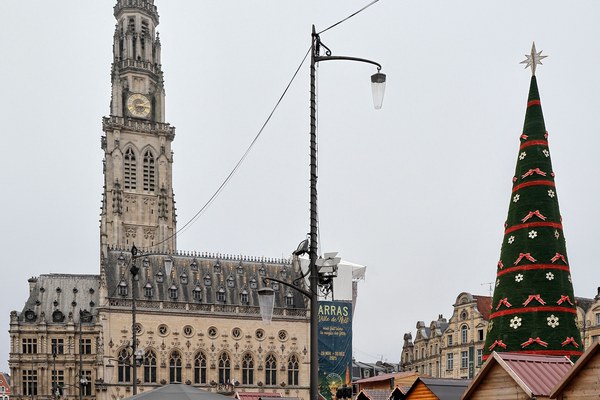
The squares, the belfry and the Christmas market
Start at the tourist office in the town hall and take the lift up the belfry. Walk along the rue de la Taillerie from the Place des Héros to the Grand’Place, and visit the market when the lights come on.
- The belfry: 6.90 euros, lift and 43 steps
- The market opens at noon
- Open until 10.30pm on Friday and Saturday
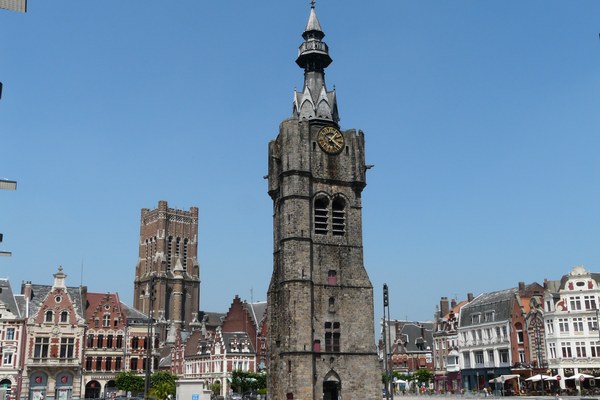
Les Boves and Béthune
Take the tour of Les Boves beneath the squares in the morning, and drive to Béthune for the guided tour up the 133 steps of the belfry. Maison Renard in Béthune is closed on Monday and Tuesday.
- Les Boves: 45 minutes, book ahead
- Béthune: around 28 kilometres
- Warm clothes in Les Boves
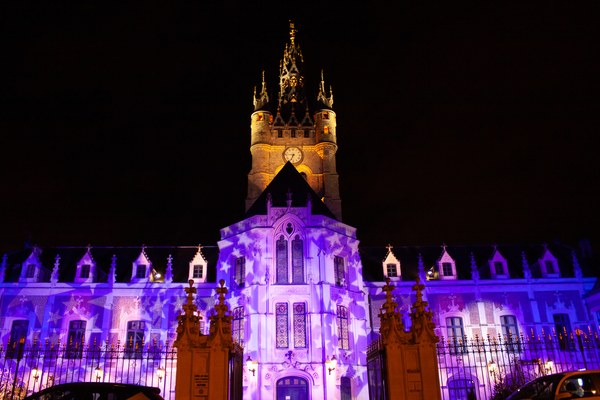
Douai and the carillon
Drive the 23 or so kilometres to Douai and book a guided tour of the belfry with its 62 bells. Have lunch at La Table des Échevins Tuesday–Friday, and return to the Christmas market in Arras in the evening.
- The belfry in Douai: guided only
- Air Accueil in Brebières is on the way
- The market closes at 9pm Sunday–Thursday
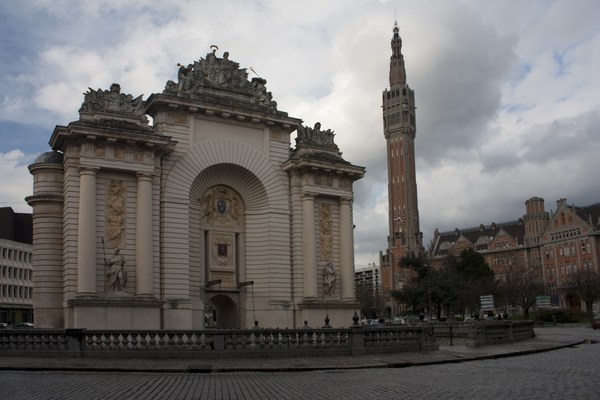
A day trip to Lille
Take the TGV to Lille, 20 minutes away. The belfry on the town hall is closed until further notice, but you can see it from the Porte de Paris. Take the train back to Arras for a last evening at the market.
- TGV Arras–Lille: 20 minutes
- The belfry in Lille: 104 metres, closed
- No car needed