
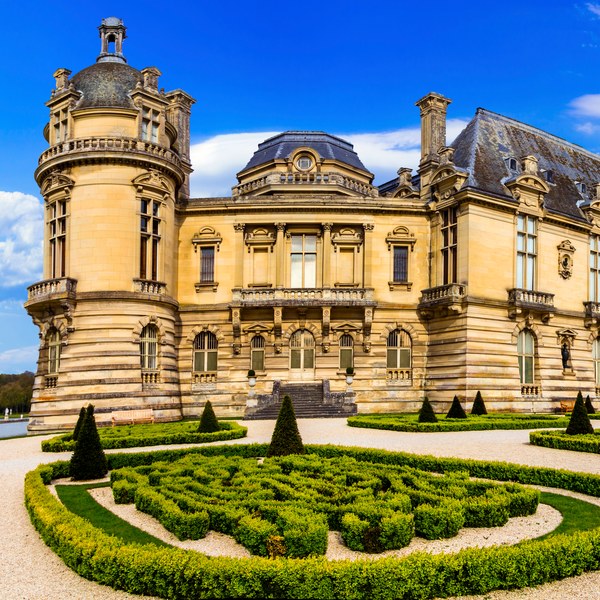
The château was “Monument préféré des Français 2025” and has close to 600,000 visitors a year. The owner is the Institut de France. The prices and times in this guide are from the sources in autumn 2026, and the prices for 2027 have not been published – check chateaudechantilly.fr before you go.
History – Montmorency, Condé and the Duke of Aumale
Chantilly passed from Montmorency to Condé and on to the Duke of Aumale. What you see today is made up of what they built and what was rebuilt after the Revolution.
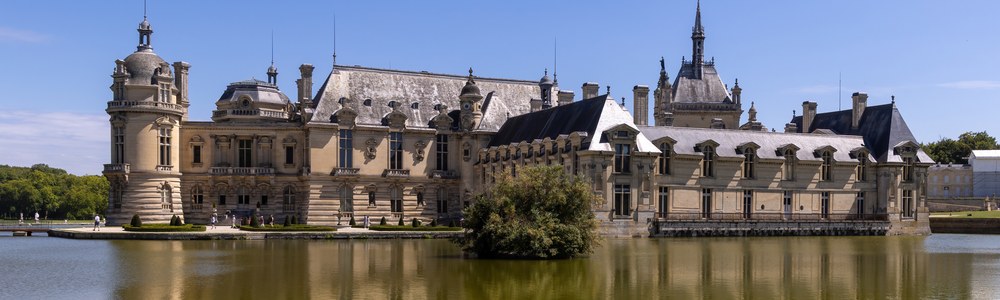
- 1386: the Orgemont family builds a castle on a rock in the marsh by the river Nonette. In 1484 Guillaume de Montmorency inherits it.
- The 16th century: Constable Anne de Montmorency (1493–1567) has Jean Bullant build the Petit Château around 1557–60.
- 1632: Henri II de Montmorency is beheaded, and Louis XIII takes the estate. In 1643 it passes to the House of Condé through Charlotte de Montmorency.
- The Grand Condé (1621–86): he brings in Le Nôtre for the gardens and gathers Molière, Racine, La Fontaine and Bossuet. In 1671 the steward Vatel dies here after the fish is delayed during the festivities for Louis XIV.
- From 1719: Louis-Henri de Bourbon builds the Great Stables with Jean Aubert and founds a porcelain factory. Christophe Huet paints the Petite Singerie (1735) and the Grande Singerie (1737).
- The Revolution: the estate is sold off from 1793, and the Grand Château is razed to the ground in the late 1790s. The Petit Château is left standing.
- 1830: the Duke of Aumale, Henri d'Orléans (1822–97), inherits Chantilly at the age of eight. From 1848 to 1871 he lives in exile in Twickenham.
- 1875–1885: the architect Honoré Daumet rebuilds the Grand Château for him.
- 1884–1898: the duke bequeaths the château in 1884 and gives it to the Institut de France in 1886. The museum opens on 17 April 1898.
Vatel was also the steward at Fouquet’s festivities in 1661, which we write about in Vaux-le-Vicomte and Barbizon. The history of the château is told by the Château de Chantilly.
What is old and what is new
The château is two buildings. The Petit Château is Renaissance from the 1550s and is still standing. The Grand Château is new from 1875–1885, in place of the one that was demolished in the late 1790s. The Great Stables (Grandes Écuries) are from 1719–1735, and the gardens from the second half of the 17th century onwards.
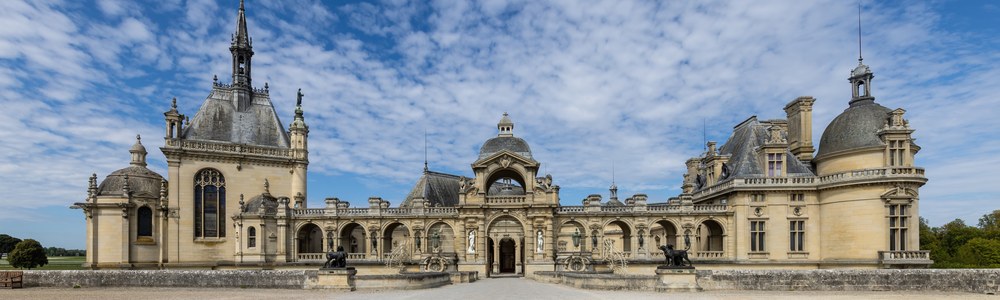
In the Grands Appartements you see 18th-century interiors and the Galerie des Batailles with eleven canvases. The rooms were emptied during the Revolution and refurnished by the duke. They are included in the ticket. The duke’s private apartments from 1845–48, decorated by Eugène Lami, can only be seen with a guide, for 7 euros extra.
Musée Condé – the main works
The château’s own wording is “la seconde collection de peintures anciennes en France après le Louvre”. That applies to older paintings, not to the museum as a whole. The collection has 800 paintings, according to the tourist office.
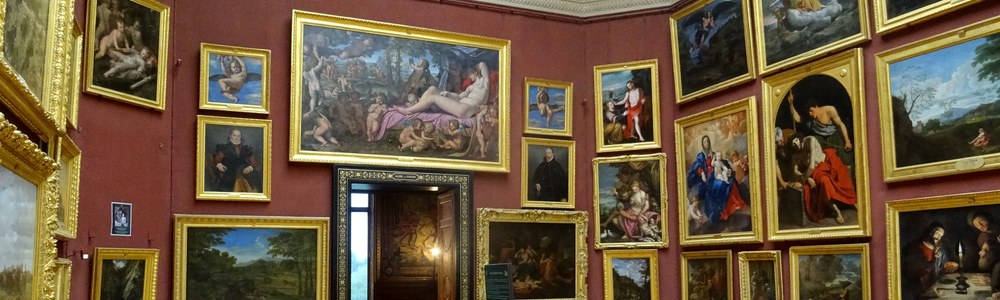
- Galerie de Peinture: approx. 85 paintings, among them Poussin’s “The Massacre of the Innocents” and Philippe de Champaigne’s portrait of Richelieu.
- Rotonde: Piero di Cosimo’s Simonetta Vespucci and Raphael’s Madonna di Loreto, which was regarded as a copy until the late 1970s.
- Santuario: Raphael’s “The Three Graces” (c. 1503–04) and the Madonna d'Orléans (c. 1506–07), 40 miniatures by Fouquet and a picture by Botticelli and Filippino Lippi.
- Tribune: Fra Angelico, Botticelli, Titian, Van Dyck, Watteau, Ingres and Delacroix.
- Cabinet des Clouet: 90 Renaissance portraits.
- Galerie de Psyché: 44 stained-glass windows in shades of grey from Écouen, 1542–44.
- Galerie des Cerfs: tapestries.
So the museum has three paintings by Raphael. The audio guide costs 3 euros.
The bequest – the pictures cannot be lent out
The duke set conditions when he gave Chantilly away. The museum must be open to the public, the collections may neither be split up nor lent out, and the pictures must hang the way he wanted. That is why they hang close together, frame by frame. If you want to see Raphael’s “The Three Graces”, you have to come here.
The Cabinet des Livres and the Très Riches Heures
The duke’s library has 60,000 volumes, and approx. 19,000 of them are in the Cabinet des Livres: 1,500 manuscripts, 200 of them illuminated manuscripts from the Middle Ages, and 17,500 printed books. The château states that it is the second-largest collection of illuminated manuscripts in France after the national library.
- Timed ticket: 3 euros extra, 30 people every 30 minutes. Arrive 10 minutes early.
- Works: the floor is to be stabilised, planned for 2028–2030.
The duke bought the book in Genoa in 1856. One of the pictures in it shows the château in Saumur – see the travel guide to Saumur.
The Great Stables and the Museum of the Horse
The Great Stables (Grandes Écuries) were built in 1719–1735 by Jean Aubert for Louis-Henri de Bourbon, the seventh Prince of Condé. The dates are on the fountain in the dome. The building is 180 metres long, had room for close to 240 hunting horses and has a dome of approx. 28 metres. The statue “Renommée” on top is from 1989.
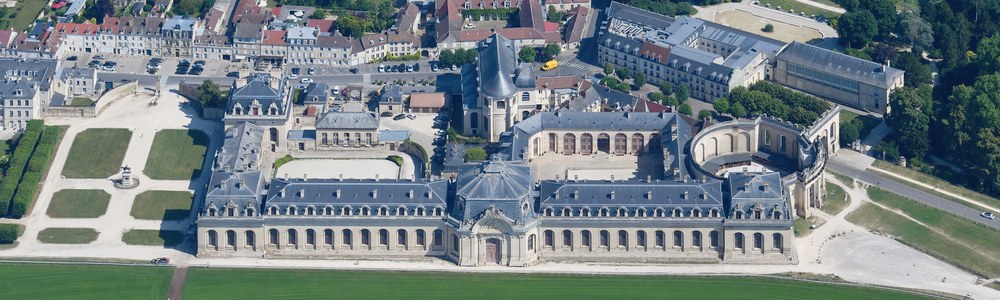
You will hear that the prince believed he would be reborn as a horse. The tourist office calls it a legend – he wanted large stables for his hunt.
The Museum of the Horse (Musée du Cheval) was founded in 1982 by Yves Bienaimé and was renewed in 2013 with 15 rooms and support from the Aga Khan. It has been remodelled since 2022, with new rooms in 2025. Here you see, among other things, harness from the coronation of Charles X in 1825. The museum is included in the one-day ticket. If you like riding yourself, you will find places in Horse riding in France.
Riding demonstrations and shows
- Demonstration (“animation équestre”): approx. 30 minutes under the dome almost every day, often at 2.30pm, and included in the ticket. You see classical riding and training – the public does not ride.
- Shows: the company is led by Sophie Bienaimé and gives over 100 a year, in April–June, in summer, in September–November and at Christmas. They cost extra. The programme and prices for 2027 have not been published.
- The dome is closed 1pm–3.30pm on show days.
- Rules: photography is forbidden during the shows, and you cannot bring animals.
- Ride yourself: the “Balade à cheval Henson” lasts approx. 3 hours, 1 hour 30 minutes of it on horseback, and is scheduled until December 2026.
Christmas at the château and the horse show
“Noël enchanté” began on 14 November 2026. The horse show “Le Noël oublié” runs 28 November 2026–3 January 2027 at 2.30pm, on several days also at 4.30pm, and lasts one hour. It costs 24 euros, reduced 19, or 32 and 26 euros together with the one-day ticket. There is also Christmas in the Potager des Princes garden in the town, “Noël au Potager”, on certain days in December 2pm–5pm, 10 euros and reduced 8. See potagerdesprinces.com.
Three gardens and the Grand Canal
The park covers 115 hectares and has three gardens, each from its own period. The axis of Le Nôtre’s layout does not run through the château. In 1698 Le Nôtre named Chantilly among the beautiful gardens of France.
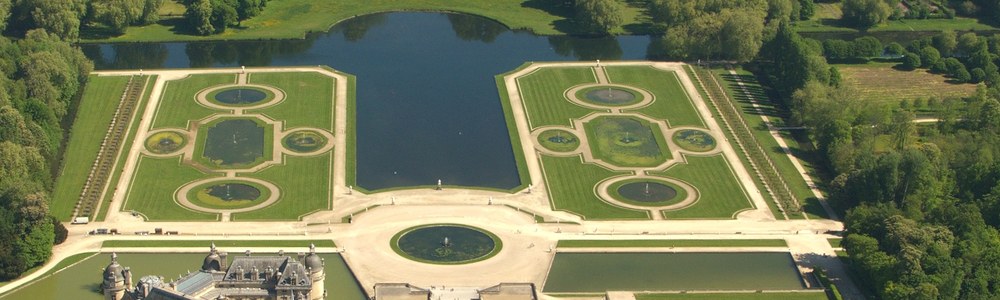
- The French garden: Le Nôtre, second half of the 17th century, with fountains restored in 2009 and jets of up to 5 metres.
- The Grand Canal: 2.5 kilometres long, dug as a canalised Nonette.
- The Anglo-Chinese garden: designed in 1773 by Jean-François Leroy.
- The English garden: from 1817, by Victor Dubois, with the Île d'Amour and the Temple de Vénus.
- The Game of the Goose (Jeu de l'Oie): 63 squares over 3.5 hectares, from the 18th century.
The little train runs 28 March–11 November (2026), takes 45 minutes and costs 8 euros, children aged 4–18 4 euros. A rowing boat in the moat costs 15 euros for 30 minutes, a hire bike 8 euros for 30 minutes or 10 euros an hour, a small four-seater car 30 euros for 30 minutes and a pedal car (rosalie) 20 euros. Your own bike is only allowed with an annual pass. In winter the statues are covered.
You will meet Le Nôtre again in Fontainebleau and at Versailles.
Le Hameau – the model for Marie-Antoinette’s village
The little village was designed by Leroy for Louis-Joseph de Bourbon-Condé in 1775, with seven small houses. Five stand today. It was the model for Marie-Antoinette’s hameau at the Petit Trianon, not the other way round.
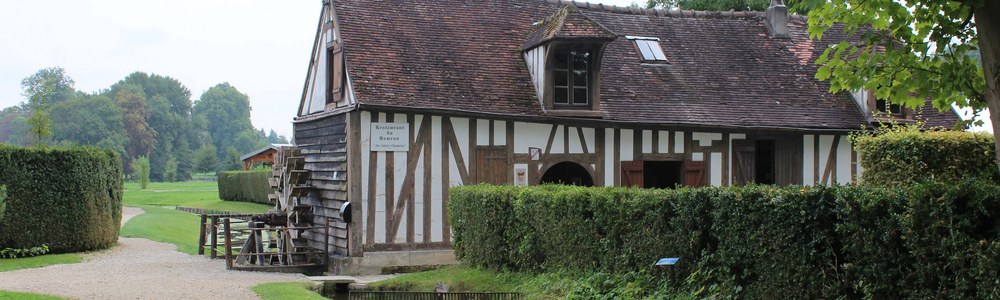
The restaurant Le Hameau serves every day except Tuesday, lunch noon–2pm (until 3pm at weekends), and the tea room is open until 5.45pm. It is closed 15 November–12 March. You need a ticket to the park to get there.
Crème Chantilly – what we know, and where to taste it
Vatel did not invent the cream. He was a steward, not a cook. Whipped, sweetened cream existed in several places in Europe in the 16th century, and the first known recipe is from England around 1545. “Fromage à la Chantilly” appears in the work of the cookery writer Menon in 1750, and the first to mention crème Chantilly in Chantilly is the Baroness d'Oberkirch in 1784, after the festivities at Le Hameau.
- In the park: the restaurant Le Hameau, and La Capitainerie in the château, open noon–5pm until the end of March and 10.30am–6pm in April–October, not Tuesdays. Both require a ticket.
- Workshops at the château: “Ateliers crème Chantilly” with the Confrérie des Chevaliers Fouetteurs, approx. one hour at 2pm, 20 euros. Dates until 3 January 2027: 28–29 November, 19, 20, 23, 26, 27, 28 and 30 December and 2–3 January.
- L'Atelier de la Chantilly, 48 rue du Connétable: Tuesday 2pm–7pm, Wednesday–Friday 1.45pm–7pm, Saturday–Sunday 11am–1pm and 2.30pm–7pm. Workshops of 1 hour 15 minutes Wednesday–Sunday at 6pm and Saturday at 2pm, minimum four people.
- Maison Trueba: ice cream and waffles by the château since 1930.
The racecourse and the horse town
The Hippodrome de Chantilly was inaugurated in 1834 and lies near the stables, 10 minutes on foot from the station. The Prix du Jockey Club has been run since 1836 and the Prix de Diane since 1843, both over 2,100 metres. The Prix de l'Arc de Triomphe was held here in 2016 and 2017.
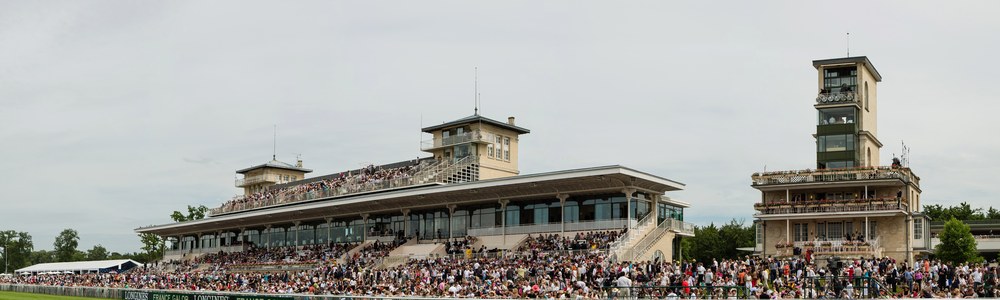
- 2027: the dates of the Prix du Jockey Club and the Prix de Diane have not been published. France Galop only gives June for the Diane. In 2026 they were on 31 May and 14 June.
- Winter 2026–27: racing on 3, 5, 8, 10, 14 and 26 December, 11, 16 and 18 January and 17–18 February.
- Prices in 2026 (standard): weekdays and Saturdays 5 euros, Sundays and public holidays 8 euros, Jockey Club 10 and Diane 14 euros. Advance tickets are cheaper, and under-12s are free. Parking 3–8 euros.
- Training: over 2,000 horses train in Chantilly and the neighbouring communes. 47 kilometres of tracks in the forest are reserved for the horses until 1pm every day.
You will find the calendar and the tickets at France Galop.
Tickets and prices 2026
- One-day ticket (the château, the park and the stables): 18 euros, reduced 14.50 for ages 7–25, among others. With the Cabinet des Livres 21 and 17.50 euros.
- The park only: 9 euros. Two days: 26 euros.
- Family: 55 euros for two adults and two or three children aged 7–17. Under-7s are free.
- Extras: Cabinet des Livres 3 euros, audio guide 3 euros, guided visit 7 euros.
- Annual pass: Parc 30 euros, Solo 45 euros and Tribu 95 euros (one person and three guests).
- The Paris Museum Pass is valid. The château is not free on the first Sunday of the month.
- Discount: a full-price ticket from Pierrefonds, Écouen, Compiègne, Royaumont, Mer de Sable or Sherwood Parc gives the reduced price.
Opening hours and closures
- High season (late March–late October): the château and the stables 10am–6pm, the park 10am–8pm.
- Low season: the château 10am–5pm, the park 10am–6pm, the stables noon–5pm. Last admission is 30 minutes before.
- Closed every Tuesday, all year round.
- Closed 4–22 January 2027: the château, the park and the stables.
The high-season times are from the visitor regulations, which date from 2023 – check the day on the château’s page on opening hours.
How long do you need?
The château recommends at least half a day, preferably a full one. If you have half a day, you have time for the museum and the stables, or the museum and the French garden. If you also want Le Hameau, the English garden, the demonstration at 2.30pm and the library, you should arrive at 10am and stay until the evening.
Exhibitions and events 2026–27
- Until 3 January 2027: “Rosa Bonheur et le cheval” in the Great Stables, “Le Diamant rose” and “Les États-Unis et Chantilly”.
- Giotto: the panels from Chaalis have been here since 24 January 2026, while the museum in Chaalis is being restored. No end date is given.
- Journées des Plantes: 14–16 May 2027 10am–6pm. See journeesdesplantesdechantilly.fr.
- Concert: Sting at the château on 15 July 2027, from 89 euros. Parking costs 20 euros on concert days.
The best time is from late March to October, with long opening hours, the train in the park and Le Hameau open. May and October are for plants, June for racing.
Advice – children, wheelchairs and dogs
- Children: the horse demonstration is included in the ticket. In the park there are the Game of the Goose, the train and rowing boats, and the escape game “Le Cavalier noir” runs 14 February–31 October, 70 euros for two to six people.
- Pushchairs: allowed in the château and the stables, but none are available to borrow.
- Wheelchairs: the Grands Appartements and the Cabinet des Livres are accessible from the courtyard, the gallery only partly and the private apartments not at all. Two wheelchairs can be borrowed in the château and one in the stables. Parking and admission with a companion are free.
- Dogs: not allowed, not even on a lead or in a bag. Guide and assistance dogs are admitted.
- Food: there are picnic tables in the park.
Getting to Chantilly
- Train from Paris: 38 trains a day from the Gare du Nord to Chantilly-Gouvieux, in 23 minutes at the fastest. The TER takes 25 minutes and the RER D 45. The Navigo card is not valid.
- Package: the “Pack TER + billet 1 Jour” costs 27 euros for the return journey, the château, the gardens and the stables. Children under 12 pay 1 euro with an adult.
- From the station: approx. 20 minutes on foot, 10 by bus and 5 by taxi. The town bus DUC is free Monday–Saturday, line 645 is free within Chantilly, and at weekends and on public holidays there is a bus between the station and the château.
- Car: the A1 from Paris, junction 7 “Chantilly”, and the A1 from Lille, junction 8 “Senlis”. Parking at the château costs 5 euros a day, by card only, also for motorhomes. There are no electric car chargers there.
- By air: Charles de Gaulle is 22 kilometres away as the crow flies, 20–25 minutes by car. The “Aire'Bus” runs from Roissypôle to Chantilly in under an hour. Paris-Beauvais is 39 kilometres away, around 45 minutes. The car hire box on this page uses Charles de Gaulle.
You will find more about the trains in The most beautiful train journeys in France, and if you are in the capital, in the travel guide to Paris.
Eating and sleeping
In Saint-Maximin, 3 kilometres from the town, Le Verbois has one Michelin star in a hunting lodge from 1886. It is open Wednesday–Saturday for lunch and dinner and Sunday for lunch. In Lamorlaye the wine bistro Charnu has a Bib Gourmand, and in Apremont Michelin recommends La Grange aux Loups with its garden terrace.
Closest to the château you stay at the five-star Auberge du Jeu de Paume, right next to the stables, with a spa and an indoor pool. By the market square is Hôtel Le Chantilly (three stars, 27 rooms) in a coaching inn from 1722, and between the station and the centre Hôtel du Parc with four stars. You will find more in the travel guide to Chantilly.
Onward from the château
The cathedral town of Senlis, the imperial palace in Compiègne, the clearing where the Armistice was signed in 1918 and the castle in Pierrefonds are in Senlis and Compiègne. If you want to see more châteaux, you will find them in France’s most beautiful castles. The long view is in The history of France, and to the north the trip continues to Amiens.
4 days in Chantilly
Each day stands on its own, so you can choose one or more: a full day at the château, a rainy day, a day with children and a day in the forest. None of them works on a Tuesday, when the château is closed. The two-day ticket costs 26 euros.
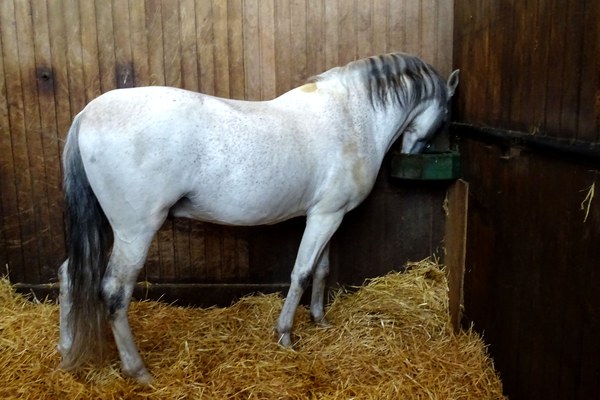
The château, the horses and the gardens
Start with the Musée Condé at 10am, have lunch at Le Hameau or La Capitainerie, see the demonstration in the Great Stables and end by the Grand Canal.
- One-day ticket: 18 euros, reduced 14.50
- The demonstration is often at 2.30pm – check the day
- Book a time in advance
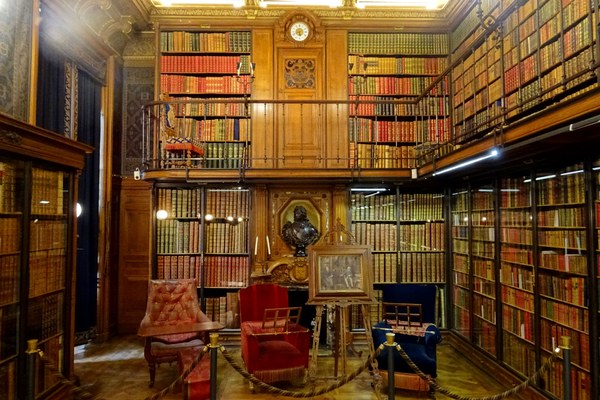
A rainy day with books and lace
Take the timed ticket to the Cabinet des Livres, see the Grands Appartements and spend the afternoon in the Museum of the Horse. The Musée de la Dentelle in the town shows the black Chantilly lace.
- Cabinet des Livres: 3 euros extra, 30 minutes
- Musée de la Dentelle: Friday–Sunday 2pm–6pm, 5 euros
- The lace museum is closed 23 December 2026–4 January 2027
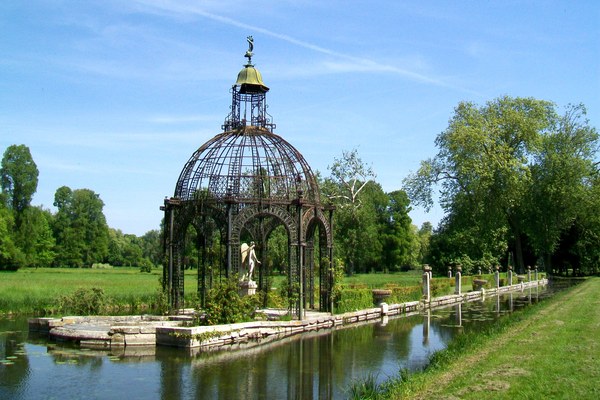
With children in the park
Take the train through the park, play the Game of the Goose, see the Île d'Amour in the English garden, row in the moat and see the horses. Bring a packed lunch for the picnic tables, or taste the cream at Le Hameau.
- Family ticket: 55 euros, under-7s free
- The train: 8 euros, children 4 euros, 28 March–11 November (2026)
- The Potager des Princes in the town has animals: 9.50 euros, reduced 8.50
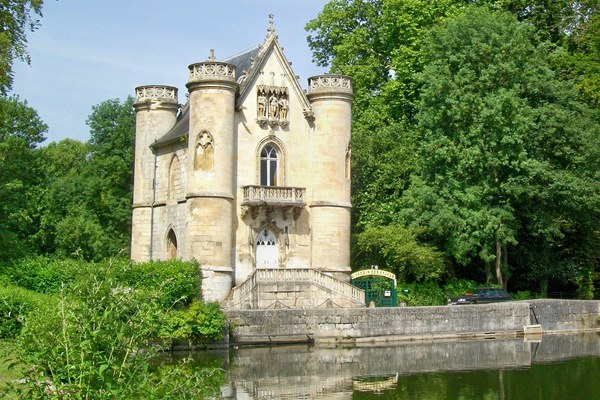
The château and Chantilly Forest
Spend the morning at the château, and head for the Commelles ponds (Étangs de Commelles) after lunch. The four ponds lie in a row in the river Thève, by the viaduct and the Château de la Reine Blanche from 1825, which is private and can only be seen from the path.
- 4–5 kilometres as the crow flies from the town
- The horse tracks in the forest are reserved for the horses until 1pm
- In March the roads are closed in the evening because of the toad migration