
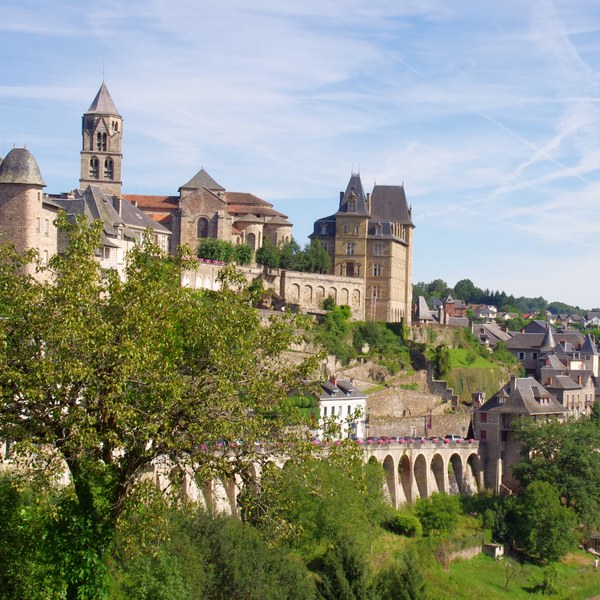
What makes the Vézère Valley special is that prehistory is not kept behind glass in a museum far away. It lies in the limestone cliffs you drive past, in the caves beneath the woods and in the rock shelters where people lived tens of thousands of years ago. From Sarlat you are there in half an hour.
A valley full of prehistory
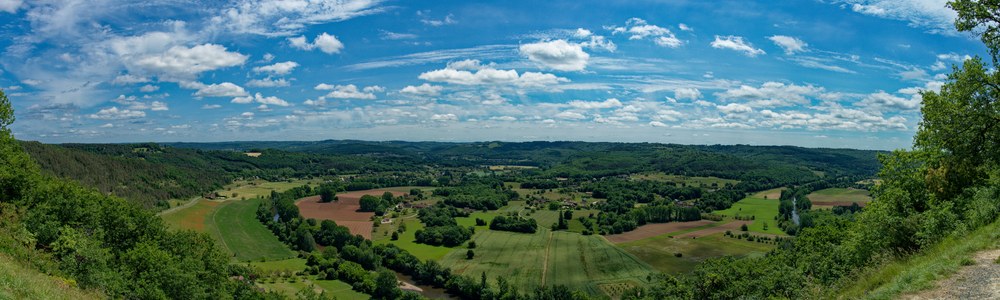
The Vézère has cut its way down into the limestone, leaving steep cliffs with overhangs, rock shelters and caves. This is where people found shelter from wind and weather, and the traces they left lie more densely here than almost anywhere else in Europe.
In 1979 the valley was added to UNESCO’s World Heritage List. The listing covers 147 prehistoric sites and 25 caves with paintings and engravings, most of them between Montignac and Les Eyzies. That is why Les Eyzies calls itself the world capital of prehistory.
Lascaux – the cave that was closed
Lascaux was discovered in September 1940 by four teenage boys in the woods above Montignac. Inside the cave they found hundreds of painted and engraved animals – horses, bulls, deer and ibex – made around 17,000 years ago.
After the war visitors poured in, and the breath, heat and humidity of thousands of people began to damage the paintings. In 1963 the cave was closed to the public, and it has remained closed ever since.
Today Lascaux is experienced through replicas. Lascaux IV, which opened in Montignac in 2016, reproduces the entire cave at full size, with the same contours in the rock and the colours where the artists applied them. The visit is well organised, with a guide and exhibitions, and it also suits children.

Les Eyzies and the museum of prehistory
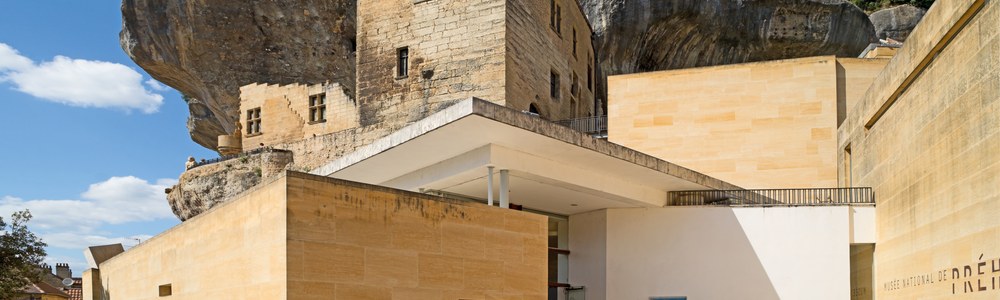
Les Eyzies is a small village squeezed in between the river and a high limestone cliff. Set into the cliff, above the village rooftops, is the Musée national de Préhistoire, France’s national museum of prehistory, with finds from the whole valley.
It was also here, in the Cro-Magnon rock shelter, that some of the first skeletons of modern humans in Europe were found in 1868. The name has since been used for the whole early European population.
Around the village there are several genuine caves. In Font-de-Gaume you can still see paintings in colour in the original cave, but the number of visitors per day is strictly limited to protect them.
Homes in the cliffs
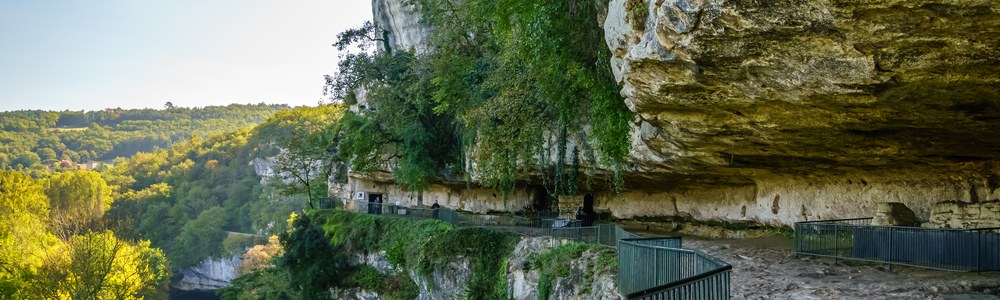
Between Les Eyzies and Montignac, several sites show how people lived in the cliff face itself. La Roque Saint-Christophe is a cliff almost a kilometre long, with terraces and rooms that were inhabited from prehistoric times to the Middle Ages, when it also served as a fortress.
Beam holes, steps and remains of timber show where the houses once stood, and from the terraces you look straight down on the river. The site is easy to explore on your own, and gives a good sense of why people chose these particular cliffs.
The villages along the river
The Vézère Valley is not only about prehistory. Saint-Léon-sur-Vézère is on the list of the most beautiful villages in France, with a Romanesque church right down by the water and two châteaux within a few hundred metres.
Montignac is a lively little town on the river and the starting point for Lascaux IV, while Les Eyzies has restaurants, hotels and the largest concentration of museums and caves. Between the villages, narrow roads run through woods and walnut groves.
Practical advice
You need a car or a bicycle for the Vézère Valley. From Sarlat it takes about half an hour to drive to Les Eyzies or Montignac, and the distances between the sites in the valley are short.
Plan no more than two or three visits in a day. The caves keep a steady, cool temperature all year round, so bring a jacket even in summer. In July and August it pays to buy tickets in advance, and some of the genuine caves have so few places that they must be booked long beforehand.
Spring and autumn are the best times to go. There are fewer people then, and the light in the valley is softer. In winter many sites have shorter opening hours or stay closed.
The Vézère Valley with Sarlat as your base
Most people who visit the valley stay in Sarlat. The town has hotels in every price range and one of France’s best-known markets, and you are out in the valley within half an hour. Many combine a day in the Vézère Valley with a day along the Dordogne, where the castles and cliff villages are.
If you would rather stay closer to the caves, Les Eyzies and Montignac are good alternatives. That gives you both the morning and the evening in the valley, before and after the day-trippers.
Four good ways to experience the Vézère Valley
The valley can be experienced underground, in the cliffs, from the river and from the car window. Here are four combinations that work well over one or two days.
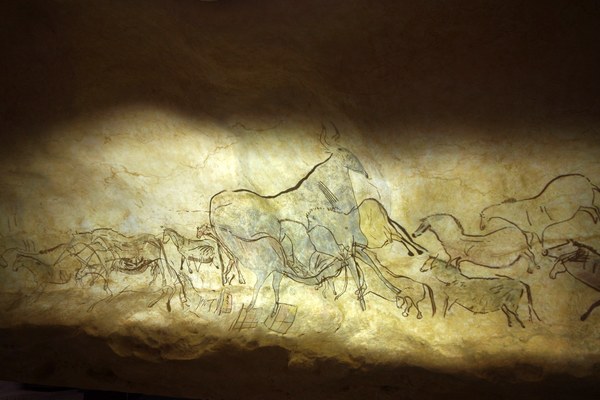
Lascaux IV in Montignac
The complete replica of Lascaux gives the best impression of the paintings, with a guided tour through the cave and exhibitions afterwards. Allow a couple of hours.
- The whole cave at full size
- Also suits children
- Buy your ticket in advance in high season
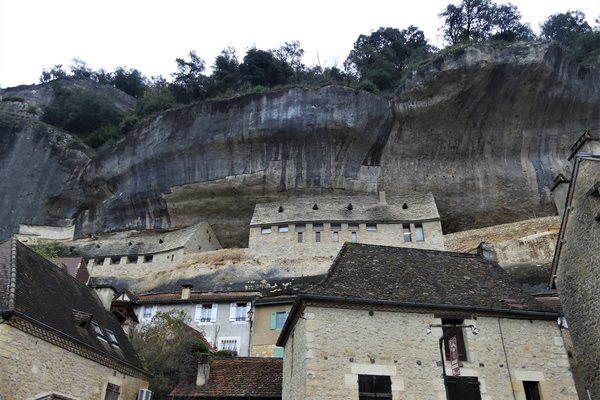
Les Eyzies and the museum of prehistory
Start at the museum in the cliff, have lunch in the village and visit one of the genuine caves in the afternoon. That makes a full day of prehistory in one place.
- Finds from the whole valley under one roof
- Genuine caves a short distance away
- Font-de-Gaume must be booked early
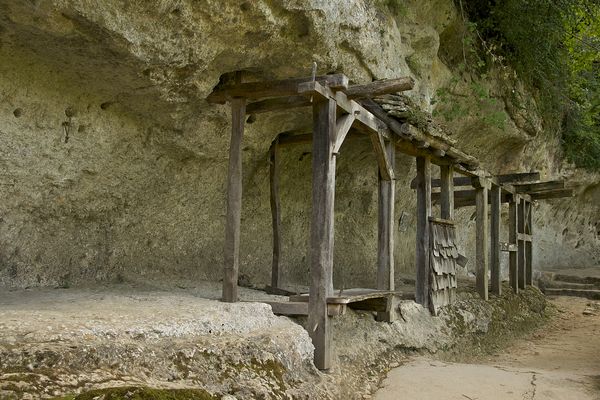
La Roque Saint-Christophe
Walk along the terraces in the cliff, see the rooms where people lived for thousands of years, and enjoy the view over the river. The site is easy to explore on your own.
- Views straight down on the Vézère
- Easy for most people to walk around
- Can be combined with Saint-Léon-sur-Vézère
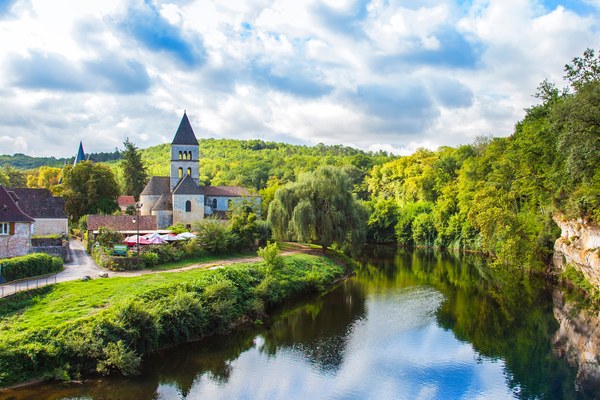
By canoe on the Vézère
The river is calmer than the Dordogne, and the hire companies will gladly drive you up the valley so that you paddle back down. The cliffs and the dwellings look quite different from the water.
- A calm river that suits beginners
- Stretches from a couple of hours to a full day
- Bring a waterproof bag for your phone and keys