
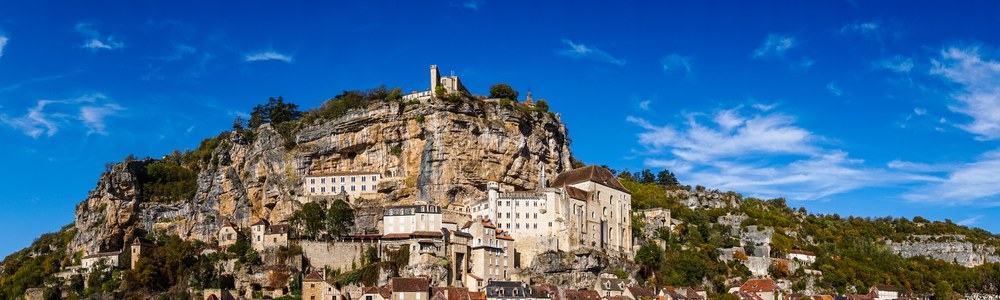
The first time you see Rocamadour, it is hard to work out how the town holds together. The houses stand on the valley floor, the sanctuaries cling to the rock face halfway up, and the castle sits at the very top, on the edge. Together with the cave at Padirac and the villages along the Lot, there is enough for a long day or two.
A pilgrimage town on three levels
Rocamadour has been a place of pilgrimage since the Middle Ages. The town gained real importance after 1166, when a body was found in a grave by the chapel and linked to Saint Amadour, who gave the place its name.
It became one of the most important pilgrimage destinations in Europe, and lies on one of the routes to Santiago de Compostela. That is why the Saint-Sauveur basilica and the Saint-Amadour crypt are included in the UNESCO World Heritage listing of the pilgrim routes in France.
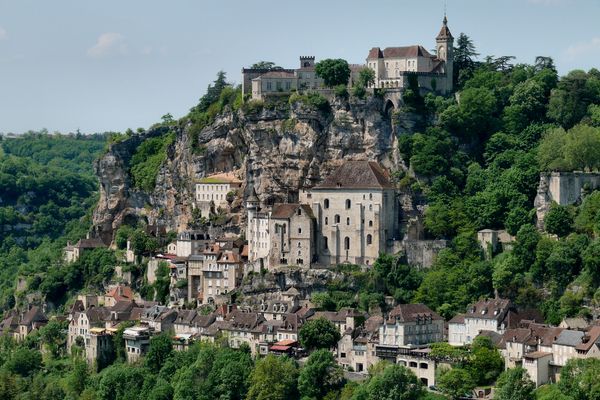
The town is divided into three levels: the village with the old main street at the bottom, the sanctuaries in the cliff in the middle and the castle at the top. Stairs, paths and lifts link them.
The sanctuaries and the great staircase
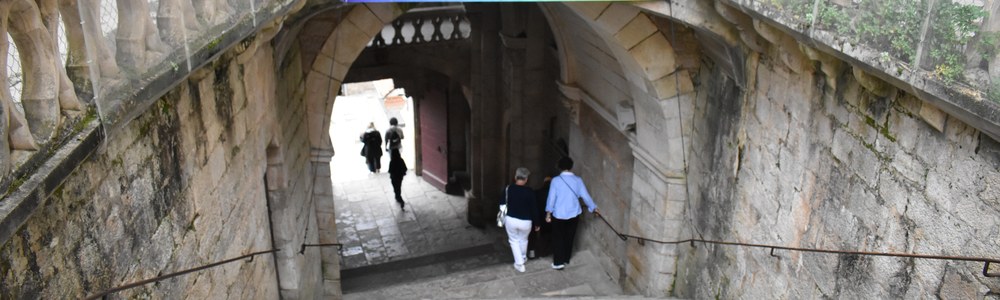
From the village, the great staircase, the Grand Escalier, leads up to the sanctuaries. Pilgrims traditionally climbed its 216 steps on their knees. Today most people walk, and many take the lift.
At the top is a small square surrounded by churches and chapels. The most important is the Chapelle Notre-Dame, home to the Black Madonna, a medieval wooden statue that is still the goal of the pilgrims.
Above the sanctuaries, the Way of the Cross climbs through the woods to the castle, which guards the top of the cliff. From the ramparts you look straight down on the rooftops and far out over the valley.
Gouffre de Padirac
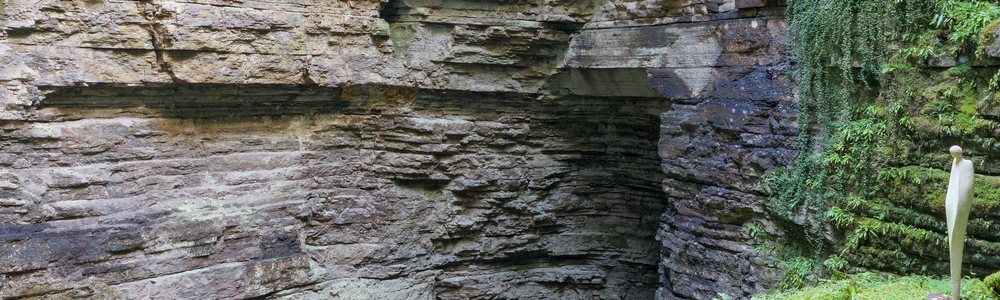
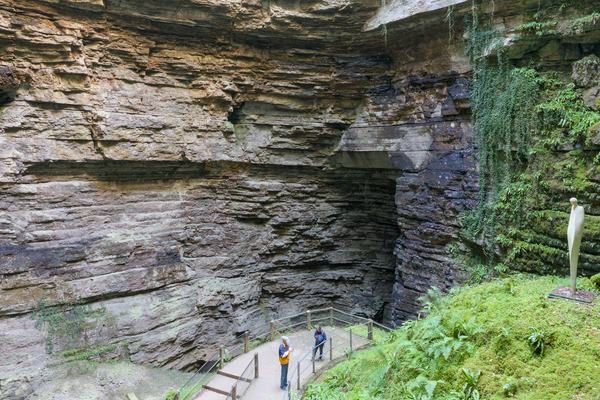
A quarter of an hour from Rocamadour, the ground opens up in a huge, round shaft. The Gouffre de Padirac is one of France’s best-known caves, and was first explored by Édouard-Alfred Martel in 1889.
The visit takes you down the shaft by stairs and lifts and on to an underground river, where the tour continues by boat among stalactites and stalagmites. It is one of the few caves where you can take a boat underground.
The temperature down in the cave is low all year round. Bring a jacket, and buy your ticket in advance from spring to autumn.
Saint-Cirq-Lapopie and the Lot Valley
South of Rocamadour, the Lot winds in great loops through the limestone plateaux of Quercy. Along the river lie some of the most beautiful villages in the region.
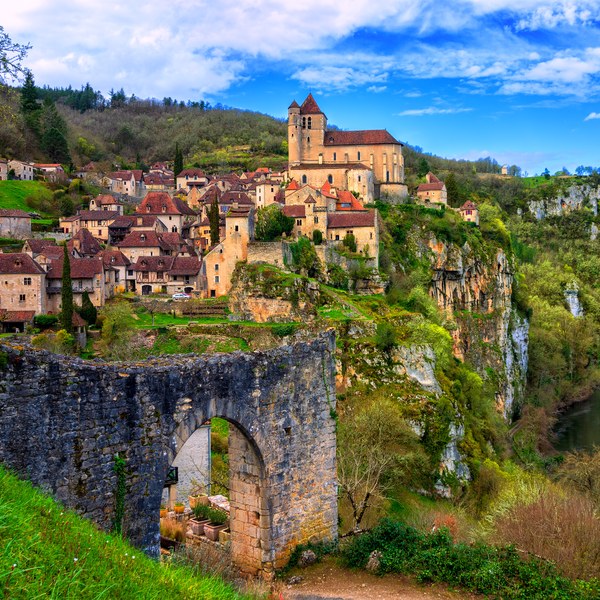
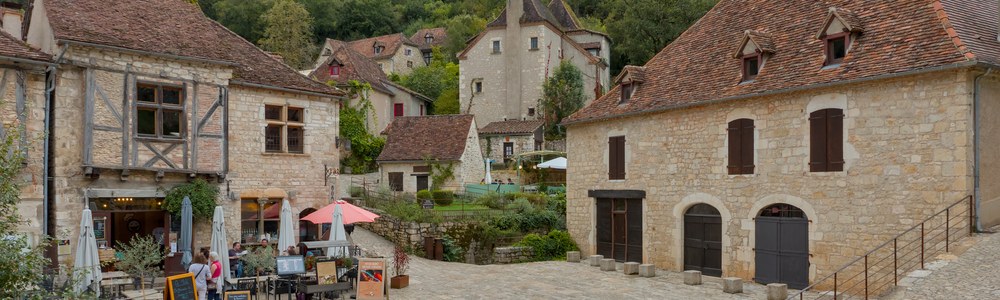
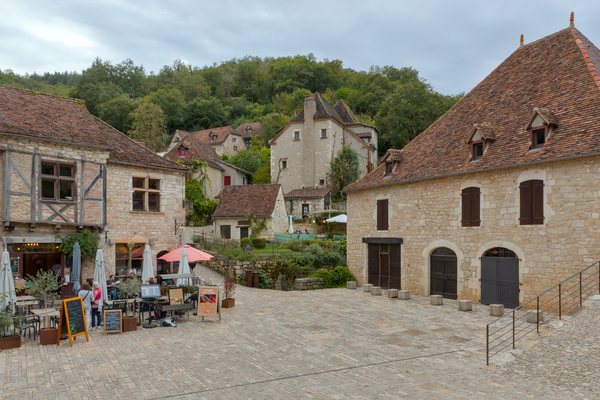
Saint-Cirq-Lapopie stands on a cliff high above the Lot, with steep streets, stone houses, a church rising above the rooftops and the castle ruins on the rock of La Popie at the top. In 2012 it was voted the French public’s favourite village, and the surrealist André Breton spent his summers here.
Further down the river lies Cahors, with the 14th-century Pont Valentré bridge and the vineyards around the town. Cahors wine is made mainly from Malbec and is known for its dark colour.
Goat’s cheese, truffles and dark wine
Rocamadour has given its name to a small, round goat’s cheese made on the farms in the area, with its own protected designation of origin. It is often eaten warm on a salad, or just as it is with a glass of wine.
The Lot is also truffle country, and in winter truffle markets are held in several of its towns. Together with duck, walnuts and the wine from Cahors, that makes for a cuisine much like the one you find in the Périgord, only a little more rustic.
Practical advice
You need a car for Rocamadour, Padirac and the Lot Valley. From Sarlat it takes about an hour to drive to Rocamadour, and roughly as long again south to Saint-Cirq-Lapopie.
Park in the valley below the village or at L’Hospitalet at the top, and use the lifts to avoid climbing all the stairs both ways. The streets are steep and cobbled, so good shoes are a must.
Spring and autumn are the best times to go. In summer it is very crowded, and many people choose to arrive early in the morning and move on before lunch.
Rocamadour with Sarlat as your base
Rocamadour works well as a day trip from Sarlat. Set off early, see the sanctuaries before the crowds arrive, do Padirac after lunch and drive back through the Dordogne Valley in the evening.
If you want to see the Lot Valley as well, it is worth spending a night in the area, for example in Cahors or in one of the villages along the river. The trip combines well with a day in the Vézère Valley north of Sarlat.
Four good ways to experience Rocamadour and the Lot Valley
The area can be experienced from the stairs, underground, from a cliff above the river and over a glass of wine. Here are four combinations that work well over one or two days.
Rocamadour from bottom to top
Start in the village, climb the staircase to the sanctuaries and carry on along the Way of the Cross to the castle. Take the lift back down if your legs have had enough.
- Three levels in one walk
- Views from the castle ramparts
- Come early in high season
A boat trip underground at Padirac
Go down into the great shaft and carry on by boat along the underground river. The visit takes a couple of hours and suits most people.
- A boat trip underground
- Cool even in summer
- Buy your ticket in advance
Saint-Cirq-Lapopie
Walk the steep streets up to the church, look down on the river far below and have lunch in the village. In the evening, when the day-trippers have gone, the village is at its loveliest.
- One of the most beautiful villages on the Lot
- Views over the river
- Park outside the village
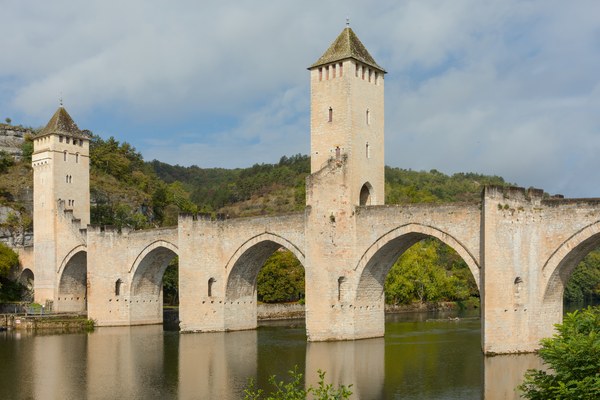
Cahors and its wine
Cross the Pont Valentré, explore the old town of Cahors and visit one of the wine estates in the valley west of the town to taste the dark Malbec wine.
- Medieval bridge from the 14th century
- Wine tasting in the Lot Valley
- A fine end to a round trip