
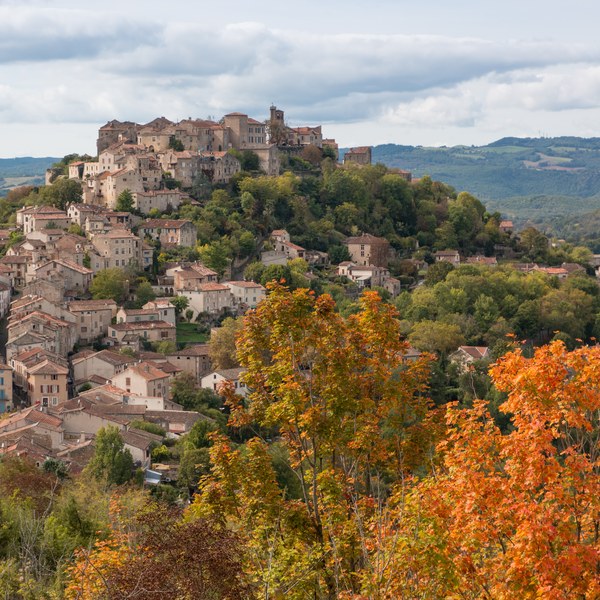
The most important thing first: Cordes lies approx. 28 kilometres from Albi, and there are no trains between Albi and Cordes. By car you can also reach Castelnau-de-Montmiral and Puycelsi. The shuttle up to the town runs April–November, and Les Médiévales and the guided tours are in summer. The prices and times in this guide are from the sources in November 2026.
Before you go – car, bus and the climb
- By car: from Albi it is approx. 28 kilometres and 36 minutes to Cordes. The villages around are spread out, and a car is the easiest option.
- Without a car: from Albi the liO bus 707 runs to Cordes from the bus station on the place Jean-Jaurès. The train stops at Cordes-Vindrac, 5 kilometres from Cordes, on the Toulouse–Aurillac line via Gaillac.
- The climb: from the place Jeanne-Ramel-Cals to the top it is 800 metres on foot on steep cobblestones, at least 20 minutes.
- Winter 2026/27: parking costs less from November to February, and the shuttle does not run in December–March. The Musée d'Art moderne et contemporain was closed in November 2026.
Cordes-sur-Ciel – the bastide from 1222
Cordes was founded on 4 November 1222 and recognised by the young Count of Toulouse, Raymond VII. The tourist office calls the town one of the first bastides in the region, and the association Les Plus Beaux Villages de France one of the oldest in Occitanie. The count's charter of liberties freed the inhabitants from serfdom, exempted their houses from tax and gave them full rights over their property.
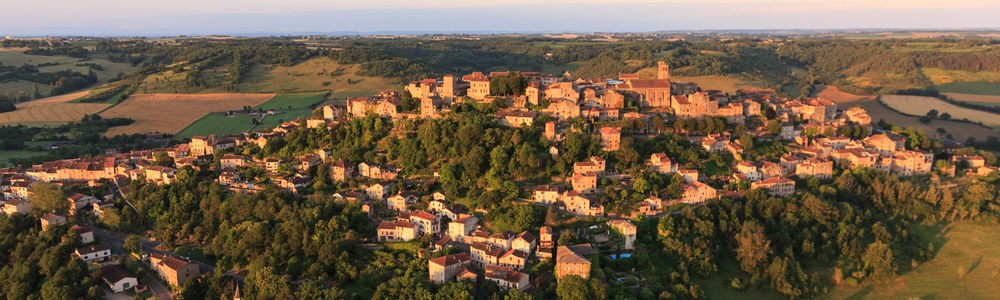
- Size: around 880 inhabitants.
- Labels: Cordes is a member of Les Plus Beaux Villages de France and of the “Grands Sites Occitanie” as “Cordes sur Ciel & cités médiévales”.
- The vote: according to press reports, Cordes won the TV vote “Village préféré des Français” on France 2 in 2014.
- Market: Saturday on the place de la Bouteillerie.
The tourist office for Cordes and the Gaillac area is called La Toscane Occitane.
The Gothic houses
The tourist office calls Cordes “la cité aux cent ogives”, the town of a hundred pointed arches. The houses were built from the last quarter of the 13th century to the early 14th century, with a golden age from 1270 to 1340, and the town has one of the largest collections of Gothic townhouses in the south of France. Seven of them stand along the Grand-Rue Raymond VII:
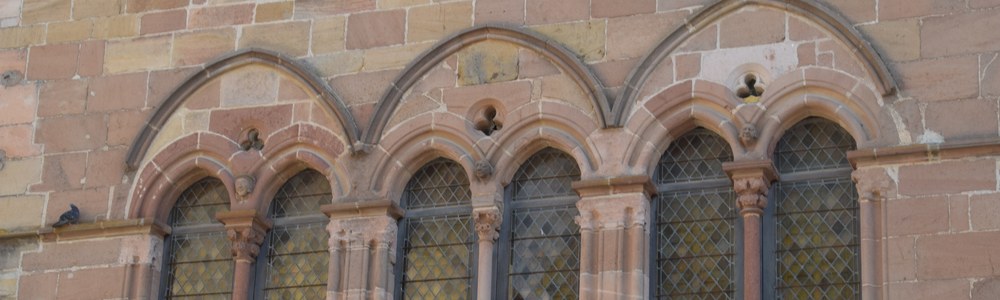
- Maison Prunet: from approx. 1270, in sandstone. It houses the Musée Les Arts du Sucre et du Chocolat.
- Maison du Grand Fauconnier: from after 1270, with six pointed arches and figures of falcons and dragons. The house holds the museum of modern art.
- Maison Fonpeyrouse: the façade measures 23.60 metres. The town hall and the tourist office are here, at Grand-Rue no. 34.
- Maison du Grand Veneur: with a frieze of hunting scenes.
- Maison Gaugiran from 1268–1269, Maison Ladevèze and Maison du Grand Écuyer, which has recently been restored.
The covered market hall and the well
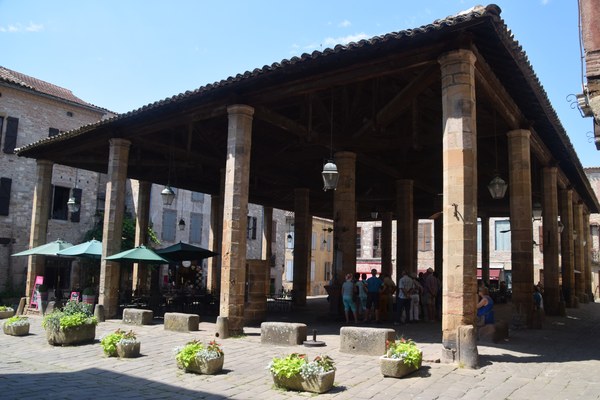
At the top of the town stands the covered market hall from the 14th century, with stone pillars and a timber roof. Under the market hall is a well which, according to the tourist office, is 113.47 metres deep.
Cordes is also home to the Jardin des Paradis, which has the “Jardin Remarquable” label.
The museums
- Musée d'Art moderne et contemporain: in the Maison du Grand Fauconnier, Grand-Rue no. 39, with over 150 works by artists including Yves Brayer, Picasso and Miró. From 6 euros. The museum was closed in November 2026.
- Musée Charles Portal: art, history and heritage from the area around Cordes. See museecharlesportal.fr.
- Musée Les Arts du Sucre et du Chocolat: in the Maison Prunet since 1989, started by the pastry chef Yves Thuriès, with a tea room.
Les Médiévales de Cordes and the summer
The medieval festival formerly called the Fête du Grand Fauconnier is now called Les Médiévales de Cordes. The Comité du Grand Fauconnier organises it every year around 14 July.
- 2026: 11–12 July. Free for those who come in costume, otherwise 5 euros. The date for 2027 has not been published.
- Tournois de chevalerie: a knights' tournament on 14–31 July 2027. The tourist office writes that the dates are to be confirmed.
- Festa Occitana: 14–15 August 2026.
- Guided tours: in July and August. For 2027 the tourist office gives 19 July–25 August, subject to change.
Parking, the climb and the shuttle
Cordes lies on top of the hill, and the streets are steep and cobbled. Park at the bottom and walk, or take the shuttle.
- Price: 6 euros per day 1 March–31 October and 2 euros per day 1 November–the end of February. No hourly rate. Free on Saturday mornings, when there is a market, and 30 minutes free in the blue zone.
- The car parks: the place de la Bouteillerie has 39 spaces, Saint-Crucifix 124 spaces and Les Tuileries approx. 10 free spaces on the top level. From Saint-Crucifix it is 800 metres and approx. 25 minutes to the centre.
- On foot: 800 metres on the Grand Rue de l'Horloge from the place Jeanne-Ramel-Cals, at least 20 minutes. The cobblestones are steep.
- The shuttle (Petit Train): April–November from the place de la Bouteillerie, on Saturdays from the place Jeanne-Ramel-Cals, to the Porte de la Jane. From there it is still a little uphill. Free under 5, and it takes wheelchairs.
- Motorhomes: the Aire Les Tuileries costs 8 euros per 24 hours and 6 euros for 8 hours, with card payment. Water and electricity are turned off November–March.
What is a bastide?
The bastides were new towns founded in the 13th century at the wish of a count, a king, a viscount or a monastery. The town was laid out to a fixed plan, with the market square in the middle and straight streets around it. The plots had a set use, and everyone paid the same tax under a contract. Around the square there are often arcades, which here are called “couverts”.
The waymarked trail GR 46 “Les Bastides albigeoises” is 114.6 kilometres long and starts in Penne.
Bastide or not – the villages around Cordes
Not all the villages around Cordes are bastides. Puycelsi is a fortified village, Penne and Bruniquel are castle villages, and Monestiés and Lautrec are medieval towns. The driving times are from Albi:
- Bastides: Cordes-sur-Ciel (approx. 36 minutes), Castelnau-de-Montmiral (approx. 36 minutes) and Lisle-sur-Tarn (approx. 28 minutes).
- Les Plus Beaux Villages de France: Cordes-sur-Ciel, Castelnau-de-Montmiral, Puycelsi, Lautrec and Monestiés in the Tarn, and Bruniquel in the Tarn-et-Garonne.
- Neither: Penne and Rabastens.
The full list is at Les Plus Beaux Villages de France. More villages are in The most beautiful villages in France.
Castelnau-de-Montmiral
Castelnau-de-Montmiral is a bastide that Raymond VII had built around 1220. It is a member of Les Plus Beaux Villages de France and has around 1,100 inhabitants.
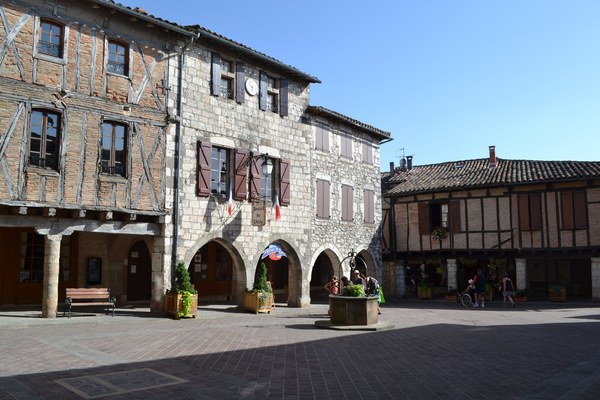
- Place des Arcades: the square with arcades, the well and the pillory. Market on Tuesday mornings.
- The church: Notre-Dame-de-l'Assomption from the 15th century has the reliquary cross of the Counts of Armagnac.
- From Albi: approx. 31 kilometres and 36 minutes by car. From Cordes it is 23 kilometres and approx. 25 minutes according to the tourist office.
Lisle-sur-Tarn
Lisle-sur-Tarn is a 13th-century bastide on the river Tarn, a river-port bastide. The square covers 4,425 square metres and is surrounded by arcades – the tourist office calls it one of the largest in southwest France.
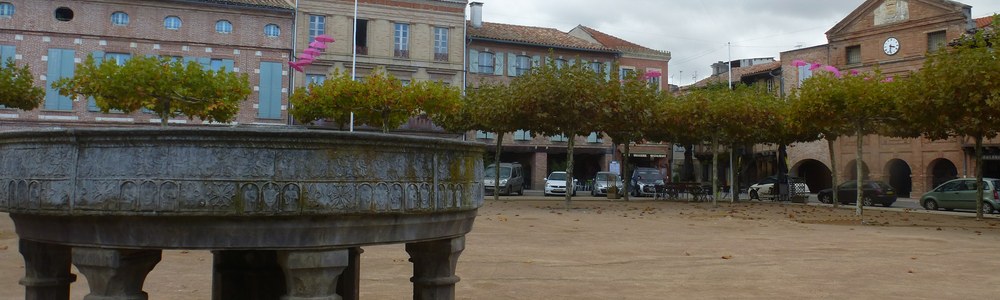
- The church: Notre-Dame-de-la-Jonquière.
- The museums: the musée Raymond Lafage and the musée de l'Art du chocolat.
- From Albi: approx. 32 kilometres and 28 minutes by car. The town is also on the Toulouse–Gaillac railway line.
Lisle-sur-Tarn is not a member of Les Plus Beaux Villages de France.
Puycelsi – a fortified village above the forest
Puycelsi lies on the edge of a plateau above the Forêt de la Grésigne. The village is not a bastide but a fortified medieval village, and it is a member of Les Plus Beaux Villages de France. It has around 460 inhabitants.
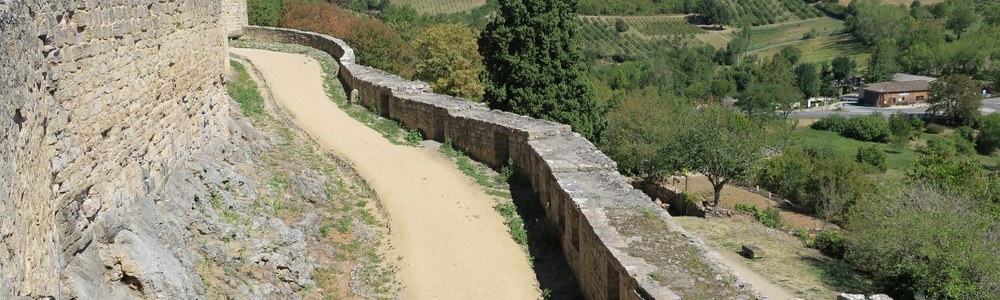
- The history: Puycelsi was given to the Count of Toulouse, Raymond V, in 1180 and taken by Simon de Montfort in 1211. The walls were demolished after the Treaty of Meaux-Paris in 1229.
- The legend: during a siege in 1386 the inhabitants are said to have paraded a pig on the walls, so that the enemy would believe they had enough food.
- To see: the church of Saint-Corneille and the rampart walk along the walls.
- From Albi: approx. 48 kilometres and 47 minutes by car. From Castelnau it is 13 kilometres and approx. 15 minutes.
The Forêt de la Grésigne
The Grésigne is a state forest of 3,500 hectares with Puycelsi to the south, Castelnau-de-Montmiral to the east and Penne to the north-west. The forest can be visited all year round, and in autumn you can hear the deer rut.
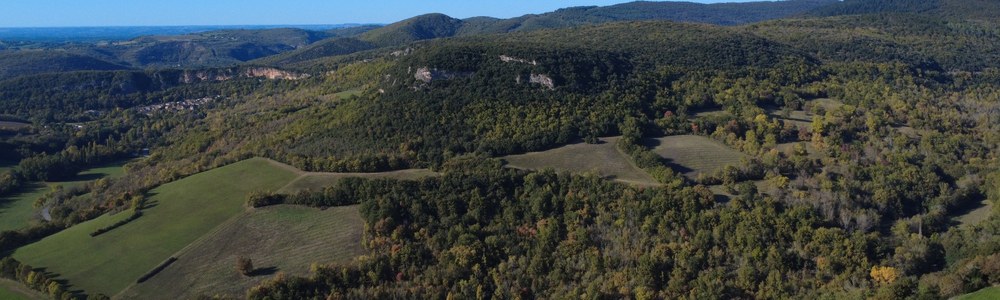
- Sentier de la Baronne: 13 kilometres.
- Château de Lagarde: 13 kilometres.
- Chemin de Gradille: 9 kilometres.
Penne and Bruniquel – the castle villages
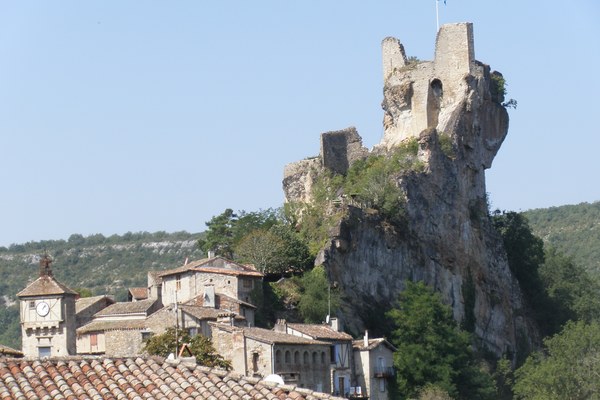
Penne has around 600 inhabitants and is a castle village. The castle is first mentioned in 825, and the ruin stands on a cliff above the gorges of the river Aveyron. The church was founded in 580. Penne is neither a bastide nor a member of Les Plus Beaux Villages de France. From Albi it is approx. 49 kilometres and 1 hour by car.
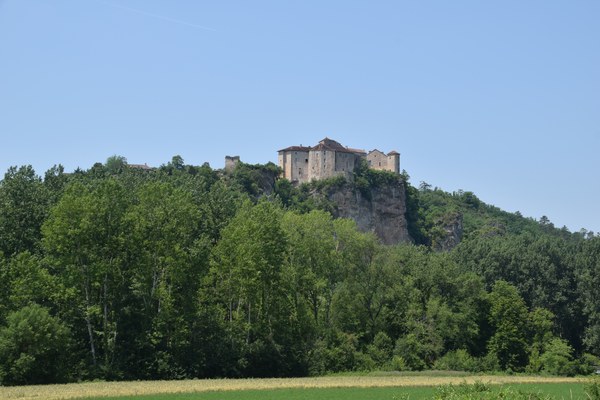
Bruniquel lies in the Tarn-et-Garonne and has around 640 inhabitants and two castles. The castles are associated with the 1975 film “Le Vieux Fusil”. The Bruniquel cave has ring structures made of 400 stalagmites, dated to 176,000 years ago, but the cave is closed to the public. Bruniquel is a member of Les Plus Beaux Villages de France. From Albi it is approx. 58 kilometres and 56 minutes by car.
Monestiés and Lautrec
Monestiés in the Ségala has around 1,400 inhabitants. A monastery here is mentioned in 936, and the bridge is from the 12th century. The chapelle Saint-Jacques has polychrome statues from the 15th century, and the town is home to the musée Bajèn-Vega. From Albi it is approx. 24 kilometres and 34 minutes by car.
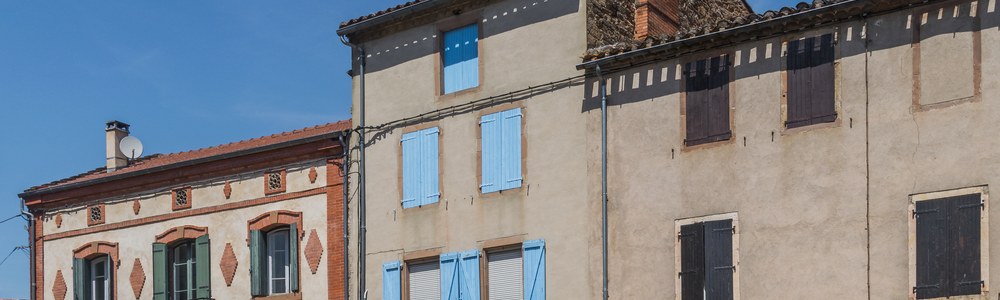
Lautrec has around 1,700 inhabitants and is known for its pink garlic, ail rose de Lautrec, which has the Label Rouge and IGP. The La Salette windmill is from 1688, and the collégiale Saint-Rémy from the 14th century. The family of the painter Henri de Toulouse-Lautrec came from here – more about the painter is in Great artists in France. From Albi it is approx. 31 kilometres and 36 minutes by car.
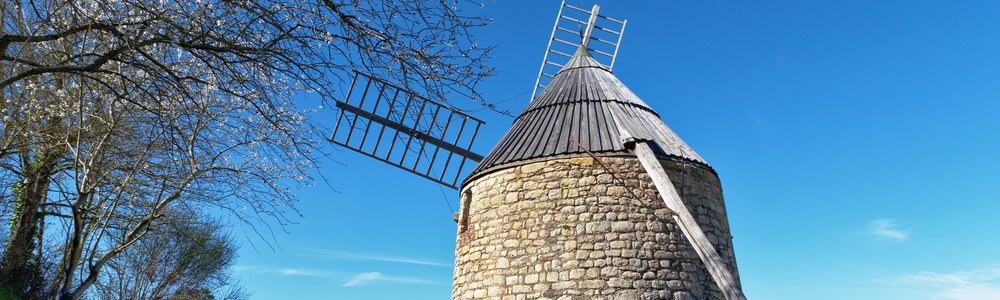
Both are members of Les Plus Beaux Villages de France, but neither of them is a bastide.
Rabastens
Rabastens on the Tarn has around 5,900 inhabitants. The church of Notre-Dame-du-Bourg has frescoes from the 14th and 15th centuries and is part of the UNESCO World Heritage Site “Chemins de Saint-Jacques-de-Compostelle en France”. Rabastens is neither a bastide nor a member of Les Plus Beaux Villages de France. From Albi it is approx. 42 kilometres and 33 minutes by car.
The Albigensian Crusade
The crusade against the Cathars lasted from 1209 to 1229 and took its name from Albi, but the town's bishop was Catholic, and the great sieges took place elsewhere, including Béziers, Carcassonne and Termes. After the crusade Albi became a powerful episcopal city, and UNESCO writes that the cathedral shows the power the Catholic clergy regained.
- Cordes and Castelnau: founded by Raymond VII in 1222 and around 1220, while the crusade was still going on.
- Puycelsi: taken by Simon de Montfort in 1211.
- Ambialet: Simon de Montfort took the castle and summoned the Count of Toulouse, Raymond VI, there.
The castles of the Corbières are in The fortresses of Languedoc.
When should you go?
- May–June and September: the shuttle runs, and there are fewer people than in July and August.
- July–August: Les Médiévales, the knights' tournament, guided tours and the most people.
- November–March: cheaper parking and quiet streets, but the shuttle only runs until the end of November, the museum of modern art was closed in November 2026, and water and electricity at the motorhome area are turned off.
Getting to Cordes-sur-Ciel
- By air: Toulouse-Blagnac is approx. 84 kilometres and 1 hour and 6 minutes by car from Albi. The car hire box on this page uses Toulouse.
- From the Nordic countries: the airport in Toulouse has its own pages for Oslo and Copenhagen with Norwegian, but the 2026/27 season is not listed there. According to a press release from the airport in December 2024, Norwegian was to fly from Oslo on Thursdays and Sundays in summer 2025 and from Copenhagen on Mondays and Fridays from April to October. Check with the airline.
- By car: from Toulouse it is 76 kilometres to Cordes via the A68, exit Gaillac/Cordes.
- By train: the TER line Toulouse–Aurillac stops in Gaillac and at Cordes-Vindrac, 5 kilometres from Cordes. From there, take the liO bus 707 or a taxi.
- From Albi: Albi is on the Toulouse–Rodez line, so there are no trains to Cordes. Take the liO bus 707 from the place Jean-Jaurès, or a car.
More about routes and round trips is in Road trips in France, and the city where the plane lands is in the travel guide to Toulouse.
Eating and sleeping near the bastides
Cordes has only two-star hotels. La Métairie lies below the town and has 23 rooms, a swimming pool and a restaurant, and the Hôtel Raymond VII has 8 rooms at the top of the town – check that it is open. In Castelnau-de-Montmiral, L'Auberge des Arcades serves food from the wood-fired oven on the arcaded square. The restaurant is recommended in the Michelin Guide, and the website lists dinner on Fridays and Saturdays. Four-star hotels and more restaurants are in Albi.
Two kilometres south-east of Cordes lies the three-star Le Moulin de Julien with 83 pitches, and by the Forêt de la Grésigne the four-star Le Chêne Vert in Castelnau-de-Montmiral. More campsites are in Camping in France.
Onward from the bastides
The cathedral, the Musée Toulouse-Lautrec and the Pont Vieux are in the travel guide to Albi. The vineyards between Cordes and the Tarn are in Gaillac wine, and the wines of the whole South West in the wine guide to Southwest France. Further south lies Carcassonne, and Toulouse has day trips to Albi and the wine regions.
4 days in Cordes-sur-Ciel and the bastides
Each day stands on its own, with Albi or Cordes as a base. In winter the villages are quiet – check the opening times before you go.
Cordes-sur-Ciel
Walk up the Grand Rue de l'Horloge from the place Jeanne-Ramel-Cals, or take the shuttle to the Porte de la Jane. See the houses along the Grand-Rue Raymond VII, the covered market hall and the well, and finish at the tea room in the Maison Prunet.
- The climb: 800 metres, at least 20 minutes
- The well: 113.47 metres deep
- Parking: 2 euros per day November–February
Castelnau-de-Montmiral and Puycelsi
Start on the Place des Arcades in Castelnau, ideally on a Tuesday when there is a market. Drive 13 kilometres on to Puycelsi, and walk the rampart walk along the walls.
- Castelnau: a bastide from approx. 1220
- Puycelsi: a fortified village, not a bastide
- Lunch: L'Auberge des Arcades on the square
The Grésigne and Penne
Walk one of the trails in the Forêt de la Grésigne in the morning, and drive to Penne on the north-west side of the forest. The castle ruin stands on the cliff above the Aveyron gorges.
- Chemin de Gradille: 9 kilometres
- Sentier de la Baronne: 13 kilometres
- Penne: the castle first mentioned in 825
Bruniquel or Lisle-sur-Tarn
Drive to Bruniquel and see the two castles. If you would rather have a shorter day from Albi, choose Lisle-sur-Tarn with its large square and Rabastens with its frescoes.
- Bruniquel: approx. 56 minutes from Albi
- Lisle-sur-Tarn: approx. 28 minutes from Albi
- Alternative: Monestiés and Lautrec