
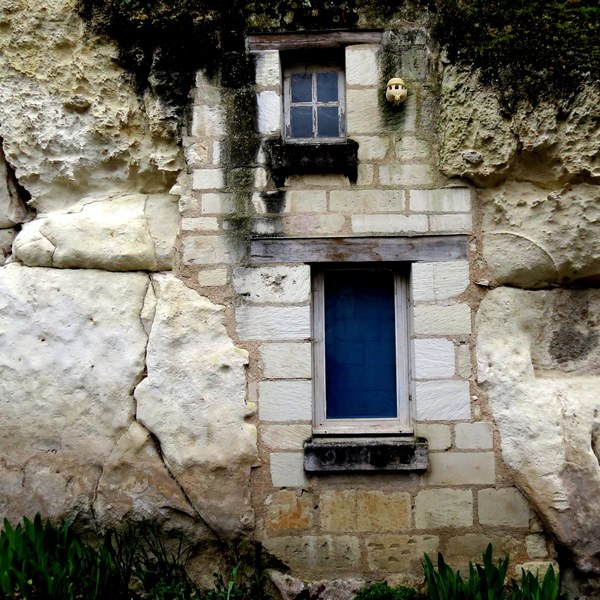
If you drive along the Loire east of Saumur, you will see doors and windows in the white rock face. The tourist office calls the underground network in the Saumurois unique in France. Some of it is a hotel or a workshop, some is a museum, and much of it is a wine cellar or a mushroom cave. Inside the rock it is 10–13 degrees all year round, so the caves suit a rainy day just as well as a heatwave.
Why tuffeau gave rise to cave villages
Along the Loire the bedrock is tuffeau, a pale limestone from the Cretaceous period. The soil above it is called “terres blanches du tuffeau”. Over the centuries people dug their way into the stone and used the spaces as homes, farms, chapels, quarries, grain silos, wine cellars, for growing button mushrooms, for drying apples and as shelters in wartime. Many of the wine cellars are old quarries: Louis de Grenelle lies in a 15th-century quarry, and at Gratien & Meyer the old passages were turned into cellars in the 19th century.
According to the wine trade body InterLoire, the wine houses settled here because the wine could be stored in the many tuffeau cellars and shipped onward on the river.
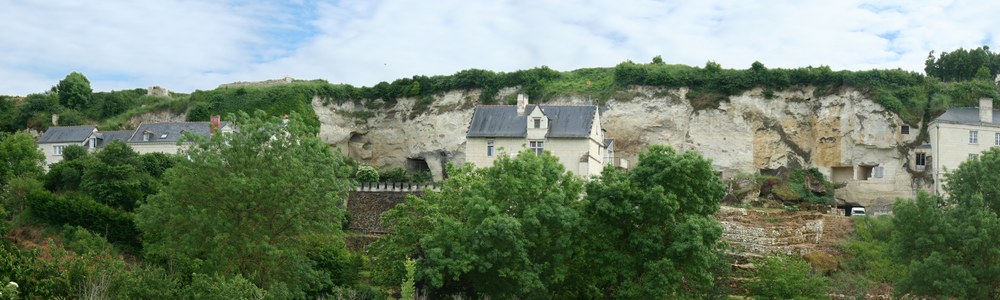
It is not tuffeau everywhere. Around Doué-la-Fontaine the caves, the sarcophagus quarries and the zoo are dug into falun, a shell sand from a sea that covered the area around 10 million years ago. The tourist office therefore distinguishes between two types:
- Cliff troglodytes (“de coteau”) around Saumur, dug horizontally into the rock face along the Loire – in Turquant, Souzay-Champigny, Parnay and Saint-Hilaire-Saint-Florent.
- Plain troglodytes (“de plaine”) around Doué-la-Fontaine, dug vertically downwards. First an open farmyard was excavated, then homes and outbuildings around it.
The troglodytes along the Loire
East of Saumur, the Loire à Vélo cycle route runs through Souzay-Champigny, Parnay and Turquant to Montsoreau. The stage from Candes-Saint-Martin to Saumur is 17 kilometres and is considered easy, but has a few hills between Turquant and Parnay. In Parnay, the Château de Parnay is on the tourist office’s list of wine cellars in troglodytes.
West of the centre, in Saint-Hilaire-Saint-Florent, the wine houses and the Musée du Champignon lie in the same cliff. It is 4–5 kilometres from the centre, and town buses 5 and 17 go there.
Turquant – craftspeople and dried apples in the rock
Turquant lies 9 kilometres east of Saumur. In the rue Château Gaillard a troglodyte hamlet has been restored as the “Village Métiers d’Art”, with craftspeople and a craft shop in season. It is free, and bus line 1 stops in Turquant.
Les Pommes Tapées du Val de Loire shows how apples were dried and flattened in ovens in the rock face. It was an industry in the 19th century that disappeared after the First World War. The guided tour takes an hour and costs 9.50 euros with a tasting (8.50 euros without) and 6 euros for children aged 6–14. Children under 6 go free. The site has a restaurant and gained an escape game in 2026. From 7 November to 13 December 2026 it is only open on Saturdays and Sundays from 10am to 5pm, and from 19 to 31 December every day.
Close by lies La Grande Vignolle, a manor house in the rock from the late 15th century with a 16th-century dovecote. The house can be visited on your own and free of charge, and Domaine Filliatreau sells wine there.
Rochemenier – the underground farms
The troglodyte village of Rochemenier in Louresse-Rochemenier lies 17 kilometres west of Saumur. The tourist office calls it the most complete troglodyte site in the Loire Valley. The museum consists of two old underground farms with living quarters and outbuildings, hundreds of tools and pieces of furniture, and an underground chapel. New in 2026 is the “Potager 1900”, a kitchen garden on the roofs.
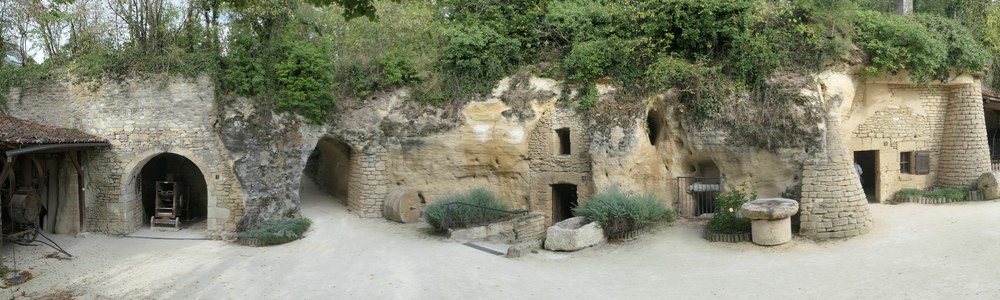
In the 2026 season (1 February–20 November) tickets cost 8.50 euros for adults, 6 euros for children aged 6–14 and 26 euros for a family of two adults and two children. Children under 6 go free. From 16 September to 20 November it is open Tuesday–Sunday from 10am to 5pm. Dogs must be carried in a bag or pushchair. Right next to the museum is the troglodyte hotel Rocaminori, and the restaurant Les Caves de la Genevraie serves fouées.
Dénezé-sous-Doué – the figures in the dark
In La Cave aux Sculptures in Dénezé-sous-Doué, hundreds of figures were carved into the rock face, in total darkness, by unknown artists between the 15th and 17th centuries. The tourist office calls it a giant comic strip in stone. What the figures mean has still not been established. The cave was given protected status by André Malraux.
In 2026 (10 April–20 September) admission cost 6.50 euros, reduced 5.50 euros. It is 13 degrees inside, and the cave is not accessible by wheelchair.
Doué-la-Fontaine and Les Perrières
Doué-la-Fontaine lies 17 kilometres south-west of Saumur, and here the caves are dug into falun. Le Mystère des Faluns is in the Caves des Perrières, monumental cellars with pointed arches like a Gothic church. A light and sound walk tells the story of the sea that covered Doué 10 million years ago. In 2026 it cost 8.50 euros for adults and 6 euros for children aged 5–11. It is 12 degrees in the cellars.
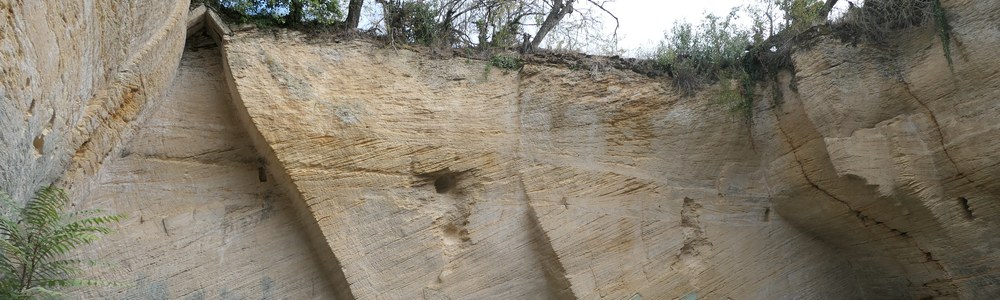
According to the tourist office, Troglodytes & Sarcophages is the largest underground sarcophagus quarry in Europe. The site shows 1,500 years of use: a sarcophagus workshop, a refuge, a grain silo, a chapel, a troglodyte farm and a shelter from the last war. There are only guided tours, and adults pay 6.50 euros and children aged 6–12 4 euros.
The Bioparc, the zoo in Doué, lies in old falun quarries and tunnels. The tourist office calls it the world’s only troglodyte zoo. It has 2,000 animals on 17 hectares. In 2026 it cost 29.50 euros for adults and 23 euros for children aged 3–10. Allow four hours.
Château de Brézé – the fortress beneath the château
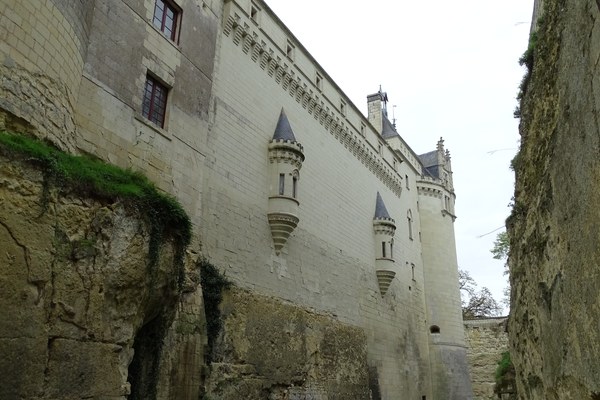
The Château de Brézé lies 10 kilometres south of Saumur. The château has been known since 1063 and was built between the 11th and 19th centuries. Beneath it lies a large fortress in the rock with living quarters, stables, a sentry walk, a drawbridge, silkworm breeding, a kitchen, cellars and large wine presses. According to the tourist office, the château has the deepest dry moats in Europe. Brézé also makes wine.
In 2026 it cost 13.70 euros for adults visiting on their own and 20.70 euros with a guide. Children aged 7–14 pay 7.40–14.40 euros, and children under 7 go free. From 1 October to 31 December it is open every day from 10am to 6pm. Underground it is 12 degrees. It is not suitable for pushchairs, and according to the tourist office it can be difficult if you suffer from claustrophobia or have reduced mobility.
The mushroom caves
The caves were also used for growing mushrooms. The tourist office writes that the area around Saumur accounts for almost 80 per cent of the production of champignon de Paris, but gives no year or source. Three places show the growing:
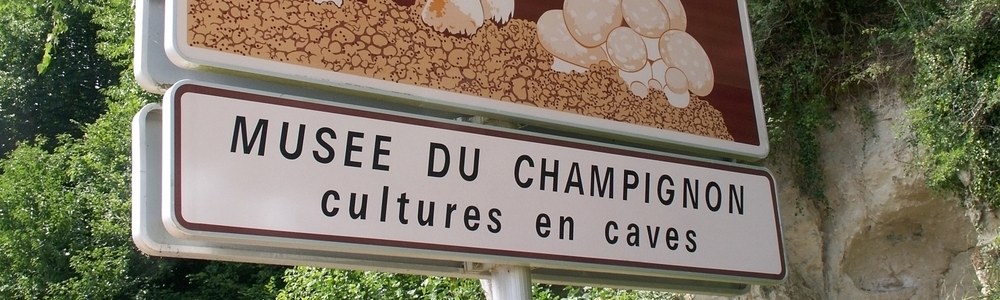
- Musée du Champignon on the route de Gennes in Saint-Hilaire-Saint-Florent is a working mushroom farm. The tourist office calls it the largest exhibition of wild mushrooms in Europe. Adults 9 euros, children aged 6–17 7 euros, family 30 euros, under-6s free. 300 metres away, Pierre et Lumière shows around 20 Loire monuments in miniature, carved in tuffeau by the sculptor Philippe Cormand. There is a combined ticket.
- La Champignonnière du Saut aux Loups in Montsoreau grows oyster mushrooms, shiitake and champignon de Paris in tuffeau passages. The shop is in old rock dwellings, and the restaurant serves galipettes. Adults 8.50 euros, children 6.50 euros, under-4s free. It is 13 degrees inside.
- Cave Vivante du Champignon in Le Puy-Notre-Dame, around 20 kilometres south of Saumur, lies in 16th-century troglodyte dwellings. Champignon de Paris and wild forest mushrooms are grown here, and there are fossils and wine tasting. Adults 8.50 euros, children aged 6–16 6.50 euros, audio guide in English.
The prices applied to the 2026 season. Galipettes are large button mushroom caps filled with rillettes, goat’s cheese or snail butter.
The wine cellars in the tuffeau
The sparkling wine from Saumur is matured in cellars in the rock. It is made with a second fermentation in the bottle, and Saumur Fines Bulles has been an appellation in its own right since 1957. Crémant de Loire, since 1975, is made along the Loire from Touraine to Anjou. It is not champagne – only wine from Champagne may use that name. It is 12–14 degrees in the cellars all year round, so bring a jacket.
- Ackerman (1811), Saint-Hilaire-Saint-Florent: a circuit of around 500 metres underground with art installations, 45 minutes to an hour, all on one level and accessible by wheelchair. 9 euros, ages 10–17 6 euros with alcohol-free grape juice, under-10s free.
- Bouvet-Ladubay (1851), Saint-Hilaire-Saint-Florent: kilometres of cellars, over 1,000 oak barrels and “la Cathédrale Engloutie” with 35 large sculptures. 6 euros until the end of 2026 and 7 euros in 2027, under-14s free.
- Langlois, Saint-Hilaire-Saint-Florent: views over the château and the Loire, and visits with a carriage ride through the vineyard. From 7 euros.
- Veuve Amiot (1884), Saint-Hilaire-Saint-Florent: a guided tour of the cellars for 5 euros in 2027, under-14s free.
- Gratien & Meyer (1864), route de Montsoreau east of the town: old tuffeau passages and views over the Loire. 5–7 euros in 2027.
- Louis de Grenelle (1859), in the middle of Saumur: 12 metres underground in a 15th-century quarry, with 4 million bottles. The only wine house you can reach on foot from the centre. 6 euros in 2027, under-16s free.
The wine cellars and the troglodyte sites have free parking. You will find more about the wines of the region in the guide Wine in the Loire Valley.
Eating and sleeping in the rock
Several restaurants are in troglodytes, among them Bistroglo, Le Saut aux Loups, Les Cathédrales de la Saulaie, Les Caves de la Genevraie, Les Caves de Marson, Les Nobles Fouées, Les Pieds Bleus and L’Hélianthe. They often serve fouées, small breads baked in a wood-fired oven and filled with local produce, and galipettes. None of them is in the Michelin Guide.
If you want to sleep in the rock, the Demeure de la Vignole in Turquant (three stars) has four rooms in the rock, a swimming pool carved out of the rock and heated to 28 degrees, and a spa. Rocaminori in Louresse-Rochemenier (three stars) has rooms wholly or partly in the rock, right next to the Rochemenier museum. The tourist office also sells the package “Château, troglo, dodo” from 121 euros per person.
Season – when the caves are open
Most of the troglodyte sites are open from February–April to November. In 2026 Rochemenier was open 1 February–20 November, the Musée du Champignon and Saut aux Loups 7 February–11 November, the Cave Vivante du Champignon 1 April–27 September and the Cave aux Sculptures 10 April–20 September. The dates for 2027 must be checked with each site.
The wine cellars are open for much of the year, and in July and August two extra summer buses run to the sights. May–June and September give you open sites without the biggest summer crowds.
Practical advice
Temperature: In the caves it is 10–13 degrees and in the wine cellars 12–14 degrees all year round. Bring a jacket, even in summer.
Shoes and accessibility: Wear shoes you can walk in on stone floors. Ackerman has the whole circuit on one level and is accessible by wheelchair. The Cave aux Sculptures is not, and Brézé is not suitable for pushchairs.
Children: The Bioparc is an obvious choice, and Pommes Tapées has an escape game. Children under 6 get into Rochemenier and the Musée du Champignon free, and under-7s get into Brézé free. At the wine houses children often go free – at Ackerman, 10–17-year-olds get grape juice.
Transport: Along the Loire you can get a long way by bike or bus: line 1 goes to Turquant and Montsoreau, lines 5 and 17 to Saint-Hilaire-Saint-Florent, line 16 to Doué-la-Fontaine and line 2 to Brézé. For Rochemenier and Dénezé-sous-Doué you need a car.
The troglodytes with Saumur as a base
Saumur lies midway between the two troglodyte areas: Turquant and Montsoreau to the east, Rochemenier and Doué-la-Fontaine to the west and south-west. The town has the château above the Loire and the wine houses in Saint-Hilaire-Saint-Florent. From Montsoreau it is a short trip on to Fontevraud Abbey, and if you want to see more of the river, we have a separate guide to the Loire Valley.
4 days among the troglodytes
With four days you have time for both the cliffs along the Loire and the plains around Doué. Here is a route with Saumur as the starting point – a car is easiest, but you can manage the first day by bus or bike.
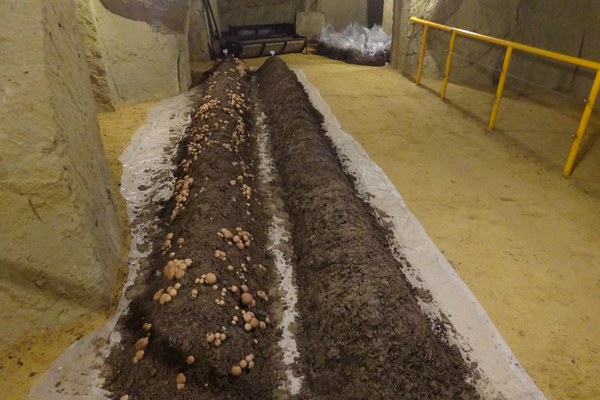
Mushrooms and bubbles in Saint-Hilaire-Saint-Florent
Start at the Musée du Champignon and see the miniature monuments of Pierre et Lumière 300 metres away. Finish in the cellar of one of the wine houses, for example Ackerman or Bouvet-Ladubay.
- 4–5 kilometres from the centre
- Bus lines 5 and 17
- Combined ticket for mushrooms and miniatures
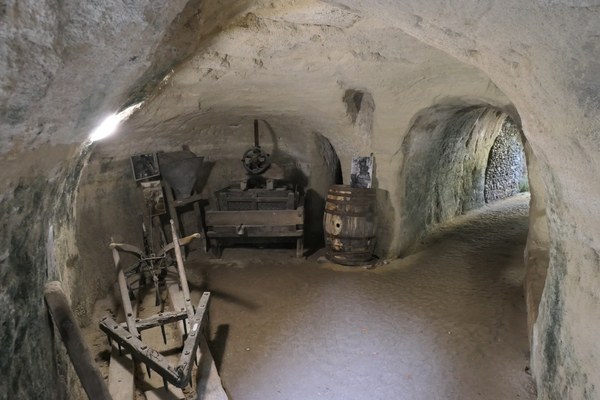
Rochemenier and Dénezé-sous-Doué
Walk through the two farms and the underground chapel at Rochemenier, and drive on to the figures in La Cave aux Sculptures. Eat fouées at Les Caves de la Genevraie.
- Rochemenier: 17 kilometres west of Saumur
- Cave aux Sculptures: open April–September
- Car needed
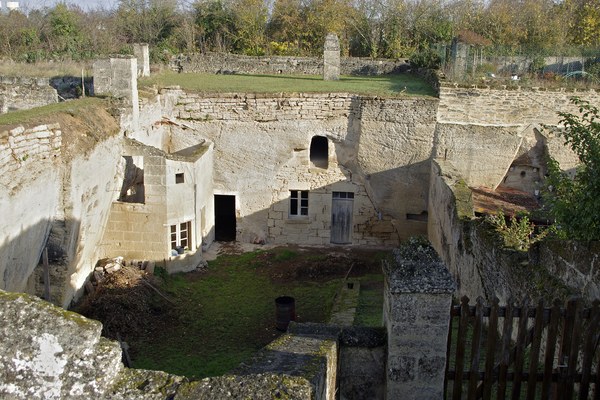
Doué-la-Fontaine
Choose between the Bioparc and a combination of Le Mystère des Faluns in the Caves des Perrières and the guided tour of Troglodytes & Sarcophages.
- Bioparc: allow four hours
- The sarcophagus quarry: guided tours only
- Bus line 16 from Saumur
Brézé, Turquant and Montsoreau
See the fortress beneath the Château de Brézé in the morning. Then drive to Turquant for the craftspeople and the dried apples, and finish with mushrooms and galipettes at Saut aux Loups in Montsoreau.
- Brézé: 10 kilometres south of Saumur
- The Village Métiers d’Art is free
- 12–13 degrees in the caves