
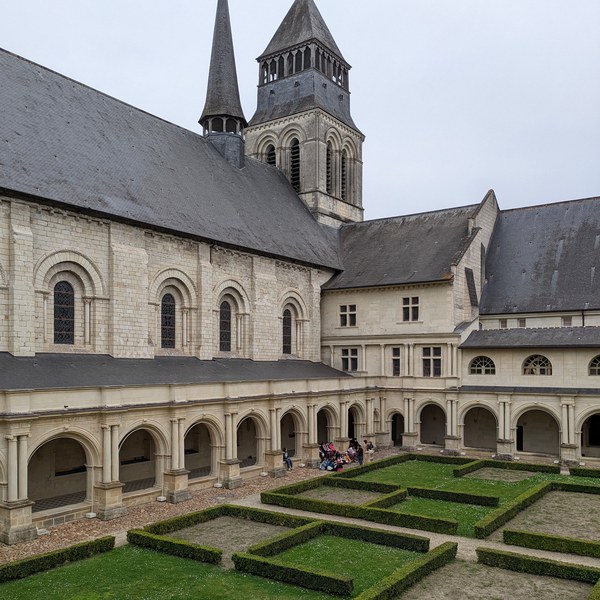
Fontevraud is more than a church with royal tombs. The abbey was led by women for almost 700 years, was one of the harshest prisons in France for a century and a half, and is today a cultural centre. Allow at least three hours, and ideally a whole day if you also want to see the museum and the village.
One of the largest monastic complexes in Europe
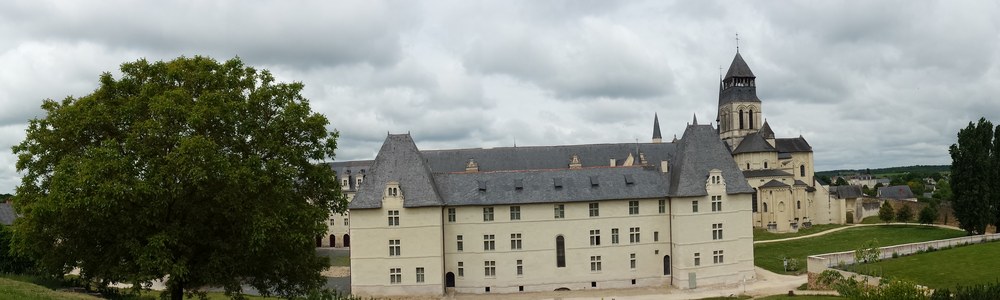
The abbey calls itself the largest monastic city in Europe, and the tourist office calls it one of the largest monastic complexes in Europe. The site has three parts: the abbey itself, the museum of modern art and Fontevraud L’Ermitage, the hotel and restaurant in the abbey. The abbey lies within the Val de Loire World Heritage Site, which was added to the UNESCO list in 2000.
The abbey recommends allowing three hours for the visit.
The history – abbesses, prison and cultural centre
In 1101 the itinerant preacher Robert d’Arbrissel settled here with a community of men and women. Under the protection of Count Fulk V of Anjou he founded a double monastery for monks and nuns, inspired by the Rule of Saint Benedict. The whole community, the men included, was led by an abbess. For almost seven centuries 36 abbesses sat here, from the high nobility and sometimes of royal blood.
Fontevraud became the mother house of the Fontevrist order, with priories from England to Spain. In the 17th century the abbess Gabrielle de Rochechouart was the sister of Madame de Montespan, the favourite of Louis XIV, and Louis XV sent his four youngest daughters here to be brought up. During the Hundred Years’ War the abbey almost disappeared, but in the 15th and 16th centuries it was rebuilt under five abbesses from the Bourbon family.
The last abbess was driven out in 1792. After twelve years of decay and looting, the abbey was turned into a central prison by a decree from Napoleon, and after ten years of conversion work the first prisoners arrived in 1814 – men, women and children from nine départements. There were up to around 2,800 prisoners, and the abbey itself calls it one of the harshest prisons in France. The prison closed in 1963.
The restoration of the church and the kitchen began early in the 20th century. In 1975 Fontevraud joined the Centres Culturels de Rencontre network, and today there are artists’ residencies, exhibitions and concerts here.
The Plantagenet tombs
Henry II, King of England from 1154, died in Chinon on 6 July 1189. He had actually wanted to be buried at Grandmont in the Limousin, but Eleanor of Aquitaine had him buried at Fontevraud. The abbey was to become for the Plantagenet family what Saint-Denis was for the French kings. Richard the Lionheart was buried here in 1199.
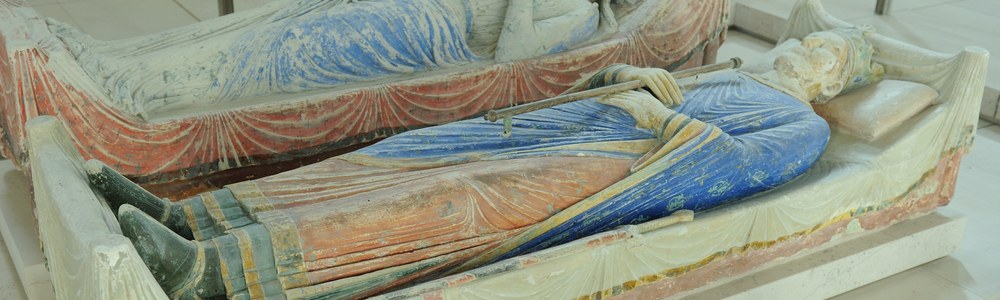
In the abbey church lie four tomb effigies, “gisants”: Henry II, Eleanor of Aquitaine, Richard the Lionheart and Isabella of Angoulême. Before she died, Eleanor commissioned painted effigies in tuffeau of herself, Henry II and Richard. Eleanor was Queen of France from 1137 and of England from 1154, and she died in Poitiers on 31 March 1204, around 80 years old.
Isabella of Angoulême, the wife of King John, was a nun at Fontevraud towards the end of her life and was buried here in 1249 – first in the chapter house, later in the church at the wish of her son Henry III. Henry III’s heart was given to Fontevraud, but his body lies in Westminster. King John is not buried here, but in Worcester Cathedral.
The abbey church and the cloister
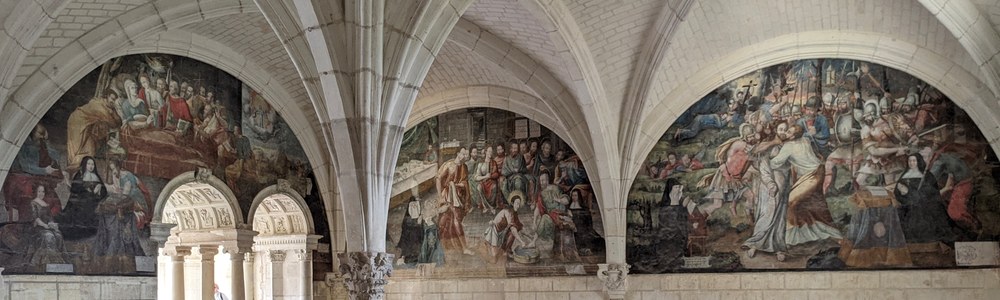
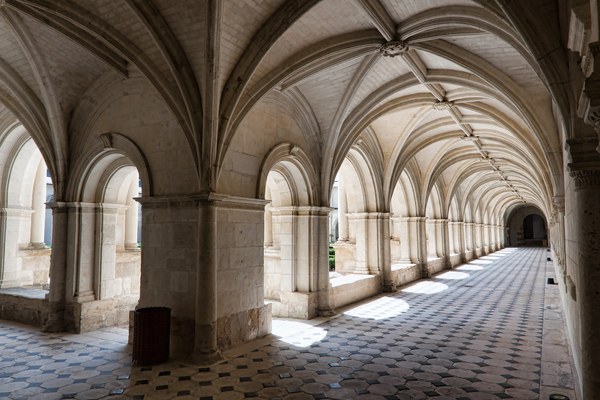
The abbey church, the Grand Moutier, is richly decorated from the Middle Ages. In the 17th century it was given painted chapels, choir stalls and a grille between the nuns’ choir and the monks’ choir. The cloister links the church, the chapter house and the communal rooms, such as the refectory and the dormitories.
Around the abbey there are art installations by, among others, François Morellet, Les Frères Chapuisat and Laure Forêt, and the church has been given six new bells, “La Ronde”. For simple refreshments there is La Terrasse Gourmande in the old orangery.
The Romanesque kitchen
The building with its many chimneys has been given many explanations over the years – a baptistery, a “lantern of the dead” and a hideout for the bandit Évraud. An archaeological investigation in 2020 confirmed that it was a kitchen.
The museum of modern art
The Musée d’Art moderne opened on 19 May 2021 in the former “Fannerie”, with its entrance from the main courtyard. It is based on the gift from Martine and Léon Cligman and has over 800 works: over a hundred paintings from the 19th and 20th centuries by, among others, Toulouse-Lautrec, Corot, Delaunay, Juan Gris, Rouault, Soutine and Bernard Buffet, almost 300 drawings, sculptures by Degas and Derain, 14 works by Germaine Richier, 88 glass works by Maurice Marinot, and antique and non-European objects.
The 2027 summer exhibition puts the collection in dialogue with the Centre Pompidou and other collections, from 22 May to 1 November. You cannot take bags, food or drink into the museum, but there are lockers at the entrance to the abbey. The museum is accessible by wheelchair, the abbey only partly.
Opening times and prices
From 2 November to 18 December 2026 the abbey and the museum are open from 10am to 6pm every day except Tuesday. From 19 December to 3 January they are open every day from 10am to 6pm, but closed on 25 December and 1 January. From 28 November until the end of the Christmas holidays they are open until 7pm on Wednesdays and Saturdays (not 12 December). Ticket sales and admission stop an hour before closing.
Until the end of 2026 the abbey costs 13 euros (reduced 7.50 euros), the museum 8 euros (reduced 5 euros) and both 17 euros (reduced 10.50 euros). A guided tour of around an hour costs 5 euros extra. Everyone under 18 and students under 25 get in free, whatever their nationality. If you come by bike, bus or train, you get a partner price – show your bike helmet or that day’s ticket. Tickets can be exchanged but not refunded.
According to the tourist office, a ticket for the abbey and museum costs 17 euros in 2027 from 2 January to 21 May and from 2 November, and 19.50 euros from 22 May to 1 November. Fontevraud had not published the 2027 prices itself when we wrote this.
Staying and eating in the abbey
Fontevraud L’Ermitage is the only hotel inside the abbey complex. It has four stars and 54 rooms in the old priory of Saint-Lazare, 38 rue Saint-Jean de l’Habit, and has been awarded a “Clef Michelin”. Guests can walk in the abbey in the evening when the other visitors have left. The hotel’s car park is in the rue Saint-Jean de l’Habit, 150 metres away.
The restaurant Fontevraud L’Ermitage has one Michelin star and is the nearest starred restaurant to Saumur. The head chef is Thibaut Ruggeri, the interior was designed by Patrick Jouin and Sanjit Manku, and the vegetables come from the restaurant’s own garden.
A cheaper alternative is the Hostellerie La Croix Blanche (three stars), a coaching inn from 1696 right opposite the abbey, with a bistro, a swimming pool and bike hire. The village also has the Domaine de Mestré (three stars).
The village of Fontevraud-l’Abbaye
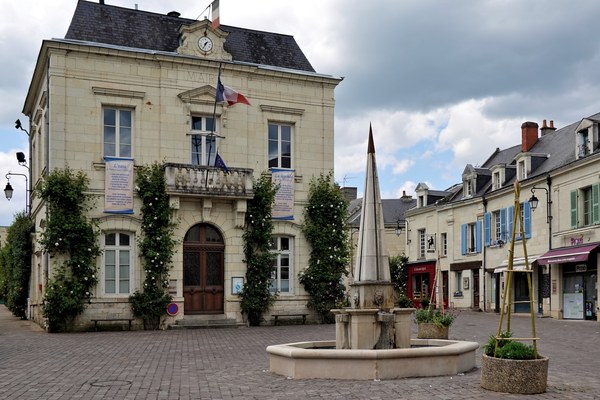
The village around the abbey is one of Les Plus Beaux Villages de France and lies where Anjou, Poitou and Touraine meet. The tourist office has its own information office here. For families there is the “Circuit patrimoine” walk about the relationship between the village and the abbey. The booklet costs 1 euro from the tourist office and the abbey, and can be downloaded free of charge from the Loire-Anjou-Touraine nature park.
On the road between Fontevraud and Montsoreau lies the soap maker Martin de Candre with the museum “Quand le savon fait sa pub”.
Montsoreau – the château on the Loire
Montsoreau lies 6 kilometres from Fontevraud and 11 kilometres from Saumur, and is also one of Les Plus Beaux Villages de France. The houses are of white tuffeau with slate roofs. The château was built in 1450 by Jean II de Chambes, an adviser to Charles VII and Louis XI, and became famous through Alexandre Dumas’s novel “La Dame de Monsoreau”. The château describes itself as the only Loire château built in the riverbed itself.
Since 2016 the château has been a museum of contemporary art with the collection of the collector Philippe Méaille. According to the tourist office, it is the world’s largest collection of works by the artists’ collective Art & Language. From the terraces 35 metres above the ground you can see all around you in every direction. In 2026 it cost 12 euros for adults and 8 euros for children, and from 1 October to 31 December it is open every day from 12 noon to 6pm, except on public holidays.
On Sunday mornings there is a market from 8am to 1pm on the place du Mail with 15–20 producers and views over the Loire. On the same square is Ververt, a Michelin-recommended restaurant with traditional dishes. Montsoreau also has the mushroom cave Saut aux Loups – read more in The troglodytes of the Loire Valley.
Candes-Saint-Martin – where the Vienne meets the Loire
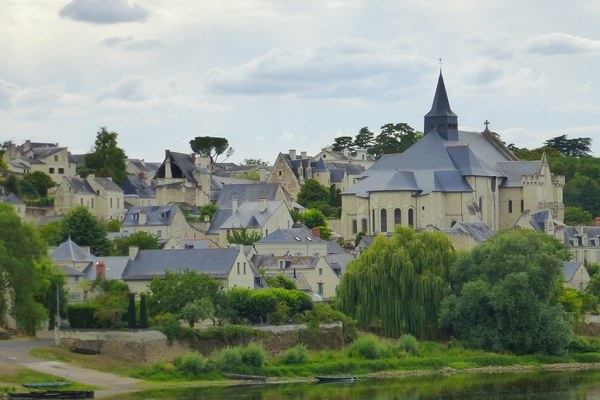
Just east of Montsoreau, in the neighbouring département of Indre-et-Loire, lies Candes-Saint-Martin. It too is one of Les Plus Beaux Villages de France. The village is an old fishing and river port at the confluence of the Vienne and the Loire, with houses and the collegiate church of Saint-Martin in white tuffeau.
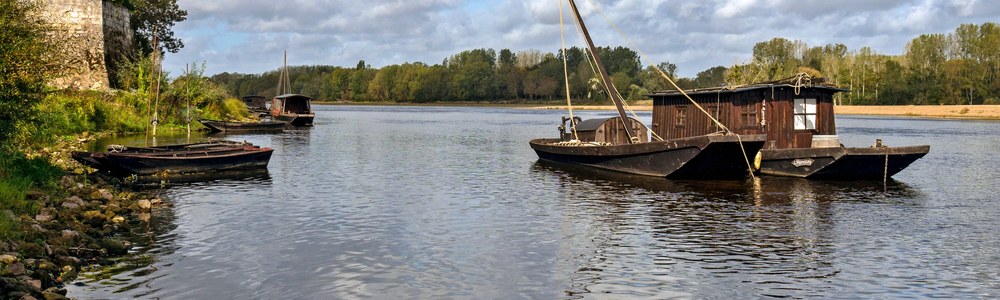
Boat trips in traditional river boats leave from the port, and in the park of the Château de Candes is the Street Art Parc. Candes is also the starting point of the Loire à Vélo stage to Saumur, 17 kilometres via Montsoreau, Turquant and Parnay.
Practical advice
By car it takes 15 minutes from Saumur, 55 minutes from Tours, an hour from Angers and around 3 hours and 15 minutes from Paris. From Saumur you can also take the Ogalo town buses. There are no direct trains from Paris to Saumur: you change at Saint-Pierre-des-Corps near Tours or in Angers.
By bike you follow the Loire à Vélo to Montsoreau and take the 6-kilometre link on minor roads to Fontevraud. The abbey has three free car parks: place du 8 Mai 1945 (with chargers), rue du Logis Bourbon and place du Grand Clos. Animals are not allowed, except guide dogs and assistance dogs.
Fontevraud with Saumur as a base
Saumur is the natural base, with the château, the wine cellars and the Cadre noir. With a full-price ticket from the châteaux of Brézé, Montreuil-Bellay or Montsoreau you get a partner price at the abbey, so it is easy to combine them. If you want to see the caves and the wine cellars in the rock around the town, we have a separate guide to the troglodytes of the Loire Valley. You will find more châteaux in France’s most beautiful castles.
4 days around Fontevraud
The abbey, the village and the two neighbouring villages on the Loire are well suited to four relaxed days. Here is a route with Fontevraud or Saumur as a base.
The abbey and the royal tombs
Join a guided tour, see the four tomb effigies in the abbey church, walk round the cloister and finish in the Romanesque kitchen.
- Allow three hours
- Guided tour: 5 euros extra
- Free for under-18s
The museum and the village
Spend the morning in the museum of modern art and the afternoon on the “Circuit patrimoine” in the village. In summer you can finish with Les Étoiles de Fontevraud.
- Over 800 works in the museum
- The walk booklet: 1 euro
- Evening walk in July and August
Candes-Saint-Martin
Walk up to the collegiate church of Saint-Martin, take a trip in a traditional river boat from the port and see the Street Art Parc in the château park.
- The confluence of the Vienne and the Loire
- Boat trips from the port
- Start of the Loire à Vélo towards Saumur
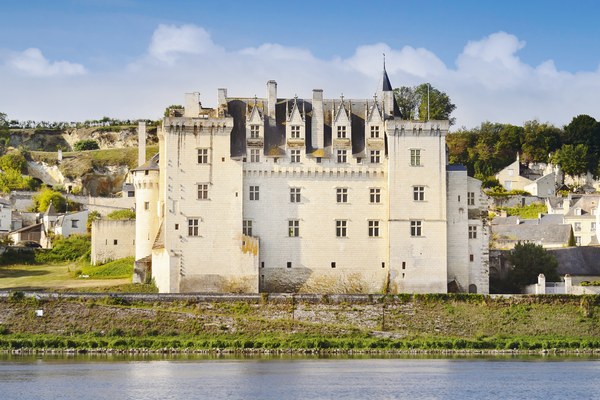
Montsoreau on a Sunday
Go to the Sunday market on the place du Mail, have lunch at Ververt and see the contemporary art and the view from the terraces of the château.
- Market on Sundays from 8am to 1pm
- The château: 12 euros for adults in 2026
- 6 kilometres from Fontevraud