
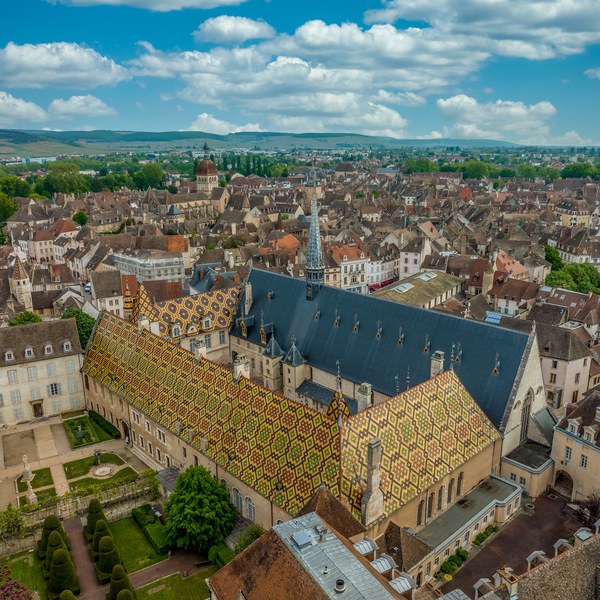
Most people come to Beaune for the wine, but the first place many of them head for is a hospital. The Hôtel-Dieu was built for the poor and the sick, and today the Hospices de Beaune owns a wine estate whose wine is sold at auction every November. The proceeds still go to the town’s hospital.
The history since 1443
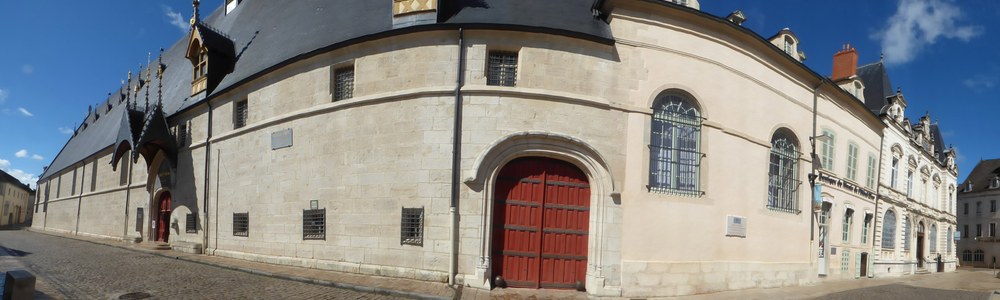
The Hôtel-Dieu was founded on 4 August 1443 by Nicolas Rolin, chancellor to the Duke of Burgundy, and his wife Guigone de Salins. They wanted to build a “palais pour les Pôvres”, a palace for the poor. The chapel was consecrated on 31 December 1451.
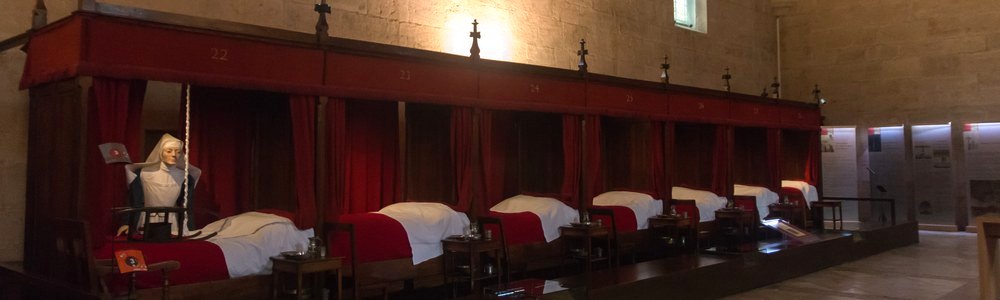
From 1459 the hospital was run by the Dames Hospitalières, and it remained a hospital until 1971. Hospital services then moved to the new Philippe le Bon hospital outside the town walls. The building was listed as a monument historique as early as 1862.
Many guides say that the Hospices de Beaune was founded in 1451 or 1452. The correct year is 1443 – 1451 is the year the chapel was consecrated.
Visiting the Hôtel-Dieu
The Hôtel-Dieu is open every day. From 16 November to 31 March the opening hours are 9.00–12.30 and 14.00–18.30, and from 1 April to 15 November it is open 9.00–19.30 without closing for lunch. On New Year’s Day and Christmas Day it opens at 14.00. The ticket office closes one hour before closing time, and a visit takes about an hour.
The standard ticket cost 12.50 euros for adults in 2026, 9.50 euros at the reduced rate and 6.25 euros for children and young people aged 6 to 17. Children under 6 go free but must be registered. A family ticket for two adults and two children, the “Pass Tribu”, costs 30 euros. There are also more expensive tickets that include more. If you have a TER train ticket to Beaune that is less than 48 hours old, you get the reduced rate.
The Hospices recommends booking online. The address is 2 rue de l’Hôtel-Dieu. The programme for 2026 is called “MOUVEMENT(S)” and is the first year in a series of three.
The Last Judgement polyptych – check before you go
The Hôtel-Dieu’s best-known work of art is the “Last Judgement” polyptych by Rogier van der Weyden, painted between 1443 and 1451. It is not a triptych, as is often written: the work had nine wings, and six of them are painted on both sides, making 15 painted panels in all. Opened out, it is 548 centimetres wide.
The Hospices and the French national restoration centre C2RMF have an agreement on restoration for 2025–2029. From September 2026 the work was due to be moved to the C2RMF laboratories for its first thorough restoration since 1875–1878. We have not been able to confirm what is on display in the room now, so ask the Hôtel-Dieu before you go if you are coming to see the polyptych. A touch screen in the Salle Saint-Louis shows all 15 panels.
The wine estate
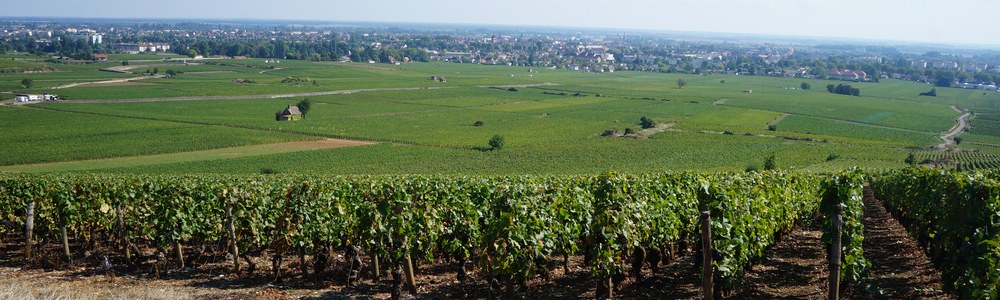
The Hospices de Beaune owns a wine estate of more than 60 hectares. Around 80 per cent is grand cru and premier cru. About 50 hectares are Pinot Noir and 10 hectares Chardonnay, mostly in the Côte de Beaune and Côte de Nuits, but also in Chablis, Pouilly-Fuissé and the Mâconnais. The whole estate is certified organic.
The wine auction in November
The wine auction is held on the third Sunday in November in the Halles de Beaune. The 166th auction was scheduled for Sunday 15 November 2026 at 14.30. Sotheby’s has run the auction since 2021, taking over from Christie’s, which had run it since 2005.
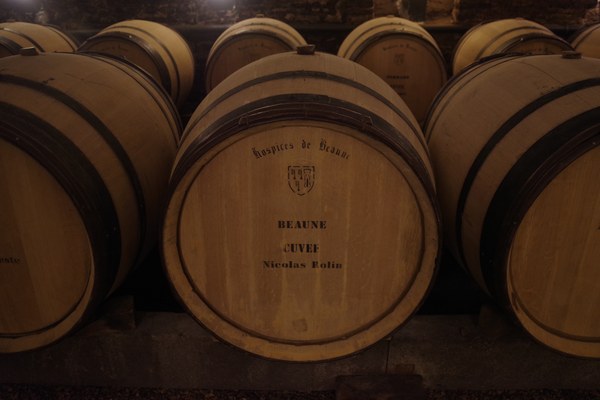
The wine is sold by the barrel, “en primeur”, before it is finished. A barrel, a “pièce”, holds 228 litres, and the buyer must have a Burgundy wine merchant, a négociant-éleveur, mature the wine for 18–24 months. In 2026 there were 52 wine cuvées at the auction, 34 red and 18 white, plus two spirits. The buyer pays an 8 per cent commission on top of the hammer price, plus the barrel itself and 20 per cent VAT.
The auction counts as a sale for professionals, and there are very few seats in the hall. You cannot simply walk in and bid. Bids can still be placed online, by telephone or in writing. The weekend around it is open to everyone.
Where does the money go?
The proceeds of the 2026 auction go to the new hospital building in Beaune, due to be completed in early 2028, and to a new electronic patient record system. In addition, one charity barrel, the “pièce de charité”, is sold, with the sum going to charities chosen each year in September.
In 2025 the charity barrel, a Pommard 1er Cru “Les Rugiens”, sold for 400,000 euros to the charities EHCO and the Institut Robert-Debré du Cerveau de l’Enfant. According to the AFP news agency, the 165th auction raised 18,384,100 euros excluding the charity barrel, the third-highest total in the auction’s history. The figure comes from the press – we have not found the Hospices’ own figures in writing. The result for 2026 had not been published when this guide was written.
The festivities around the auction
The weekend around the auction is for everyone. During “Les Festivinales” the Comité des Fêtes et du Développement de Beaune organises cellar tours, wine tastings, a food market, free outdoor concerts and a cork-pulling competition. A half marathon runs through the vineyards of Pommard, Meursault and Volnay. In 2026 the Festivinales took place on 13–15 November.
The weekend is often called “Les Trois Glorieuses”, the three glorious days. On Saturday there is traditionally a dinner of the wine brotherhood Chevaliers du Tastevin at Clos de Vougeot, on Sunday the auction, and on Monday the weekend ends with the Paulée de Meursault, a lunch at the Château de Meursault for around 700 invited guests.
The Festivinales also holds events during the rest of the year, including Festi’Noël on 12–13 December 2026.
Beaune around the Hôtel-Dieu
Directly opposite the Hôtel-Dieu is the Marché aux Vins, in the former Cordeliers church. Here you can taste wines in the cellar – the simplest tasting, with five wines, costs 25 euros booked online and 29 euros in the shop. Caves Patriarche Père & Fils is housed in the former Visitandines convent and offers self-guided tours with a tasting at the end. The cellars are the largest in Burgundy, according to the house itself.
Do not mix up the two Bouchard houses: Bouchard Père & Fils is based in the Château de Beaune, the old fortress, and receives visitors by appointment only. Bouchard Aîné & Fils on the boulevard Foch can be visited without an appointment. The wine museum, the Musée du Vin de Bourgogne, is temporarily closed, with no reopening date given.
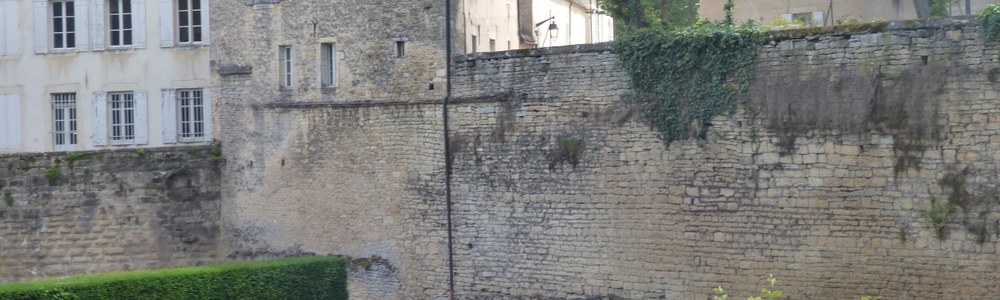
The walls around the old town were built in several phases: the castle and the first ring wall in 1478–1502, the great towers in 1513–1524 and the bastions in 1636. On Saturday mornings there is a large market with around 180 traders in and around the Halles de Beaune – the same halls where the auction is held.
Practical advice
In winter the Hôtel-Dieu closes for lunch from 12.30 to 14.00, so plan your visit around that. If you want to experience the auction weekend, book your hotel early – the hotels are then full and expensive.
Beaune is on the railway line between Dijon and Lyon. The regional TER train from Dijon takes around 20 minutes, and from Lyon Part-Dieu there is a direct TER taking around an hour and 40 minutes. From Paris you usually change in Dijon. The old town is small, and the Hôtel-Dieu, the Marché aux Vins, the market halls and the Collégiale Notre-Dame are a few minutes’ walk from one another.
The Hospices de Beaune with Beaune as a base
If you stay in Beaune, you have the Hôtel-Dieu, the wine cellars and the market within walking distance. The travel guide has hotels, restaurants and wine cellars in the town. The vineyards begin just outside the town, and the Route des Grands Crus takes you through the wine villages from Dijon to Santenay.
Four good ways to experience the Hospices de Beaune and the town
Most of Beaune lies inside the town walls, and everything can be reached on foot. Here are four suggestions that work well for a day or half a day.
The Hôtel-Dieu in the morning
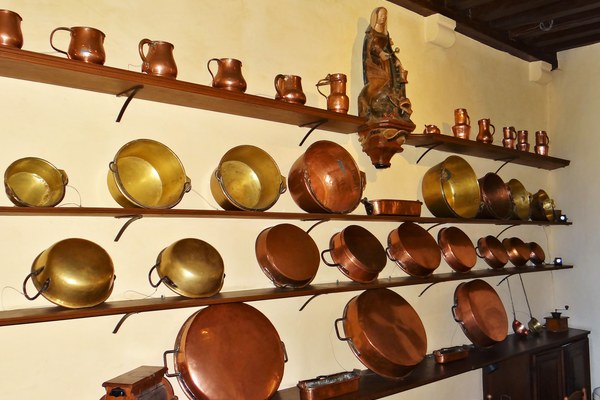
Arrive when the doors open at 9.00, and walk through the hospital while the day is still young. Allow around an hour, and book your ticket online.
- Standard ticket 12.50 euros in 2026
- Open every day
- Closed for lunch in winter
Wine tasting in the cellars
Cross the street from the Hôtel-Dieu to the Marché aux Vins and taste five or seven wines in the cellar. If you want to see more, Caves Patriarche offers tours with a tasting in an old convent.
- Five wines from 25 euros online
- Bouchard Père & Fils by appointment only
- Bouchard Aîné & Fils without an appointment
The Saturday market and the town walls
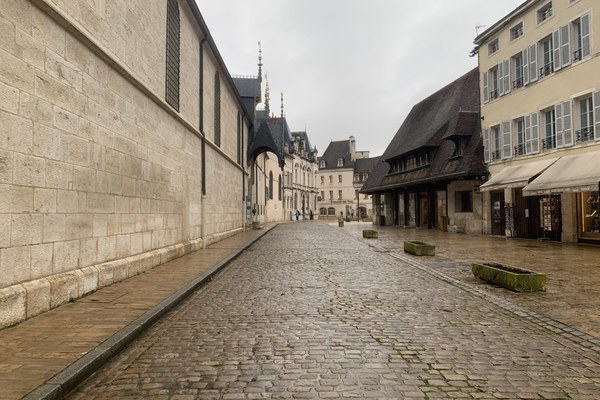
Start at the market halls and the Place Fleury on Saturday morning, and then see the walls and towers around the old town. The tourist office runs guided tours along the walls on selected dates.
- Around 180 traders
- Saturday mornings, including public holidays
- Small Wednesday market on the Place de la Halle
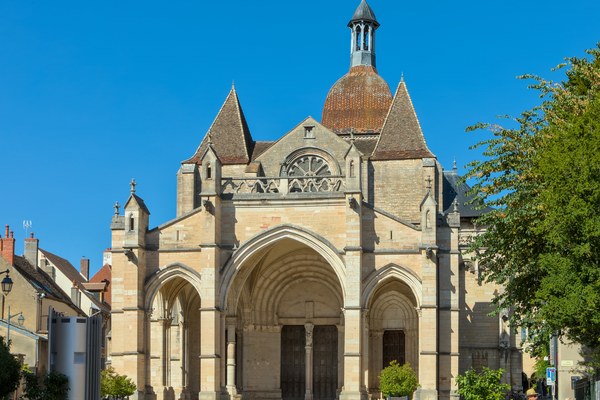
The tapestries in the Collégiale Notre-Dame
The Collégiale Notre-Dame is one of the last great Romanesque churches in Burgundy, inspired by Cluny. In the choir hang five 15th-century tapestries in wool and silk depicting the life of the Virgin Mary.
- Tapestries on show 12 April–31 October
- Afternoons 14.30–17.30, free
- Closed Mondays and Saturdays