
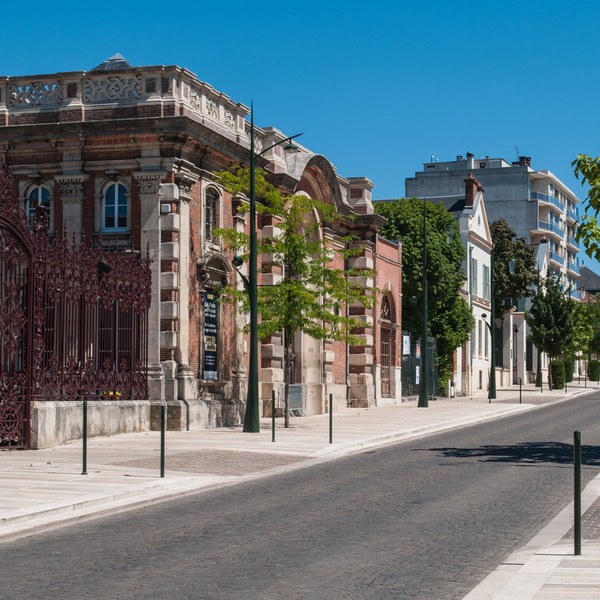
Épernay calls itself the “Capitale du Champagne” and lies in the middle of around 34,000 hectares of vineyards. The Avenue de Champagne is a five-minute walk from the station. The houses along the street welcome visitors in very different ways – some only with a tour booked in advance, some with tastings without an appointment, and some not at all. That is why it pays to know who does what before you go.
The avenue – 1.5 kilometres of Champagne houses
The Avenue de Champagne is 1.5 kilometres long and ends at the place de la République. According to the World Heritage site manager, the Mission Coteaux, Maisons et Caves de Champagne, the first négociant houses arrived from the 18th century, and today the street is a row of elegant mansions and châteaux, cobbled courtyards of honour and gardens.
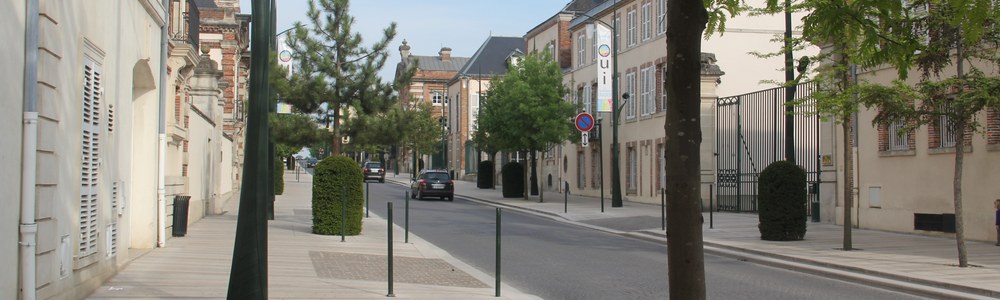
The avenue turned 100 in 2025, and you can walk it, cycle it or see it from above: the World Heritage site manager also mentions a tethered balloon that rises more than 150 metres from the Charles-de-Gaulle car park. Whether the balloon runs in 2026, and what it costs, we have not been able to confirm.
Twice a year the street becomes a festival ground: the Soirée Blanche on 14 July and Habits de Lumière in December. The tourist office is at the bottom of the avenue, at no. 7 (tel. 03 26 53 33 00).
World Heritage – Coteaux, Maisons et Caves de Champagne
The Avenue de Champagne was inscribed on the UNESCO World Heritage List on 4 July 2015, as part of “Coteaux, Maisons et Caves de Champagne” – the hillsides, houses and cellars of Champagne. Not all of Champagne is World Heritage, only three defined areas totalling 1,101.72 hectares:
- The historic vine-covered slopes in Hautvillers, Aÿ and Mareuil-sur-Aÿ – more about them in Hautvillers and the Montagne de Reims.
- The Colline Saint-Nicaise in Reims, with the cellars in the old chalk quarries.
- The Avenue de Champagne and Fort Chabrol in Épernay.
Together they show the whole chain, from the slopes where the grapes are grown to the houses and cellars where the Champagne is made, stored and sold. At the heart of the World Heritage Site is the method: sparkling wine that gets its bubbles from a second fermentation in the bottle. The cathedral in Reims is a separate World Heritage Site, inscribed in 1991.
The cellars beneath Épernay
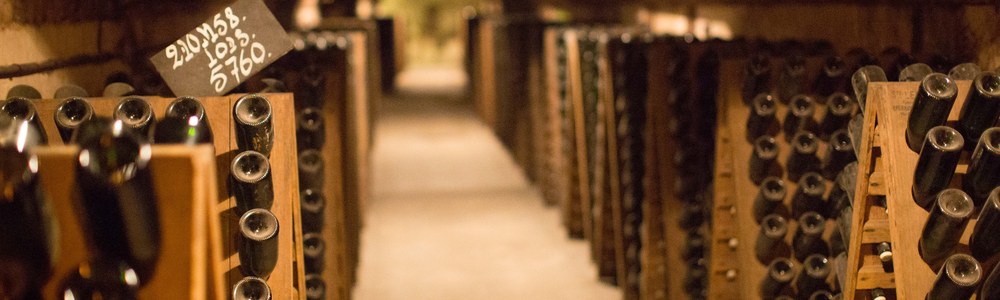
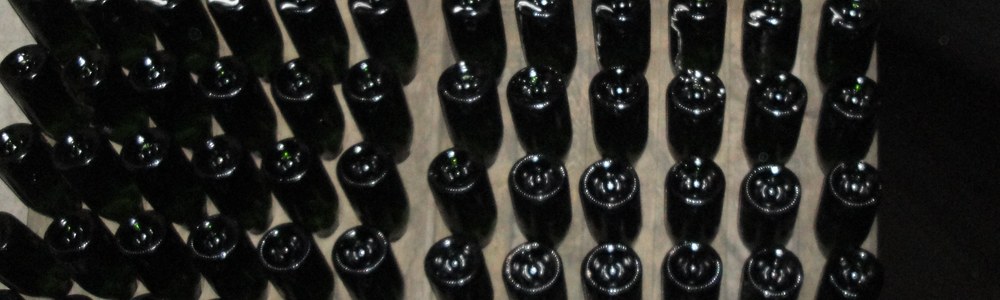
According to the Comité Champagne, there are around 110 kilometres of cellars beneath the Avenue de Champagne, dug into the chalk on several levels. The World Heritage site manager writes “around a hundred kilometres”, and no one has measured the whole network: an attempt to measure it was begun but had to be abandoned. The tourist office states that around 200 million bottles are stored beneath the avenue.
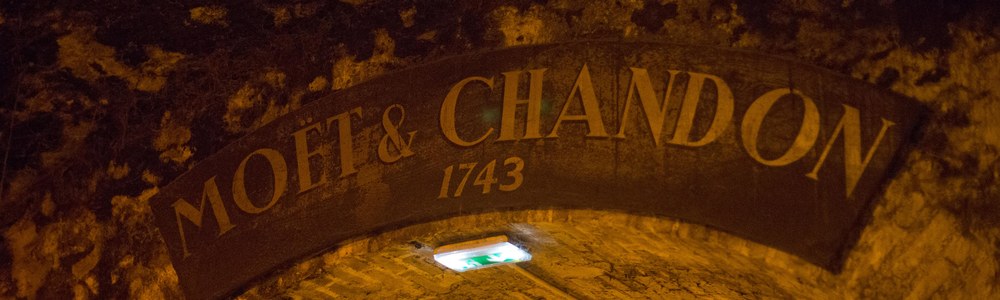
Many guides mix up the figures. The 110 kilometres apply to the whole avenue; each house has its own passages. Moët & Chandon has 28 kilometres, 10–30 metres underground, and Mercier has 18 kilometres, 30 metres deep.
The cellars stay at around 10–12 degrees and 90–100 per cent humidity all year round. Bring a jacket or a jumper, even in summer.
Moët & Chandon – by advance booking only
Moët & Chandon at 18 avenue de Champagne has the largest cellars in Champagne. The house is open every day, but only for guided tours booked in advance, and the cellar visit is on foot and followed by a tasting. Tours run from 9.30am to 5pm. There is a lift and access for people with reduced mobility.
- L’Instant Impérial (1 hour and 30 minutes, the cellar and two Champagnes): 48 euros per person – the cheapest tour.
- Signature 65 euros and Grand Vintage 85 euros, both 1 hour and 30 minutes.
- Richesses Naturelles (2 hours and 30 minutes, the vineyards and Fort Chabrol, a maximum of four people, in English): around 235 euros. Children under 10 may not take part, and young people aged 10–17 pay 50 euros.
Older guides give 25–30 euros for a tour at Moët – that is no longer correct. No age limit is given for the regular cellar tours, so ask when you book if you are bringing children.
Mercier – by train through the cellar
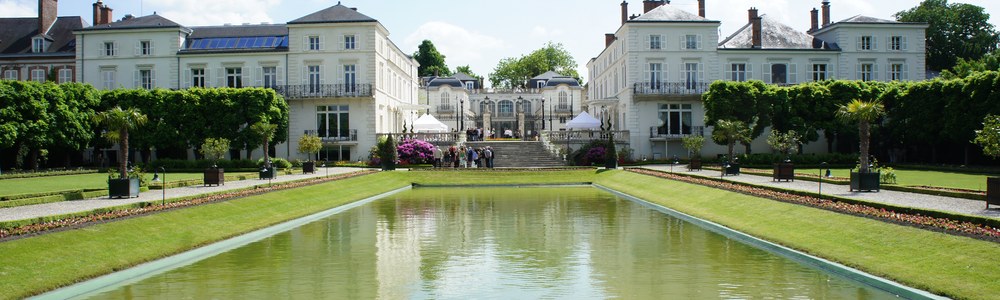
At Mercier, at 68 avenue de Champagne, a panoramic lift takes you 30 metres down, and a driverless train carries you through the 18 kilometres of cellars. The train is included in every tour. Eugène Mercier founded the house at the age of 20, and the giant barrel he showed at the 1889 World’s Fair in Paris holds the equivalent of 200,000 bottles.
- Prices 2026: Fondateur (45 minutes, one glass) 25 euros, Mercier Duo 30 euros, Bulles d’Or (three glasses) 35 euros and the 1-hour-30-minute guided tours 45 euros. Young people aged 10–17 pay 12 euros, and children under 10 go free.
- Open: every day from 6 April to 15 November 2026, and from 18 November to 27 December Wednesday–Sunday. Closed on 25 December, open on 28 and 29 December, and closed from the evening of 30 December.
- Booking: the house strongly recommends booking. Same-day visits cannot be booked online – call +33 3 26 51 22 22 instead.
- Children: children may come along with an adult, but the free ticket must also be booked. The train has room for a wheelchair.
Tours without a tasting are not offered, but adults who do not drink alcohol can have alcohol-free drinks at the tasting at a reduced price. This must be booked in advance by phone or e-mail.
Perrier-Jouët, Boizel, Esterlin and more houses
Perrier-Jouët at nos. 26 and 11 has an Art Nouveau character. The tourist office lists no cellar tour: here you taste in the Cellier Belle Époque (no. 26) from 11.30am, and the gastronomic lunch in the Maison Belle Époque (no. 11), with a menu inspired by Pierre Gagnaire, must be booked. From 10 November to 31 December 2026 it is open Monday–Thursday and Sunday from 11.30am to 8pm and Friday–Saturday from 11.30am to 10pm. Tastings cost 20–45 euros. Elsewhere the tourist office writes that the house is closed on Tuesdays, so check before you go.
Boizel at no. 46 has been a family house in Épernay since 1834, now in its sixth generation. The tours take in the celliers, the fermentation rooms and the historic cellars, in French and English: “Millésime” costs 40 euros and “Joyau de France” 60 euros. Children pay 15 euros and get fruit juice. The house is open from 1 November to 21 December 2026.
Esterlin at no. 25 is the only cooperative on the avenue. The shop and tasting are open Monday–Friday from 9am to 12pm and 2pm to 5pm, and closed on Saturday and Sunday.
The tourist office lists several more houses that welcome visitors, among them De Venoge at no. 33 (the mansion, the garden and the vinothèque), A. Bergère (cellar and film, every day) and Collard-Picard (shop every day). Pol Roger has no public visits, and the house is not on the tourist office’s list – do not plan a visit there.
de Castellane – the tower is open, the cellars closed
The cellars of de Castellane at no. 63 are temporarily closed to the public. What is on offer is the tower and a heritage tour. The tower is 66 metres high, with eight floors and 237 steps, and gives views all round Épernay and the vine-covered slopes.
- The tower with one glass: 20 euros (1 hour, a maximum of ten people). With two glasses: 30 euros.
- Visite patrimoniale: the room with 7,000 labels, and two glasses, 60 euros (1 hour and 30 minutes), at 10am, 2pm and 4pm, by booking only.
- Open: every day from 12 March to 22 December 2026. Tower visits from 10am to 12pm and 2pm to 6pm, and booking is recommended.
Dogs are not allowed. Whether the tower visit can be done without alcohol, we have not been told.
Château Perrier and the wine museum
Château Perrier at 13 avenue de Champagne was built in 1852–1857 by the architect Pierre-Eugène Cordier, in a mix of French Renaissance and Louis XIII style, and has been listed as a monument historique since 2013. Charles Perrier and Octavie Gallice lived here from 1856 to 1878, and the cellars were connected to the railway. Henri Gallice took over Perrier-Jouët in 1878.
Today the château houses the Musée du vin de Champagne et d’Archéologie régionale, with geology, archaeology from the Neolithic to the Merovingians and the history of Champagne – around 2,000 objects and an interactive exhibition. Allow 1 hour and 30 minutes to 3 hours.
- Open: 1 April–31 October from 11am to 7pm, closed on Tuesdays. 1 November–31 March Wednesday–Friday from 1.30pm to 6pm and Saturday–Sunday from 10am to 6pm, closed on Mondays and Tuesdays. Closed on 1 January, 1 May and 25 December. Last entry one hour before closing.
- Price: 10 euros, reduced 6.50 or 4.50 euros. Free for under-13s, and free for everyone on the first Sunday of the month.
- Audio guide: included, in 11 languages – but not in Norwegian, Swedish or Danish.
- The park: free and open every day, from 8am to 9pm in summer and from 8am to 8pm in winter.
The town hall park and the view from Mont Bernon
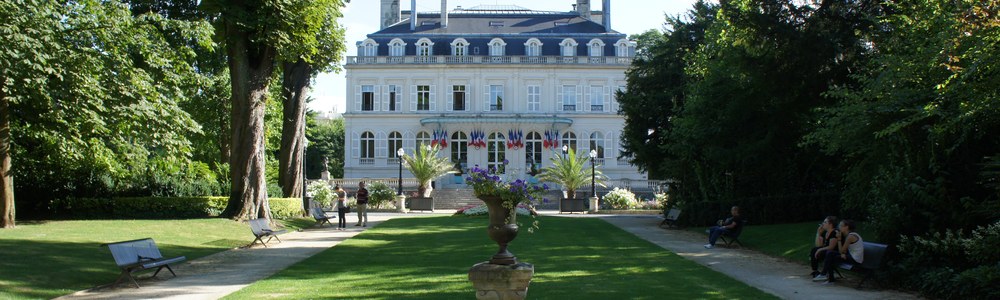
At the bottom of the avenue, at no. 7, stands the Hôtel Auban-Moët, built from 1858 for Victor Moët’s daughter and son-in-law. It has been the town hall since 1920 and was listed in 2012. The park behind, inspired by Versailles, has the “jardin remarquable” label and is open to the public. From the station, walk straight ahead and through the park to the tourist office.
If you want to see the avenue from above, walk to the belvédère Pierre Cheval on Mont Bernon (208 metres above sea level), via the Chemin de la Source. Around 60 wooden steps take you up to the view over the avenue, the Marne, Fort Chabrol and the wine villages of Hautvillers, Cumières, Champillon and Damery.
Habits de Lumière – the avenue in lights in December
Habits de Lumière takes place on 11, 12 and 13 December 2026, for the 26th time. The town and the Comité de l’Avenue de Champagne are behind it, and in 2025 it drew 95,000 visitors.
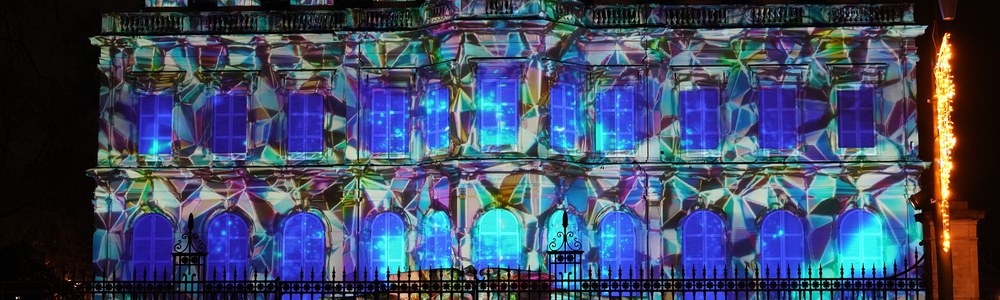
- Friday and Saturday evening: light projections on the façades, shows, Champagne bars, light installations and fireworks on the avenue.
- Saturday: “Habits de Saveurs” with star chefs and the houses, a competition for young pastry chefs, workshops and cellar visits.
- Sunday: a parade of more than 400 vintage cars.
The tourist office gives no admission price for the festival on the avenue. The food and wine workshops cost from 20 euros.
How Champagne is made
Champagne is made from Pinot Noir and Meunier, which are black grapes, and the green Chardonnay. The Montagne de Reims is known for Pinot Noir, the Vallée de la Marne for Meunier and the Côte des Blancs for Chardonnay. The fact that black grapes make white wine is down to a gentle, fractionated pressing developed in Champagne in the second half of the 17th century.
The Comité Champagne describes the sequence like this:
- Pressing and fermentation: the must is clarified (débourbage) and fermented.
- Assemblage: from 1 January after the harvest, the wines are blended.
- Tirage and prise de mousse: the wine is bottled and ferments a second time – this is what creates the bubbles.
- Ageing: the bottles rest on the lees for at least 15 months.
- Finally: remuage, dégorgement, dosage and corking.
Some milestones: the cork stopper comes into use in Champagne in 1685, the bottles become thicker in 1770, Jean-Baptiste François measures the sugar correctly in 1837, and Pasteur explains yeast in 1860.
Taste in moderation – age, alcohol-free and do not drive
French law prohibits the sale and free distribution of alcohol to people under 18, and the seller may ask for ID. Children can still take part in many tours: Mercier welcomes children with an adult, and Boizel has a children’s ticket with fruit juice. Moët does not admit children under 10 to Richesses Naturelles.
You do not have to finish your glass. If you do not drink alcohol, you can book alcohol-free drinks at Mercier, and the museum in Château Perrier, the town hall park and the view from Mont Bernon involve no alcohol.
If you have tasted Champagne, do not drive. The avenue is five minutes from the station, and you can reach the wine villages around by train, bus or the “Esprit de Champagne” minibus. The houses themselves write: “L’abus d’alcool est dangereux pour la santé” – excessive alcohol consumption is dangerous to your health.
Practical – train, car and parking
Train: Paris-Est – Épernay takes around 1 hour and 20 minutes by direct train. From Reims, trains run around every half hour and take around 30 minutes. From the station it is less than ten minutes on foot to the tourist office on the avenue.
Plane: The nearest major airport is Paris-Charles de Gaulle, 132 kilometres from Hautvillers just outside Épernay.
Car: from Paris it is 140 kilometres, around 1 hour and 30 minutes via the A4 motorway. The first hour is free in the town’s three car parks. Parking du Jard (entrance from rue Eugène-Mercier) and Parking Centre-ville charge 16 euros a day, and Parking du Jard has 20 charging points.
When: from April to mid-November Mercier is open every day and the museum keeps its summer hours. In December Habits de Lumière is the draw, while winter brings shorter opening hours.
Eating and sleeping
On the avenue itself, at no. 84, is La Villa Eugène, the only five-star hotel in Épernay, with 15 rooms. In the centre, Hôtel Jean Moët (12 rooms) and Hôtel Margaux (27 rooms) have four stars.
The only restaurant in Épernay in the Michelin Guide is La Grillade Gourmande in rue de Reims, with dishes grilled over a wood fire. You will find the nearest stars just outside the town: Le Royal in Champillon and Alcôve in Vinay have one star each. Perrier-Jouët serves lunch in the Maison Belle Époque by booking.
You will find more hotels, restaurants and car parks in the travel guide to Épernay.
Onward from the avenue
The avenue is one of three parts of the World Heritage Site. The vine-covered slopes in Hautvillers, Aÿ and Mareuil-sur-Aÿ are a few kilometres away – read more in Hautvillers and the Montagne de Reims. You will find the cellars beneath the Colline Saint-Nicaise and the cathedral in the travel guide to Reims, and the whole wine region in the wine guide to Champagne.
4 days on the Avenue de Champagne
With four days you can take the avenue from bottom to top, one or two houses a day, with the museum and the parks in between. Everything is within walking distance of the station, so you do not need a car.
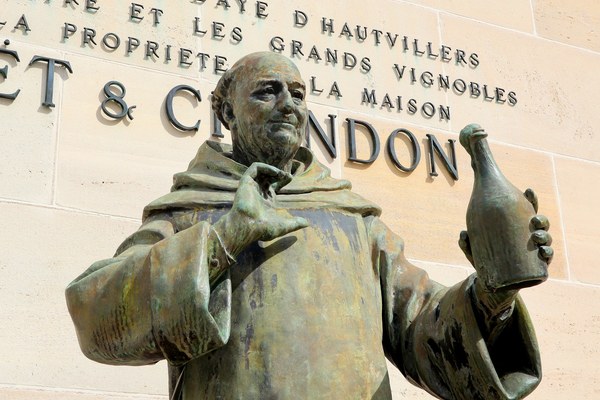
The town hall park and Moët & Chandon
Walk from the station through the town hall park to the tourist office at no. 7. Take the pre-booked cellar tour at Moët & Chandon at no. 18, and end with the view from Mont Bernon.
- Moët: from 48 euros, by booking only
- The cellars stay at 10–12 degrees
- The town hall park is open to all
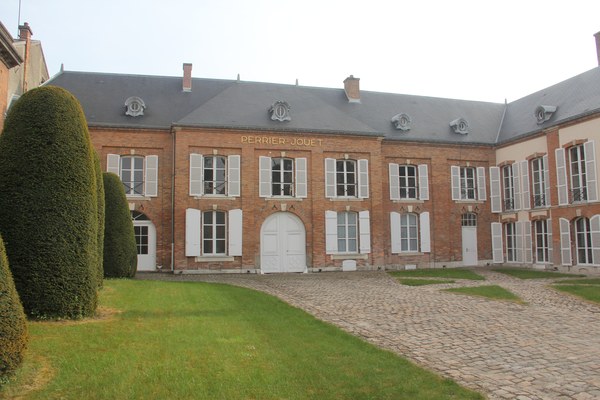
Château Perrier and Perrier-Jouët
Spend the morning in the wine museum in Château Perrier at no. 13. Have lunch in the Maison Belle Époque or taste in the Cellier Belle Époque at Perrier-Jouët.
- The museum: 10 euros, free for under-13s
- Closed on Mondays and Tuesdays in winter
- Lunch at Perrier-Jouët must be booked
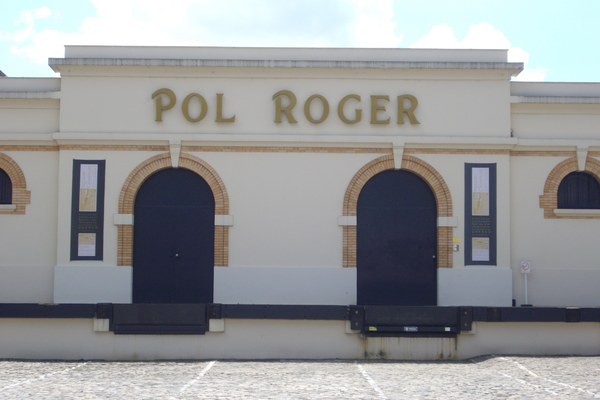
The houses in the middle of the avenue
Taste at the Esterlin cooperative at no. 25 on a weekday, see De Venoge at no. 33 and take a tour at the family house Boizel at no. 46. Pol Roger you only see from the street.
- Esterlin is closed on Saturday and Sunday
- Boizel: 40 euros, children 15 euros with fruit juice
- Pol Roger has no public visits
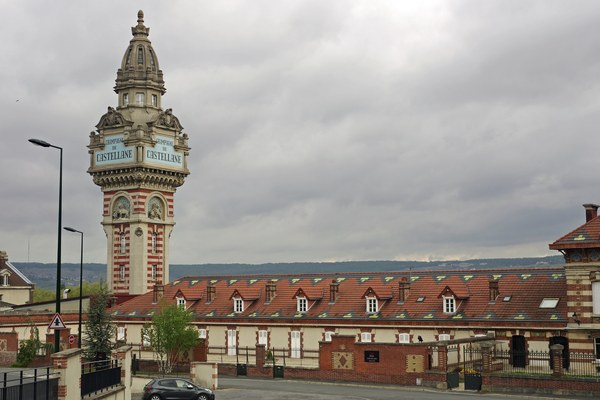
The Castellane tower and the Mercier train
Climb the 237 steps of the de Castellane tower at no. 63 in the morning, and take the train through the cellars at Mercier at no. 68 in the afternoon.
- The tower: 20 euros with one glass
- Mercier: from 25 euros, under-10s free
- Alcohol-free at Mercier: book in advance