
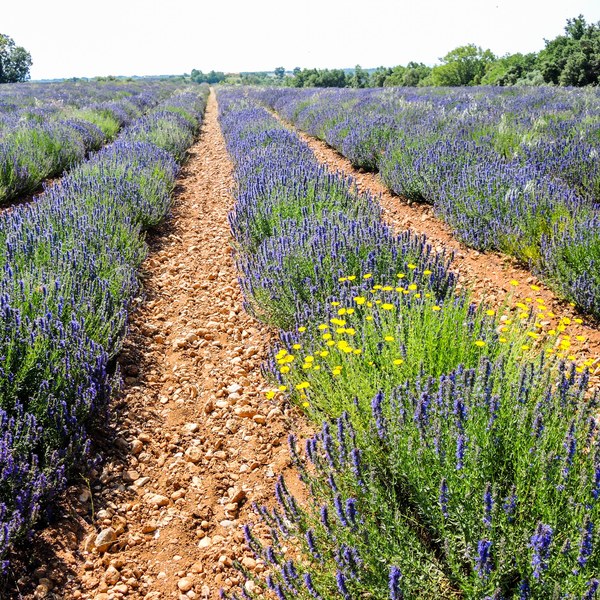
If you drive from Moustiers towards Puimoisson and Valensole, you are on the plateau after around 20 minutes. The tourist office in Moustiers calls it a sunny balcony above the Durance valley. In summer it is the lavender fields people come for, but the plateau changes colour throughout the year: almond trees in blossom in spring, yellow grain before the lavender and ploughed fields in ochre in autumn.
The plateau between the Durance and the Verdon
The tourist offices state that the Plateau de Valensole covers more than 800 square kilometres. The same figure is also used for the commune of Valensole, one of the largest in France, so the area is not entirely clear-cut. The tourist office in Manosque calls the plateau the largest agricultural plateau in Provence and the world’s most important area for lavandin, and the commune has earned the nickname “the granary of the region”.

The main road from Moustiers runs via Puimoisson and Valensole. The side roads between Puimoisson, Valensole and Riez are quieter. You will also find lavender on the plateau at Sainte-Croix-du-Verdon.
Lavender or lavandin?
Most people call the fields of Valensole lavender fields, but the tourist office in Moustiers writes that only lavandin is grown on the plateau, and the tourist office in Manosque that it is overwhelmingly lavandin. The difference is easy to see when you know what to look for:
- True lavender (lavande fine or lavande vraie) grows above about 800 metres, likes limestone soil and tolerates cold. It has narrow leaves and a single thin spike per stem. The oil is used in perfume and aromatherapy.
- Lavande aspic grows lower down, below about 600 metres.
- Lavandin is a cross between true lavender and aspic, and appeared in the 1920s. It has long, compact spikes, and the stems divide into three. The oil is used in detergents, soap and against insects.

Lavandin yields much more oil than true lavender, but the sources disagree on how much. The tourist office in Moustiers writes that it takes more than 100 kilos of lavender against 40 kilos of lavandin for one litre of oil, the tourist office in Manosque that true lavender requires around five times as much, and the département tourist office that lavandin yields up to ten times more.
When does the lavender flower?
On the Valensole plateau the fields flower from mid-June to mid-July, depending on the weather. The flowering starts around the middle of June and peaks at the beginning of July, and the whole period lasts three to four weeks. In 2026 the flowering started as early as 10 June, and the cutting began on 29 June and lasted around 15 days.

The tourist office in Manosque recommends travelling in the second half of June or the first week of July, and calling the tourist office before you travel just for the lavender. The dates shift by 10–15 days from year to year. In August the fields have usually been harvested. You get the best light in the hour after sunrise.
The harvest and the distilling
The harvest usually starts around 14 July and lasts until the beginning of August, earlier in dry years. The cut lavender dries a little before it is steam-distilled. The oil is separated from the flower water, the hydrosol, because they have different densities.

During the flowering the beehives are moved to the plateau, and that produces lavender honey. The bees are busy with the flowers, not with you.
Valensole – the town rising above the fields
Valensole lies 19 kilometres as the crow flies from Moustiers, built like an amphitheatre above the fields along an old Roman road. At the top stands the bell tower of the church of Saint-Blaise, which the département tourist office dates to the 11th century. Around it are steep lanes, vaulted passages, fountains, wash houses and the town wall. The market is on Saturday from 8am to 1pm in the avenue Segond.

The Fête de la Lavande is held on the third Sunday in July. The streets fill with market stalls selling only lavender products from more than 80 producers and craftspeople, lavender is distilled in an old still in the middle of the village, and there are cutting demonstrations morning and afternoon, folk music and dancing. The département tourist office writes that the festival draws tens of thousands of visitors. By the rule it falls on Sunday 18 July in 2027, but the programme has not yet been published.
The Musée de la Lavande and the distilleries
The Musée de la Lavande lies on the route de Gréoux in Valensole, in a family distillery from 1925. Pictures and explanations show how lavender is grown, spread over two floors of 200 square metres each, and around the museum there is a one-hectare park with a herb garden and a kitchen garden. There is a shop and refreshments, and admission is free. The opening times vary between sources, so check before you go.

The lavender route also includes a distillery in Puimoisson and the “Musée vivant de l’abeille”, a living bee museum in Valensole. Terraroma in Valensole grows lavender and almonds. If you want to see distilling, the lavender festival in July is a safe bet: then lavender is distilled in an old still in the middle of the village.
Riez – the Roman town
Riez, or “Riez la Romaine”, lies 11 kilometres as the crow flies from Moustiers and was founded in the first century, one of the oldest towns in the département. Four granite columns from a Roman temple still stand in a field. The town also has an early Christian baptistery from the 5th century, one of the oldest in France, the cathedral of Notre-Dame-de-l’Assomption and Renaissance plasterwork in the Hôtel de Mazan. The town gates Ayguières and Sanson are from the 14th century.
There are markets on Wednesday and Saturday. The Hôtel Les Deux Lions (three stars) is in the middle of the town, between Moustiers and Valensole, and in summer bus 450 runs from here to Moustiers and La Palud.
Puimoisson – the chapel and the commandery
Puimoisson lies 8 kilometres as the crow flies from Moustiers, on the road out onto the plateau. Here stand the 10th-century chapel of Sainte-Apollinaire and the church of Saint-Michel, and you will find the remains of the commandery of the Order of Malta and a lavender distillery.
Allemagne-en-Provence – the château with the garden
Allemagne-en-Provence lies 19 kilometres as the crow flies from Moustiers, in the middle of the plateau. The château is from the 13th century and was extended in the 16th century, and it has a garden. In the village you can take a horse-drawn ride and buy local produce at the “Maison de Produits de Pays”, and there is a market on Thursday. The Hôtel du Moulin (three stars) is a small hotel with a restaurant on the Route de la Lavande.
The Route de la Lavande du Plateau Valensole
The département tourist office has created a 92.4-kilometre loop across the plateau, with 954 metres of ascent, taking around four hours. The route stops in:
- Valensole: the lavender museum, distilleries, Saint-Blaise, the town wall, the fountains and the bee museum.
- Puimoisson: the chapel of Sainte-Apollinaire, the distillery, Saint-Michel and the commandery.
- Riez: the Roman columns, the baptistery, the bell tower and the town gates.
- Allemagne-en-Provence: the château and the garden.
- Gréoux-les-Bains: the Templar castle and the thermal baths.
- Roumoules
Valensole is also a stop on “Les Routes de la Lavande”, which links the lavender areas from the Drôme provençale to Alpes-de-Haute-Provence. Further west, in Sault and at Sénanque, there is more true lavender, and there it flowers later than on the Valensole plateau. See the guide to the Luberon villages if you want to combine the two.
Respect for the fields
The fields are farms, not a park. The tourist offices ask the following:
- Do not walk into the fields and do not trample the plants. Keep to the edge or the road.
- Do not pick the lavender.
- Do not drive or fly drones over the farms without permission.
- Park only in lay-bys, never on bends or on narrow verges. The farm machinery is wide and moves slowly.
- Keep your dog on a lead in the Verdon park.
Outside the lavender season
The almond trees blossom in March, according to the tourist office in Manosque as early as February. The plateau also grows pistachios, immortelle, sage and sunflowers, and just before the lavender, wheat and grain turn the fields yellow.
In autumn the fields are ploughed and ochre-coloured. In winter the mistral blows, the lavender rows are clipped into grey balls, and you can see the Alps. Then it is truffle season, with markets and demonstrations at weekends, and in Aups there is a truffle market on Thursdays in winter.
Eating and sleeping
The town of Valensole has no classified hotels, only guest houses and rooms in private homes. The nearest hotels are Les Deux Lions in Riez and the Hôtel du Moulin in Allemagne-en-Provence, both with three stars. In Moustiers there are several hotels, among them La Ferme Rose and Les Restanques de Moustiers (both three stars).
There are no Michelin restaurants in Valensole or Riez. In Moustiers, La Bastide de Moustiers has one star. If you are coming from the A51, Manosque has the Restaurant Pierre Grein (one star) and Chez Bastien (Bib Gourmand).
Practical advice
Car: From the A51, take exit 18 (Manosque) towards Valensole and Puimoisson, or exit 17 (Vinon-sur-Verdon) towards Gréoux-les-Bains and Riez on the D952. It takes around two hours from Marseille and two and a quarter hours from Nice to Moustiers.
Train and bus: The nearest station is Manosque–Gréoux-les-Bains. ZOU! line 132 runs Riez–Gréoux–Manosque, line 67 Marseille–Riez via Gréoux and line 450 Riez–Moustiers–Castellane. Outside the summer the 450 in practice only runs as a school bus, so you need a car to get around the plateau.
Flights: The nearest airports are Marseille-Provence and Nice Côte d’Azur.
Valensole with Moustiers as a base
Moustiers-Sainte-Marie lies between the plateau and the gorge: around 20 minutes to the lavender fields to the west and 5 kilometres to the Plage de la Cadeno on Lac de Sainte-Croix. After a day in the fields you can paddle into the gorge from the Pont du Galetas – read more in Gorges du Verdon. You will find more villages, markets and wine regions in the guide to Provence.
4 days on the Valensole plateau
With four days you have time for the lavender fields in the morning light, the museum, the Roman town and the château in the middle of the plateau. Here is a route with Moustiers as the starting point – you need a car.
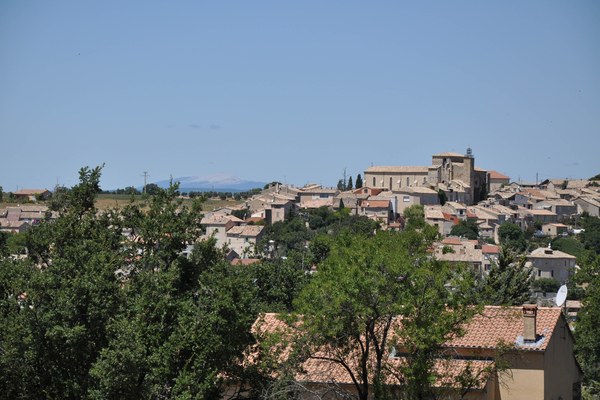
Valensole and the lavender museum
Drive out onto the plateau at sunrise and stop only in the lay-bys. Walk through the lanes of Valensole up to Saint-Blaise, and finish at the Musée de la Lavande.
- Market on Saturday, 8am–1pm
- The museum is free
- Flowering mid-June to mid-July
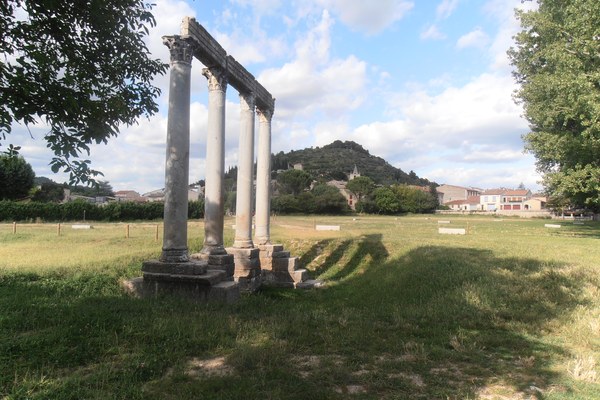
Riez la Romaine
See the four Roman columns and the 5th-century baptistery, and walk through the 14th-century town gates. Come on a Wednesday or Saturday, when there is a market.
- 11 kilometres from Moustiers
- Markets on Wednesday and Saturday
- Plasterwork in the Hôtel de Mazan
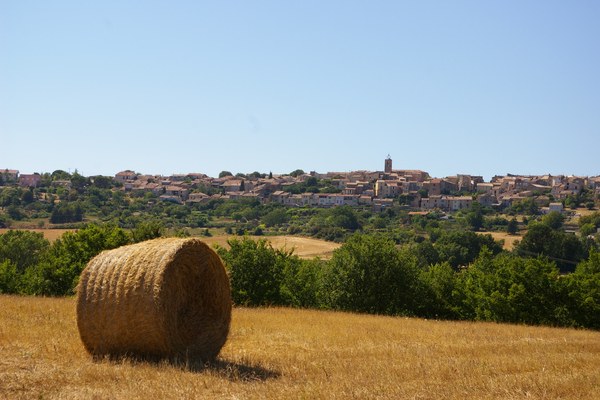
Puimoisson and the side roads
Start at the chapel of Sainte-Apollinaire and the remains of the commandery in Puimoisson. Then drive the quieter side roads between Puimoisson, Valensole and Riez.
- 8 kilometres from Moustiers
- A distillery on the lavender route
- Do not walk into the fields
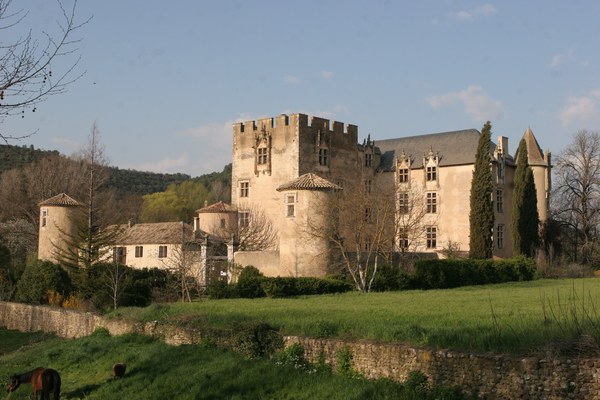
Allemagne-en-Provence and Gréoux-les-Bains
See the château and the garden in Allemagne-en-Provence, perhaps take a horse-drawn ride, and continue along the lavender route to the Templar castle and the thermal baths in Gréoux-les-Bains.
- Market in Allemagne on Thursday
- A 13th-century château
- The whole route: 92.4 kilometres