
The most important thing first: Roquefort-sur-Soulzon lies approx. 25 kilometres from Millau, and the cellars and Viaduc Expo are open in winter too. You cannot walk on the viaduct, but you can see it from the Aire du Viaduc rest area and from several viewpoints. The prices and times in this guide are from the sources in November 2026.
Before you go – car, toll and opening times
- By car: from Millau it is approx. 25 kilometres and 28 minutes to the cellars in Roquefort, and approx. 15 minutes to the Aire du Viaduc. The Larzac villages are spread out, and a car is the easiest option.
- Tolls: the A75 is free, except for the viaduct. A car pays 11.30 euros, and 13.80 euros from 15 June to 15 September.
- In winter: the cellars and Viaduc Expo are open. Société is closed 19–25 December 2026 and 1 January 2027, and the restaurants at Société close for the winter.
- Train: the Tournemire-Roquefort station is in Tournemire, not in Roquefort.
Roquefort-sur-Soulzon
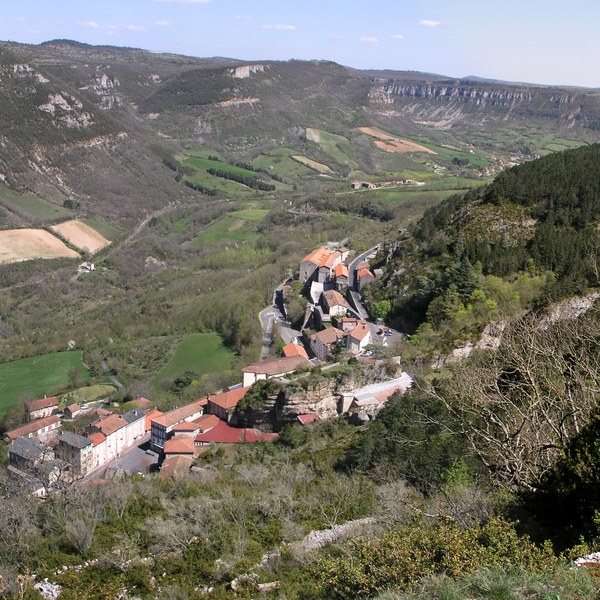
Roquefort-sur-Soulzon has around 480 inhabitants and lies below the Combalou mountain. The tourist office in Millau gives the distance from Millau as 25 kilometres. According to the tourist office, the oldest reliable mention of the cheese is in the cartulary of Conques from 1070.
- Tourist office: Office de Tourisme Pays du Roquefort et Saint-Affrique.
- Walks: the Sentier des Échelles up the Combalou, and the Sentier des Costes, du Menhir and de Trompette.
- Le Saloir: the municipality's knowledge centre.
- The festival: “Roquefort, un territoire en fête” is on the second weekend of June. The date for 2027 has not been published.
The cheese – appellation d'origine from 1925
After counterfeits – among them “roquefort” made from cow's milk from the Auvergne and Danish “roquefort” – roquefort received an appellation d'origine by the law of 26 July 1925. According to the Confédération générale de Roquefort, it was the first appellation d'origine for a cheese in France. The tourist office gives AOC in 1979, and the cheese received AOP in 1996. In 2025 it was 100 years since the law.
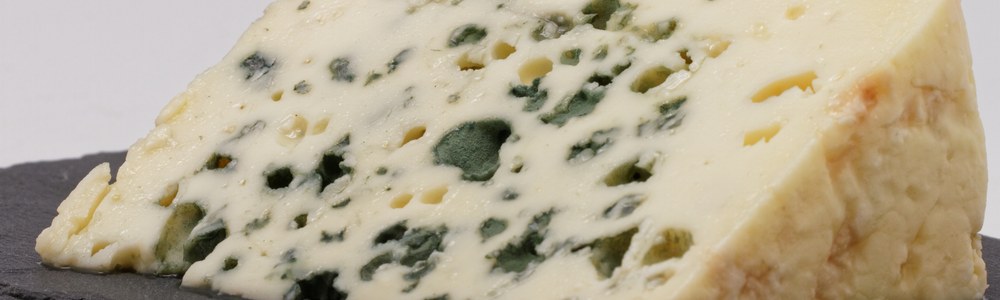
- The forerunners: Charles VI in 1411, Charles VII in 1457 and the Parlement de Toulouse on 31 August 1666, which gave the village the sole right to mature the cheese in the caves.
- Size: the third-largest cheese AOP in France by volume, exported to 105 countries.
- Website: roquefort.fr.
Lacaune sheep, raw milk and seven producers
- The milk: raw whole milk from the lacaune sheep breed. The sheep must go out to pasture every day when the weather allows.
- The feed: at least 75 per cent must come from the “rayon de Roquefort”, approx. 100 kilometres around Roquefort in the Aveyron, Lozère, Tarn, Aude, Hérault and Gard.
- The mould: Penicillium roqueforti is added to the milk. The tourist office writes that 100 grams is enough for 100 tonnes of roquefort, and Société grows its own strains.
- The industry: 7 producers, 8 dairies, approx. 3,000 sheep farmers on 1,465 farms and 2,000 employees in production.
- The season: the milk comes in December–June.
According to the Confédération générale de Roquefort, roquefort is the only AOP blue cheese made from sheep's milk.
The Combalou and the fleurines
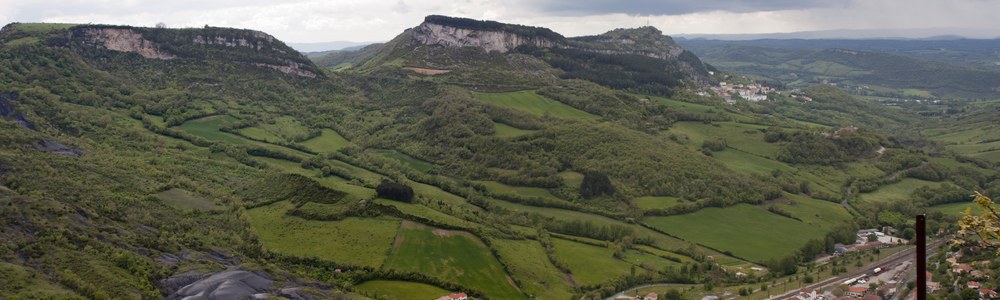
The cellars lie under the rockfall from the Combalou, face north and go down up to 11 storeys. The fissures in the mountain, the fleurines, send cold, damp air into the cellars.
- The maturing: at least 14 days unwrapped in the cellars of the Combalou, then the cheese is wrapped – traditionally in tin foil – and matures slowly. In total it takes at least 3 months.
- Other cellars: in the 19th century there were at least 102 “caves bâtardes” outside the Combalou. Two are in use today, but the cheese from them is blue cheese, not roquefort.
The legend of the shepherd
The story of the young shepherd who forgot a slice of bread in the cave is well known in Roquefort. The Confédération générale de Roquefort calls it a legend created in the 19th century, and the tourist office tells it as a fable.
The cellars you can visit
Of the seven producers, four welcome visitors. Carles only has a shop.
- Société (avenue François-Galtier): 12,000 square metres of cellars from the Middle Ages. The “Souffle des Saveurs” tour takes approx. 1 hour and costs 8.50 euros (5 euros for children aged 7–15, free up to and including 6), without booking. Open every day 10am–12pm and 1.30–4.30pm, closed 19–25 December 2026 and 1 January 2027.
- Papillon (8 bis avenue de Lauras): from 1 April 2026 the tour costs 4 euros (2 euros for children aged 6–11), and it must be booked by telephone on 05 65 67 23 50. Open 10am–6pm every day. The maturing now takes place elsewhere, so you do not see cheese being matured.
- Gabriel Coulet (avenue de Lauras, by the church): a family firm since 1869. Free and without booking, every day except 1 January and 25 December. January–March 9.30–11.45am and 1.30–4.45pm. Approx. 1 hour, 10–12 degrees in the cellar.
- Le Vieux Berger (7 avenue du Combalou): free, weekdays only.
The overview is on roquefort.fr, but the prices there for Société and Papillon are out of date – check the producers' own pages.
The Millau Viaduct – the figures
The viaduct carries the A75 over the Tarn valley west of Millau. It was designed by the architect Norman Foster and engineered by Michel Virlogeux, and it was built and is operated by Eiffage, with a 78-year concession.
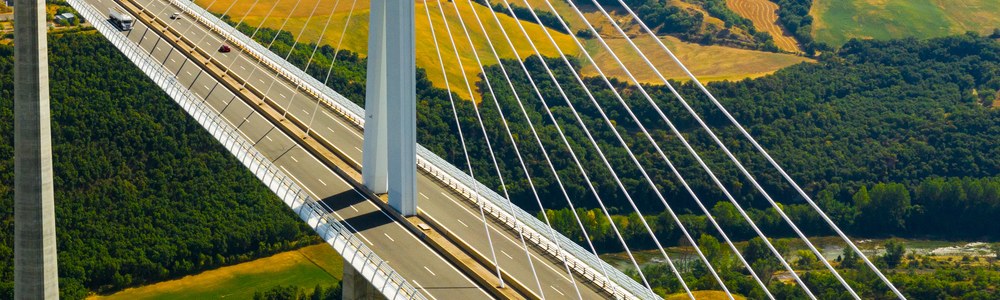
- Length: 2,460 metres, with two side spans of 204 metres and six spans of 342 metres.
- The structure: 7 piers, pylons of 87 metres and 154 stays. The deck is 32 metres wide and contains 36,000 tonnes of steel.
- Cost: 400 million euros for the bridge and the toll station.
- The dates: first stone 14 December 2001, inaugurated by Jacques Chirac on 14 December 2004 and opened to traffic on 16 December 2004 at 9am.
Foster also designed the Carré d'Art in Nîmes. See the tourist office's page on the viaduct.
How high is the viaduct?
- Pier P2: 245 metres. Eiffage calls it the highest bridge pier in the world.
- Highest point: 343 metres to the top of the pylon – according to Eiffage, 13 metres more than the Eiffel Tower.
- The roadway: approx. 270 metres above the Tarn.
The tourist office calls it the highest viaduct in Europe, and it is one of the highest bridges in the world.
Tolls 2026
- Car: 11.30 euros 16 September–14 June and 13.80 euros 15 June–15 September.
- Class 2 (2–3 metres high, up to 3.5 tonnes – many motorhomes): 17.00 euros, and 20.70 euros in summer.
- Motorcycle: 6.80 euros.
- 2027: new prices come on 1 February 2027. The rest of the A75 is free.
Aire du Viaduc and Viaduc Expo
The Aire du Viaduc rest area lies on the A75 in both directions, and you can also drive there from Millau via the D911 and the boulevard du Viaduc, approx. 15 minutes from the centre. Parking is free. In an old farm from the Causse plateau there is the Viaduc Expo exhibition, a shop, food, a playground and a viewing platform.
- Viaduc Expo: free and open every day all year except 1 January and 25 December. In winter 9am–4.50pm, in July–August until 6.45pm.
- “Sentier des Explorateurs”: a 50-minute guided tour to a separate viewing platform below the deck. 6 euros for adults, 4 euros for children and students, 14 euros for families and free under 6.
- “Sur les anciennes pistes de chantier”: 2 hours and 30 minutes on the old construction roads, into pier P2, for a maximum of 18 people.
- “Autour du Viaduc”: a coach tour from Millau with a guide from the tourist office, 3 hours and 30 minutes, 26 euros for adults and 15 euros for ages 7–17.
- Season: the guided tours run in summer and in the school holidays – the dates are not listed in one place.
See Le Viaduc Expo.
Can you walk on the bridge?
No, only during the Course Eiffage du Viaduc de Millau race: 23.7 kilometres there and back over the bridge, while part of the A75 is closed. The first race was on 13 May 2007, and since 2012 it has been held every other year. The 8th edition was on 13 September 2026, and there will be no race in 2027. The next date has not been published.
The viewpoints
Eiffage lists these places for seeing the viaduct:
- Aire du Viaduc: the viewing platform at Viaduc Expo.
- Cap de Costes-Brunas: from Creissels, on a narrow road that is for cars only.
- Belvédère de Luzençon: 650 metres above sea level.
- Peyre, the Pont Lerouge in Millau and the terrace of the Beffroi.
- “Panoramique” on the RD 809: from the A75, exit 47 La Cavalerie.
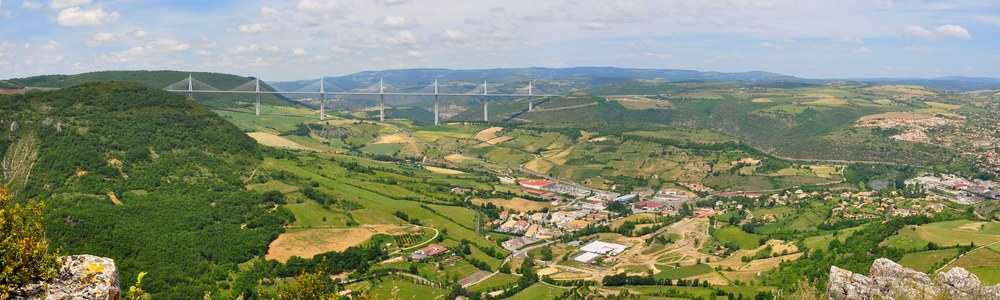
From the river you can paddle the 8 kilometres from Peyre to the viaduct with Millau Aventure. More about the gorge upstream is in Gorges du Tarn.
Larzac
The Causse du Larzac covers approx. 1,000 square kilometres, mostly in the Aveyron, and lies at up to approx. 900 metres above sea level. The tourist office calls it the best known of the limestone plateaus of the Grands Causses. From 1971 the Larzac became known for the struggle against the expansion of the military camp, with the slogan “Gardarem lo Larzac”.
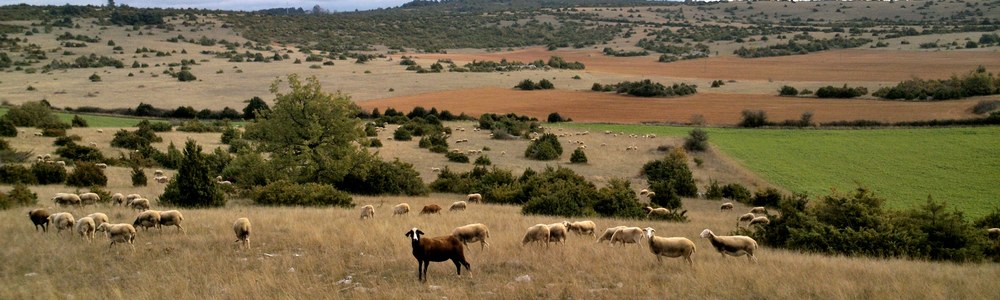
The Larzac lies within the UNESCO World Heritage Site “Les Causses et les Cévennes”, which is inscribed as a cultural landscape of grazing and farming.
The Knights Templar and the Knights Hospitaller
From the 12th to the 15th century the Knights Templar and the Knights Hospitaller held estates on the Larzac. The Templar order was dissolved in 1312, and its estates passed to the Hospitallers. The tourist office counts five fortified sites on the “Larzac Templier et Hospitalier” route, which has approx. 400,000 visitors a year:
- La Couvertoirade: the Templars' castle and the Hospitallers' ramparts.
- La Cavalerie: a Hospitaller village with ramparts from the 15th century.
- Sainte-Eulalie-de-Cernon: a commandery of the Templars and the Hospitallers.
- Viala-du-Pas-de-Jaux: the Hospitallers' refuge tower.
- Saint-Jean-d'Alcas: built by Cistercian abbesses – not by the Templars.
The waymarked trail GR 71C “Sur la trace des Templiers et des Hospitaliers” takes 2–6 days. See the tourist office's page on the route and Office de tourisme Larzac et Vallées.
La Couvertoirade
La Couvertoirade has 210 inhabitants and is a member of Les Plus Beaux Villages de France. The ramparts from the 15th century are 12 metres high and more than 400 metres long. The Templars' castle dates from the late 12th or early 13th century, and according to Les Plus Beaux Villages de France it is the only castle the Templars built in France. The castle is private and open in summer.
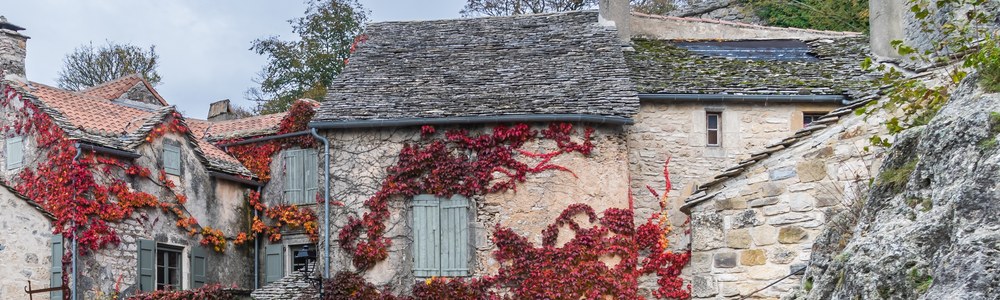
- To see: the church of Saint-Christophe, whose tower became part of the wall in the 15th century, the oval pond (lavogne), the Redounel windmill and the Maison de la Scipione, where the walk along the wall begins.
- From Millau: approx. 43 kilometres and 39 minutes by car.
La Cavalerie
La Cavalerie is a Hospitaller village with around 2,200 inhabitants and restored ramparts from the 15th century. The church is from the 18th century, with remains of the Templars' church.
- Guided tour: in July and August at 10.30am, 3pm and 4.30pm. Otherwise there is an audio guide.
- From Millau: approx. 19 kilometres and 18 minutes by car.
Sainte-Eulalie-de-Cernon, Viala-du-Pas-de-Jaux and Saint-Jean-d'Alcas
- Sainte-Eulalie-de-Cernon: the commandery of the Templars and the Hospitallers in the Cernon valley. Approx. 26 kilometres and 25 minutes from Millau.
- Viala-du-Pas-de-Jaux: the Hospitallers' refuge tower is 30 metres high and is called “le phare du Larzac”, the lighthouse of the Larzac. Approx. 34 kilometres and 31 minutes from Millau.
- Saint-Jean-d'Alcas: a “fort de dame” built by the Cistercian abbesses of Nonenque. Approx. 34 kilometres and 35 minutes from Millau.
Peyre – the church in the rock
Peyre lies in the municipality of Comprégnac, approx. 7 kilometres west of Millau, and is a member of Les Plus Beaux Villages de France. The village is built at the foot of a travertine cliff, out of reach of the floods of the Tarn. The village has two churches, and one of them, Saint-Christophe, is a fortified, semi-troglodyte Romanesque church built over a spring, with refuges from the Wars of Religion. A local resident opens it every day.
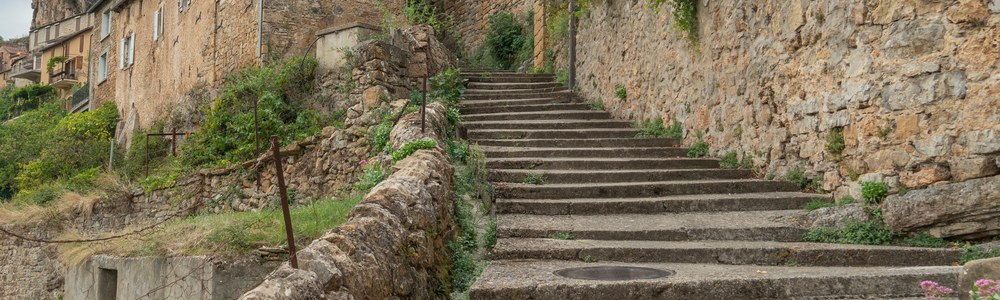
- View: towards the viaduct, and the road passes pier P2.
- Dinosaur tracks: approx. 12 tracks at Thérondels.
- Christmas market: Marché de Noël et Fête de la Truffe on 20 December 2026.
- Parking: two paid car parks. From Millau it is approx. 10 kilometres and 14 minutes by car via the D41.
See Les Plus Beaux Villages de France on Peyre. More villages are in The most beautiful villages in France.
Castelnau-Pégayrols
Castelnau-Pégayrols lies approx. 20 kilometres and 20 minutes by car from Millau. The village is not a member of Les Plus Beaux Villages de France, but it makes a short detour after Peyre.
When should you go?
- May–June and September: everything is open, and there are fewer people than in July and August. On the second weekend of June there is a festival in Roquefort.
- July–August: guided tours in La Cavalerie, the castle in La Couvertoirade is open, and the guided tours at the viaduct run. It is also the busiest time.
- November–March: the cellars in Roquefort and Viaduc Expo are open, but several hotels and restaurants stay closed.
Getting to Roquefort and the viaduct
- By air: Montpellier Airport is approx. 124 kilometres and 1 hour and 35 minutes by car from Millau. The car hire box on this page uses Montpellier.
- From the Nordic countries: in summer 2026 (29 March–25 October) Norwegian flew from Copenhagen, Oslo and Stockholm and SAS from Copenhagen to Montpellier. Winter 2026/27 and 2027 have not been confirmed – check with the airline.
- Bus and train: the liO buses 661 and 681 run from Montpellier to Millau. Millau is also on the “Ligne de l'Aubrac” railway from Béziers towards Saint-Chély-d'Apcher.
- To the viaduct without a car: taxi or hire car – the viaduct is approx. 8 kilometres from the station in Millau. In summer the tourist office's coach tour runs.
- From Albi: approx. 105 kilometres and 1 hour and 48 minutes by car to Millau.
The city where the plane lands is in the travel guide to Montpellier, and the cathedral and the museums in the travel guide to Albi.
Eating and sleeping near Roquefort and the viaduct
Roquefort has no classified hotels, so most visitors stay in Millau. There the four-star Mercure Millau has 57 rooms in the centre, and the three-star Hôtel des Causses has a Nordic restaurant and speaks Finnish and Swedish – open 1 March–31 October. The four-star Château de Creissels, near the viewpoints, has a winter break until March 2027 and no longer has a restaurant. On the Larzac lies the two-star Hôtel-Restaurant de la Poste in La Cavalerie.
In Roquefort, Le Comptoir de Gabriel is open 11am–3pm, but closed on Sunday and Monday. In Saint-Affrique, La Table de Jean is recommended in the Michelin Guide, with traditional brasserie food every day. In the south of the Larzac, L'Ogustin in La Vacquerie-et-Saint-Martin-de-Castries has a Bib Gourmand, with a surprise menu in an old sheepfold, closed 22 December–7 January.
Nearest the viaduct lies the three-star Camping Saint-Martin in Creissels, and on the Larzac by the A75 the two-star Camping Au Tour de l'Aveyron in L'Hospitalet-du-Larzac. Motorhomes can empty their tanks at the Aire du Viaduc in March–October. More sites are in Camping in France.
Onward from Roquefort and the viaduct
The Pont Vieux, the Beffroi, La Graufesenque and the glovemakers are in the travel guide to Millau. The gorge north of the town, with Sainte-Enimie, the boat trip from La Malène and the vultures of the Jonte, is in Gorges du Tarn. The wine regions around Montpellier are in the wine guide to Languedoc-Roussillon.
4 days around Roquefort and the Millau Viaduct
Each day stands on its own, with Millau as a base. The cellars and Viaduc Expo are open all year – the castle in La Couvertoirade and several guided tours only in summer.
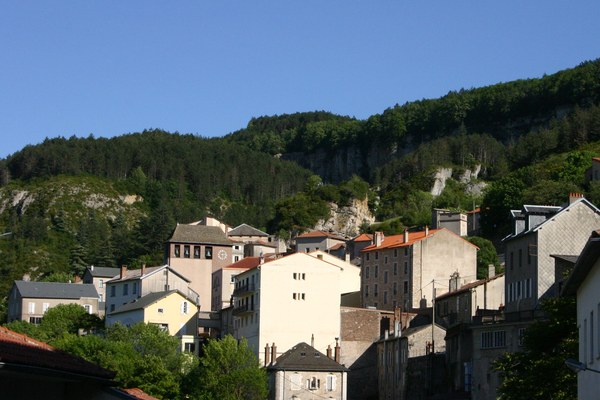
Roquefort-sur-Soulzon
Take the tour at Société in the morning and the free tour at Gabriel Coulet afterwards. If you have booked by telephone, you can also see the old cellars of Papillon. Walk the Sentier des Échelles up the Combalou if the weather is good.
- Société: 8.50 euros, approx. 1 hour
- Gabriel Coulet: free, without booking
- From Millau: approx. 28 minutes
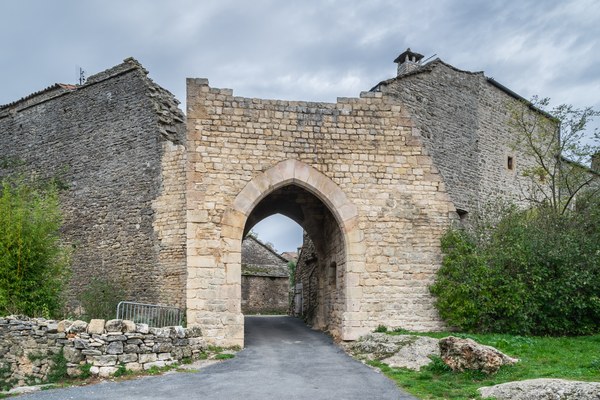
La Couvertoirade and La Cavalerie
Drive to La Couvertoirade and walk along the wall from the Maison de la Scipione. Stop in La Cavalerie on the way back and see the ramparts from the Hospitaller period.
- La Couvertoirade: approx. 39 minutes from Millau
- La Cavalerie: approx. 18 minutes from Millau
- Guided tour in La Cavalerie in July–August
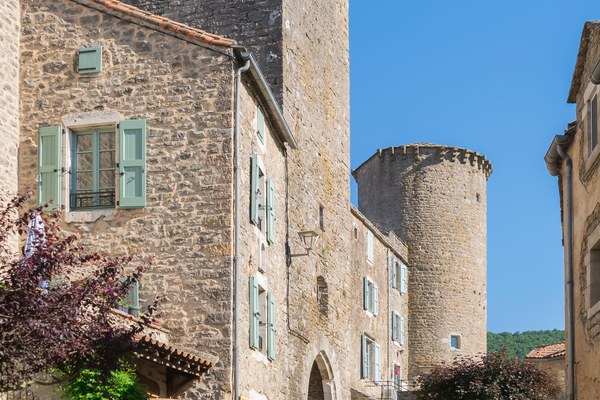
The viaduct and Sainte-Eulalie-de-Cernon
Start at the Aire du Viaduc with Viaduc Expo and the viewing platform, or the guided tour below the deck. Then drive to Sainte-Eulalie-de-Cernon and on to the tower in Viala-du-Pas-de-Jaux.
- Viaduc Expo: free, open all year
- Sentier des Explorateurs: 6 euros
- Sainte-Eulalie: approx. 25 minutes from Millau
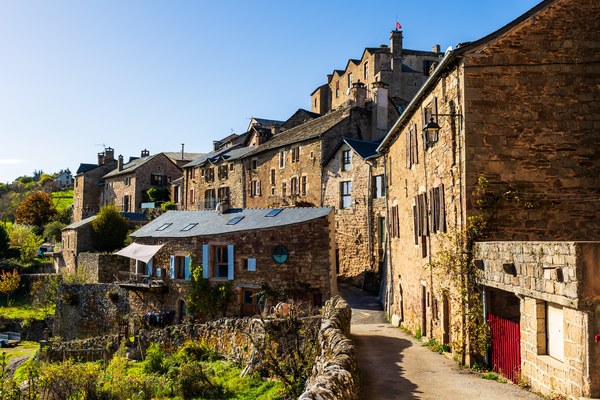
Peyre and Castelnau-Pégayrols
See the church in the rock in Peyre and the view of the viaduct, and drive past pier P2. Continue to Castelnau-Pégayrols, or see the viaduct from Cap de Costes-Brunas on the way back.
- Peyre: approx. 14 minutes from Millau
- Castelnau-Pégayrols: approx. 20 minutes from Millau
- Peyre: two paid car parks