
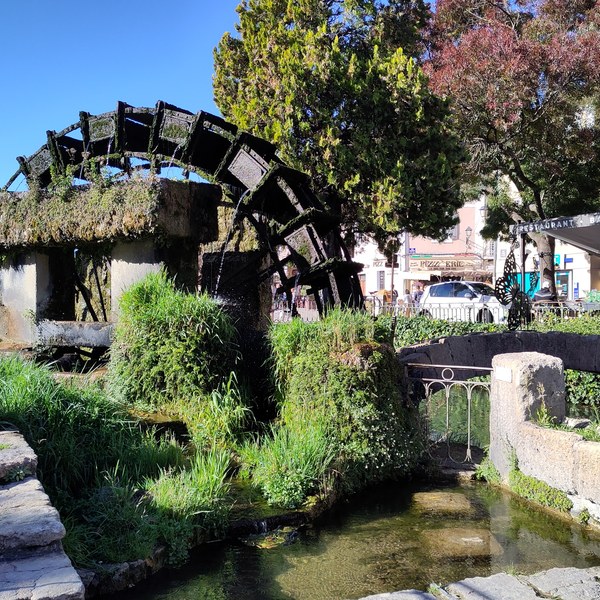
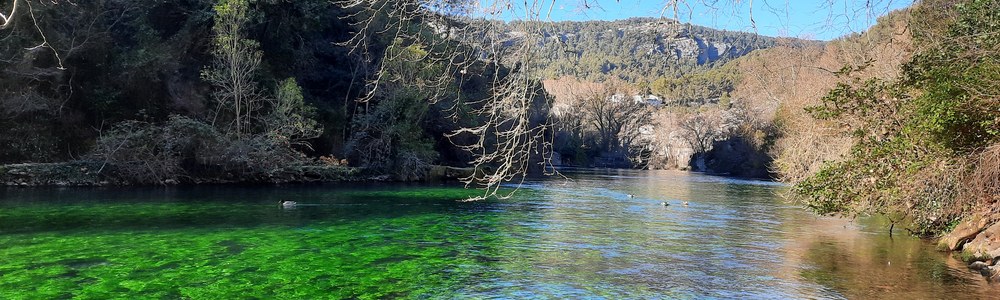
The water is the first thing you notice. In L’Isle-sur-la-Sorgue the river flows through the centre in several channels, and old water wheels still turn in the current. If you follow the river upstream, you come to Fontaine-de-Vaucluse, where the Sorgue emerges from the spring.
L’Isle-sur-la-Sorgue – the town on the water
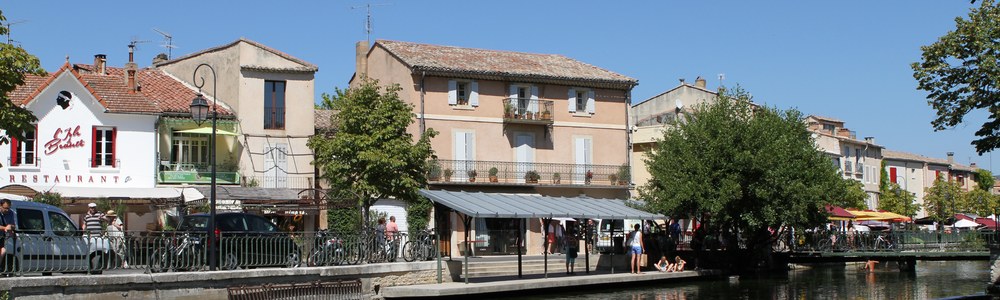
L’Isle-sur-la-Sorgue is called the «Venise Comtadine», the Venice of the Comtat, because the town is criss-crossed by many channels of the Sorgue. Until the 19th century it was a fishing village, and the poet René Char was born here.
Several of the old water wheels still turn, and you can see them along the river channels in the centre. The Partage des Eaux, «the parting of the waters», is also among the town’s sights.
In the old town stand the baroque collegiate church of Notre-Dame-des-Anges and the 17th-century Hôtel-Dieu, with its vestibule, chapel, old pharmacy and garden. The Hôtel Donadeï de Campredon has changing exhibitions, and the town also has a toy and doll museum.
The Sunday market
On Sunday mornings the town holds its big Provençal market. The brocante is on the same day, so Sunday is the day for anyone who wants to take in both.
On the first Sunday in September there is a floating market, where goods are sold from boats on the river.
The antiques and the brocante
L’Isle-sur-la-Sorgue is known for its antiques. According to the tourist office, the town has around 300 antique dealers and second-hand shops, many of them gathered in six «antiques villages» such as the Village des Antiquaires de la Gare and L’Île aux Brocantes. Most are open from Friday to Monday all year round and on public holidays, and some on Thursdays too.
Every Sunday from 9 am to 6 pm there is a brocante along the avenue des Quatre Otages. It has been going for almost 40 years. Around Easter and in August there are also large international antiques fairs – check the dates with the tourist office.
The spring at Fontaine-de-Vaucluse
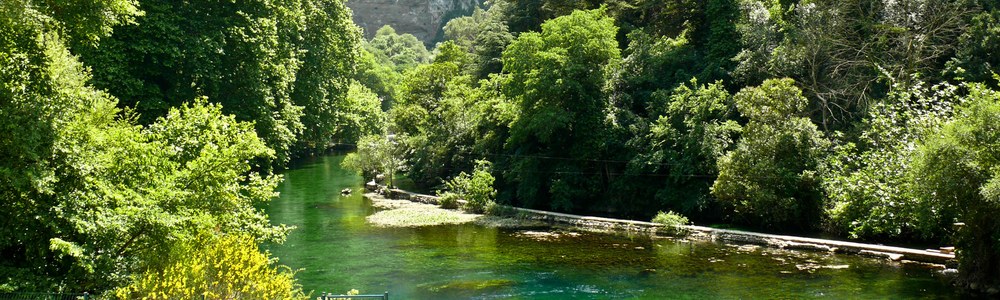
The spring, le Gouffre, is according to the tourist office the largest river spring in France and one of the largest in the world by volume of water. On average, 630 million cubic metres of water emerge here every year, and during the spring and autumn floods the flow can reach about 90 cubic metres a second. The water is collected from an area of 1,240 square kilometres, from Mont Ventoux, the Monts de Vaucluse and the Montagne de Lure.
The spring is at its most spectacular in spring and autumn, when the flow is greatest. In summer it is calm.
The path from the village up to the spring is the same as before, but you cannot get all the way there. Because of the risk of rockfall, all access is forbidden on the last stretch, about 50 metres before the spring. There is a barrier and signs just before the rocky spur, and the viewpoint has been moved about 50 metres further up. The municipality may also close the path in bad weather, especially in heavy rain.
Fontaine-de-Vaucluse – Petrarch and the paper mill
The Italian poet Petrarch lived in Fontaine-de-Vaucluse in the 14th century. The Musée-bibliothèque Pétrarque, the département’s museum, stands where his house once stood. We have not found the opening hours for 2026, so check them before you go.
At the Moulin à papier Vallis Clausa paper mill, admission is free and open to all. The village also has a history museum about the Second World War, the Musée d’histoire Jean Garcin 1939–1945.
Practical advice
Plan around the day of the week. On Sunday you have both the market and the brocante, while most of the antique dealers are open from Friday to Monday. If you come on a Tuesday or Wednesday, many of the antiques villages are closed.
Without a car, take the regional buses, Zou!. Lines 906, 913, 914 and 920 go to L’Isle-sur-la-Sorgue, about 15 minutes from Cavaillon, 30 from Carpentras and 45 from Avignon. Line 914 continues to Fontaine-de-Vaucluse. The town also has a railway station. Check the timetables before you go.
If you want to eat well, L’Isle-sur-la-Sorgue has the restaurant Le Vivier with one Michelin star and Solelh with a Bib Gourmand. The vineyards around both places belong to AOP Ventoux.
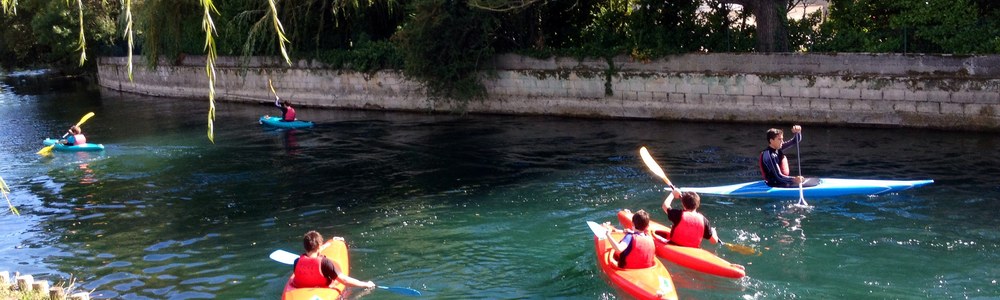
If you want to get out on the water, you will find more about paddling on the rivers of the south in our guide to canoeing in France.
The Sorgue valley with Gordes as a base
From Gordes it is a short trip to Fontaine-de-Vaucluse and on to L’Isle-sur-la-Sorgue. The travel guide has hotels, restaurants and parking in the village. East and south of Gordes lie the Luberon villages – Roussillon, Bonnieux, Lourmarin and Ménerbes.
Four good ways to experience L’Isle-sur-la-Sorgue and Fontaine-de-Vaucluse
The two places are close together, and all four experiences can be combined in one long day – preferably a Sunday.
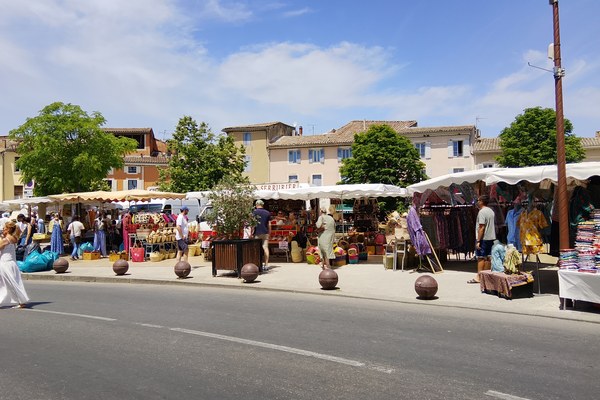
Market and brocante on a Sunday
Start at the Provençal market in the morning, then carry on to the brocante along the avenue des Quatre Otages. Finish with a browse in one of the antiques villages.
- The market is on Sunday morning
- The brocante is open 9 am–6 pm
- Around 300 dealers in the town
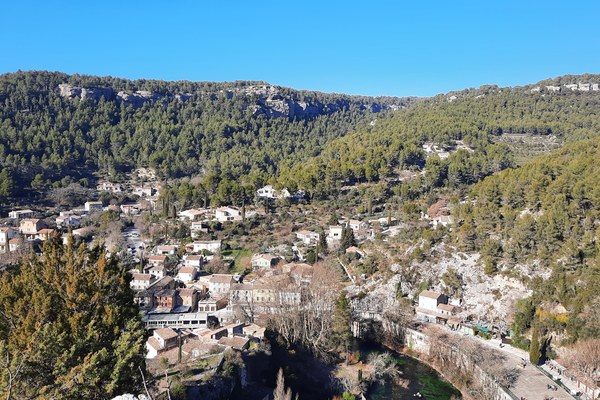
The walk up to the spring
Walk from the village up towards the spring and the new viewpoint. In spring and autumn the flow is greatest; in summer the spring is calm.
- The last 50 metres or so are closed off
- May close in heavy rain
- Most water in spring and autumn
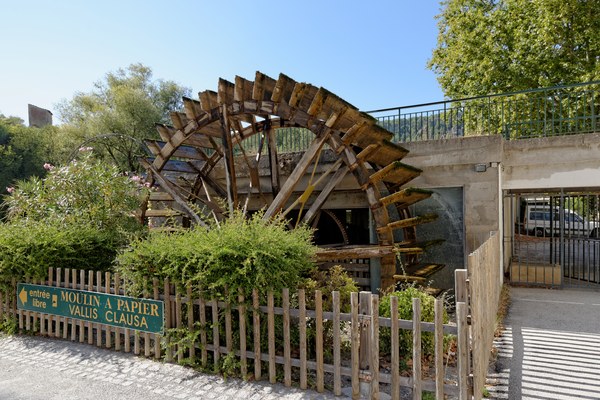
The Vallis Clausa paper mill
Drop in at the paper mill on the way to or from the spring. Admission is free, and the visit fits well with the walk to the spring.
- Free admission, open to all
- In Fontaine-de-Vaucluse
- Check the opening hours outside May and June
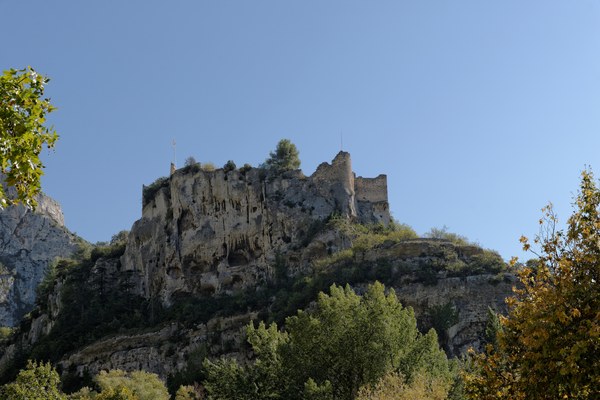
In Petrarch’s footsteps
Visit the Musée-bibliothèque Pétrarque, where the poet lived in the 14th century, and end the day in the village by the river.
- The museum stands where his house stood
- Check the opening hours before you go
- In Fontaine-de-Vaucluse