
In winter the museums are open Tuesday–Saturday, the cloister Tuesday–Sunday. The prices are from autumn 2026, and 2027 has not been published – check frejus.fr before you go.
Forum Julii – the town from the time of Caesar
Fréjus was called Forum Julii and was founded in the time of Caesar, 49–44 BC. The excavations at Butte Saint-Antoine show settlement from 45–44 BC, and the larger public buildings came in 27–25 BC. The Via Aurelia ran through the town. Today Fréjus has around 60,000 inhabitants.
- The town wall: 4 kilometres long and 8 metres high around approx. 35 hectares. The remains have been listed since 1886.
- Agricola: the Roman general was born here on 13 June in the year 40 and has a statue in the town. So does Sieyès.
- Plate-Forme romaine: 6,000 square metres with a residence and a cistern of 400 cubic metres. The municipality announced that it would open in autumn 2026, free during the opening hours of the park. The cistern is shown with a guide.
- Vivier romain: the site was discovered in 2008 and is shown only with a guide, on Wednesdays at 2.30pm.
The overview of the monuments is at the tourist office in Fréjus. If you like Roman architecture, you can continue to Nîmes.
The naval harbour and the Lanterne d'Auguste
After the battle of Actium in 31 BC the harbour became a naval base under Augustus and Agrippa. Today it is silted up, and the remains lie some way from the sea. The Lanterne d'Auguste is a hexagonal tower of 10 metres with a pyramid-shaped top. It was a landmark for sailors and not a lighthouse. Butte Saint-Antoine nearby has free access.
The Roman amphitheatre
The arena is from the end of the first century AD, after the Colosseum. It measures approx. 113 × 83 metres, is 21 metres high and had room for over 10,000. In 1840 it was on the first list of French historic monuments, and it was fully excavated in 1960. Today it holds approx. 5,000 spectators, and it closes now and then for events. It is open all year, see the times.
The Roman theatre
The first theatre was made of wood, and the stone one was built around AD 15–20. It had 2,000 seats and was excavated in 1919–29 by Jules Formigé. Today it is called the Théâtre romain Philippe Léotard, and it is free with open access.
The aqueduct – 42 kilometres and 36 bridges
The aqueduct drew water from the springs of La Foux in Montauroux and La Siagnole in Mons, 515 metres above sea level. It is 42 kilometres long with a drop of 481 metres and 36 aqueduct bridges, 28 of them in the Reyran valley. It was built in the second half of the first century and was in use for around four hundred years.
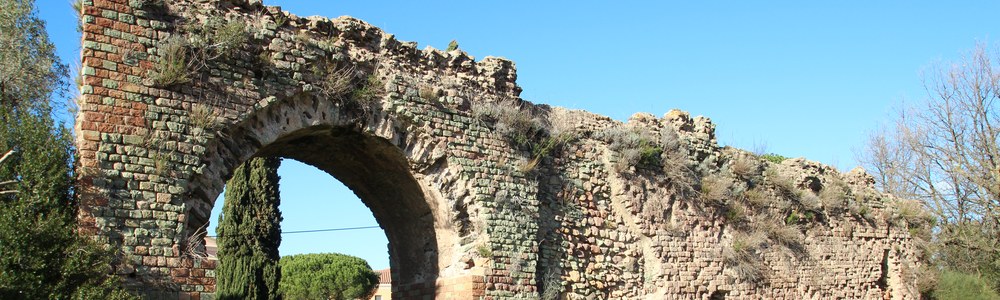
The six arches of the Arches Sénéquier stand by the Route de Malpasset, and you can see them on the way to Malpasset.
Porte des Gaules and Porte d'Orée
- Porte des Gaules: built as a semicircle 50 metres in diameter on the Via Aurelia, and later walled up. The Roman paving beneath it was found in 1919.
- Porte d'Orée is not a town gate. It is the remains of the frigidarium, the cold bath, of a Roman bath from the 2nd century. The name comes from the gilded nails, “clous dorés”.
Musée archéologique
The museum is by place Calvini, in the bishop’s residence beside the cathedral. Here you find the two-headed Hermes in Carrara marble, found in 1970 and now the emblem of the town, and the panther mosaic. The tourist office states that the museum is closed 3–26 November for fire safety work, without giving a year. Check before you go.
Opening hours, prices and the Fréjus Pass in winter 2026/27
The amphitheatre, the Musée archéologique, the Cocteau chapel and the local museum have the same opening hours.
- 1 October–31 March: Tuesday–Saturday 9.30am–12.30pm and 2pm–5pm. Closed on Sundays, Mondays and public holidays.
- 1 April–30 September: Tuesday–Sunday and public holidays 10am–1pm and 2.30pm–6pm. Closed on Mondays and 1 May.
- Last admission: 15 minutes before.
- Price: 3 euros per site. The Fréjus Pass costs 6 euros, reduced 4, and is valid for seven days. Free for under-12s.
- The cloister is run by the Centre des monuments nationaux and has its own hours and its own ticket.
The cathedral cloister and the painted ceiling
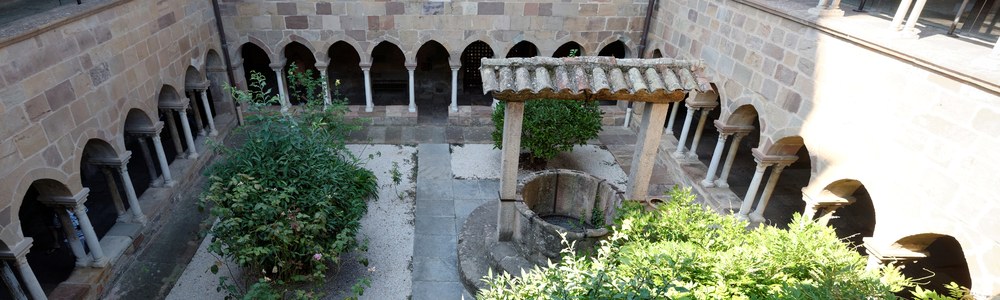
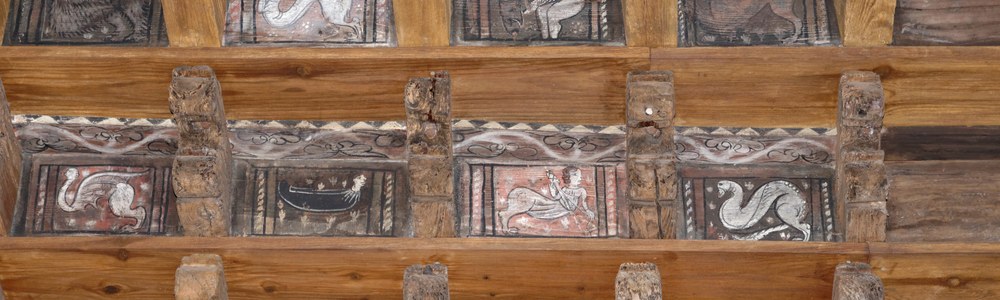
The cloister by the cathedral is from the 13th century. From the middle of the 14th century the wooden ceiling was given painted panels. Originally there were over 1,200, and more than 300 remain, with animals and fabulous creatures.
- 1 September–27 April: 10am–1pm and 2pm–5pm. 28 April–31 August: 10am–6pm. Last admission is 30 minutes before.
- Closed: Mondays, 1 January, 1 May, 1 November, 11 November and 25 December. On 24 and 31 December it closes at 4pm.
- Price 2026: 7 euros, reduced 5.50 with a partner ticket. Free for under-18s, for EU citizens aged 18–25, and on the first Sunday in January, February, March, November and December.
- Practical: 58 rue du Cardinal Fleury. Dogs are not allowed.
See cloitre-frejus.fr, the cloister’s page at the Centre des monuments nationaux.
The baptistery and the cathedral
The baptistery is from the 5th century according to the excavations. It is roughly square on the outside, with an octagonal baptismal font inside. The dome was reconstructed in 1930 by Jules Formigé. The Council of Valence in 374 is the first documentation of a bishop in Fréjus.
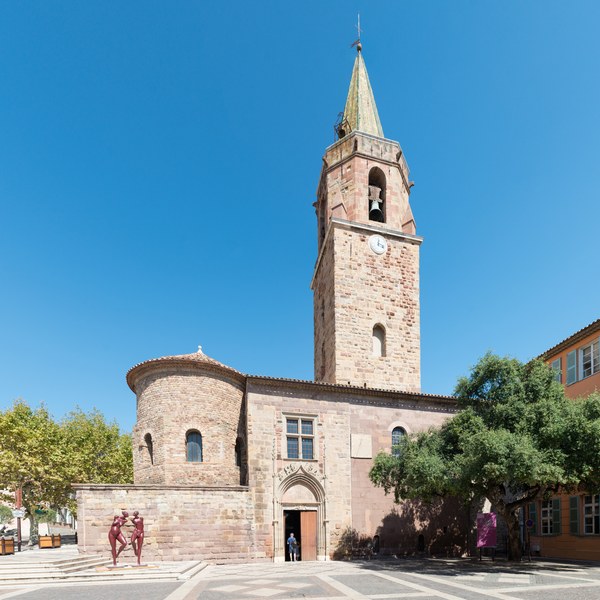
Saint-Léonce Cathedral was built from the 5th to the 16th century, with a bell tower from the 13th–16th centuries and doors from 1530.
The Cocteau chapel Notre-Dame-de-Jérusalem
The first stone was laid on 24 February 1963, and Jean Cocteau died on 11 October of the same year. Édouard Dermit completed the decoration from Cocteau’s sketches, in an octagonal building designed by Jean Triquenot. In the Last Supper you see Cocteau himself and Jean Marais. The chapel became a listed monument in 1989 and lies by the DN7, Route de Cannes, 5 kilometres as the crow flies from the centre. It has the same hours as the museums.
Villa Aurélienne
The villa is from 1889, built for James Hiscutt Crossman by the architect Henri Lacreusette. The park is free. You can only go inside the house with a guide or for exhibitions.
The pagoda, the mosque and the memorials
- Pagode Hông Hiên: inaugurated on 6 April 1919 by the soldiers. Open Wednesday, Saturday and Sunday 10am–5pm, but not in rain or wind. The tourist office calls it the oldest in Europe.
- The Missiri mosque: built in concrete in 1930 on the model of the mosque in Djenné. It is being restored and is closed, so you see it only from the outside.
- Mémorial des guerres en Indochine: closed until 2029.
- Mémorial de l'Armée noire: from 1994, free access.
- Musée des Troupes de Marine: the sources give different hours, so check before you go.
The background on the colonies is in France’s colonial history.
Roland Garros 1913
On 23 September 1913 Roland Garros took off from Fréjus and landed in Bizerte in Tunisia after approx. 700 kilometres. It was the first flight across the Mediterranean, the year before war broke out.
Napoleon in 1799 and 1814
Bonaparte landed in the bay of Saint-Raphaël on 9 October 1799 on his way from Egypt and spent the night in Fréjus. In 1814 Fréjus was the last stop before Elba, and he embarked in Saint-Raphaël on 28 April 1814. When he returned in 1815, he landed in Golfe-Juan. The story is in Napoleon Bonaparte.
Malpasset – the dam that burst in 1959
The dam in the Reyran valley above Fréjus burst on 2 December 1959 at 9.13pm. 423 people died. The ruins are still there, with a marked path and information boards.
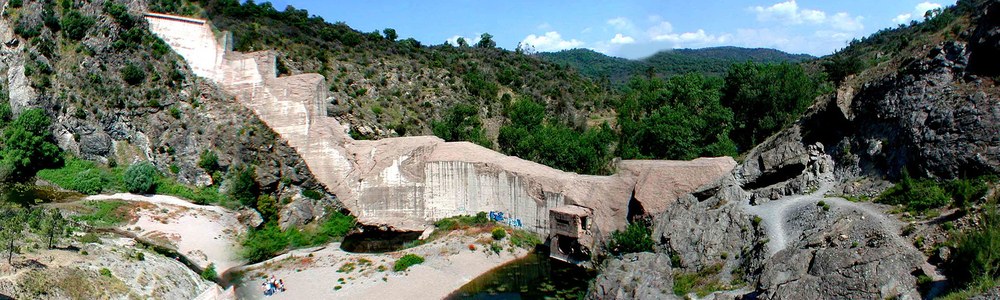
- Access: free, but the path may be closed in bad weather and when there is a risk of flooding. Parking by the Route de Malpasset, 8.9 kilometres as the crow flies from Fréjus.
- Guided tour: Fridays at 9.30am from September to December, next on 11 December 2026. It costs 8 euros, and you need your own car.
- The local museum in Fréjus has a room of its own about the disaster.
See the tourist office in Fréjus. Tours for January–March 2027 have not been published.
The beaches in Fréjus
Fréjus has 8 kilometres of fine sand: Fréjus-Plage, Base nature and Esclamandes by Saint-Aygulf.
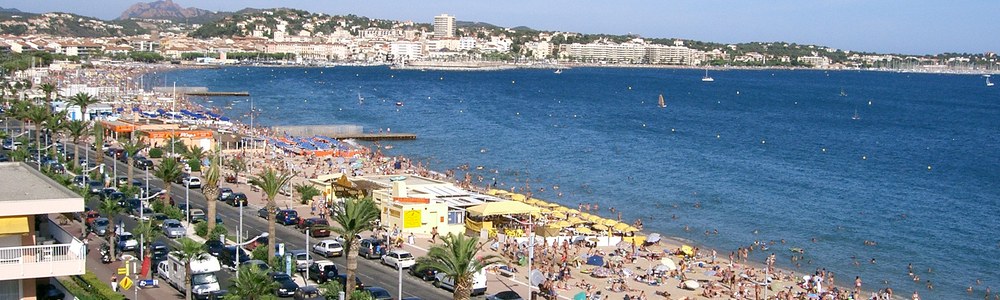
- Lifeguards: eight posts 9am–7pm from the first Friday in June to the third Sunday in September. By that rule it will be 4 June–19 September 2027.
- HandiPlage (for bathers with reduced mobility): Base nature.
- Blue Flag: the harbour Port-Fréjus was on the 2025 list, but none of the Fréjus beaches.
- Naturist beach: by Esclamandes and Villepey, June–September.
- Dogs: a separate beach by the river Argens.
- Base nature: 135 hectares, 80 of them nature, behind the beach.
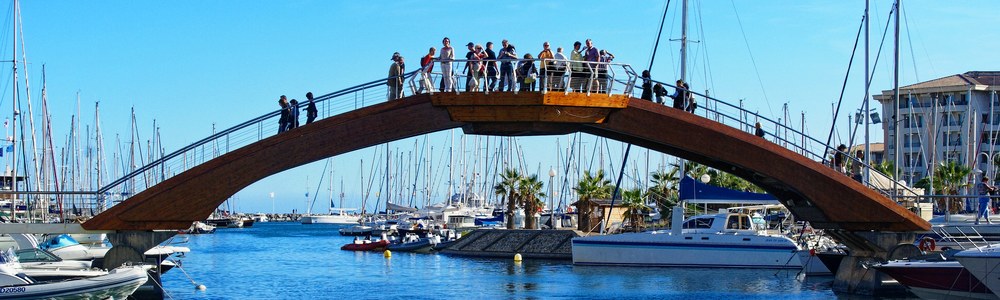
Port-Fréjus has 849 berths. In July–August boats ran from the harbour to Saint-Tropez on Tuesdays and Saturdays, 1 hour 15 minutes (2026), with Les Bateaux Bleus. The 2027 season starts in April. You will find other beaches in The Best Beaches in France.
The beaches in Saint-Raphaël
The municipality has 36 kilometres of coast and over 28 beaches, according to the tourist office.
- The centre: the sandy plage du Veillat, and Beaurivage.
- To the east: Péguière, Arène Grosse, Boulouris, Plage du Débarquement with rounded stones of esterellite, Camp Long and Pourrousset.
- Agay: three sandy beaches in the bay, and Baumette and Anthéor further out.
- Lifeguards: Veillat, Beaurivage, Péguière, Débarquement, Agay and Lido.
- HandiPlage: Beaurivage in July and August 2026, 9.30am–4.15pm, and l'Escale in Agay, 15 June–20 September 2026.
- Blue Flag in 2025: Agay, Anthéor, Baumette, Boulouris, Dramont, Péguière and Pourrousset. The 2026 list per beach has not been checked. See Pavillon Bleu.
The red coves along the road towards Théoule are in The Estérel massif. The overview of the beaches is at Saint-Raphaël Tourisme.
Saint-Aygulf and Étangs de Villepey
Saint-Aygulf lies in the far west of Fréjus, with small coves – Corailleurs, Louvans, Romains, Four à Chaux and Pont de Bois – and a marked sentier des douaniers of 8 kilometres.
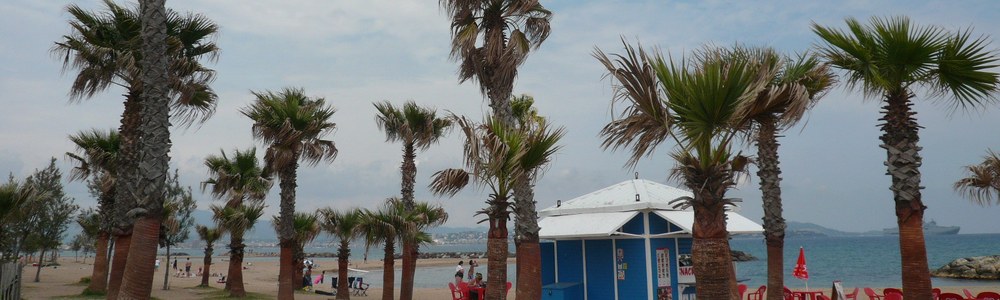
- Étangs de Villepey: 255 hectares of lagoons and wetland, Natura 2000 and under the Conservatoire du littoral. Over 220 bird species have been recorded, including flamingos.
- Omelette géante: in 2026 the giant omelette was made on 12–13 September. The date for 2027 has not been published.
Aqualand Fréjus
The water park opens in June 2027; the date has not been published. See aqualand.fr. You will find more parks in 50 theme parks and water parks.
Markets, events and Christmas
- The old town of Fréjus: Wednesday and Saturday.
- Fréjus-Plage: Sunday on the promenade, Tuesday and Friday mornings on place de la République.
- Saint-Aygulf: Tuesday and Friday mornings.
- Saint-Raphaël: food market on place Victor-Hugo every day 7am–1pm and fish market on place Kennedy every day 7am–noon.
- Christmas: “Vive Noël” in Fréjus 5 December 2026–2 January 2027, with 80 stalls, a skating rink, a light show on the cathedral and a free DJ on New Year’s Eve.
- Bravade de Fréjus: the third Sunday after Easter, that is, 18 April 2027. The programme has not been published.
- Roc d'Azur: mountain bike festival at Base nature 6–10 October 2027. See rocazur.com.
You will find more about shopping at the market in Markets in France.
The journey to Fréjus
- Train: Fréjus has its own station, and the TER from Nice takes 50 minutes. The TGV stops in Saint-Raphaël–Valescure, 20 a day all year, and Paris takes 4 hours 45 minutes.
- Air and bus: Nice Côte d'Azur is around 50 minutes away by car. ZOU 90 runs from Terminal 2 to Fréjus and Saint-Raphaël every day at 9am, 11.30am, 1.30pm, 3.45pm, 7.30pm and 9.30pm (from 1 September 2026). The car hire box on this page uses Nice.
- Car: the A8, junction 38 “Fréjus/Saint-Raphaël”. If you are coming from Toulon to the cloister, junction 37 and the N7 are given.
- From Saint-Raphaël: the centres of the two towns are 2.7 kilometres apart as the crow flies. The buses are called Estérel Côte d'Azur – Le Bus.
- Cycling: shared electric bikes from Lime in Fréjus since 26 August 2026, 2.99 euros for 30 minutes.
Eating and sleeping
In the old town, L'Amandier has a Bib Gourmand from Michelin. There are 16 guests per service, so book a table. It is closed on Sundays, and for lunch on Mondays, Wednesdays and Fridays. Other restaurants are in the travel guide to Saint-Raphaël.
In the centre of Fréjus is Hôtel L'Aréna (three stars, 26 rooms), and by the Esclamandes beach the Van der Valk Hotel Saint-Aygulf (four stars, 87 rooms). If you are bringing a tent or a motorhome, see Camping in France.
Onward from Fréjus
The mountains behind the town, the coast road and the fire map are in The Estérel massif, and the rest of the department in Le Var. To the west the trip goes to Saint-Tropez, with the places around the bay in the article about Saint-Tropez, and to the east to Cannes.
4 days in Fréjus
Each day stands on its own. In winter, make days 1, 2 and 3 fall on Tuesday–Saturday, and days 2 and 3 on a Wednesday or Saturday if you can. Day 4 works all year.
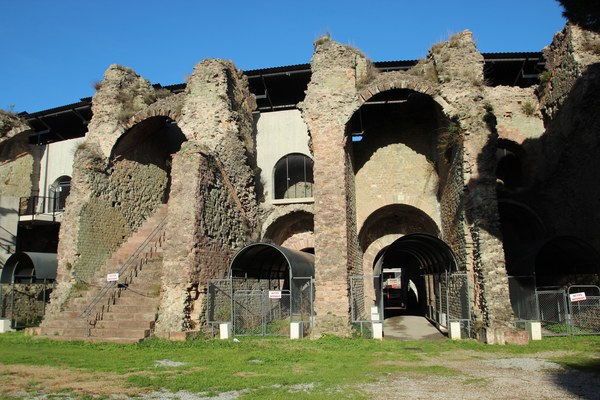
The Roman town
Begin at Porte des Gaules, see the amphitheatre and walk to the Roman theatre. Visit the Musée archéologique after lunch.
- Tuesday–Saturday in winter
- Fréjus Pass: 6 euros, seven days
- The theatre is free
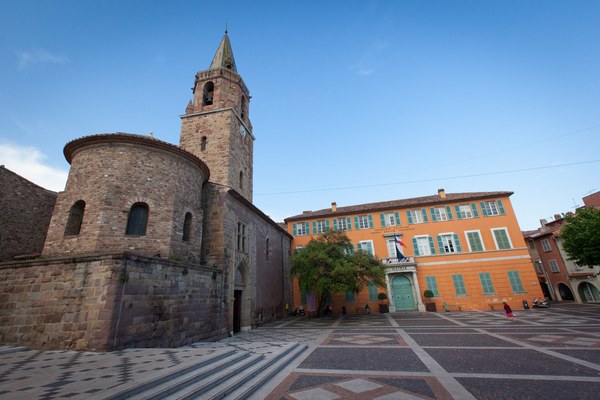
The cathedral, the cloister and the market
Go to the market on Wednesday or Saturday morning, see the painted ceiling in the cloister and the baptistery, and have lunch in the old town.
- The cloister: 7 euros, closed on Mondays
- Market Wednesday and Saturday
- L'Amandier: no lunch on Wednesdays
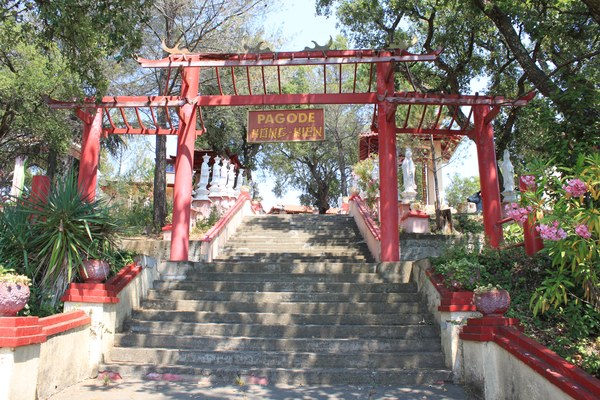
The pagoda, the villa and Cocteau
See the pagoda when it is open, take a walk in the park at Villa Aurélienne and drive to the Cocteau chapel. You see the Missiri mosque only from the outside.
- The pagoda: Wednesday, Saturday and Sunday 10am–5pm
- The chapel: 3 euros, Tuesday–Saturday in winter
- Choose Wednesday or Saturday
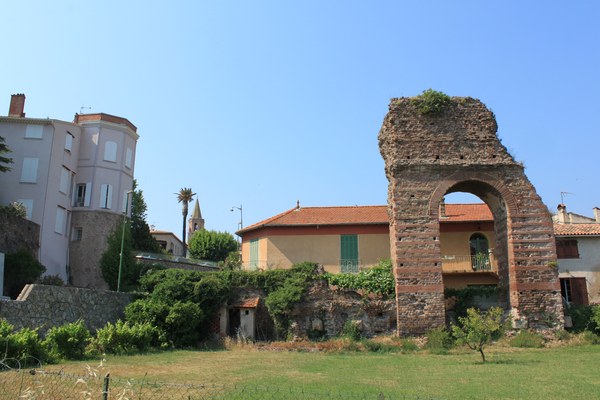
Porte d'Orée, the harbour and the beach
Walk from Porte d'Orée to Butte Saint-Antoine and the Lanterne d'Auguste, on to Port-Fréjus, and spend the rest of the day on the beach or on the path in Saint-Aygulf.
- Butte Saint-Antoine has free access
- Lifeguards June–September 9am–7pm
- Sentier des douaniers: 8 kilometres