

Deauville was founded in 1860. The Duc de Morny, half-brother of Napoleon III, planned a racecourse from the start. Trouville lies on the other side of the Touques, and the train from Paris terminates at Trouville-Deauville station between the two towns. The inDeauville tourist office covers eleven municipalities, from Bénerville-sur-Mer to Villerville, and has been awarded the state label “Destination d’Excellence”.
Les Planches, the beach cabins and the parasols
The boardwalk Les Planches was built in 1923. Along it stand the beach cabins bearing the names of film stars who have come to the Festival du Cinéma Américain, and towards the sea stand the colourful parasols. By the promenade you will also find the Bains Pompéiens, inspired by the baths of Pompeii.
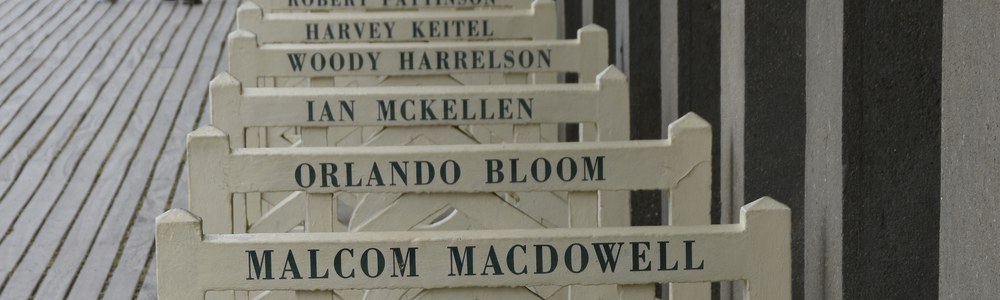
The names on the cabins show who has been to the film festival – more about it further down.

The casino
The Casino Barrière Deauville belongs to the same group as the five-star Hôtel Barrière Le Normandy (271 rooms), and the Barrière name recurs in the August races at the racecourse. Trouville has its own casino, the Casino Barrière Trouville, on the Quai Albert Ier by the Touques. We have not found an official source for when the casino in Deauville was built.
Horse racing – La Touques and Clairefontaine
Deauville has two racecourses. The large one is the Hippodrome de Deauville-La Touques, 45 avenue Hocquart de Turtot. The first races were improvised on the beach in 1859, and the first on the course were held on 14–15 August 1864.
- The tracks: two turf tracks and one fibre-sand track from 2003, and around 50 race days a year.
- August: the Meeting de Deauville Barrière runs all month, on Tuesdays, Thursdays, Saturdays and Sundays.
- The big races: the Prix Jacques Le Marois over 1,600 metres on the straight course, with 1 million euros in prize money, and the Lucien Barrière Grand Prix de Deauville over 2,500 metres, which closes August.
The Hippodrome de Deauville-Clairefontaine in Tourgéville dates from 1928. Flat racing, trotting and steeplechase are held on the same course, with around 20 race days from June to October and 70,000 spectators in the season. The course has over 100,000 flowers, and inside the track a wetland area has been returned to nature.
Festival du Cinéma Américain
The American film festival is held at the Centre International de Deauville (CID). The 52nd festival runs from 4 to 13 September 2026. The dates change from year to year, and the 2027 dates have not been announced – check festival-deauville.com.
The names on the beach cabins along Les Planches are the stars who have come to the festival. You will find more events in the same month in France in September.
Villa Strassburger
The Villa Strassburger was built in 1907 for Baron Henri de Rothschild, on the site of the Ferme du Coteau, which the Flaubert family had owned since 1837. The architect was Georges Pichereau, and the villa blends the Belle Époque with the style of the Pays d’Auge, in an orchard park of almost 2 hectares.
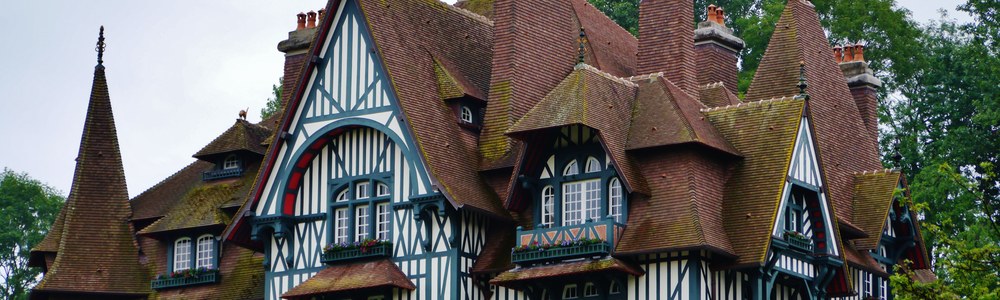
- 1924: Ralph Beaver Strassburger became the owner of the villa.
- 1975: listed as a monument historique on 29 October.
- 1980: bequeathed to the municipality.
The address is 1 avenue Strassburger. The dates for guided tours are available from the inDeauville tourist office.
The villas and the architecture
In the Quartier des Villas – rue de Gheest, rue Pasteur, rue Raspail and rue Laplace – stand villas from the early 20th century in the Norman villa style, with mock half-timbering and chequerboard patterns in brick and stone. In 1928 André Citroën opened a garage and showroom in the district. Today it is the Cinéma Morny.
Trouville – the fish market, the harbour and the villas
The Marché aux Poissons, the fish market by the quay, was designed by Maurice Vincent from Trouville, who won the competition in 1935. The hall was built in around six months from April 1936, with the Lieutenance in Honfleur as its model, and has been protected as a monument historique since 1992.
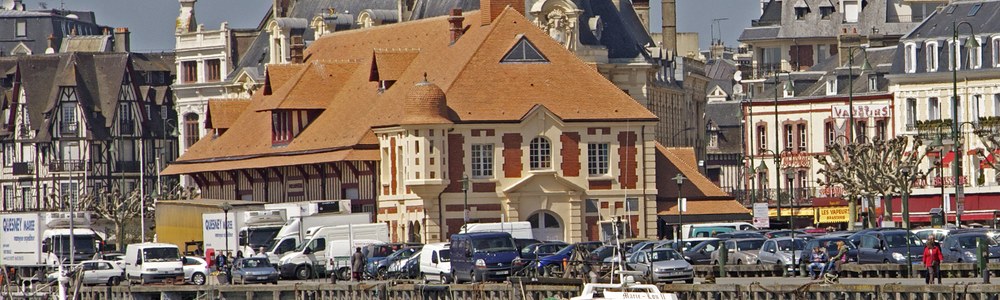
In September 2006 the hall was set on fire. The reinforced concrete held, and the hall was rebuilt as it had been. On the counters lie oysters, prawns and lobster.
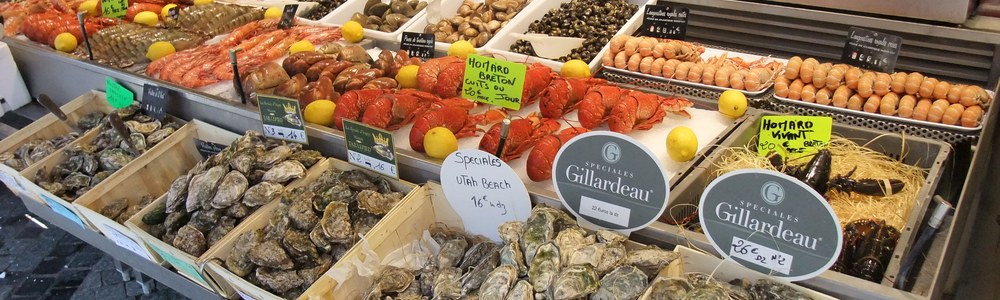
Trouville has a market twice a week. In November 2026 the tourist office’s calendar shows a weekly market on Wednesdays and a market with fishermen on Saturdays – check the days when you are there. The tourist office is at 32 boulevard Fernand Moureaux, and the Musée Villa Montebello has changing exhibitions.
Along the Touques lies the harbour, and behind the town the villas stand on the green hillside. Trouville also has its own Les Planches along the beach.
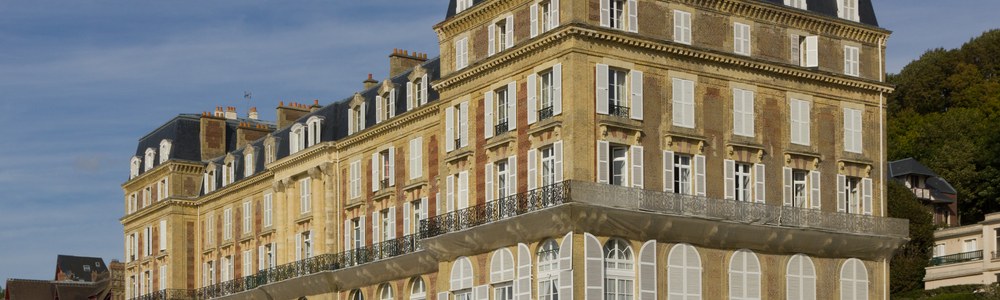
The ferry across the Touques – Le Bac
The little ferry Le Bac has run between Trouville and Deauville since 1889. It leaves from the Quai Albert Ier in Trouville, every five minutes, with room for 25 people.
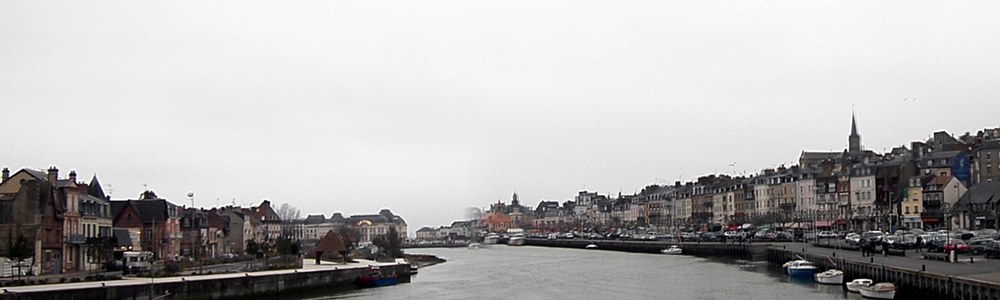
- Price: 2 euros per passenger, bicycle or pushchair, 1 euro for a dog and 1 euro for luggage. A card of 14 trips costs 20 euros.
- Cash only.
- When: every day from February to November or December, but the times follow the tide. They are posted on the quay by the bicycle hire “Les Trouvillaises”.
Villerville – the village on the cliff
Between Trouville and Honfleur, 7.8 kilometres from Honfleur, lies Villerville, which the tourist office calls “the village on the cliff”. It was originally a fishing village, with tall, colourful houses, villas and a park facing the Roches Noires cliffs.
Here Henri Verneuil filmed “Un singe en hiver” (1962) with Jean Gabin and Jean-Paul Belmondo, at the Roches Noires and the Pointe du Heurt.
Côte Fleurie – Cabourg and Houlgate
The Trouville tourist office uses the name Côte Fleurie for the coast here. Further west lie the seaside towns of Villers-sur-Mer, Houlgate and Cabourg, and the 111 bus from Honfleur stops in Villers-sur-Mer and Cabourg, among other places.
- Cabourg (29 kilometres from Honfleur as the crow flies): four kilometres of beach, the Promenade Marcel Proust with a statue of Proust and the Villa du Temps retrouvé. The Grand Hôtel Cabourg has five stars, and the restaurant Symbiose has one Michelin star.
- Houlgate (26 kilometres): part of the “Ville Belle Époque” network. The restaurant L’Éden has a Bib Gourmand.
Getting there
From Honfleur by bus: the Nomad 111 (Le Havre–Honfleur–Trouville–Deauville–Caen) and 122 (Caen–Deauville–Honfleur) regional buses run between the towns. We have not been able to read the timetables at Nomad, so check journey times and departures before you go. The distance is 12.4 kilometres to Trouville and 13.3 kilometres to Deauville as the crow flies.
From Paris by train: the train from Paris Saint-Lazare terminates at Trouville-Deauville. The ticket sites we have seen give around 2 hours and 10 minutes by direct train, but we have not been able to check this with SNCF. The station is on rue Auguste Decaens in Deauville, by the Touques between the towns. More about Paris in the travel guide to Paris.
By car: the Trouville tourist office reckons on 200 kilometres and 2 hours from Paris, 90 kilometres from Rouen, 65 kilometres and 1 hour from Caen, 40 kilometres from Le Havre and 30 kilometres from Lisieux.
By boat from Le Havre: in the summer of 2026 a boat ran from Le Havre to Trouville on eight days between 11 July and 24 August, taking around one hour. Adults paid 25 euros, children aged 4–12 18 euros, and the family ticket was 75 euros. The programme for 2027 is not known.
By air: Deauville-Normandie airport lies 8 kilometres from Trouville, but we have not found direct flights there from the Nordic countries.
Eating and sleeping
Deauville has two restaurants with one Michelin star: L’Essentiel on rue Mirabeau, where Charles Thuillant and Mi-Ra combine Norman produce with Asian flavours, and Maximin Hellio on rue Gambetta, with a lot of seafood. In Trouville, Turbulent by the quays along the Touques is recommended by Michelin.
In Trouville you will find the four-star Le Flaubert by the beach, within walking distance of the fish hall and the ferry, and the five-star Les Cures Marines. In Deauville the Hôtel Barrière Le Normandy has five stars, and in Villerville Le Paquebot has four. You will find more hotels and restaurants in the travel guide to Honfleur.
Onward from Deauville
Across the Pont de Normandie lie the chalk cliffs of Étretat – read more in Étretat and the Alabaster Coast. The 111 bus continues to Caen, which you will find in the travel guide to Caen, and the rest of the region in Normandy – coast, history and road trip. Deauville also features in Golf in France.
4 days in Deauville and Trouville
With four days you can take in Deauville, the races, Trouville and Villerville, and finally the seaside towns further west. The ferry across the Touques runs according to the tide, and the race days are in August at La Touques and from June to October at Clairefontaine.
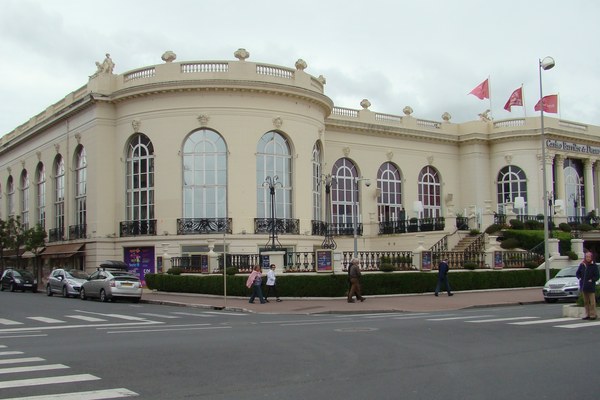
Les Planches and the casino
Walk Les Planches past the beach cabins with the stars’ names and the parasols, see the Bains Pompéiens and finish at the casino. Take a stroll through the Quartier des Villas on the way.
- Les Planches dates from 1923
- Rue de Gheest, Pasteur, Raspail and Laplace
- Cinéma Morny in the Citroën hall
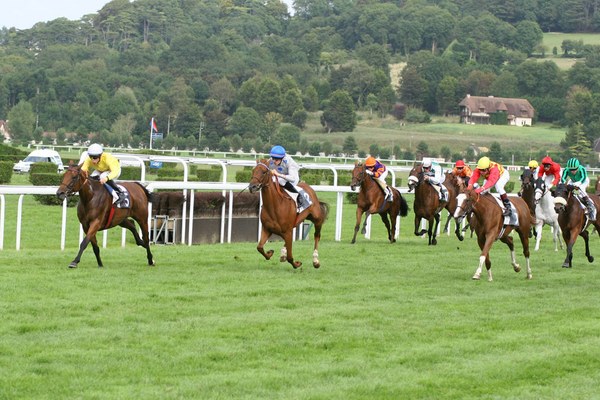
The races and the Villa Strassburger
Choose a race day at Clairefontaine in Tourgéville from June to October, or at La Touques in August. See the Villa Strassburger and the orchard on the way.
- Clairefontaine: around 20 race days
- La Touques in August: Tuesday, Thursday, Saturday and Sunday
- Guided tour of the villa: check the dates
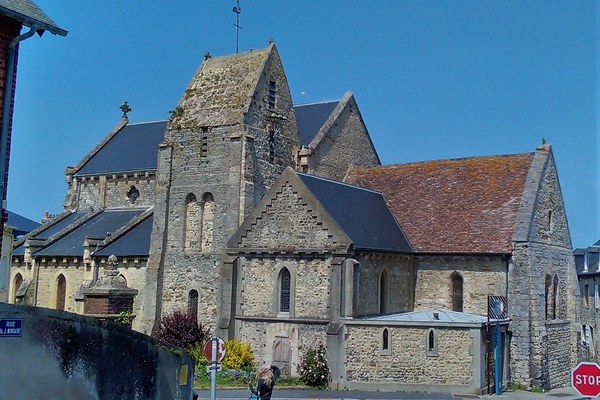
Trouville and Villerville
Take the ferry across the Touques to Trouville and start at the fish market in the morning. Walk along the harbour and the quays, and drive on to Villerville, the village on the cliff.
- The ferry: 2 euros, cash only
- The fish hall from 1936
- “Un singe en hiver” was filmed in Villerville
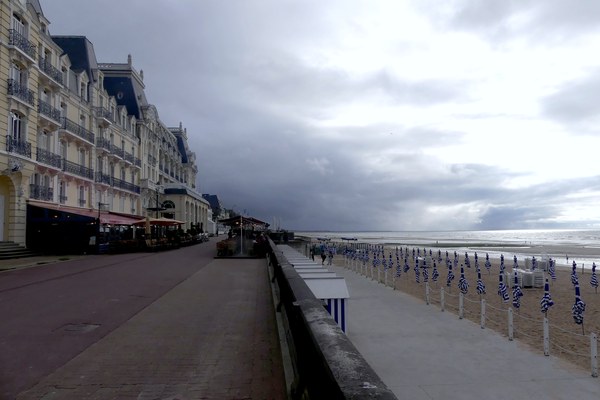
Houlgate and Cabourg
Follow the coast west to Houlgate and Cabourg. Walk the Promenade Marcel Proust along the four-kilometre beach, and eat at Symbiose or L’Éden.
- The 111 bus stops in Cabourg
- Villa du Temps retrouvé
- Symbiose: one Michelin star